Snack Science
9 Reasons Your 9 PM Cravings Are Ruining Your Diet
You eat clean all day. Then 9 p.m. hits and the wheels come off. If that’s you, you’re in the majority: about 60% of U.S. adults snack after 8 p.m.1 The good news is it isn’t a willpower problem. It’s nine specific things happening in your body and brain, and once you see them, the fix gets obvious.
 1
1 You’re not weak — 9 p.m. is rigged against you
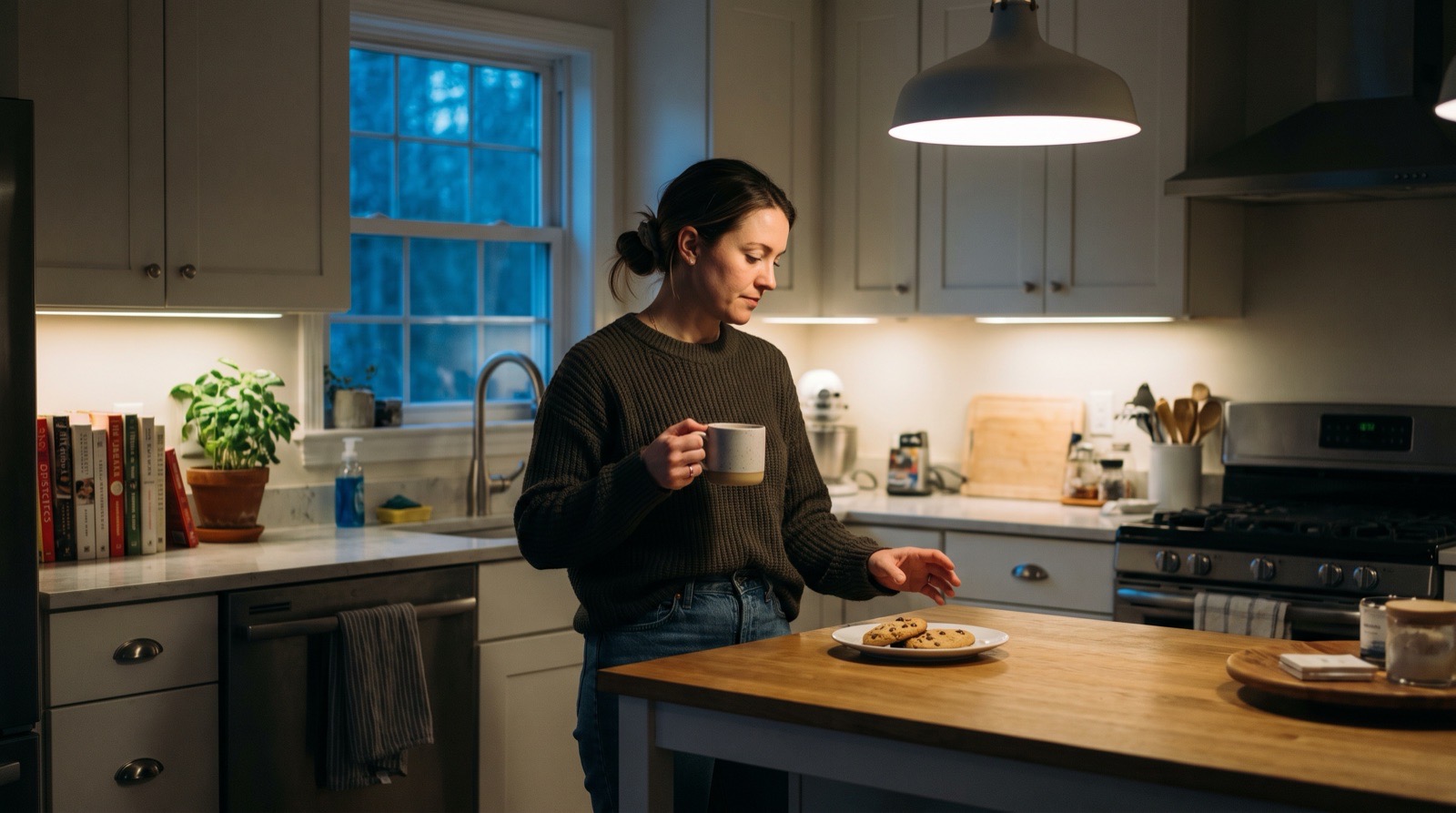
First thing to get straight: this isn’t a willpower failure. Roughly 60% of U.S. adults admit to snacking after 8 p.m. — it’s practically the national default. You eat clean all day, then the same urge hits at the same time every night. That’s not a character flaw; it’s biology, habit, and timing stacking the deck against you. The next eight reasons show you exactly how.
 2
2 Your hunger hormones don’t clock out at night
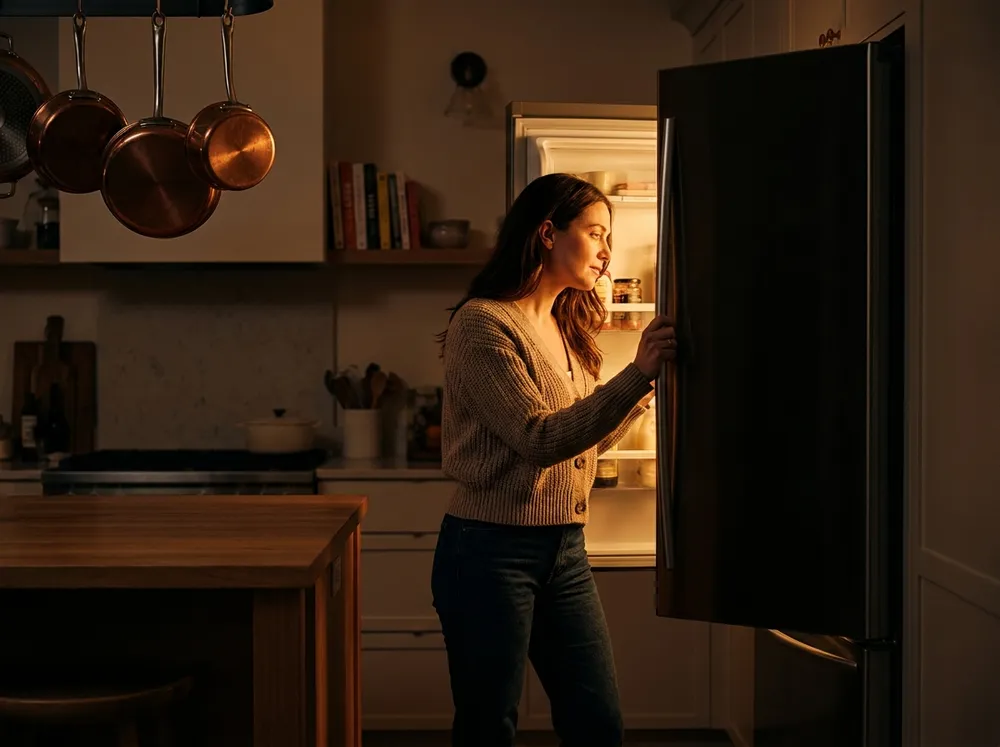
Ghrelin — the hormone that says “eat” — doesn’t switch off after dinner. Your hunger and fullness signals run on a daily rhythm, and for many people the “I’m satisfied” signal (leptin) gets quieter in the evening while the “feed me” signal lingers. So you can finish a full dinner and still feel a pull an hour later. It isn’t that you didn’t eat enough — your hormones are still talking.
 3
3 Stress quietly switched off your self-control
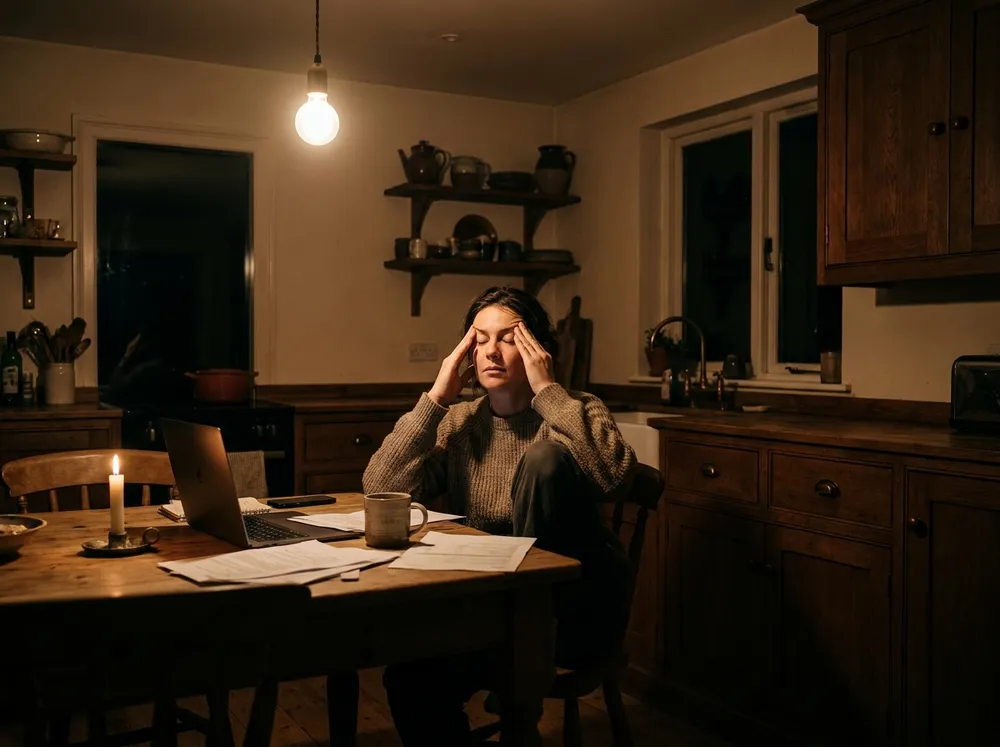
Willpower lives in your prefrontal cortex — the planning, impulse-control part of your brain. When you’re stressed, cortisol rises and that exact region gets dialed down while the reward-seeking parts get louder. After a long, stressful day, the brain you’re counting on to say “no” is the one that’s been benched. That’s why the cookies feel impossible at 9 p.m. but easy to ignore at 9 a.m.
 4
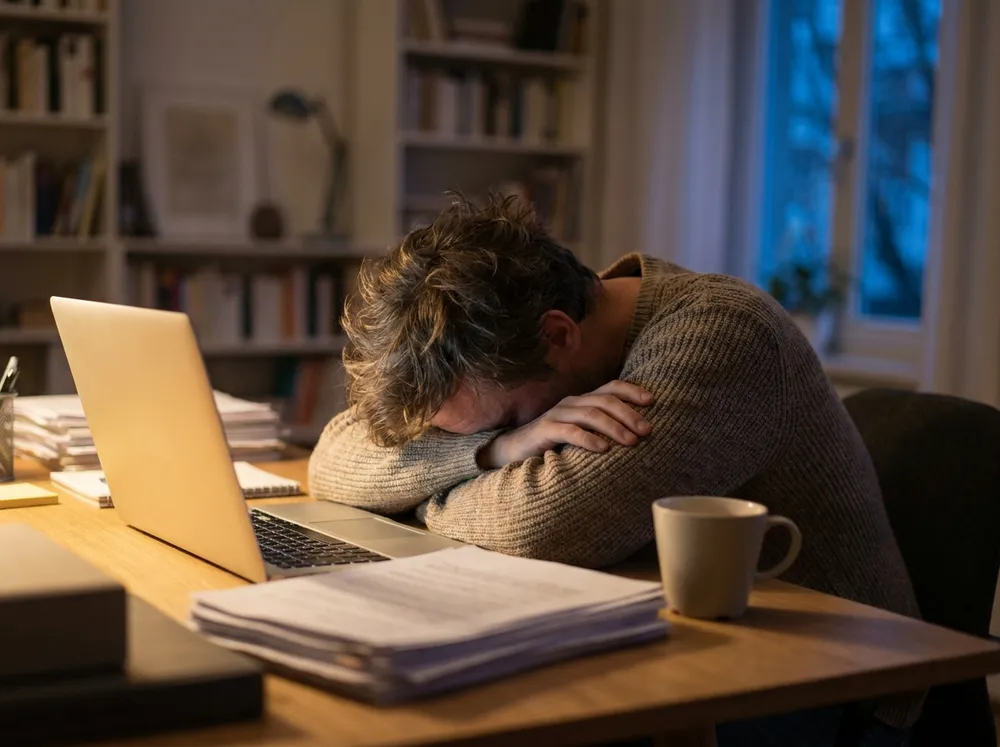
4 You’ve made thousands of decisions today — the tank is empty
Self-control behaves like a muscle that tires with use; researchers call it decision fatigue. Every choice you made today — work, kids, what to wear, what to reply — drew from the same limited reserve. By night there’s almost nothing left for “should I really have that?” You’re not weaker at night; you’re just running on empty.
 5
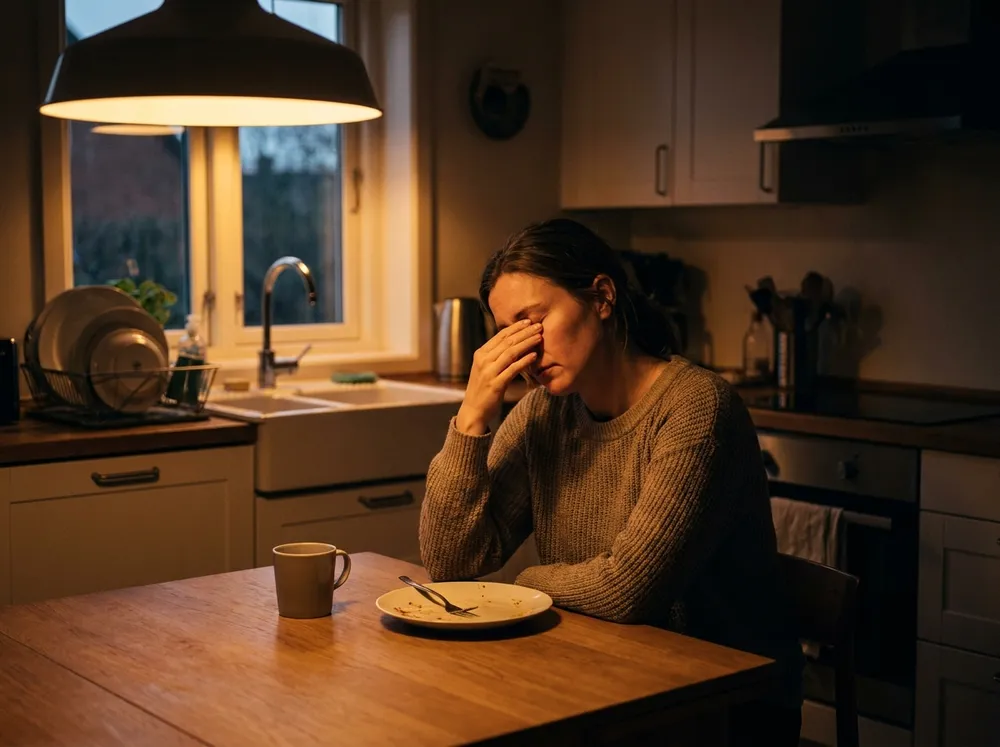
5 Your post-dinner blood-sugar dip is faking a hunger alarm
A big or carb-heavy dinner can spike your blood sugar, then drop it below baseline a couple of hours later. Your body reads that dip as “low fuel — eat now,” even though you’re not actually short on energy. So the craving that hits around 9 isn’t always real hunger. Sometimes it’s just a glucose rollercoaster sending a false alarm.
 6
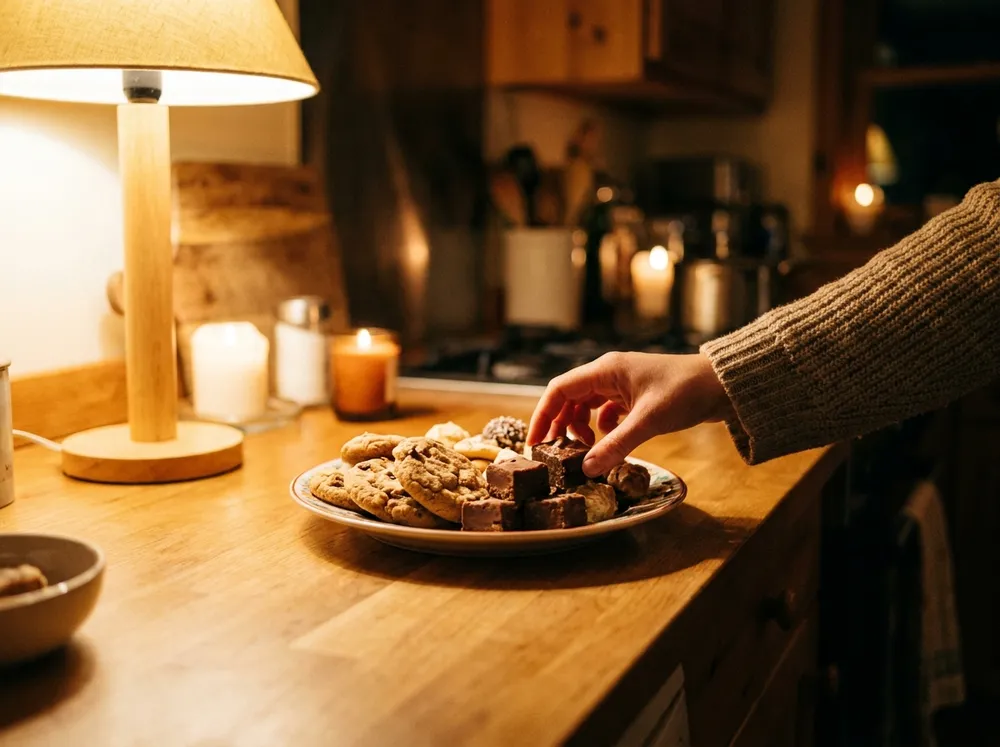
6 It’s not hunger. It’s dopamine
By night, a lot of “cravings” have nothing to do with your stomach — they’re your brain chasing a hit of reward, the dopamine bump from something sweet or salty while you unwind. People literally call it “food noise”: the urge to eat when you’re not even hungry. Once your brain links “evening” with “treat,” it keeps asking, full stomach or not.
 7
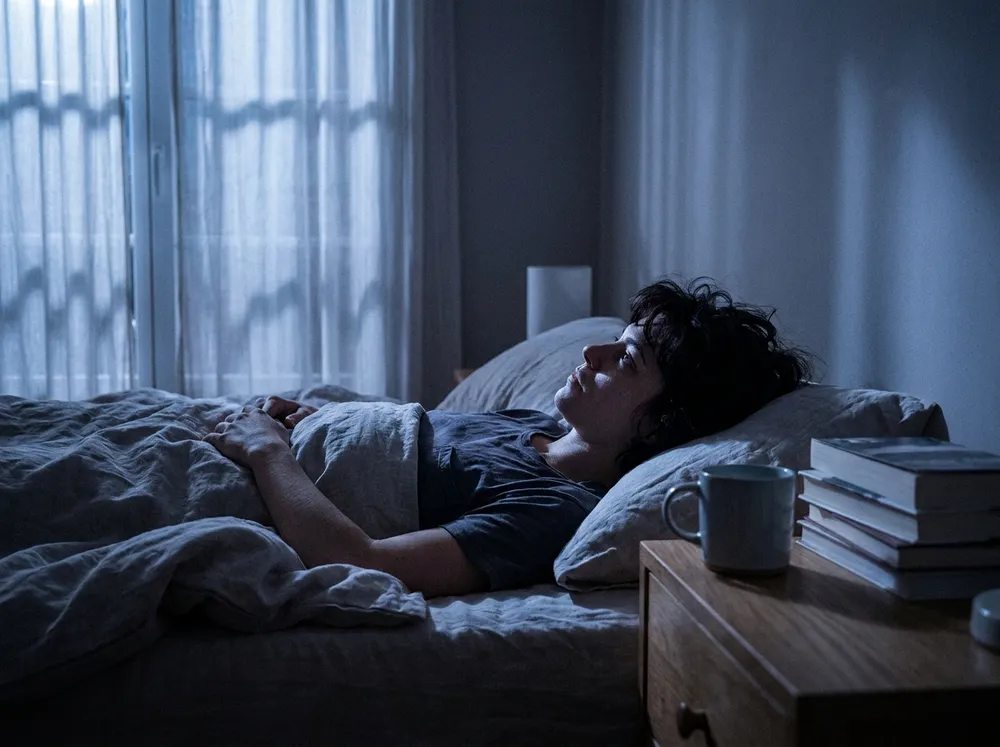
7 One short night makes tomorrow’s cravings worse
Skimp on sleep and your hunger hormones tilt the wrong way — ghrelin up, leptin down — so the next day you’re hungrier and reaching for higher-calorie food. The cruel part: late eating can disrupt the very sleep you need to regulate appetite. It becomes a loop — snack late, sleep worse, crave more, repeat.
 8
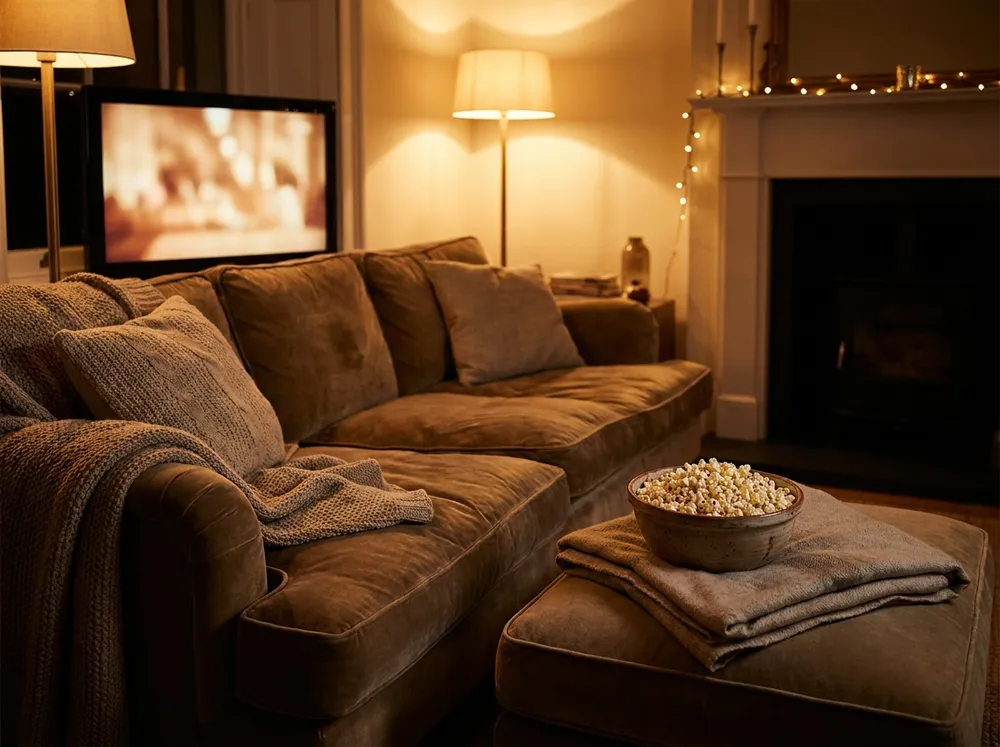
8 Your couch is a trigger
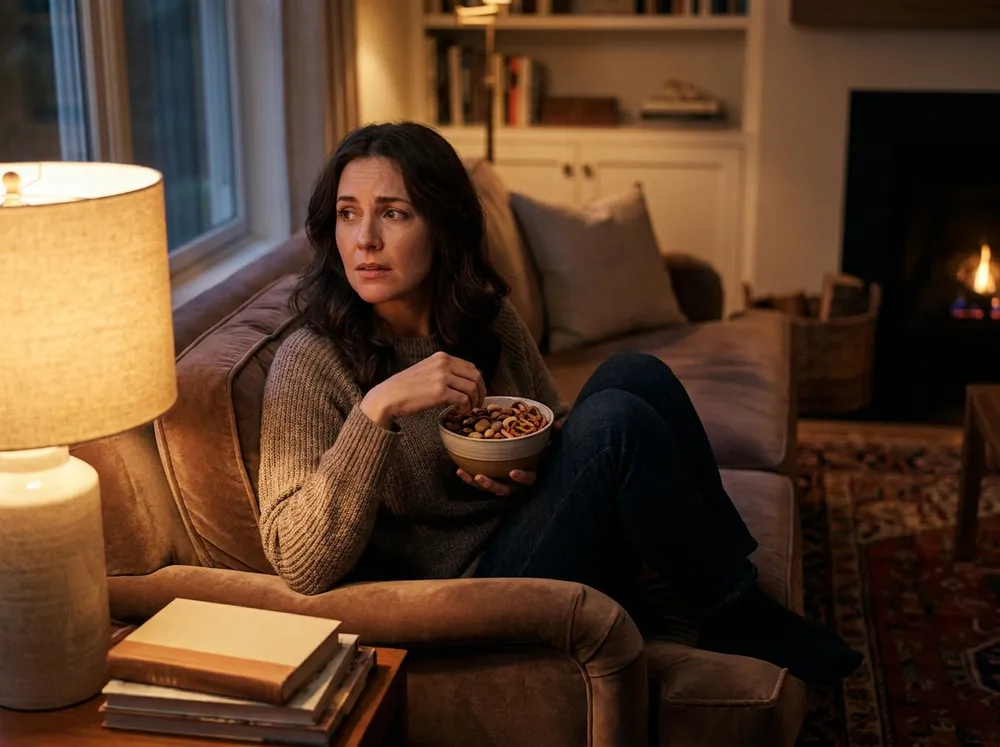
Cravings aren’t only chemical — they’re conditioned. If you always snack on the couch with a screen, your brain wires “couch + show” to “time to eat.” The cue fires automatically, no hunger required. That’s why the urge shows up the second you sit down, in the same spot, at the same time, like clockwork.
 9
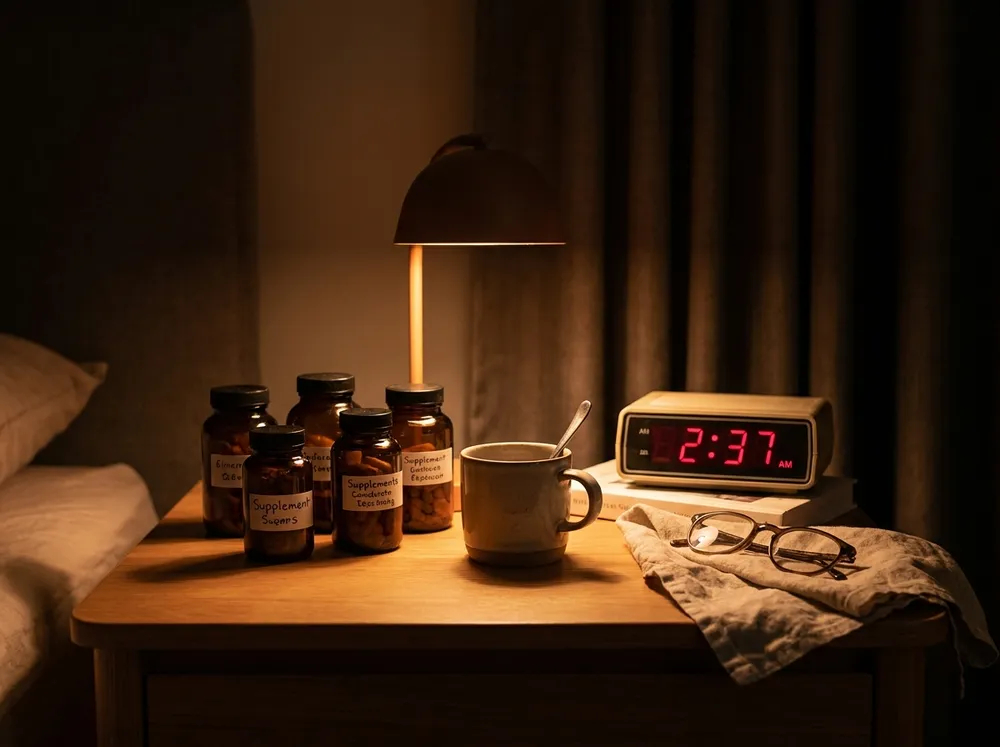
9 And everything you’ve tried fails at exactly 9 p.m.
Here’s the trap. Caffeine pills and “fat burners” can blunt appetite — but you can’t take a stimulant at 9 p.m. without wrecking your sleep, so they’re useless for the one window that matters. Your willpower is already gone for the day. And piling on fiber alone tends to bloat before it helps. Most “solutions” are built for daytime, or for a single lever — not for the multi-front ambush that is 9 p.m.
The fix that’s actually built for 9 p.m.
One caffeine-free drink, made for the moment you struggle
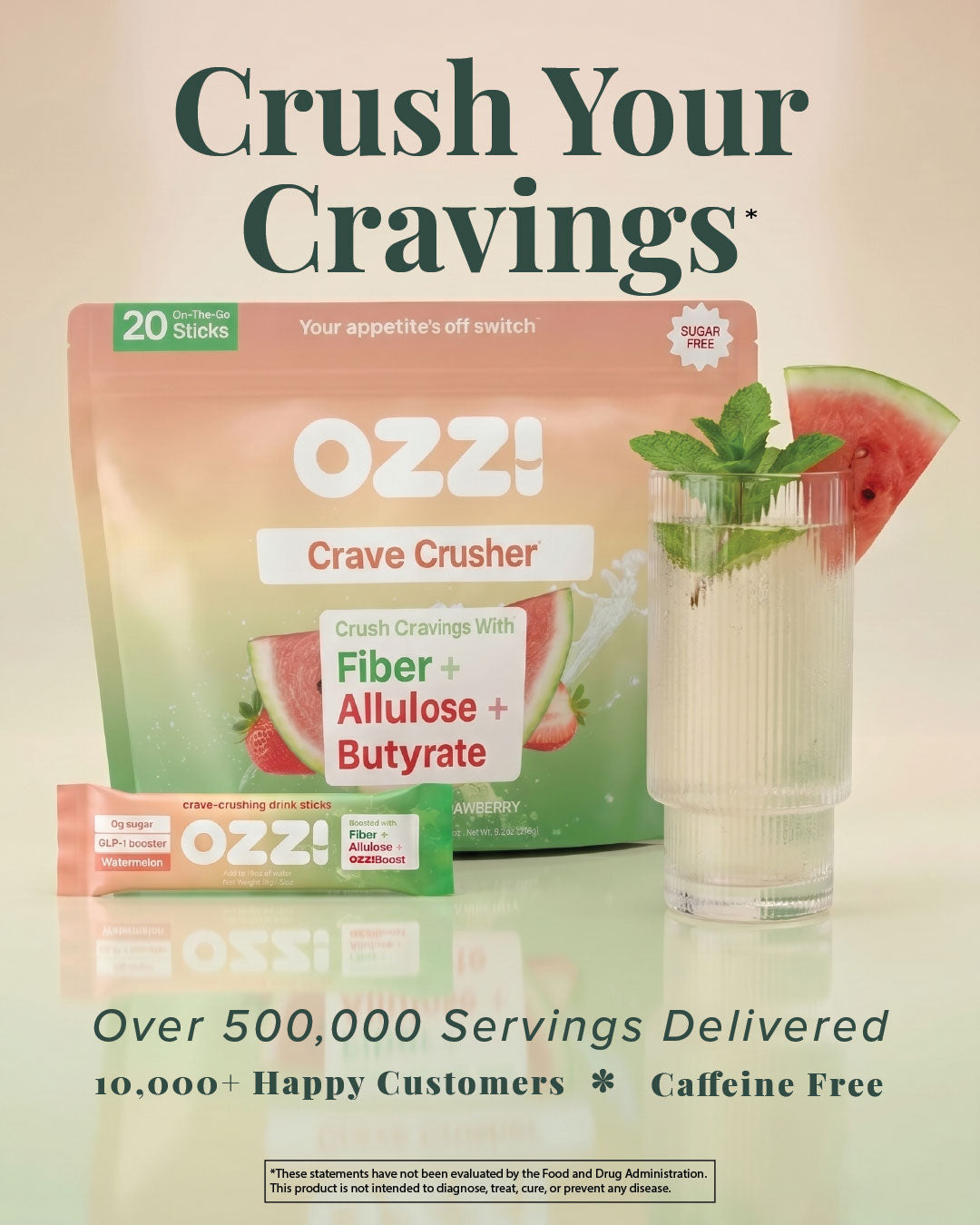
This is exactly why Ozzi exists. It’s a caffeine-free drink you make when the craving hits, so it works in the evening, when stimulant pills can’t. Instead of pulling one lever, it supports several of the pathways above at once: steadying blood sugar, supporting your natural fullness signals, and feeding the gut-hormone system that tells your brain you’re done.
- Caffeine-free, built for the after-dinner window
- Works all 7 hunger pathways, not just one
- A drink you reach for in the moment, not a 6-pill routine
- No stimulants, no crash, fully disclosed doses
🎁 Free Sample Pack with your first order, added automatically
- ✓ Ranked #1 of the 14 products we score
- ✓ 14-day challenge: use it 14 nights straight on your first bag, or it’s refunded
- ✓ 5 calories · caffeine-free · vegan-friendly
What people using Ozzi say
“I am ordering my 3rd bag and I am a BELIEVER! My sugar cravings are 100% gone and I do not blow the whole day up at 9pm anymore.”
“I can usually control my cravings until the night time hunger hits. I’ve been having 1 Ozzi drink after dinner and I have been able to stop my night time snacking.”
“OZZI is the most satisfying 5 calories of my day! No more snack attacks.”
“Ozzi definitely cuts down my evening cravings and the watermelon flavor is quite nice!”
“I drink one in the morning and one in the evening — basically the times I’m usually craving something sweet. These help me feel satisfied.”
“After a few days I was able to reduce and end night-time snacks.”
Verified 5-star reviews from Ozzi customers. Individual results vary.
Common questions
Why do I crave food at night even when I’m not hungry?
Several things stack up after dark: evening shifts in hunger and fullness hormones, a stress-driven drop in prefrontal (self-control) activity, decision fatigue, post-dinner blood-sugar dips, and learned habit cues. Together they produce an urge to eat that often has little to do with real hunger.
Is late-night snacking really that common?
Yes — roughly 60% of U.S. adults report snacking after 8 p.m. (International Food Information Council, 2021 Food & Health Survey). It’s closer to the norm than the exception.
Why doesn’t caffeine or willpower fix evening cravings?
Caffeine-based products can suppress appetite during the day, but taking a stimulant at night disrupts sleep — so they can’t serve the evening window. And willpower is largely depleted by night. A caffeine-free approach that works several hunger pathways at once fits the 9 p.m. window far better.
1. International Food Information Council (IFIC), 2021 Food & Health Survey — ~60% of U.S. adults 18–80 report snacking after 8 p.m. (foodinsight.org).
These statements have not been evaluated by the FDA. This product is not intended to diagnose, treat, cure, or prevent any disease. Educational content; not medical advice.
Stop white-knuckling it
Stop fighting your own biology at 9 p.m.
Give your body something that actually fits the moment: caffeine-free, multi-pathway, made for the after-dinner window.
Shop Ozzi Now →🎁 Free Sample Pack with your first order, added automatically