Ingredient Science
The Science of Ursolic Acid: What the Apple-Peel Compound Actually Does for Muscle and Metabolism
A database query in 2011 turned an apple-peel compound into a muscle and metabolism story. Fifteen years later, the mice are still doing most of the talking.
Ursolic acid showed up on supplement shelves the way most ingredients do: one striking paper, a lot of blog posts about that paper, and then a product.
What makes this one worth a proper look is that the original paper was genuinely good science. It just wasn't done in people.
Here's what ursolic acid is, where the muscle and metabolism claims come from, and how far the human evidence has actually moved in the fifteen years since.
What ursolic acid is
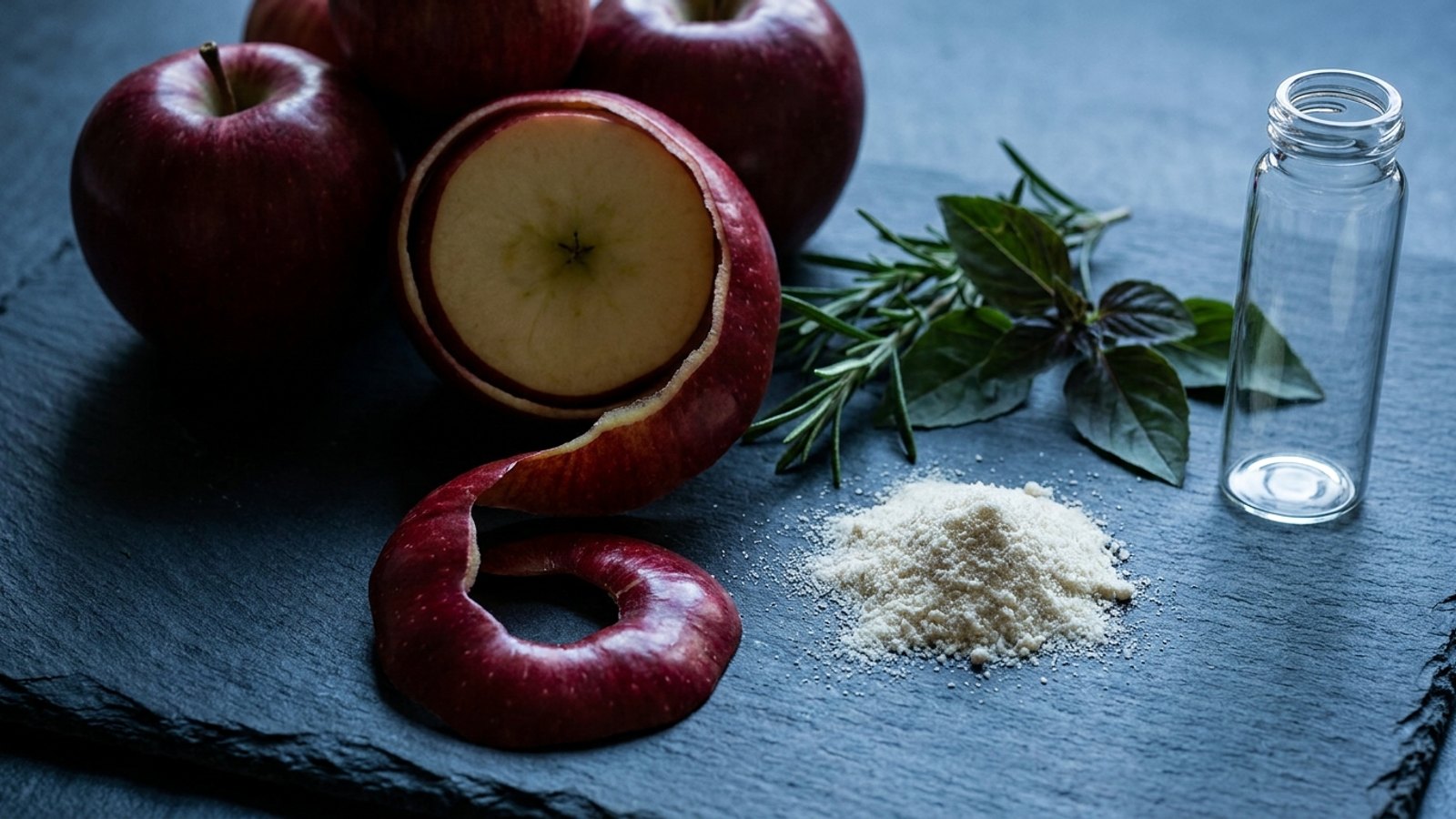
Ursolic acid is a pentacyclic triterpenoid. That's a class of waxy plant compounds built from a five-ring carbon skeleton, and this one is concentrated in the waxy coating of apple skin. It also turns up in rosemary, holy basil, thyme, and a long list of other plants.
You eat small amounts of it whenever you eat an unpeeled apple. Nobody knows the exact dietary intake, and it isn't an essential nutrient, so there's no recommended amount and no deficiency to correct.
The supplement version is an isolated extract, usually standardized to a percentage of ursolic acid and sold in capsules at doses that have nothing to do with what you'd get from fruit.
The 2011 study that started all of it
The origin story is unusual, and it's the reason researchers took the compound seriously in the first place.
A team led by Steven Kunkel at the University of Iowa wasn't looking for ursolic acid at all. They were trying to find any compound that might counteract muscle wasting. So they built two mRNA expression signatures of human muscle atrophy: 63 genes regulated by fasting in both human and mouse muscle, and 29 regulated by both fasting and spinal cord injury in human muscle (Kunkel et al., Cell Metabolism 2011).
Then they ran those signatures through the Connectivity Map, a database that matches gene-expression patterns to the compounds that produce them, and asked which compound produced the opposite pattern. Ursolic acid came back.
The human part of that study is the gene signatures. Everything that happened next was in mice.
In mice, ursolic acid reduced muscle atrophy and stimulated muscle growth. It did this by enhancing insulin and IGF-I signaling in skeletal muscle and switching off atrophy-associated genes. Along the way, the mice also showed reductions in body fat, fasting blood glucose, plasma cholesterol, and triglycerides.
That's a lot of good news from one compound, which is exactly why it traveled so fast.
The follow-up: brown fat and energy burn
The same group went back in 2012 and put ursolic acid into mice on a high-fat diet (Kunkel et al., PLoS One 2012). Muscle mass went up again, grip strength and exercise capacity went up, and the mice on ursolic acid gained less fat despite the same diet.
The interesting mechanism was brown fat. Brown adipose tissue burns energy as heat instead of storing it, and it shares a developmental origin with skeletal muscle. Ursolic acid increased it, and total energy expenditure rose with it. Glucose tolerance improved and liver fat went down.
Notice what's missing from that paragraph: any human being. This is a high-fat-diet mouse model, and mouse energy metabolism is not a small-scale version of ours. Rodents have a lot of metabolically active brown fat. Adults mostly don't.
What happened when they tried it in people
Two human trials matter here, and neither one is large.
Sixteen men, eight weeks (2014). Korean researchers put 16 healthy men through eight weeks of resistance training, with 9 taking ursolic acid capsules three times a day and 7 taking placebo (Bang et al., Korean Journal of Physiology and Pharmacology 2014). The ursolic acid group ended with lower body fat percentage, higher IGF-1, higher irisin, and higher measured strength.
Sounds like a win, and it's the study most product pages cite. But the effects were reported as changes from each group's own baseline, not as differences between the two groups. That's a real distinction. Both groups were lifting weights six days a week, which moves all of those numbers on its own. Body weight, BMI, lean body mass, glucose, and insulin didn't budge in either group.
With 9 people in the treatment arm, this study can generate a hypothesis. It can't settle one.
Twenty-six postmenopausal women, eight weeks (2021). A Brazilian team ran the better-designed trial: double-blind, randomized, placebo-controlled, 450 mg of ursolic acid per day alongside a combined exercise program (Cione et al., Clinical Nutrition ESPEN 2021).
The primary outcome was waist circumference. It came back null. So did blood pressure, fasting bloods, body composition, and physical function. Metabolic syndrome remission happened in 38.5% of participants in both groups, which tells you the exercise was doing the work.
One thing did separate: handgrip strength improved more on ursolic acid, by 1.8 kgf (95% CI 0.3 to 3.2). The authors' own conclusion was that ursolic acid didn't add anything to the metabolic picture, and that the strength signal needs longer studies.
So the sharpest human trial found nothing on the metabolic outcomes and a small, single-measure strength effect. That's the honest state of play.
The dogs are an interesting middle case
In 2024, a group including several of the original Iowa researchers ran a randomized, placebo-controlled trial of an ursolic acid supplement in older beagles with age-related muscle loss, over 60 days (Ebert et al., Animals 2024).
Muscle biopsies showed ursolic acid blocked many of the mRNA changes that drive atrophy, and the dogs improved on exercise participation and a T-maze test. It's a real, controlled result in a larger mammal with muscle biopsies as the primary outcome, which puts it a step above the mouse work.
It's still not a human trial. Several authors are affiliated with a company developing ursolic acid products, which is disclosed in the paper and worth knowing.
The absorption problem nobody markets around
Here's the part that probably explains the gap between the mouse results and the human ones.
Ursolic acid barely dissolves in water, and compounds that don't dissolve don't get absorbed well. In rats, a phospholipid-complexed version reached a peak blood level of 183.8 µg/L against 68.3 µg/L for plain ursolic acid, with total exposure over time roughly four times higher (Wang et al., Pharmaceutical Development and Technology 2020).
Same compound. Same animal. Four-fold difference in what actually reached the bloodstream, decided entirely by how it was formulated.
That cuts both ways. It means a plain ursolic acid capsule may be delivering far less than the milligrams on the label suggest. It also means formulation claims deserve scrutiny rather than trust, because the incentive to overstate them is obvious.
Some products use a chromium-complexed ursolate form and report absorption several times higher than plain ursolic acid. Those figures come from the ingredient makers, not from published human pharmacokinetic studies, so treat them as supplier claims until someone publishes the data. Even taking a four or five-fold multiplier at face value, a 10 mg dose lands in the tens of milligrams of functional exposure. The human trials used 450 mg a day. Those are different orders of magnitude, and no absorption story closes that gap on its own.
This is the same problem we ran into with chromium: what's on the label and what reaches your blood are two different numbers, and the marketing only ever quotes the first one.
Safety, and what we don't know
Ursolic acid is in food, and the human trials ran 450 mg a day for eight weeks without reported safety problems. That's reassuring as far as it goes.
It doesn't go very far. Two small trials over two months tells you almost nothing about a year of daily use, about interactions with medication, or about anyone pregnant, nursing, or managing a health condition. Nobody has established a safe upper limit.
If you're on anything that affects blood sugar or blood lipids, the mouse data alone is a good reason to mention it to a doctor before adding a concentrated extract.
Where this leaves ursolic acid
The mechanism is real and unusually well characterized. Ursolic acid does something specific to muscle insulin and IGF-I signaling, and it does it consistently across mice, rats, and dogs. That's more mechanistic grounding than most things on the shelf have.
The human evidence is two small trials. One was underpowered and reported the wrong comparison. The other was properly designed and came back null on everything except grip strength.
Our read: interesting compound, early evidence, and a long way from established. If a product's pitch leans on the 2011 mouse study without saying "mouse," that tells you something about the product. If someone quotes the 2014 human trial as proof it builds muscle in people, they either haven't read the methods or are counting on you not to.
Nothing here suggests ursolic acid is useless. It suggests we don't know yet, which is a different thing and a much less marketable one. For how we weigh evidence like this, see our methodology, and the rest of the metabolism and weight ingredient reviews.
References
- Kunkel SD, et al. mRNA expression signatures of human skeletal muscle atrophy identify a natural compound that increases muscle mass. Cell Metab. 2011;13(6):627-38. PMID 21641545
- Kunkel SD, et al. Ursolic acid increases skeletal muscle and brown fat and decreases diet-induced obesity, glucose intolerance and fatty liver disease. PLoS One. 2012;7(6):e39332. PMID 22745735
- Bang HS, et al. Ursolic acid-induced elevation of serum irisin augments muscle strength during resistance training in men. Korean J Physiol Pharmacol. 2014;18(5):441-6. PMID 25352765
- Cione JGC, et al. No additional effects of ursolic acid supplementation associated with combined exercise program on metabolic syndrome of postmenopausal women: a double-blind, randomized, placebo-controlled trial. Clin Nutr ESPEN. 2021;44:143-149. PMID 34330458
- Ebert SM, et al. Ursolic acid induces beneficial changes in skeletal muscle mRNA expression and increases exercise participation and performance in dogs with age-related muscle atrophy. Animals (Basel). 2024;14(2):186. PMID 38254356
- Wang W, et al. Preparation of ursolic acid-phospholipid complex by solvent-assisted grinding method to improve dissolution and oral bioavailability. Pharm Dev Technol. 2020;25(1):68-75. PMID 31544585
- Miro C, et al. Ursolic acid-based nutraceutical mitigates muscle atrophy and improves exercise performance in mouse model of peripheral neuropathy. Int J Mol Sci. 2025;26(11):5418. PMID 40508225
FAQ
Does ursolic acid actually build muscle in humans?
Not on the current evidence. The muscle-building results are in mice and dogs. The two human trials are small: 16 men over 8 weeks (which reported within-group changes rather than a comparison against placebo, with 9 people in the treatment arm), and 26 postmenopausal women on 450 mg/day for 8 weeks, which found no difference in body composition. The second trial did find a greater improvement in handgrip strength on ursolic acid, 1.8 kgf, which is one measure in one small study. The mechanism is well described; the human proof isn't there yet.
What dose of ursolic acid did the human studies use?
The best-designed human trial used 450 mg per day for 8 weeks (Cione et al. 2021). The 2014 trial in men used capsules three times daily. Most standalone supplements sit somewhere in that range, though the milligrams on a label and the amount that reaches your blood are not the same number: ursolic acid dissolves poorly, and rat data shows a formulated version delivered roughly four times the total blood exposure of the plain compound.
Can I just eat apples instead?
Not at anything close to study amounts. Ursolic acid is concentrated in the waxy skin, so eating apples unpeeled gets you some, but the human trials used 450 mg a day of isolated extract and you would not reach that from fruit. Eating whole apples is a good idea for other reasons, including fiber. Treat it as a nice bonus, not a dosing strategy.
Is ursolic acid safe to take daily?
The human trials ran 450 mg a day for 8 weeks without reported safety problems, and the compound occurs in food. That is a thin basis for long-term use. There is no established upper limit, no long-duration safety data, and no interaction data worth relying on. Anyone pregnant, nursing, on medication, or managing a health condition should talk to a doctor before taking a concentrated extract.
Products mentioned
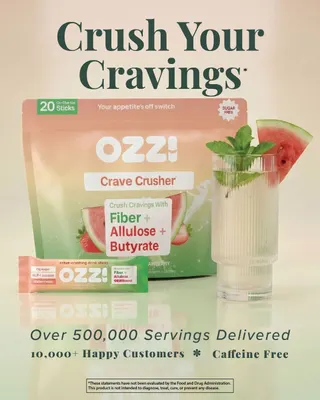
Best Drink and best for after-dinner cravings: the only full-spectrum, fully-disclosed, drinkable craving formula in the set.
Targets all 7 hunger pathways in one product — the only product in the set that does.
Some users are sensitive to the natural butyrate smell from BIOMEnd.
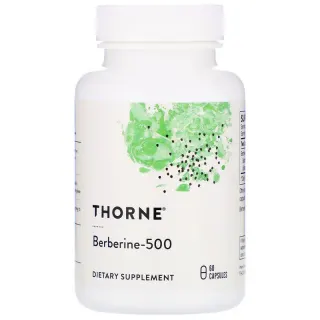
Thorne Berberine (1,000 mg)
Thorne · capsuleWell-evidenced berberine for metabolic support — but the effective dose is rough on a lot of stomachs.
Berberine has real human RCT evidence for glucose and lipid markers.
Berberine commonly causes GI distress — cramping, diarrhea, constipation — and at the 1,000 mg+ effective dose it is hard for many people to tolerate.

Supergut GLP-1 Daily Support
Supergut · powderA drinkable, gut-first option — but it leans on a proprietary fiber blend and a heavy fiber load.
Drinkable and caffeine-free.
Individual fiber doses are hidden inside a proprietary blend.

Leanbean
Ultimate Life Ltd · capsuleA maximal glucomannan dose — which is also its risk: top-of-range fiber means you must take it carefully with plenty of water.
Glucomannan dosed at the full 3 g/day EFSA satiety level, fully disclosed.
At 3 g/day, glucomannan sits at the very top of the studied range — large glucomannan doses carry a documented risk of throat, esophageal, or GI blockage if not taken with enough water.