Supplement Safety
5-HTP and Saffron for Cravings: The Serotonin Risk If You're on an SSRI
Two of the buzziest "natural" appetite ingredients both nudge serotonin — the same system many antidepressants act on. Here's the overlap worth understanding before you stack them.
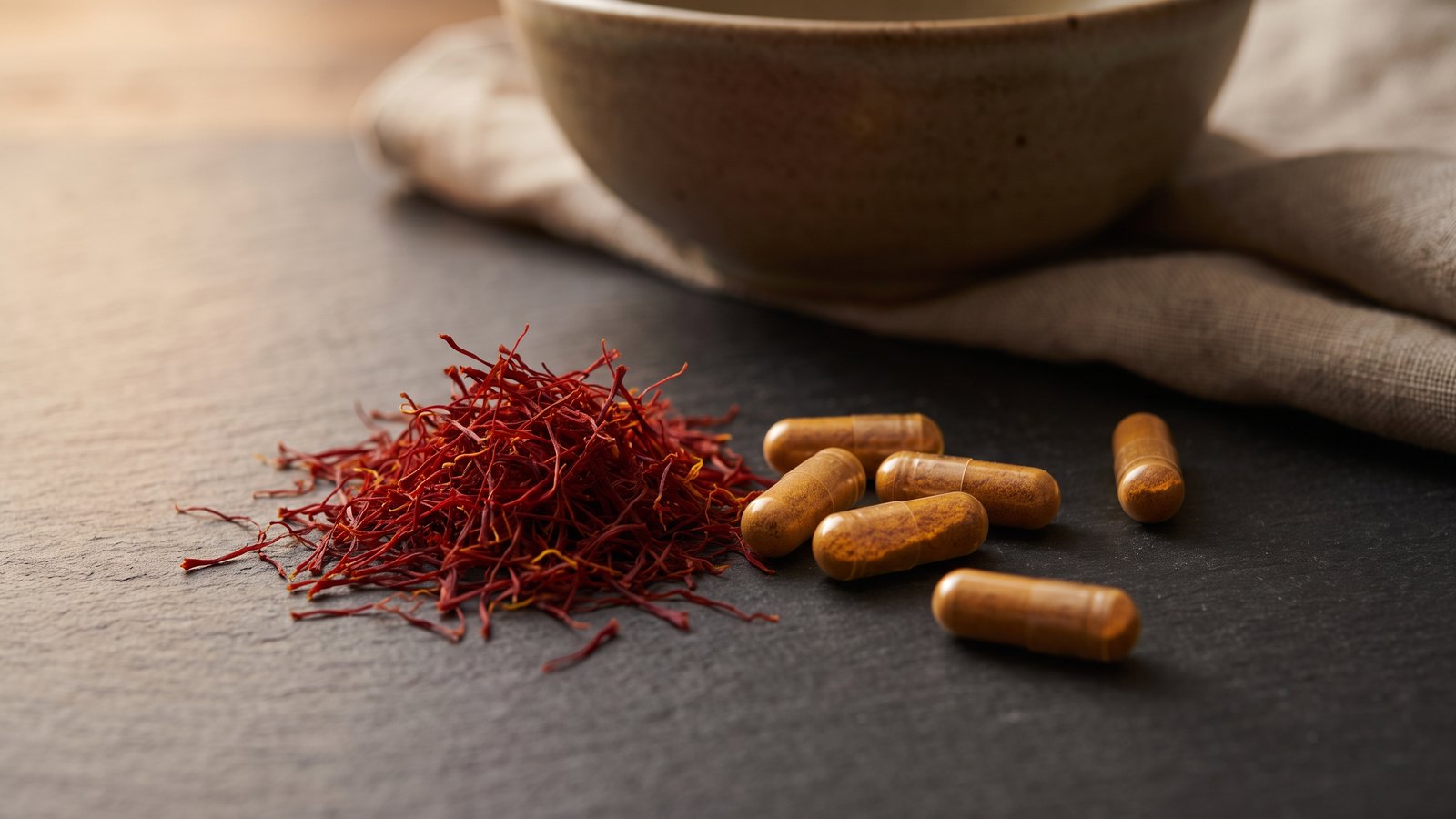
Two ingredients keep showing up in "natural" appetite and craving products right now: 5-HTP and saffron. Both have a real story for satiety. Both also happen to work on the same brain chemical, serotonin, that a lot of common antidepressants act on.
That overlap is the whole reason this piece exists. If you take an SSRI or SNRI and you're eyeing a craving supplement, the ingredient list matters more than the marketing.
This isn't medical advice, and it's not a reason to panic. It's the context your prescriber would want you to have before you stack two serotonin-active things on top of each other.
A lot of people are on the drugs this interacts with
This isn't a niche concern. During 2015 to 2018, 13.2% of US adults reported taking an antidepressant in the past 30 days, and use ran much higher in women (17.7%) than men (8.4%), per the CDC's National Center for Health Statistics (NCHS Data Brief No. 377).
So roughly 1 in 8 adults, and closer to 1 in 6 women, is walking around on a serotonergic medication. Those are exactly the people who reach for appetite and mood supplements. The two groups overlap a lot.
What 5-HTP actually is
5-HTP (5-hydroxytryptophan) is the direct chemical step right before serotonin. Your body normally makes serotonin from the amino acid tryptophan in two stages, and the first stage is the slow, tightly controlled one.
Supplemental 5-HTP skips that first gate. It's the finished precursor, usually extracted from the seeds of an African plant called Griffonia simplicifolia, so it feeds serotonin production more directly than food does.
The appetite angle is real but modest. In two trials in overweight women, a sublingual 5-HTP spray raised reported satiety versus placebo over 8 weeks (Rondanelli et al., Int J Obes, 2009; PubMed), and a follow-up tied that satiety effect to how much 5-HTP was actually absorbed (Rondanelli et al., Eat Weight Disord, 2012; PubMed). Serotonin is part of how the brain reads fullness, which is why nudging it can take the edge off snacking.
Here's the catch. The same mechanism that may support satiety, more serotonin activity, is the mechanism the interaction warning is about. You can't get one without the other.
What saffron is doing
Saffron is the red stigma of the Crocus sativus flower, and its two headline compounds are crocin and safranal. It's been studied mostly for mood, and the appetite data is smaller but interesting.
In a randomized placebo-controlled study, a standardized saffron extract at 176.5 mg per day reduced snacking frequency and produced a bit more weight loss than placebo in mildly overweight women over 8 weeks (Gout et al., Nutr Res, 2010; PubMed). That study is why saffron gets marketed for "emotional eating."
The reason it lands in this article: saffron is serotonergic too. A review of its chemistry describes crocin and safranal acting through monoamine reuptake inhibition (the same broad lever SSRIs pull), plus NMDA and GABA effects (Matraszek-Gawron et al., Pharmaceuticals, 2022; PubMed). So saffron isn't just a flavor sitting in a capsule. It's nudging the same system.
You'll see a branded saffron extract on the label of some appetite and GLP-1 products (one standardized saffron marketed for emotional-eating shows up in a popular GLP-1 daily supplement, for example). The brand's own positioning leans on the mood-and-snacking link. We can't verify any given product's dose does what the isolated-ingredient studies did, so read those labels with that gap in mind.
Serotonin syndrome, in plain terms
Serotonin syndrome is what happens when there's too much serotonin activity in the nervous system at once. Classic descriptions call it a triad: altered mental status, autonomic problems (things like fast heart rate, sweating, high temperature), and neuromuscular signs (tremor, twitching, overactive reflexes) (Martin, Ann Emerg Med, 1996; PubMed).
It runs from mild (jitteriness, sweating, a racing pulse) to a genuine emergency. The important part for our purposes is how it usually starts: not from one serotonergic agent, but from stacking two or more. A focused review lays out that additive mechanism and the drug classes involved, and notes it's diagnosed clinically using the Hunter criteria (Mikkelsen et al., Basic Clin Pharmacol Toxicol, 2023; PubMed).
"Two or more serotonergic agents" is precisely the situation of an SSRI plus a serotonin-active supplement.
Why the combination is the concern
An SSRI keeps serotonin hanging around longer by blocking its reuptake. 5-HTP pushes the body to make more serotonin in the first place. Saffron appears to lean on reuptake and other pathways. Line those up and you've got several hands on the same dial, all turning it the same direction.
Most documented serotonin syndrome comes from drug-drug combinations, and the supplement case reports are thinner. So I'm not going to tell you a 5-HTP capsule with your SSRI guarantees a problem, because the honest evidence doesn't support that certainty.
What the pharmacology does support is caution. There's no clean "safe below X milligrams" line for stacking serotonergic agents, because serotonin syndrome can show up even at ordinary therapeutic doses when things add together (Mikkelsen et al., 2023). For context on how much people take: saffron appetite studies used about 176.5 mg per day, mood studies often use around 30 mg per day, and 5-HTP is commonly sold in 50 to 200 mg capsules. None of those numbers were tested alongside an antidepressant for safety.
The practical move if you're on an SSRI or SNRI
Talk to the prescriber or a pharmacist before adding 5-HTP or saffron. That's the actual answer, and it's a five-minute conversation they have all the time.
A few specifics worth saying out loud:
- Don't stop your medication to "make room" for a supplement. Stopping an antidepressant on your own carries its own risks, and no craving supplement is a substitute for prescribed treatment.
- Read the full ingredient panel, not the front of the box. 5-HTP and saffron hide inside blends with names like "mood and appetite support." Griffonia simplicifolia on a label means 5-HTP.
- Know the early warning signs. Agitation, heavy sweating, shivering, tremor, a racing heart, or diarrhea coming on after you start a new supplement are reasons to stop and seek medical advice promptly.
- Watch the "natural means gentle" assumption. A serotonergic supplement is still serotonergic. Plant origin doesn't cancel the pharmacology.
If you're not on any serotonergic medication, this specific interaction isn't your issue, and these ingredients are generally studied as well tolerated at the doses above. The warning is really for that 1-in-8 (and 1-in-6 women) group already taking something that works on serotonin.
Where this leaves the craving question
Serotonin is a legitimate lever for appetite. That's not the debate. The point is that it's the same lever a big chunk of the population is already pulling with a prescription, and pulling it twice is where the risk lives.
If serotonin is off the table for you, plenty of craving approaches don't touch it at all, from viscous fiber for fullness to gut-hormone and blood-sugar pathways. Our appetite-suppressant breakdown and our scoring methodology walk through those without the serotonin overlap. The best craving tool is the one you can take safely alongside everything else you're already on.
References
- Brody DJ, Gu Q. Antidepressant Use Among Adults: United States, 2015-2018. NCHS Data Brief No. 377. National Center for Health Statistics, 2020. CDC/NCHS
- Martin TG. Serotonin syndrome. Ann Emerg Med. 1996. PubMed
- Mikkelsen N, Damkier P, Pedersen SA. Serotonin syndrome - A focused review. Basic Clin Pharmacol Toxicol. 2023. PubMed
- Matraszek-Gawron R, Chwil M, Terlecki K, Skoczylas MM. Current Knowledge of the Antidepressant Activity of Chemical Compounds from Crocus sativus L. Pharmaceuticals (Basel). 2022. PubMed
- Gout B, Bourges C, Paineau-Dubreuil S. Satiereal, a Crocus sativus L extract, reduces snacking and increases satiety in a randomized placebo-controlled study of mildly overweight, healthy women. Nutr Res. 2010. PubMed
- Rondanelli M, Klersy C, Iadarola P, Monteferrario F, Opizzi A. Satiety and amino-acid profile in overweight women after a new treatment using a natural plant extract sublingual spray formulation. Int J Obes (Lond). 2009. PubMed
- Rondanelli M, Opizzi A, Faliva M, et al. Relationship between the absorption of 5-hydroxytryptophan from Griffonia simplicifolia extract and the effect on satiety in overweight females after oral spray administration. Eat Weight Disord. 2012. PubMed
FAQ
Can I take 5-HTP or saffron if I'm on an SSRI?
Ask your prescriber or pharmacist first. Both 5-HTP and saffron act on serotonin, the same system SSRIs and SNRIs work on, and stacking serotonergic agents is what raises the risk of serotonin syndrome. There's no established safe combined dose, so it's a conversation to have before you start, not after.
Isn't saffron just a spice? How can it interact with medication?
The active compounds in saffron, crocin and safranal, have been shown to act on serotonin pathways (including monoamine reuptake), which is also why it's studied for mood. Plant origin doesn't remove the pharmacology, so a standardized saffron extract can still add to an existing serotonergic load.
What are the warning signs of too much serotonin?
Classic signs are a mix of agitation or confusion, autonomic changes like sweating, fast heart rate and high temperature, and neuromuscular signs like tremor, shivering, or twitching. If these come on after starting a new supplement, stop it and seek medical advice promptly. Severe cases are a medical emergency.
If serotonin is risky for me, what else helps with cravings?
Plenty of craving approaches don't touch serotonin at all, such as viscous fiber for stomach fullness, and gut-hormone or blood-sugar pathways. These can be used without the SSRI overlap. The right pick is the one that fits safely alongside your current medications.
Products mentioned
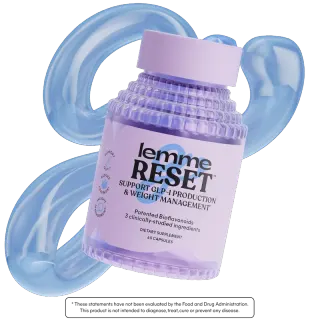
Lemme GLP-1 Daily (Lemme Reset)
Lemme · capsuleThe most transparent standalone GLP-1 capsule: fully-disclosed branded actives in a simple once-daily pill, though it covers fewer hunger pathways than the Ozzi capsule.
Fully disclosed, standardized branded actives (no proprietary blend).
No published trial on the finished three-ingredient combination.
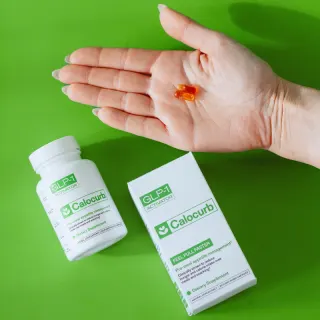
Calocurb GLP-1 Activator
Calocurb · capsuleThe best-evidenced single-mechanism appetite trigger — clinically interesting, but premium-priced and a pre-meal, short-window tool rather than all-day support.
Amarasate is one of the most directly studied appetite ingredients — multiple human RCTs, dosed on-label at 250 mg.
Acute, short-window effect: a pre-meal tool (up to 4 capsules/day), not all-day craving support.
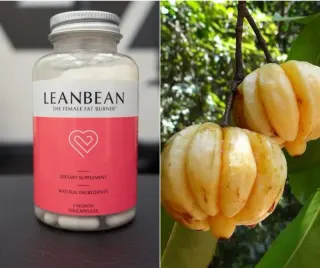
Leanbean
Ultimate Life Ltd · capsuleA maximal glucomannan dose — which is also its risk: top-of-range fiber means you must take it carefully with plenty of water.
Glucomannan dosed at the full 3 g/day EFSA satiety level, fully disclosed.
At 3 g/day, glucomannan sits at the very top of the studied range — large glucomannan doses carry a documented risk of throat, esophageal, or GI blockage if not taken with enough water.