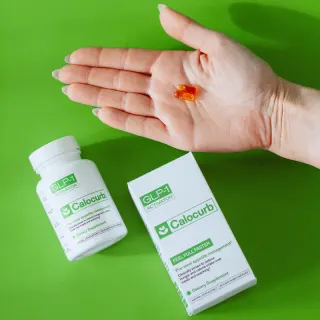
Calocurb GLP-1 Activator
by Calocurb · capsule ·
The best-evidenced single-mechanism appetite trigger — clinically interesting, but premium-priced and a pre-meal, short-window tool rather than all-day support.
- Format
- capsule Pill
- Best price
- $1.70 per serving
- Pathways
- 1 hunger dimensions
- Headline dose
- 250 mg NZ Hops Flower Extract
- Caffeine
- Caffeine-free evening-friendly
- Bloat risk
- Low Bitter extract, no fiber
1/7 hunger pathways
- GLP-1 / gut-hormone Amarasate
The short version
Calocurb is the best-evidenced single-ingredient appetite product we track, built on a bitter hops extract with randomized human trials measuring hunger and food intake. It's worth buying if you want a caffeine-free pre-meal tool and you're honest about the protocol: the trial that weighed the food used 500 mg, which is the brand's full 4-capsule day at about $4.00. It isn't all-day craving support, and one independent trial at the serving dose found no effect.
How it scores
Every score is derived from publicly verifiable facts. See the full methodology and Value Index formula.
Ingredients & doses
| Ingredient | Dose | Pathway | Notes |
|---|---|---|---|
| NZ Hops Flower Extract Amarasate | 250 mg | GLP-1 / gut-hormone | 250 mg per 2-capsule serving — the on-label dose used in the human trials. A patented bitter hops-flower extract bred by Plant & Food Research (New Zealand); Calocurb is essentially the only brand built on it. |
| Rosemary leaf extract | Undisclosed proprietary blend | — | Listed but dose not disclosed. |
How it claims to work
Calocurb is built around Amarasate, a patented bitter hops-flower extract. Its bitter compounds activate bitter taste receptors (TAS2Rs) in the gut, triggering release of the appetite-regulating hormones GLP-1, CCK, and PYY — the same gut-hormone axis the GLP-1 conversation centers on — to blunt hunger before a meal.
The evidence
Amarasate has more direct human appetite-trial data than most ingredients in this category: randomized, double-blind, crossover studies report roughly 10–30% lower hunger and about 18% lower calorie intake at a meal. Two honest caveats — the effect is acute (a 1–2 hour pre-meal window, not all-day support), and most of the strongest research is funded by or connected to the ingredient’s owner (Plant & Food Research / Calocurb).
Strengths
- Amarasate is one of the most directly studied appetite ingredients — multiple human RCTs, dosed on-label at 250 mg.
- Triggers the GLP-1 / CCK / PYY gut-hormone axis, caffeine-free.
- Money-back guarantee on first orders.
Watch-outs
- Acute, short-window effect: a pre-meal tool (up to 4 capsules/day), not all-day craving support.
- Most of the strongest evidence is sponsored by the ingredient’s owner.
- A single-source patented botanical — one of the priciest and most obscure options, and a single mechanism.
Price & value
Taste & format: Tasteless delayed-release capsules taken ~1 hour before meals (up to 4/day), so the bitter hops never hit the palate; the multiple pre-meal doses require routine discipline.
Calocurb GLP-1 Activator: the full review
What it is and who it's for
Calocurb GLP-1 Activator is a delayed-release capsule built on one active: Amarasate, a patented bitter extract from New Zealand hop flowers. The idea is a "bitter brake." Bitter compounds pass your tongue, reach the intestine, and bind bitter taste receptors (TAS2Rs) on gut hormone cells, which then release GLP-1, CCK and PYY, the signals your body uses to register that a meal has arrived.
It's caffeine-free and taken about an hour before meals, so a pre-dinner dose is on-label. That makes it one of the few products in the appetite suppressant category that works with the evening window rather than against it.
It suits people who want the most directly studied appetite ingredient available and can keep a pre-meal routine. It's a poor fit if you want something you take once and forget, or if you're expecting all-day support: the effect in the trials is acute, in a 1 to 2 hour window before eating.
What the label says
The label lists 250 mg of Amarasate per 2-capsule serving, plus rosemary leaf extract at an undisclosed amount. There's no proprietary blend around the active, which is more than much of this aisle manages. A bottle holds 90 capsules.
| Label line | Listed amount | Studied doses |
|---|---|---|
| Amarasate hops extract | 250 mg per 2 capsules | 100 to 250 mg twice during a fast (hunger ratings); 500 mg single dose (food intake) |
| Rosemary leaf extract | Not disclosed | No trial to compare against |
The routine matters and most reviews gloss over it. You ramp over 5 days, and the full protocol is 2 capsules twice daily, up to 4 a day, an hour before meals on an empty stomach. At 4 capsules a day a 90-capsule bottle lasts 22 or 23 days. The 250 mg serving matches the fasting trials; the 500 mg that cut food intake matches the full 4-capsule day. Our Amarasate science piece walks through each dose.
What the evidence shows
Four randomized, double-blind human trials, which is more than almost anything else on this shelf. The strongest ran in the American Journal of Clinical Nutrition in 2022: 19 healthy-weight men took placebo or 500 mg of hop extract in delayed-release or quick-release capsules, then ate freely at lunch and an afternoon snack. Intake fell from 5,383 kJ on placebo to 4,473 kJ (gastric) and 4,439 kJ (duodenal), roughly 17%, or a bit over 200 calories. CCK, GLP-1 and PYY all rose after meals on both hop treatments.
Two details deserve equal billing. Subjective appetite didn't change: the men ate less without reporting they felt less hungry. And pre-lunch ghrelin went up on treatment, the opposite of what a tidy story would want.
Two fasting trials support the on-label dose, on ratings rather than intake. In 30 men doing a 24-hour water fast, 100 mg or 250 mg twice during the fast cut hunger by more than 10% over the final 6 hours. A 2024 trial in 30 women at 125 mg and 250 mg found significantly lower appetite and lower food cravings versus placebo.
Then an outside group tested it and found nothing. A University of Adelaide team delivered the extract by tube into the duodenum (100 or 250 mg) or stomach (250 mg) and measured hormones, appetite and buffet intake. The 250 mg duodenal dose produced a modest, transient rise in pyloric pressure and PYY. No effect on CCK, appetite or energy intake at any dose or route. Put the papers together and a dose story emerges: 500 mg did something, 250 mg mostly didn't. The three positive trials all list authors from the institute that developed the ingredient; the null trial was independent.
Side effects, tolerability and who should skip it
Side effects were mostly mild but not zero. The 2022 intake trial reported small but statistically significant increases in nausea, bloating and abdominal discomfort, with adverse GI symptoms rated mild to severe in the quick-release gastric arm specifically. The fasting trial in women logged loose stools in two participants on the high dose and heartburn in one.
That pattern makes sense. A concentrated bitter compound hitting the stomach lining is more likely to cause trouble than one released further down, which is why the delayed-release capsule is part of the design rather than a marketing detail.
All the human data is short-term; the longest trial followed people for 3 weeks of intermittent fasting days. There's no long-term data on daily use and no trial tracking body weight over months. Skip it, or ask your doctor first, if you're pregnant, nursing, on medication, or managing a health condition.
Price and value
$89.99 for 90 capsules, or $76.49 on subscription. First orders carry a 30-day money-back guarantee. What that costs per day depends on which dose you take, and the per-serving number flatters it.
- One 2-capsule serving before your worst meal: 45 days a bottle, about $2.00 a day. Cheaper than PhenQ, and the dose the independent trial found nothing at.
- Full 4-capsule protocol: 22 or 23 days a bottle, about $4.00 a day, or $3.40 on subscription. The only version that reaches the 500 mg used in the food-intake trial.
On our rubric it scores 16 out of 25: 2 on pathway coverage, 4 on ingredients, 4 on science, 3 on value, 3 on format. That's 4th in the caffeine-free field and 2nd among natural GLP-1 supplements, with the single-mechanism, short-window design doing most of the damage to the score.
How to take it and what to expect
Ramp over 5 days, then 2 capsules about an hour before a meal on an empty stomach, up to 4 capsules a day. The capsules are tasteless, so the bitterness never reaches your palate. Pick the meal you most overeat and dose before that one if you're running the single-serving budget.
Expect a pre-meal effect, not an all-day one. In the trials the measurable change was eating around 200 fewer calories in a single afternoon at 500 mg, and lower hunger ratings during a fast at 250 mg. Nobody in the intake trial reported feeling fuller, so don't judge it by sensation alone. And no trial has measured what it does to body weight over months.
How it compares
Against Evolv GLP-1, the other premium single-active product aimed at the same gut-hormone pathway, Calocurb wins on evidence and it isn't close: 4 published, registered human trials against an unpublished interim readout. It also costs less and refunds first orders. See Evolv vs Calocurb.
Against PhenQ, Calocurb shows its number and PhenQ doesn't, and Calocurb can be taken before dinner while PhenQ's caffeine rules it out after 3 p.m. We ran that one in Calocurb vs PhenQ. For how we weigh a split evidence file like this one, read our methodology.
Frequently asked questions
Does Calocurb work?
The evidence is split. Three randomized trials found less hunger during a fast at 100 to 250 mg and about 17% lower food intake at a single 500 mg dose, with GLP-1, CCK and PYY rising. One independent trial delivering 100 to 250 mg straight into the gut found no effect on appetite or intake. The 500 mg result matches the full 4-capsule day, not a single serving.
What are the side effects of Calocurb?
Mild digestive ones in the trials: nausea, bloating and abdominal discomfort in the intake study, worse in the quick-release stomach arm, plus loose stools in two women and heartburn in one in the fasting trial. Calocurb's delayed-release capsule is designed to limit that. No long-term daily-use data exists.
How long does Calocurb take to work?
It's an acute, pre-meal tool. You take it about an hour before eating and the trials measured effects in the 1 to 2 hour window after dosing. It isn't designed as all-day craving support, and no trial has tracked results over months.
Does Calocurb have caffeine?
No. It's caffeine-free, which is why a pre-dinner dose is on-label and why it fits the evening craving window better than stimulant products.
How much does Calocurb cost?
$89.99 for 90 capsules, or $76.49 on subscription, with a 30-day money-back guarantee on first orders. That's about $2.00 a day at one serving, or about $4.00 a day ($3.40 subscribed) at the full 4-capsule protocol that matches the food-intake trial dose.
How do you take Calocurb?
Ramp up over 5 days, then 2 capsules about an hour before meals on an empty stomach, up to 4 capsules a day. At 4 a day a bottle lasts 22 or 23 days.
References
- Walker EG, Lo KR, Pahl MC, et al. An extract of hops (Humulus lupulus L.) modulates gut peptide hormone secretion and reduces energy intake in healthy-weight men: a randomized, crossover clinical trial. Am J Clin Nutr. 2022;115(3):925-940. PubMed PMID 35102364
- Walker E, Lo K, Tham S, et al. New Zealand Bitter Hops Extract Reduces Hunger During a 24 h Water Only Fast. Nutrients. 2019;11(11):2754. PubMed PMID 31766216
- Walker E, Lo K, Gopal P. Gastrointestinal delivery of bitter hop extract reduces appetite and food cravings in healthy adult women undergoing acute fasting. Obes Pillars. 2024;11:100117. PubMed PMID 39071168
- Bitarafan V, Fitzgerald PCE, Poppitt SD, Ingram JR, Feinle-Bisset C. Effects of intraduodenal or intragastric administration of a bitter hop extract (Humulus lupulus L.), on upper gut motility, gut hormone secretion and energy intake in healthy-weight men. Appetite. 2023;184:106490. PubMed PMID 36781111
- Lela L, et al. Humulus lupulus L.: Evaluation of Phytochemical Profile and Activation of Bitter Taste Receptors to Regulate Appetite and Satiety in Intestinal Secretin Tumor Cell Line (STC-1 Cells). Mol Nutr Food Res. 2024;68(21):e2400559. PubMed PMID 39388530
This review is for education only and isn't medical advice. Product details are as the brand or its retailers list them. Talk to your doctor before starting any supplement.