Buyer's Guide
Best Stimulant-Free Appetite Suppressant: The Caffeine-Free Field, Ranked
The stimulant does almost nothing for hunger and 71.8% of supplement heart-rate emergencies trace back to weight-loss and energy products. Six caffeine-free options, one rubric, cons included.
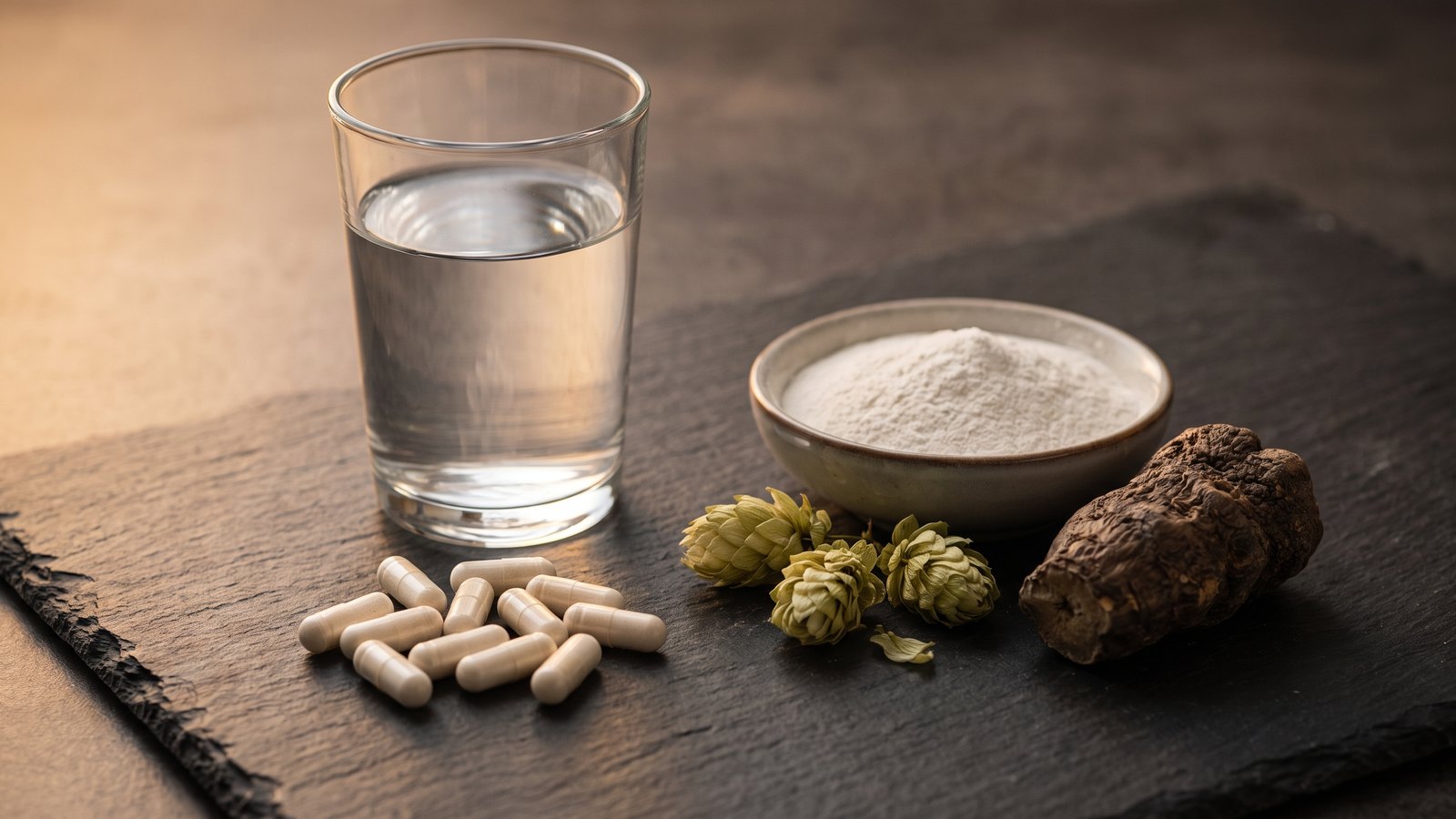
Type "stimulant free appetite suppressant" into Google and you get a wall of product pages using the same three words, most of them selling a blend that doesn't tell you the doses. So let's do the term first, then the field, then the pick.
Stimulant-free means no caffeine, no synephrine or bitter orange, no yohimbine, no green tea extract dosed for thermogenics. It's a formulation decision, not a marketing one, and it changes both what a product can do and when you can take it. For the wider set of label checks that apply across this whole category, start with our buyer's guide to natural GLP-1 supplements, then come back here for the caffeine-free field specifically.
Why people search for this
Three reasons, and they're all practical.
The first is timing. Most of the snacking people want help with happens after dinner, which is exactly when a stimulant is the worst possible thing to swallow. We wrote about the research behind late-night eating and the pattern is consistent: the craving window and the caffeine window are on a collision course.
The second is tolerance. Some people get palpitations, jitter or reflux from 200 mg of caffeine and have no interest in finding out what 400 mg does.
The third is arithmetic. If you already drink two coffees, a pre-workout with 300 mg on top is not a supplement decision, it's a dosing problem.
What you actually give up by dropping the stimulant
Less than the fat-burner aisle implies. Caffeine's reputation as an appetite suppressant is much larger than its data.
In a double-blind crossover at Purdue and Buffalo, 50 adults got 0, 1 or 3 mg/kg of caffeine 30 minutes before an all-you-can-eat breakfast. The 1 mg/kg dose cut lab intake by roughly 10%. The 3 mg/kg dose did nothing. Out of the lab, across the rest of the day, neither dose changed total intake or appetite ratings at all. The authors' own conclusion was that the effects are weak and transient and "do not support caffeine as an effective appetite suppressant" (Panek-Shirley and colleagues, Journal of the Academy of Nutrition and Dietetics 2018).
A separate randomised crossover tested coffee, decaf, caffeine alone and caffeine with decaf against placebo, tracking appetite, gastric emptying, plasma glucose and an ad libitum lunch. Nothing moved. Energy intake ranged from 2016 to 2287 kJ across four conditions with no significant difference between any of them (Schubert and colleagues, Appetite 2014). We went through the rest of this evidence in our look at whether caffeine really controls cravings, and the short version is that it buys you alertness, not fullness.
What you do give up is the felt effect. Stimulants make you notice something is happening. Fiber and gut-hormone ingredients mostly don't, which is a genuine downside for adherence even when the mechanism is better.
What you avoid
This is the part the category doesn't advertise. CDC and FDA researchers used ten years of surveillance data from 63 emergency departments to estimate that dietary supplements send about 23,000 people to US emergency departments every year. Weight-loss and energy products accounted for 71.8% of all supplement-related adverse events involving palpitations, chest pain or a racing heart, and 58% of those cases were adults aged 20 to 34 (Geller and colleagues, New England Journal of Medicine 2015).
That's the single strongest argument for the caffeine-free shelf, and it has nothing to do with efficacy.
Sleep is the quieter cost. A dose of caffeine equal to a double espresso taken three hours before bed delayed the circadian melatonin rhythm by about 40 minutes, roughly half the shift produced by three hours of bright light (Burke and colleagues, Science Translational Medicine 2015). Ten days of 3 x 150 mg daily, all of it during the day, still delayed REM sleep and left men reporting harder wake-ups (Weibel and colleagues, Journal of Biological Rhythms 2021). Short sleep is one of the more reliable predictors of eating more the next day, so a stimulant taken to eat less can work against you 16 hours later.
A note on "stimulant free fat burner"
People search that phrase constantly and we're not going to pretend it describes a real product class. A fat burner claims to raise energy expenditure. Strip the stimulant out and there's almost nothing left in the supplement toolbox that does that at a meaningful size in humans.
What a caffeine-free product can honestly do is help with intake: support fullness, steady blood sugar, and give the gut hormones that signal satiety something to work with. That's appetite control, and it's a smaller, more defensible claim. If a caffeine-free bottle promises thermogenesis, you're reading marketing.
Worth knowing that the phrase has a paper trail. The term "stimulant-free dietary supplement" enters the literature with a 2003 six-week study of a glucomannan, chitosan, fenugreek and gymnema blend in 24 obese adults, which reported 2.3 kg lost versus none on placebo. It's also 24 people, unblinded to the funding in a real sense: the paper's own disclosure notes the first author owned the company that made the supplement (Woodgate and Conquer, Current Therapeutic Research 2003). Twenty-three years later, that study still gets cited as proof. It shouldn't be.
How we rank
Five axes, 1 to 5 each, 25 total, the same rubric for every product on this site and spelled out on our methodology page: hunger-pathway coverage, ingredient transparency, mechanism and evidence, price and value, and format and timing.
Two things that are not on the rubric. We don't demand a blood GLP-1 measurement for a finished product, because circulating GLP-1 is broken down within minutes and commercial assays for it disagree badly with each other (Bak and colleagues, Diabetes, Obesity and Metabolism 2014). Absence of that number is a fact about measurement, not a verdict on a formula. And we don't score marketing.
Ozzi sponsors this site. It wins below, we list its real downsides alongside everyone else's, and the rubric is public so you can reweight it and get a different answer.
The ranking: caffeine-free only
1. Ozzi V2 Crave Crusher, 21/25
A caffeine-free drink stick with six disclosed actives covering all seven hunger pathways we track: 8 g allulose for the glucose and energy side, 500 mg konjac glucomannan for viscous-fiber fullness, 500 mg BIOMEnd L-Lysine Butyrate on the GLP-1 and microbiome axis, African mango for leptin signaling, and a chromium complex for insulin sensitivity. Every dose is on the label, three of the actives are branded standardized forms, and nothing is hidden in a blend.
The allulose base is doing more than flavor. In a randomised crossover in 30 adults without diabetes, allulose added to a 50 g sucrose load produced a dose-dependent drop in plasma glucose at 30 minutes, significant at 7.5 g and 10 g, with a matching reduction in insulin excursion (Franchi and colleagues, BMJ Open Diabetes Research and Care 2021). A separate crossover in 30 Thai volunteers found the same dose-dependent pattern (Buranapin and colleagues, Journal of Nutritional Science and Vitaminology 2024).
Cons, honestly. There's no trial on the finished product. The individual doses are moderate by design, so if you want a maximal single ingredient this isn't it. Some people are sensitive to the natural smell of the butyrate. And at $3.25 a serving it's the priciest sticker here, only landing around $2.25 through a multi-box bundle.
It wins because it's the only caffeine-free product in the set that discloses everything, covers more than one pathway, and fits the evening window as a drink rather than a pill. Full spec and scoring.
2. Ozzi Crave Crusher Capsules, 20/25
The same formula minus the allulose base that can't fit in a capsule, so five pathways instead of seven, at $2.32 a serving. Take this one if you'd rather swallow two capsules than mix a drink. You lose the blood-sugar and sweet-satisfaction side, which for a lot of people is the half that matters most after dinner.
3. Metamucil 4-in-1 Psyllium Fiber, 17/25
One pathway, done properly, at 21 cents a serving. In two sequential double-blind crossovers, psyllium taken before breakfast and lunch cut hunger and desire to eat and raised fullness between meals, with 6.8 g giving the most consistent benefit (Brum and colleagues, Appetite 2016). A network meta-analysis of 111 randomised trials put psyllium at the top of the nutraceutical field for body weight, at -3.70 kg with moderate certainty (Shahinfar and colleagues, Pharmacological Research 2023). The evidence on psyllium at full size is the strongest single-ingredient case in this category.
It scores 2 on coverage because a fiber is a fiber. It's also a 3.4 g gel load per dose, so start low. Best value on the page by a distance.
4. Calocurb GLP-1 Activator, 16/25
250 mg of Amarasate bitter hops extract per serving, caffeine-free, taken about an hour before meals. In a crossover in 19 healthy-weight men, 500 mg of the extract cut total ad libitum energy intake from 5383 kJ to about 4450 kJ, roughly 17%, while raising GLP-1, PYY and CCK (Walker and colleagues, American Journal of Clinical Nutrition 2022). That's real human hormone data, which most of this shelf lacks.
Read the caveats though. Nineteen men. Twice the retail dose. Both arms produced measurable nausea, bloating and abdominal discomfort, with adverse GI symptoms rated mild to severe in the gastric-release arm. And most of the strongest work comes from the institute that owns the ingredient. We covered what the hops research does and doesn't show separately. Also up to four capsules a day at $2.00 a serving, which is a real routine.
5. Leanbean, 14/25
Glucomannan at the full 3 g EFSA satiety dose, fully disclosed, caffeine-free, and that's the pitch. Six capsules a day in three pre-meal doses at $2.00 a serving. The dose is also the risk: expanding viscous fiber at the top of the studied range needs a proper glass of water every time.
6. Lipozene, 12/25
1.5 g of glucomannan per serving at a dollar a day. Cheap, honest about its single ingredient, and that's where the good news stops. The 2014 meta-analysis of 8 randomised trials found no significant weight difference between glucomannan and placebo, at -0.22 kg with high heterogeneity (Onakpoya and colleagues, Journal of the American College of Nutrition 2014). A 2023 network analysis put glucomannan at -1.36 kg with low certainty. There's a real satiety case for glucomannan, but it's a fullness ingredient, not a weight-loss one, and the brand has an FTC history worth knowing about.
What you're avoiding
For contrast, the two big stimulant sellers. Hydroxycut Hardcore carries 265 mg of caffeine per 2-capsule serving, up to 530 mg a day, at 83 cents. PhenQ discloses caffeine anhydrous on the label but not the amount, and puts its signature actives inside a proprietary blend. Both are daytime-only by construction, which makes them the wrong tool for the window most people are actually asking about. We ran the caffeine-free versus stimulant comparison head to head if you want the long version.
Who should pick what
If the problem is evening cravings and you want one thing that covers more than one mechanism, the Ozzi drink. If you want the same formula in a pill, the capsules. If your budget is the constraint and you'll take it consistently before meals, psyllium is the best-evidenced 21 cents in the category. If you want the ingredient with the most direct human gut-hormone data and can live with a pre-meal routine and possible nausea, Calocurb.
All of these are structure and function tools. None of them is a drug, none replaces one, and if you're on a prescription GLP-1 or managing a diagnosed condition, that conversation belongs with your doctor. More of the field is scored on our appetite suppressant category page.
Disclosure: Ozzi sponsors Crave Crushers, and we may earn a commission on purchases made through links on this page. Rankings come from the published rubric on our methodology page, and Ozzi's downsides are listed on the same terms as every other product's.
References
- Panek-Shirley LM, DeNysschen C, O'Brien E, Temple JL. Caffeine Transiently Affects Food Intake at Breakfast. Journal of the Academy of Nutrition and Dietetics, 2018. PubMed 30033159
- Schubert MM, Grant G, Horner K, et al. Coffee for morning hunger pangs. An examination of coffee and caffeine on appetite, gastric emptying, and energy intake. Appetite, 2014. PubMed 25218717
- Geller AI, Shehab N, Weidle NJ, et al. Emergency Department Visits for Adverse Events Related to Dietary Supplements. New England Journal of Medicine, 2015. PubMed 26465986
- Burke TM, Markwald RR, McHill AW, et al. Effects of caffeine on the human circadian clock in vivo and in vitro. Science Translational Medicine, 2015. PubMed 26378246
- Weibel J, Lin YS, Landolt HP, et al. Regular Caffeine Intake Delays REM Sleep Promotion and Attenuates Sleep Quality in Healthy Men. Journal of Biological Rhythms, 2021. PubMed 34024173
- Woodgate DE, Conquer JA. Effects of a stimulant-free dietary supplement on body weight and fat loss in obese adults: a six-week exploratory study. Current Therapeutic Research, 2003. PubMed 24944372
- Franchi F, Yaranov DM, Rollini F, et al. Effects of D-allulose on glucose tolerance and insulin response to a standard oral sucrose load. BMJ Open Diabetes Research and Care, 2021. PubMed 33637605
- Buranapin S, Kosachunhanan N, Waisayanand N, et al. Effects of D-Allulose with Sucrose Beverage on Glucose Tolerance and Insulin Levels among Thai Healthy Volunteers. Journal of Nutritional Science and Vitaminology, 2024. PubMed 38945885
- Brum JM, Gibb RD, Peters JC, Mattes RD. Satiety effects of psyllium in healthy volunteers. Appetite, 2016. PubMed 27166077
- Shahinfar H, Jayedi A, Torabynasab K, et al. Comparative effects of nutraceuticals on body weight in adults with overweight or obesity: a systematic review and network meta-analysis of 111 randomized clinical trials. Pharmacological Research, 2023. PubMed 37778464
- Walker EG, Lo KR, Pahl MC, et al. An extract of hops (Humulus lupulus L.) modulates gut peptide hormone secretion and reduces energy intake in healthy-weight men. American Journal of Clinical Nutrition, 2022. PubMed 35102364
- Onakpoya I, Posadzki P, Ernst E. The efficacy of glucomannan supplementation in overweight and obesity: a systematic review and meta-analysis of randomized clinical trials. Journal of the American College of Nutrition, 2014. PubMed 24533610
- Bak MJ, Wewer Albrechtsen NJ, Pedersen J, et al. Specificity and sensitivity of commercially available assays for glucagon-like peptide-1. Diabetes, Obesity and Metabolism, 2014. PubMed 25041349
FAQ
Does a stimulant-free appetite suppressant work as well as one with caffeine?
On appetite, the caffeine isn't doing much of the work to begin with. A double-blind crossover in 50 adults found a roughly 10% cut in lab breakfast intake at 1 mg/kg of caffeine, nothing at 3 mg/kg, and no effect at all on total intake across the rest of the day. What caffeine reliably delivers is alertness. Fullness comes from fiber, gut-hormone signaling and blood-sugar stability, none of which need a stimulant.
Can I take a caffeine-free appetite suppressant at night?
That's the main reason to buy one. Caffeine-free products in this set have no timing restriction, and the evening is when most snacking actually happens. A caffeine dose equal to a double espresso three hours before bed delayed the melatonin rhythm by about 40 minutes in a controlled study, so an evening stimulant costs you sleep on top of doing little for appetite.
Is there such a thing as a stimulant-free fat burner?
Not in any meaningful sense. Raising energy expenditure is what the stimulant does. Take it out and a supplement's realistic job becomes intake: supporting fullness, steadying blood sugar, and giving satiety hormones something to respond to. If a caffeine-free bottle promises thermogenesis, treat that as marketing rather than mechanism.
Are caffeine-free options actually safer?
On the cardiovascular side, the data supports it. Ten years of US emergency-department surveillance attributed 71.8% of supplement-related adverse events involving palpitations, chest pain or a racing heart to weight-loss and energy products. Caffeine-free doesn't mean risk-free, though: viscous fibers like glucomannan need a full glass of water every dose, and bitter extracts can cause nausea and bloating.
Products mentioned
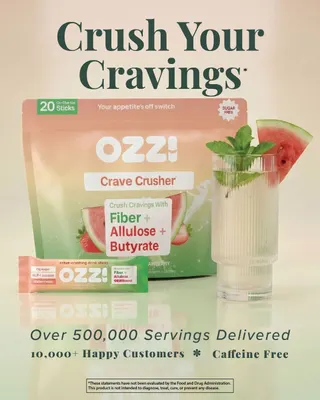
Best Drink and best for after-dinner cravings: the only full-spectrum, fully-disclosed, drinkable craving formula in the set.
Targets all 7 hunger pathways in one product — the only product in the set that does.
Some users are sensitive to the natural butyrate smell from BIOMEnd.
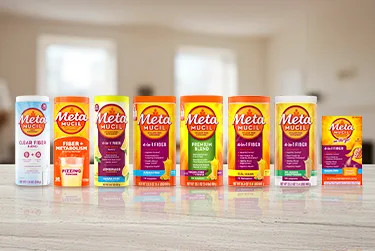
Metamucil 4-in-1 Fiber (Psyllium Husk)
Metamucil (Procter & Gamble) · powderBest Value: cheap, drinkable, and well-evidenced as a fiber — but single-pathway and a heavy gel load.
Pennies per serving — by far the cheapest in the set.
Single pathway — a fiber, not a craving formula.
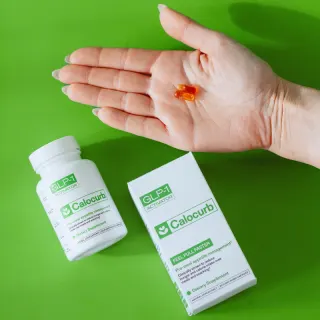
Calocurb GLP-1 Activator
Calocurb · capsuleThe best-evidenced single-mechanism appetite trigger — clinically interesting, but premium-priced and a pre-meal, short-window tool rather than all-day support.
Amarasate is one of the most directly studied appetite ingredients — multiple human RCTs, dosed on-label at 250 mg.
Acute, short-window effect: a pre-meal tool (up to 4 capsules/day), not all-day craving support.
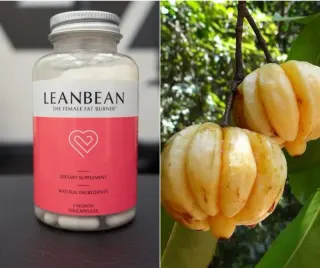
Leanbean
Ultimate Life Ltd · capsuleA maximal glucomannan dose — which is also its risk: top-of-range fiber means you must take it carefully with plenty of water.
Glucomannan dosed at the full 3 g/day EFSA satiety level, fully disclosed.
At 3 g/day, glucomannan sits at the very top of the studied range — large glucomannan doses carry a documented risk of throat, esophageal, or GI blockage if not taken with enough water.