Meal Timing
How to Stop Nighttime Snacking: What the Research Actually Supports
You were fine all day. Then it got dark. That pattern has a mechanism, and it is not a character flaw.
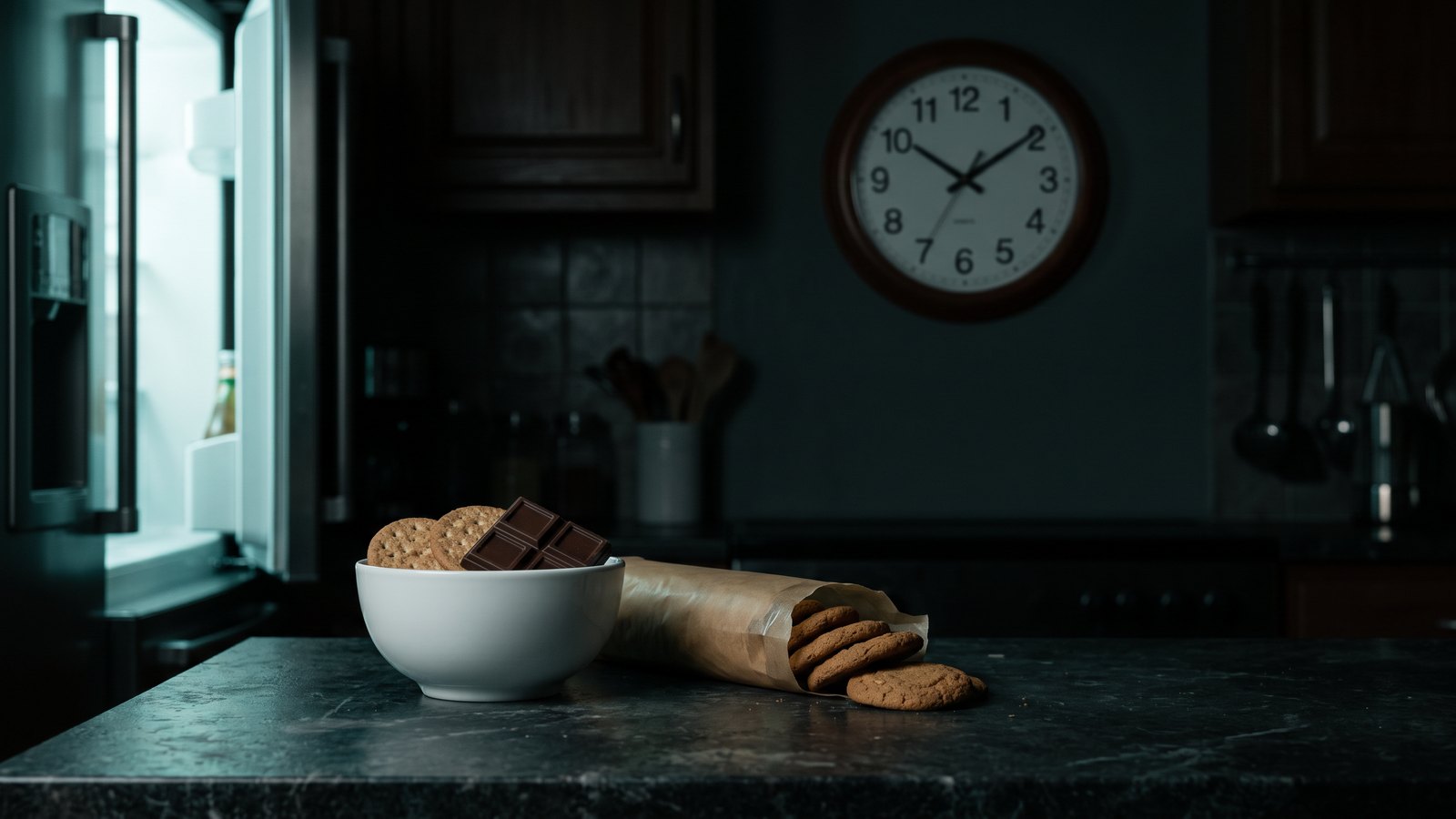
Nothing all day. Fine at breakfast, fine at lunch, fine straight through the afternoon. Then it gets dark, the house goes quiet, and by 9:30 you have eaten more standing up than you did sitting at the table.
Most people file that under character flaw. The research files it somewhere else. Evening is when your appetite is supposed to be loudest, most adults are running short on sleep, and those two facts stack. Here is what the evidence actually shows, in the order it matters.
Your appetite peaks in the evening by design
In 2013 a team at Brigham and Women's Hospital ran 12 healthy adults through a 13-day laboratory protocol built to strip the body clock away from everything that normally rides along with it. Meals were matched for calories and spaced evenly, sleep periods were rotated across the full circadian cycle, and participants rated hunger and food preferences throughout.
Hunger followed a clean internal rhythm. The trough landed near 8 AM and the peak near 8 PM, a 17% swing from bottom to top (Scheer, Morris and Shea, Obesity 2013). Appetite for sweet, salty and starchy foods tracked the same curve.
Sit with that for a second. The evening pull toward crackers and chocolate showed up in people who had been fed on schedule all day, inside a lab, with nothing to be stressed about. It is not the residue of a bad afternoon. It is the clock. The same mechanism is a big part of why the constant mental chatter about food that people now call food noise gets louder after dinner rather than before it. If cannabis is part of your evening, why the munchies hit hardest at night covers how THC stacks on top of this rhythm.
Short sleep turns the dial up
The second factor is the one almost nobody counts. In 2024, 30.5% of US adults reported getting 6 hours of sleep or less in a 24-hour period, according to the National Center for Health Statistics (NCHS Data Brief No. 559, April 2026, drawn from the National Health Interview Survey).
What that does to appetite has been measured directly. A randomized crossover study put 12 healthy young men through 2 days of sleep restriction and 2 days of sleep extension with calories and activity held constant. Restricted sleep dropped leptin, the satiety hormone, by 18%, raised the hunger hormone ghrelin by 28%, and increased self-rated hunger by 24%. Appetite for calorie-dense, high-carbohydrate food rose 33% to 45% (Spiegel et al., Annals of Internal Medicine 2004).
That is a small, tightly controlled study, so the useful question is whether the reverse works in real life. It does. Researchers at the University of Chicago randomized 80 adults with overweight who habitually slept under 6.5 hours to either a single sleep-hygiene counseling session aimed at extending bedtime or to carry on as normal. No prescribed diet. No prescribed exercise. Sleep went up about 1.2 hours a night, and objectively measured energy intake fell by 270 calories a day against the control group (Tasali et al., JAMA Internal Medicine 2022).
One counseling session, no diet, 270 calories a day. There is no supplement in this category with a result that clean.
Eating late makes the next night harder
Late eating is not just a symptom of the problem. It feeds it. A randomized controlled crossover trial in adults with overweight and obesity compared an early eating schedule against a late one while rigorously matching nutrient intake, physical activity, sleep and light exposure, so the only variable left was timing.
Late eating increased hunger, raised the waking and 24-hour ghrelin-to-leptin ratio, lowered waking energy expenditure and dropped 24-hour core body temperature. Fat-tissue gene expression shifted in a direction consistent with less fat breakdown and more fat storage (Vujović et al., Cell Metabolism 2022).
Same food, same amount, different clock time, measurably different hunger the following day. If your evenings have been getting steadily worse rather than staying flat, that loop is a plausible reason.
What actually helps
1. Fix sleep before you fix anything else
It is the least appealing answer and the one with the best trial behind it. If you sleep under 6.5 hours, the Tasali result says extending it is worth more than any evening willpower plan you can construct. Bedtime is the lever, not the 9 PM moment.
2. Shift calories earlier instead of cutting them
The Nordic Nutrition Recommendations scoping review on meal patterns found that among prospective studies, lower energy intake during the late afternoon and evening was associated with lower body weight (Svendsen and Forslund, Food and Nutrition Research 2024). Front-loading is a redistribution, not a restriction. Arriving at 8 PM genuinely underfed is the fastest way to lose the evening.
3. Plan the snack rather than banning it
A review of nighttime eating research makes a distinction that most advice skips: large mixed meals late at night behave differently from small, nutrient-dense, single-macronutrient snacks. Consumption of roughly 150 calories before bed did not appear harmful in the studies reviewed, and may support muscle protein synthesis and cardiometabolic markers in healthy people (Kinsey and Ormsbee, Nutrients 2015).
A decided-in-advance 150-calorie snack is a different event from an undecided one. The first has an end. The second is the one you regret.
4. Build a dinner that is harder to leave hungry
Protein and viscous fiber both slow gastric emptying and both raise fullness ratings, which is why they anchor most satiety advice. Be honest about what that evidence is, though: it comes from meal studies and preload trials, not from trials with nighttime snacking as an endpoint. It is a reasonable mechanism to build a dinner around, not a proven cure for 10 PM. If you want the fuller picture on the fiber half of that, we covered why fiber is having the moment protein had five years ago, and the evidence on glucomannan, the most-studied viscous fiber in the appetite category.
5. Change what is within arm's reach
Nothing in the circadian data says your evening appetite has to be aimed at cookies. Scheer's participants wanted sweet, salty and starchy food at 8 PM because that is what the rhythm reaches for. What is actually available decides the rest. If sugar specifically is what you find yourself chasing, the crash-and-crave loop behind it is worth understanding, and we wrote up why sugar is usually the thing people reach for and what changes it.
Worth naming the caffeine question too, since afternoon coffee sits upstream of both problems in this article. We looked at what caffeine really does to appetite, and its cost, and the short version is that the appetite effect is modest and the sleep cost is not.
What the evidence does not support
The same Nordic scoping review that produced the front-loading finding also graded 24 reviews of meal patterns as low or critically low quality and concluded the overall evidence was limited and inconclusive. Eating frequency showed no consistent effect on body weight. Intermittent fasting reduced weight but was not superior to plain continuous calorie restriction.
So treat confident rules about breakfast, meal counts and eating windows as weaker than they sound. Meal timing looks real. The specific protocols people sell around it mostly are not.
On supplements, keep the bar in the same place. No supplement in this category has been tested in a randomized trial with nighttime snacking as the endpoint. Ingredient-level trials on satiety and blood sugar exist and some are decent, but a product that markets itself against your 10 PM problem is extending evidence collected on something else. Our guide to reading a natural GLP-1 supplement label before you buy one walks through how to tell the two apart, and the whole appetite suppressant category page is ranked on the same five axes, which are spelled out in our methodology.
When it is more than a habit
There is a clinical pattern here worth knowing, because a slice of people reading this have it and have been treating it as a discipline problem for years.
Night eating syndrome is characterized as a delayed circadian rhythm of food intake and neuroendocrine function, where intake is at least 25% of daily calories after the evening meal, or there are at least two nocturnal awakenings with eating per week (Stunkard et al., Obesity Reviews 2009). It has been linked to elevated serotonin transporter binding in the midbrain, and it responds to SSRI treatment, which is a strong hint that it is not a willpower story.
That is a diagnosis for a clinician to make, not one to give yourself off a paragraph on a website. But if you are waking in the night to eat, or a quarter of your day's food lands after dinner most days, that is worth raising with a doctor rather than absorbing as a personal failing.
For everyone else, the ladder holds: sleep first, calories earlier, the evening snack decided in advance. It is the same order we used when we walked through how to quiet food noise without a prescription, because the underlying biology is the same biology.
References
- Scheer FA, Morris CJ, Shea SA. The internal circadian clock increases hunger and appetite in the evening independent of food intake and other behaviors. Obesity. 2013;21(3):421-3. PubMed 23456944
- Spiegel K, Tasali E, Penev P, Van Cauter E. Brief communication: Sleep curtailment in healthy young men is associated with decreased leptin levels, elevated ghrelin levels, and increased hunger and appetite. Annals of Internal Medicine. 2004;141(11):846-50. PubMed 15583226
- Tasali E, Wroblewski K, Kahn E, Kilkus J, Schoeller DA. Effect of sleep extension on objectively assessed energy intake among adults with overweight in real-life settings: a randomized clinical trial. JAMA Internal Medicine. 2022;182(4):365-374. PubMed 35129580
- Vujović N, Piron MJ, Qian J, et al. Late isocaloric eating increases hunger, decreases energy expenditure, and modifies metabolic pathways in adults with overweight and obesity. Cell Metabolism. 2022;34(10):1486-1498.e7. PubMed 36198293
- Kinsey AW, Ormsbee MJ. The health impact of nighttime eating: old and new perspectives. Nutrients. 2015;7(4):2648-62. PubMed 25859885
- Svendsen M, Forslund HB. Meal patterns, including intermittent fasting: a scoping review for Nordic Nutrition Recommendations 2023. Food and Nutrition Research. 2024;68. PubMed 38370117
- Stunkard AJ, Allison KC, Lundgren JD, O'Reardon JP. A biobehavioural model of the night eating syndrome. Obesity Reviews. 2009;10 Suppl 2:69-77. PubMed 19849804
- National Center for Health Statistics. Short Sleep Duration and Sleep Difficulties Among Adults: United States, 2024. NCHS Data Brief No. 559. April 2026. CDC/NCHS
FAQ
Why do I only get cravings at night?
Partly because your body clock schedules it that way. A 13-day laboratory study that controlled meals, sleep and activity found an internal circadian rhythm in hunger with its trough around 8 AM and its peak around 8 PM, a 17% swing, with appetite for sweet, salty and starchy foods following the same curve (Scheer et al., Obesity 2013). Short sleep amplifies it: 2 days of sleep restriction lowered leptin 18%, raised ghrelin 28% and increased appetite for calorie-dense carbohydrate foods by 33% to 45% (Spiegel et al., Annals of Internal Medicine 2004).
Is eating at night actually bad for you?
It depends on the size and the composition, not the hour alone. A randomized crossover trial found that eating the same food late rather than early increased hunger, raised the ghrelin-to-leptin ratio and lowered waking energy expenditure (Vujović et al., Cell Metabolism 2022). But a review of nighttime eating research concluded that small, nutrient-dense snacks of roughly 150 calories before bed did not appear harmful and may be beneficial in healthy people (Kinsey and Ormsbee, Nutrients 2015). Large late mixed meals and a planned 150-calorie snack are not the same event.
What is the single most effective thing I can do?
Sleep longer, if you currently sleep less than about 6.5 hours. In a randomized trial of 80 adults with overweight, a single sleep-hygiene counseling session that extended sleep by about 1.2 hours a night cut objectively measured energy intake by 270 calories a day, with no prescribed diet or exercise (Tasali et al., JAMA Internal Medicine 2022). Nothing else in this article has a result that clean.
Is there a supplement that stops nighttime snacking?
None that has been tested against that endpoint. There are ingredient-level trials on satiety, gastric emptying and blood sugar, and some are reasonable, but no randomized trial in this category has used nighttime snacking as its outcome measure. A product marketed at your 10 PM problem is applying evidence gathered on something else, which is worth knowing before you pay for it.
Products mentioned

Metamucil 4-in-1 Fiber (Psyllium Husk)
Metamucil (Procter & Gamble) · powderBest Value: cheap, drinkable, and well-evidenced as a fiber — but single-pathway and a heavy gel load.
Pennies per serving — by far the cheapest in the set.
Single pathway — a fiber, not a craving formula.
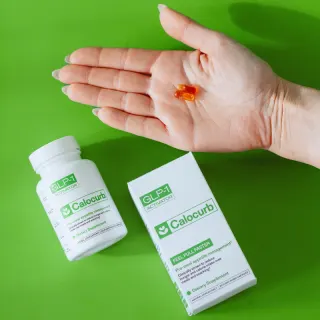
Calocurb GLP-1 Activator
Calocurb · capsuleThe best-evidenced single-mechanism appetite trigger — clinically interesting, but premium-priced and a pre-meal, short-window tool rather than all-day support.
Amarasate is one of the most directly studied appetite ingredients — multiple human RCTs, dosed on-label at 250 mg.
Acute, short-window effect: a pre-meal tool (up to 4 capsules/day), not all-day craving support.

Leanbean
Ultimate Life Ltd · capsuleA maximal glucomannan dose — which is also its risk: top-of-range fiber means you must take it carefully with plenty of water.
Glucomannan dosed at the full 3 g/day EFSA satiety level, fully disclosed.
At 3 g/day, glucomannan sits at the very top of the studied range — large glucomannan doses carry a documented risk of throat, esophageal, or GI blockage if not taken with enough water.