Craving Toolkit
Caffeine for Craving Control: The Cheapest Tool, and Its Hidden Costs
Caffeine can blunt daytime hunger for the price of a coffee. Its one blind spot is the late-night window where cravings do the most damage. Here's how to use it, and when to reach for something else.
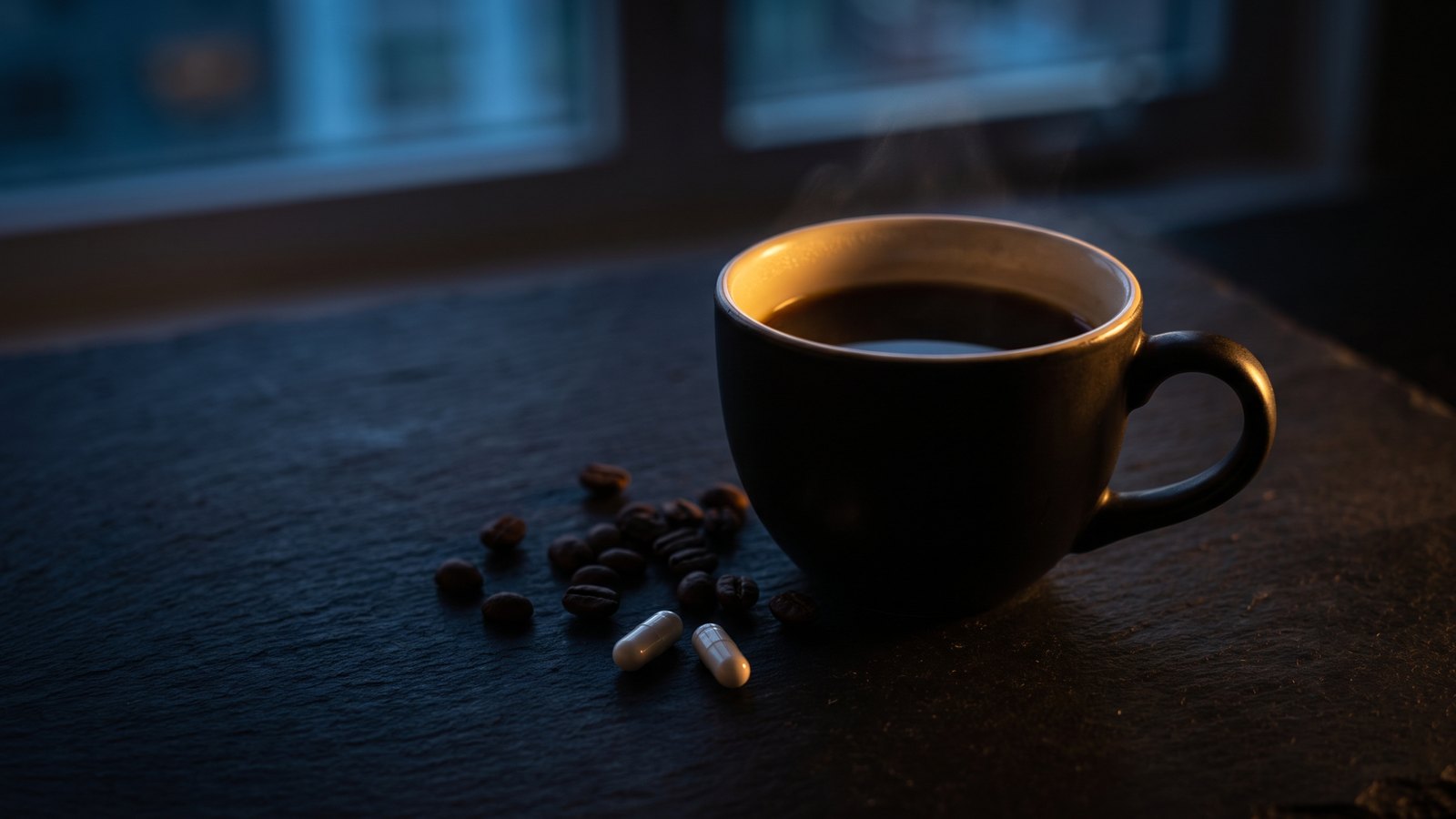
Caffeine is the appetite suppressant almost everyone already owns. It's in your coffee, your tea, half the "fat burner" tubs on the shelf, and most pre-workouts. More than 60% of Americans drink coffee every single day (Emadi and Kamangar, Nutrients, 2025). So before you buy anything fancy for cravings, it's worth asking what the cheap tool in your kitchen actually does, and where it quietly falls short.
Short version: caffeine can take the edge off hunger, mostly during the day. The catch is that its biggest weakness lines up exactly with the moment most people lose the plot, which is late at night.
Does caffeine actually blunt appetite?
Somewhat, and the timing matters. A review of coffee, caffeine, and appetite found that caffeine taken about 0.5 to 4 hours before a meal can suppress how much people eat at that meal. Coffee taken earlier, 3 to 4.5 hours out, barely moved intake (Schubert et al., Int J Food Sci Nutr, 2017; PubMed).
So it's a short window. Caffeine right before you'd normally eat can shave off some intake. The same caffeine hours ahead of time does close to nothing for hunger.
The mechanism isn't fully pinned down. A 2024 review lays out the leading candidates: caffeine blocks adenosine receptors, nudges up energy expenditure, and may lean on appetite and fat-metabolism pathways (Wang et al., Purinergic Signal, 2024; PubMed). The honest read is that the appetite-hormone and gastric-emptying evidence is mixed. The reviewers of the appetite literature called those results equivocal and asked for longer, controlled studies (Schubert et al., 2017). Real but modest, in other words, and not a sure thing person to person.
Why it's the cheapest tool in the drawer
Cost is the honest selling point. A cup of coffee is pennies. You already drink it. There's no subscription, no six-capsule regimen, no waiting on a probiotic to colonize your gut. If a mild, daytime appetite nudge is all you want, caffeine is hard to beat on price.
And it does one thing the gentler craving tools can't: it wakes you up. That daytime lift is genuinely useful, and it's the reason caffeine anchors so many stimulant products. Hydroxycut Hardcore packs 265 mg of caffeine per serving; PhenQ buries its stimulant dose inside an undisclosed blend. The engine under a lot of the "fat burner" shelf is just caffeine you're paying a premium for.
The hidden cost: it can't work the night shift
Here's where it breaks down. The cravings that wreck people aren't the 10am ones. They're the 9pm, standing-at-the-pantry, not-even-hungry ones. And that's the one window caffeine can't touch without a price.
A 2025 randomized crossover trial is about as clean a look at this as you'll find. Researchers gave 23 healthy men either 100 mg or 400 mg of caffeine at 12, 8, or 4 hours before bed, with sleep measured at home by polysomnography. The 100 mg dose (roughly one cup of coffee) didn't significantly hurt sleep, even 4 hours before bed. The 400 mg dose (about four cups) did: it delayed sleep onset and fragmented sleep when taken within 12 hours of bedtime, and it got worse the closer to bed it landed. Taken 4 hours before bed, 400 mg cut perceived sleep quality by 34% (Gardiner et al., Sleep, 2025; PubMed).
One detail from that study is worth flagging. People were bad at feeling the damage. The objective sleep disruption didn't always match what participants reported, which means "caffeine doesn't affect my sleep" is a claim most of us can't actually verify from the inside (Gardiner et al., 2025).
It's not only about falling asleep. In an earlier controlled study, a dose of caffeine equal to a double espresso taken 3 hours before bed pushed the body's internal clock later by about 40 minutes, roughly half the shift you'd get from 3 hours of bright light at bedtime (Burke et al., Sci Transl Med, 2015; PubMed). Evening caffeine doesn't just cost you sleep that night. It nudges your whole clock later.
The part that circles back to cravings
This is the loop that makes evening caffeine a bad craving tool. Wreck tonight's sleep, and you've stacked the deck for tomorrow's hunger.
A meta-analysis of 41 randomized trials found that when people's sleep was cut short, they ate about 253 more calories the next day, reported meaningfully more hunger, and showed more brain activity in reward and cognitive-control regions when they looked at food. Short sleep also dented insulin sensitivity, and over the trials it tracked with a small amount of weight gain (Zhu et al., Sleep Med Rev, 2019; PubMed).
So a stimulant you reach for to fight the evening munchies can, by trashing your sleep, make the next day's munchies worse. For the exact problem people most want help with, caffeine at night is working against you.
The other costs nobody prices in
Tolerance is the quiet one. Lean on caffeine daily and your body adapts, so the same cup does less. That pushes people toward bigger doses, which is right where the 400 mg sleep problems live.
Then there's the jitter tax. The same review that gives coffee a mostly clean bill of health is blunt that excessive caffeine can bring on anxiety and sleep disturbances (Emadi and Kamangar, 2025). Anyone who's had one coffee too many knows the feeling: wired, restless, weirdly snacky. Stimulation and calm are different states, and stress eating is real.
A stimulant blend that only discloses its caffeine number, or hides it entirely, is a transparency problem on top of that. If you can't see the dose, you can't manage the tolerance or the evening cutoff. That's a big reason these blends score poorly with us. Our scoring methodology walks through how we weigh disclosure and timing.
Using caffeine well (and knowing when to reach for something else)
So the move is to treat caffeine as what it is, a daytime tool, and use it like one:
- Front-load it. A morning or early-afternoon coffee before a meal is where caffeine's appetite effect actually shows up (Schubert et al., 2017), and it's far enough from bed to leave sleep alone.
- Keep a real cutoff. The trial data suggests 100 mg is fine up to about 4 hours before bed, but bigger doses need a much wider buffer (Gardiner et al., 2025). If you're sensitive, push the cutoff earlier.
- Don't chase the dose. If you need more and more to feel it, that's tolerance talking, not a reason to double up.
- Cover the evening a different way. The 9pm window wants something caffeine-free.
That last point is the whole reason this category exists. Plenty of craving approaches don't touch your sleep at all: viscous fiber for stomach fullness, gut-hormone and blood-sugar pathways, bitter compounds taken before dinner. We break those down in our appetite-suppressant guide, and we go deep on why the evening window decides most outcomes in our piece on timing.
The verdict
Caffeine is the cheapest, most available appetite tool there is, and for a daytime nudge it earns its keep. Just be honest about the ceiling. The effect is modest, it fades as you get used to it, and it's locked out of the late-night hours where cravings do the most damage, because using it there costs you the sleep that keeps the next day's hunger in check. Cheap and useful, with a curfew.
References
Based on articles retrieved from PubMed:
- Schubert MM, Irwin C, Seay RF, et al. Caffeine, coffee, and appetite control: a review. Int J Food Sci Nutr. 2017. PubMed
- Wang M, Guo W, Chen JF. Caffeine: a potential mechanism for anti-obesity. Purinergic Signal. 2024. PubMed
- Gardiner CL, Weakley J, Burke LM, et al. Dose and timing effects of caffeine on subsequent sleep: a randomized clinical crossover trial. Sleep. 2025. PubMed
- Burke TM, Markwald RR, McHill AW, et al. Effects of caffeine on the human circadian clock in vivo and in vitro. Sci Transl Med. 2015. PubMed
- Zhu B, Shi C, Park CG, Zhao X, Reutrakul S. Effects of sleep restriction on metabolism-related parameters in healthy adults: A comprehensive review and meta-analysis of randomized controlled trials. Sleep Med Rev. 2019. PubMed
- Emadi RC, Kamangar F. Coffee's Impact on Health and Well-Being. Nutrients. 2025. PubMed
FAQ
Does caffeine really suppress appetite?
Somewhat, and only in a short window. Studies show caffeine taken about 0.5 to 4 hours before a meal can reduce how much you eat at that meal, while caffeine taken hours earlier does little. The effect is real but modest, and it varies from person to person.
How late is too late for caffeine?
In a 2025 randomized trial, 100 mg (about a cup of coffee) didn't significantly hurt sleep even 4 hours before bed, but 400 mg disrupted sleep when taken any time within 12 hours of bedtime, and got worse the closer to bed. Taken 4 hours before bed, the big dose cut perceived sleep quality by about a third. If you're sensitive, give yourself a wider buffer.
Why is caffeine a bad choice for night-time cravings?
Because evening caffeine can wreck your sleep, and short sleep makes the next day's hunger worse. A meta-analysis found people ate about 253 more calories the day after restricted sleep, felt hungrier, and had more food-reward brain activity. So a late stimulant can backfire on the exact cravings you're trying to fight.
Does caffeine stop working over time?
For appetite and energy, tolerance is real. Use it daily and the same dose does less, which tempts people into bigger doses where the sleep and anxiety downsides show up. Front-loading it earlier in the day and not chasing the dose keeps it useful.
Products mentioned
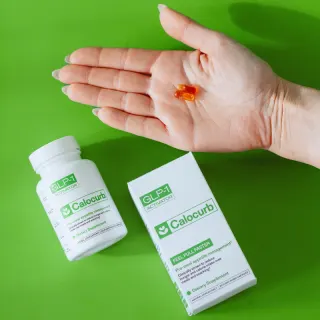
Calocurb GLP-1 Activator
Calocurb · capsuleThe best-evidenced single-mechanism appetite trigger — clinically interesting, but premium-priced and a pre-meal, short-window tool rather than all-day support.
Amarasate is one of the most directly studied appetite ingredients — multiple human RCTs, dosed on-label at 250 mg.
Acute, short-window effect: a pre-meal tool (up to 4 capsules/day), not all-day craving support.

Leanbean
Ultimate Life Ltd · capsuleA maximal glucomannan dose — which is also its risk: top-of-range fiber means you must take it carefully with plenty of water.
Glucomannan dosed at the full 3 g/day EFSA satiety level, fully disclosed.
At 3 g/day, glucomannan sits at the very top of the studied range — large glucomannan doses carry a documented risk of throat, esophageal, or GI blockage if not taken with enough water.
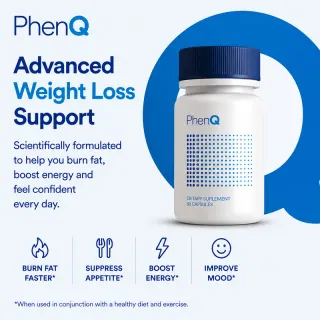
PhenQ
Wolfson Brands · capsuleBest for Daytime Energy: a caffeinated daytime option for some — but useless for after-dinner cravings, and it hides its doses.
Caffeine provides a genuine daytime energy and appetite-blunting kick.
Key actives are hidden in proprietary blends (a-Lacys Reset, Capsimax).
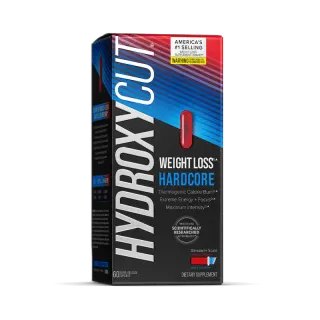
Hydroxycut Hardcore
Hydroxycut (Iovate) · capsuleA cheap stimulant thermogenic — daytime energy only, with weak weight-management evidence.
Cheap per serving.
265 mg caffeine per serving (up to 530 mg/day) — jitters, sleep disruption, and no good for evening cravings.