Craving Mechanics
"I Can't Stop Eating Sugar": Why, and What Actually Helps
It isn't the sugar high that gets you. It's the trough that shows up 2 to 3 hours later, and it's measurable.
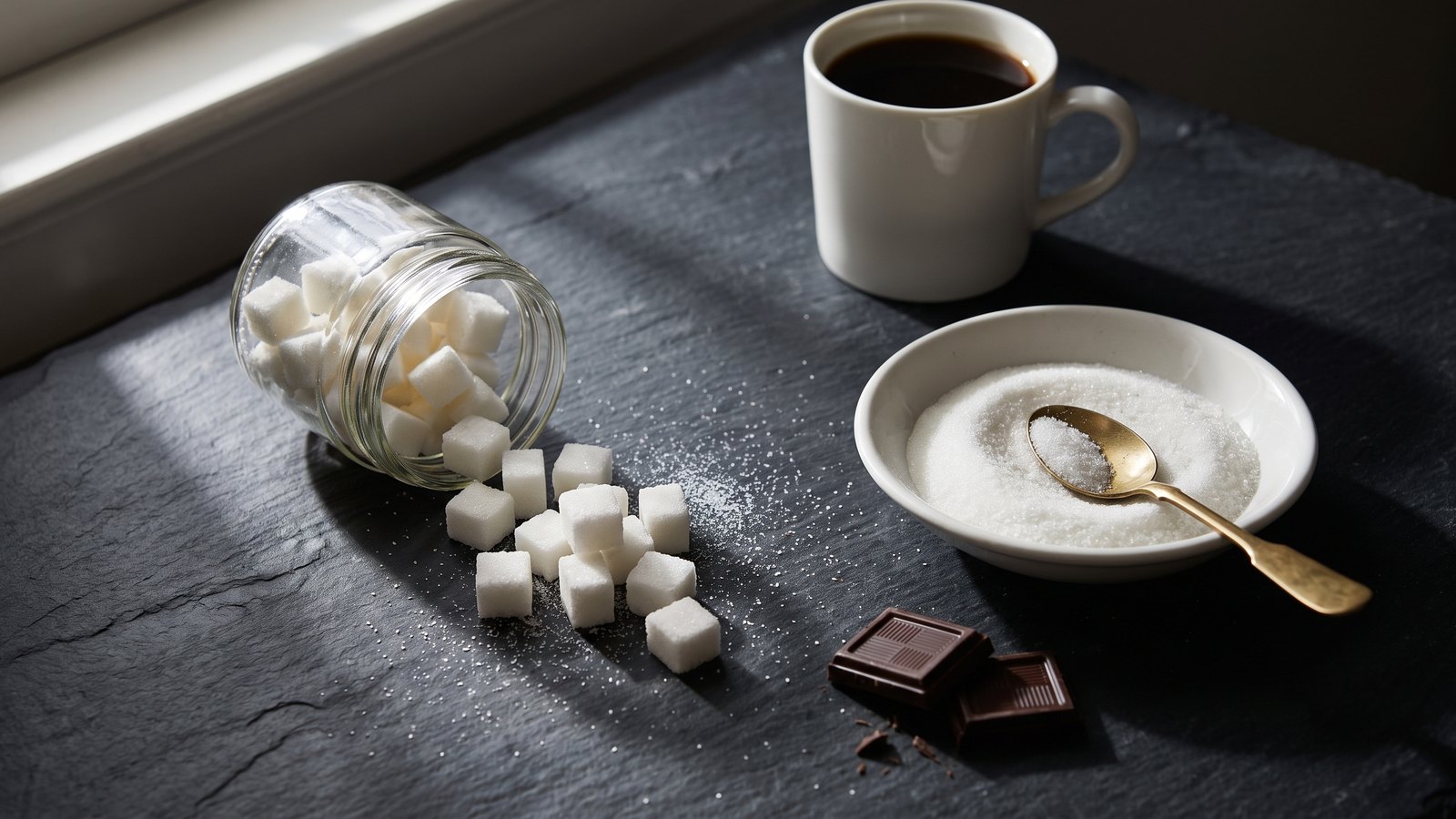
Let's start where you actually are. It's 9pm, the day went fine, and you've eaten more sugar in the last 20 minutes than you meant to eat all week.
Then comes the part that stings more than the sugar: the sense that everyone else has this handled and you don't.
They don't. And the loop you're in has a mechanism behind it, which is better news than it sounds. Mechanisms can be worked with. Character flaws can't.
First, some boring context
Added sugar is not a niche problem you have been uniquely bad at. The USDA's What We Eat in America analysis of NHANES 2015-2016 found that 47% of US adults aged 20 and over kept added sugars under 10% of daily calories. The other 53% averaged 19.4% of their calories from added sugar, close to 4 times the intake of the group that stayed under the line (USDA Food Surveys Research Group, 2019).
Beverages supplied about half of it. Sweetened drinks alone accounted for roughly 37% of added sugars in men's diets and 28% in women's, with sweet bakery items and the sugar people stir into coffee and tea taking most of the rest.
So the average American adult is not sipping sugar at the edges of an otherwise clean diet. Sugar is load-bearing in the food supply. Noticing that you can't stop isn't evidence of weakness. It's evidence you're paying attention.
The crash-then-crave loop
If your question is why this happens at roughly the same time every day, the best single answer in the literature is a blood sugar trough you never feel arriving.
A 2021 study in Nature Metabolism put continuous glucose monitors on 1,070 people across a UK cohort and a US validation cohort, fed them 8,624 standardized meals, then tracked 71,715 meals they chose freely afterwards (Wyatt et al., Nat Metab 2021).
The finding that matters: the dip in blood glucose 2 to 3 hours after eating predicted hunger better than the peak did. People with bigger dips reported more hunger at 2 to 3 hours, went a shorter time before their next meal, ate more calories 3 to 4 hours later, and ate more over the following 24 hours.
Read that last part again in practical terms. One meal that spikes and then drops hard doesn't just make you hungry that afternoon. It nudges the whole next day upward.
Two honest caveats. The correlations are modest (r values of 0.14 to 0.27), and this is observational work, not a controlled feeding trial that assigned people to dips. A correlation of 0.27 explains a slice of the variance, not your whole evening. But the direction held across two separate cohorts, which is more than most appetite findings can say.
The takeaway isn't that sugar is poison. It's that the sugar high isn't what gets you. The trough afterwards is. That's the same mechanism sitting underneath most of the blood sugar supplements sold for craving control, and it's a big part of what people are describing when they talk about food noise that won't shut up.
So is sugar actually addictive?
Contested, and the two best-argued positions land in genuinely different places. Anyone who tells you it's settled hasn't read both.
A review in European Journal of Nutrition went through the animal and human neuroscience side by side and concluded there is little evidence for sugar addiction in humans. Their key observation about the animal work: addiction-like behaviors such as bingeing show up mainly under intermittent access, when sugar is withheld and then made available again. Their read is that the behavior comes from the access pattern and the palatability, not from sucrose doing something special to the brain (Westwater et al., Eur J Nutr 2016).
The other side got its clearest statement in a 2023 BMJ analysis arguing that ultra-processed foods high in both refined carbohydrate and fat behave enough like addictive substances to be treated that way in clinics and in policy (Gearhardt et al., BMJ 2023). That piece is an argument, not a trial, and it's fair to read it as one.
Here's what's useful. Both camps agree the trigger isn't sucrose alone. It's the combination, the processing, and the pattern of access.
Which means "no sugar at all this week" is not a neutral experiment. It is, by definition, intermittent access.
Why cutting it out cold makes the noise louder
There's a measured version of that backfire. A study in Obesity recorded brain responses to appetizing food images in 34 adolescents with obesity and 24 healthy controls, and checked whether dietary restraint changed anything (Hofmann et al., Obesity 2015).
In the healthy controls, higher restraint scores went with smaller late brain responses to food images and lower palatability ratings. Restraint looked protective. In the adolescents with obesity, higher restraint scores went with larger responses and higher palatability ratings. The authors described the effect as paradoxical and suggested approaches that de-emphasize strict restraint.
Keep the limits in view: it's a small study, in adolescents, measuring brain-wave correlates rather than what anyone actually ate. It does not prove restriction causes binges. It does line up uncomfortably well with what people describe, which is that the week they ban sugar is the week they think about it constantly.
The practical version is unglamorous. Structure beats prohibition. A planned dessert on Tuesday is a different psychological object than a forbidden one.
The sleep multiplier nobody accounts for
Short sleep and a bad sugar day travel together, and there's some direct measurement of it.
A randomized crossover in the Journal of Sleep Research ran 9 inactive middle-aged men through four 3-night conditions: normal sleep, restriction to 4 hours, fragmented sleep, and extension to 10 hours (Larsen et al., J Sleep Res 2021). Perceived appetite itself didn't shift much. Some aspects of food craving did change after restriction, and a 20-minute bout of vigorous cycling attenuated the desire for sweet foods in the sleep-restricted condition. Mood and general wellness were clearly worse after restriction and fragmentation, and the exercise bout helped there too.
Nine men. The authors call it preliminary and so should you. It's worth a mention because the direction matches the wider sleep and appetite literature, and because "I couldn't stop eating sugar" and "I slept 5 hours" show up in the same sentence constantly.
Late evening is where all of this stacks up at once, which is why we gave that hour its own breakdown of why 9pm is rigged against you.
What the trials say actually helps
1. Eat enough, on a schedule
The most encouraging result here is one people don't expect. A 16-week randomized trial in Nutrients put 162 adults on a high-protein partial meal-replacement program, half of them with alternate-day fasting added, followed by 8 weeks of maintenance (Bowen et al., Nutrients 2018). Both groups lost roughly 11 kg, with no meaningful difference between them.
The part relevant to you: food cravings, mood and quality of life all improved in both arms. People eating in a structured, protein-forward, calorie-reduced plan reported fewer cravings, not more.
That's the opposite of the folk wisdom that dieting makes cravings worse, and the difference is probably the word "structured." This was a controlled program with defined meals, not skipping lunch and hoping. Our walk through the non-pharmaceutical ladder for quieting cravings starts in the same place for the same reason.
2. Flatten the dip instead of chasing the peak
If the 2-to-3-hour trough is the trigger, the lever is the shape of the curve, not the total. Sugar arriving with protein, fat or fiber behaves differently from sugar arriving alone in a glass. That's why the single highest-yield change for most people is the liquid sugar, since drinks supplied roughly half of all added sugars in the NHANES data.
None of that requires a monitor or an app. It requires not drinking your sugar on an empty stomach at 3pm.
3. Protect sleep before you blame yourself
Cheapest intervention on the list, and the one people cut first.
4. Retrain sweetness gradually, if you're going to retrain it
Two parallel double-blind randomized trials, one in the US and one in Mexico, followed habitual soda drinkers for 6 months while lowering the sweetness of their drinks either in gradual steps or all at once (Mah et al., Sci Rep 2024). In the US full-sugar cohort, both methods helped people hold a preference for the less-sweet version. Neither method moved the low-calorie-sweetener cohorts or either Mexican cohort. Across every group, people in the reduction arms were more willing to buy the less-sweet drink than controls were.
Disclosure worth stating plainly: several authors are PepsiCo employees and the company funded the work. On a question about how sweet drinks should be, that's a real conflict. Read the direction of the result, not the enthusiasm around it.
5. Be honest about the supplement shortcut
Something you swallow will not out-argue 5 hours of sleep and a skipped lunch. Some ingredients have real human data on adjacent endpoints and most have marketing. We ranked that field in our piece on what the evidence actually supports for sugar cravings, the wider shelf is scored in our ranking of craving supplements by trial quality, and the rubric behind every score is public in our methodology.
When it's more than a rough habit
Food noise and a heavy sugar habit are not a diagnosis, and this page isn't in the business of handing you one.
But there's a line worth naming. If eating regularly feels out of your control once it starts, if you're hiding it, if it continues well past physical discomfort, or if it's causing you real distress, that's worth taking to a clinician or a registered dietitian rather than a blog. Those patterns have names and they have treatments, and neither of them is willpower.
The bottom line
You can't stop eating sugar for reasons that are mostly not about you. The food supply is built around it, your glucose curve has a trough with your name on it a couple of hours after most meals, short sleep sharpens the pull, and banning the thing outright reliably makes it louder.
What the evidence supports is dull and it works: eat enough protein on a schedule, stop drinking sugar by itself, sleep, and step the sweetness down rather than slamming the door. Hunger is a signal your body sends, not a verdict on your discipline, which is the whole argument in our explainer on how your gut and brain negotiate what you crave.
More on the same territory in our appetite and craving coverage.
References
- Wyatt P, Berry SE, Finlayson G, et al. Postprandial glycaemic dips predict appetite and energy intake in healthy individuals. Nature Metabolism. 2021;3(4):523-529. PubMed 33846643
- Westwater ML, Fletcher PC, Ziauddeen H. Sugar addiction: the state of the science. European Journal of Nutrition. 2016;55(Suppl 2):55-69. PubMed 27372453
- Gearhardt AN, Bueno NB, DiFeliceantonio AG, et al. Social, clinical, and policy implications of ultra-processed food addiction. BMJ. 2023;383:e075354. PubMed 37813420
- Hofmann J, Ardelt-Gattinger E, Paulmichl K, Weghuber D, Blechert J. Dietary restraint and impulsivity modulate neural responses to food in adolescents with obesity and healthy adolescents. Obesity. 2015;23(11):2183-2189. PubMed 26381395
- Larsen P, Marino FE, Guelfi K, Duffield R, Skein M. A preliminary investigation of the effects of short-duration, vigorous exercise following sleep restriction, fragmentation and extension on appetite and mood in inactive, middle-aged men. Journal of Sleep Research. 2021;30(4):e13215. PubMed 33111359
- Bowen J, Brindal E, James-Martin G, Noakes M. Randomized trial of a high protein, partial meal replacement program with or without alternate day fasting. Nutrients. 2018;10(9):1145. PubMed 30142886
- Mah E, Kamil A, Blonquist TM, et al. Change in liking following reduction in sweetness level of carbonated beverages: a randomized controlled parallel trial. Scientific Reports. 2024;14(1):26742. PubMed 39500957
- US Department of Agriculture, Food Surveys Research Group. Added Sugars in Adults' Diet: What We Eat in America, NHANES 2015-2016. Dietary Data Brief No. 24, October 2019. Full text
FAQ
Why can't I stop eating sugar even when I want to?
Several things stack. Added sugar supplies a large share of calories in the US food supply, so exposure is constant: 53% of US adults exceed the added-sugar recommendation and average 19.4% of calories from it. On top of that, blood glucose dips 2 to 3 hours after a meal predict more hunger and more eating over the next 24 hours, so a spike-and-crash meal sets up the next craving. Short sleep sharpens the pull, and strict restriction has been shown to make food cues more salient rather than less in some groups.
Is sugar addictive?
The evidence is genuinely split. A 2016 review in European Journal of Nutrition found little support for sugar addiction in humans and noted that addiction-like bingeing in animals appears mainly under intermittent access, meaning the pattern of restriction and reward rather than sucrose itself. A 2023 BMJ analysis argues the opposite case for ultra-processed foods high in both refined carbs and fat. Both sides agree the trigger is the combination and the access pattern, not sugar alone.
Does cutting out sugar completely stop the cravings?
Not reliably, and it can go the other way. Total elimination is itself a form of intermittent access, the exact pattern that produced binge-like behavior in the animal literature. One study of food-cue brain responses found that higher dietary restraint went with larger responses and higher palatability ratings in adolescents with obesity, the reverse of what it did in controls. Structured eating with a planned place for sweet foods has better support than prohibition.
What actually reduces sugar cravings?
In a 16-week randomized trial of 162 adults, a structured high-protein partial meal-replacement program improved food cravings, mood and quality of life while people lost weight, which suggests eating enough on a schedule beats white-knuckling. Beyond that: pair carbohydrates with protein, fat or fiber to blunt the 2-to-3-hour glucose dip, avoid drinking sugar on its own since beverages supply about half of added sugar intake, protect your sleep, and step sweetness down gradually rather than banning it.
Products mentioned

Metamucil 4-in-1 Fiber (Psyllium Husk)
Metamucil (Procter & Gamble) · powderBest Value: cheap, drinkable, and well-evidenced as a fiber — but single-pathway and a heavy gel load.
Pennies per serving — by far the cheapest in the set.
Single pathway — a fiber, not a craving formula.

Thorne Berberine (1,000 mg)
Thorne · capsuleWell-evidenced berberine for metabolic support — but the effective dose is rough on a lot of stomachs.
Berberine has real human RCT evidence for glucose and lipid markers.
Berberine commonly causes GI distress — cramping, diarrhea, constipation — and at the 1,000 mg+ effective dose it is hard for many people to tolerate.
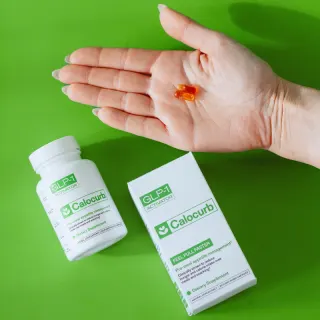
Calocurb GLP-1 Activator
Calocurb · capsuleThe best-evidenced single-mechanism appetite trigger — clinically interesting, but premium-priced and a pre-meal, short-window tool rather than all-day support.
Amarasate is one of the most directly studied appetite ingredients — multiple human RCTs, dosed on-label at 250 mg.
Acute, short-window effect: a pre-meal tool (up to 4 capsules/day), not all-day craving support.