Craving Mechanics
What Deficiency Causes Sugar Cravings? What the Trials Actually Show
Your body probably isn't asking for magnesium. The two shortfalls with real evidence behind them are a lot more boring.
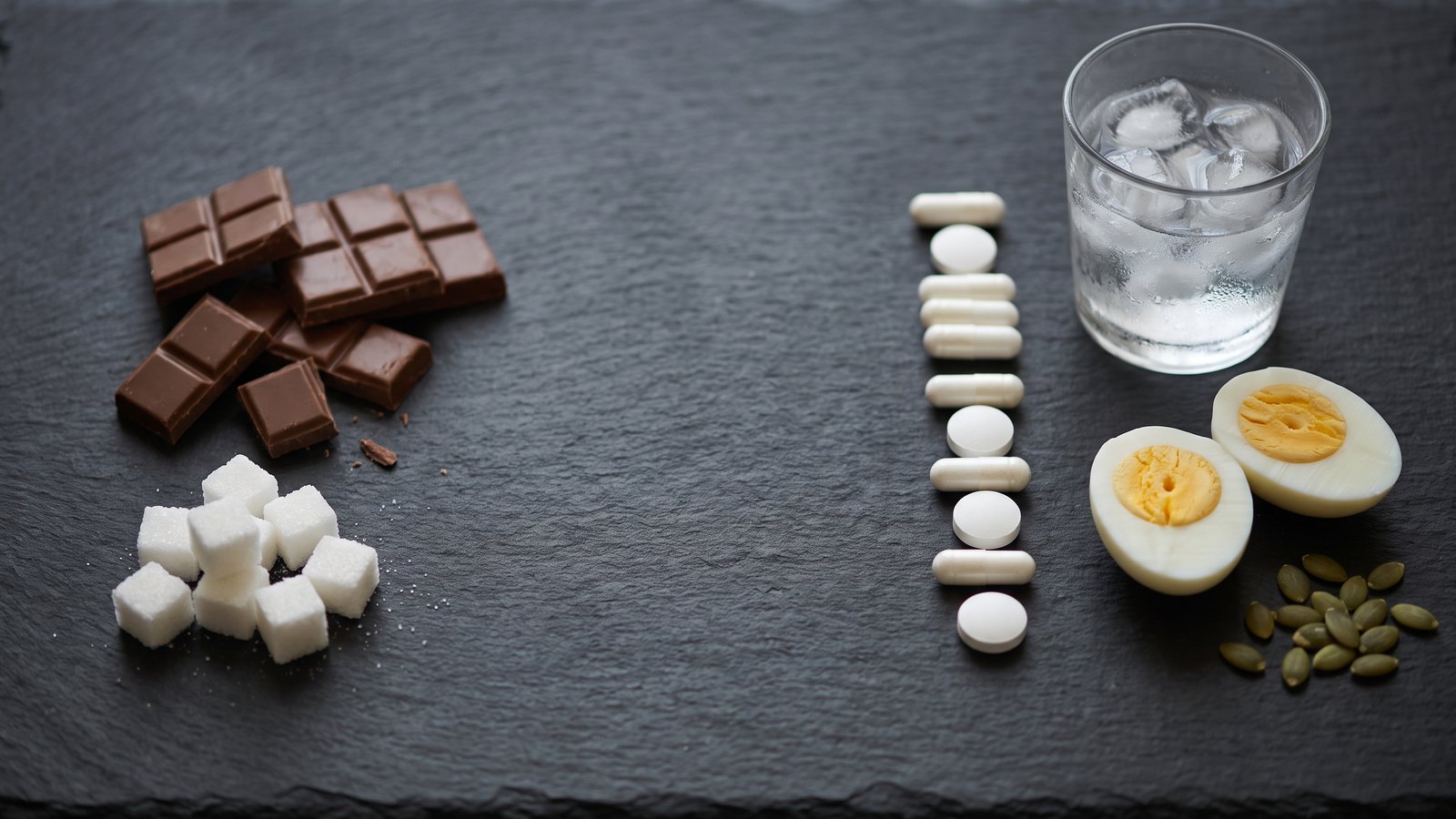
Short answer: no single nutrient deficiency has been shown, in a controlled trial, to cause sugar cravings. The three that get blamed most are magnesium, chromium and iron, and each one lands somewhere different when you check the actual studies.
Magnesium is mostly folklore. Chromium has the most real data, though it's a supplement effect in people who already crave carbs rather than proof of a deficiency. Iron deficiency really does cause cravings, just not for sugar.
The two gaps with the best evidence behind them aren't vitamins or minerals at all. They're sleep and breakfast.
The quick version
- Magnesium: two placebo-controlled trials found 200 mg a day did nothing for premenstrual cravings. Folklore on current evidence.
- Chromium: two small randomized trials in people selected for carb cravings found improvements on some craving and appetite measures. Promising, modest, not settled.
- Iron: a real deficiency-to-craving link, but the craving is usually for ice. Worth a blood test if that's you.
- Sleep: one night of deprivation raised desire for high-calorie foods, and adding sleep cut free sugar intake in a randomized trial.
- Protein at breakfast: eating breakfast at all cut sweet cravings compared with skipping it.
Magnesium: the chocolate theory
The magnesium idea comes from chocolate. Cocoa is relatively rich in magnesium, chocolate is one of the most commonly craved foods, so the story goes that your body is asking for the mineral and settling for the candy bar.
A 1999 review in the Journal of the American Dietetic Association did list self-medication for a magnesium shortfall as one possible piece of chocolate cravings, alongside hormones, mood and the plain appeal of fat, sugar and texture (Bruinsma and Taren, 1999). It flagged the idea. It didn't test it.
A review in Public Health Nutrition the same year was blunter: the amounts of magnesium and the other "drug-like" compounds in chocolate are too low to explain its effect on mood, and the likelier driver is that palatable food of any kind triggers the brain's reward chemistry (Benton and Donohoe, 1999). If you were really short on magnesium, pumpkin seeds would do far more for you than a chocolate bar. Nobody craves pumpkin seeds.
Then there are the trials. Researchers at the University of Reading gave 38 women either 200 mg of magnesium or a placebo for two menstrual cycles and tracked symptoms daily, including a dedicated craving category. Magnesium had no effect on any category in the first month. In the second month it eased fluid retention, and that was all. Cravings didn't budge (Walker et al., 1998).
The same group then ran 44 women through four treatments in a crossover: magnesium, vitamin B6, both together, and placebo. No overall difference between treatments. The combination gave a small drop in anxiety-type symptoms, not cravings (De Souza et al., 2000).
One fair caveat: both trials used magnesium oxide, which the authors themselves noted is poorly absorbed, and lasted only 1 to 2 cycles. So the idea isn't disproven so much as unsupported. (We compared magnesium citrate, oxide, glycinate and threonate for sugar cravings separately, form by form.) Getting enough magnesium is still worth doing for its own sake. It just isn't a proven fix for a sweet tooth.
Chromium: the most real data, with fine print
Chromium helps insulin do its job, which is why it keeps coming up in blood sugar conversations (including the one about whether craving sugar is a sign of diabetes). Of the three minerals here, it's the only one with randomized trials that measured cravings directly.
In a double-blind trial at Pennington Biomedical, 42 overweight women who reported carb cravings took 1,000 micrograms of chromium picolinate or placebo for 8 weeks, with food intake measured at every meal. The chromium group ate less, reported less hunger and had fewer fat cravings. Weight loss only trended in their favor (Anton et al., 2008). Note what improved: fat cravings, in a group recruited for carb cravings.
An earlier multicenter trial gave 113 adults with atypical depression 600 micrograms of chromium a day or placebo for 8 weeks. It missed its main depression endpoints. But in the people who took their pills as directed, chromium beat placebo on specific items including carbohydrate craving and increased appetite (Docherty et al., 2005). That's a secondary analysis of a trial that missed its main goal, so hold it loosely.
Neither study tested whether participants were chromium deficient to begin with. They show a supplement dose doing something in people who already crave carbs. That's a different claim from "low chromium causes cravings," and it's the one you can actually defend. Our full breakdown of the chromium research on cravings goes through the rest of the trials.
Iron: a real craving, wrong target
Iron is the one deficiency with a well-documented craving attached. The catch is what people crave.
It's called pica: compulsive cravings for things that aren't really food. With iron deficiency the classic form is pagophagia, a strong urge to chew ice. A review of 959 gastric bypass patients, a group at high risk of iron deficiency, found 16 with pica, most commonly ice craving. Every one of them was iron deficient, with a median ferritin of 5 ng/mL, and every one saw the cravings resolve after intravenous iron (Van Osdol et al., 2017).
So if you're tired, getting winded easily and find yourself crunching through a cup of ice a day, that's worth a ferritin test. Iron deficiency is common, especially in women with heavy periods. But it doesn't explain a nightly pull toward cookies, and taking iron you don't need carries its own risks. Test first.
Sleep: the deficiency with the best evidence
If you want a shortfall that reliably turns up cravings for high-calorie food, skip the supplement aisle and look at your sleep.
A Berkeley brain-imaging study kept young adults awake for a full night and then had them rate how much they wanted various foods. After sleep deprivation, activity dropped in the frontal regions that weigh up choices and rose in the amygdala. Desire for high-calorie foods went up, and the worse people said their sleep loss felt, the bigger the jump (Greer et al., 2013).
The encouraging half comes from a randomized trial at King's College London. Researchers took 42 habitual short sleepers (5 to under 7 hours a night) and gave half of them a single sleep-hygiene consultation. Over 4 weeks that group added about 21 minutes of actual sleep a night and cut free sugar intake by 9.6 g a day, while the control group went up 0.7 g (Al Khatib et al., 2018). Small trial, food diaries rather than a lab, but it's the one intervention here that moved sugar intake directly.
Short sleep also stacks on top of your body clock, which is already pushing appetite up in the evening. We laid out that timing in why hunger climbs after dark.
Protein and skipped meals
Plenty of "I need sugar" moments turn out to be "I haven't eaten properly since 7 AM."
A crossover trial at the University of Missouri ran 20 overweight young women who usually skipped breakfast through three 6-day patterns: keep skipping, a 350-calorie breakfast with 13 g of protein, or the same calories with 35 g of protein. Both breakfasts cut sweet and savory cravings compared with skipping. The high-protein version tended to do more for savory cravings and kept a marker of dopamine activity higher through the morning (Hoertel et al., 2014).
It's a pilot, and the gap between the two breakfasts didn't reach statistical significance. The gap between eating and not eating did. If your cravings peak in the evening, look at what you ate before noon before you blame a mineral. The crash-then-crave loop behind a sugar habit works the same way: a skipped meal sets up the evening.
What to actually do
- Craving ice, tired, pale or out of breath on stairs? Ask for a ferritin test. That's a real deficiency with a real fix.
- Sleeping under 7 hours? Start there. It has the best evidence of anything on this page.
- Skipping breakfast or eating a light lunch? Add a proper protein-forward meal early in the day and see what happens to the evening.
- Tried all that and still fighting carb cravings? Chromium is the one mineral with trial data behind it. Our ranking of the supplements with human data for sugar cravings covers it alongside the fibers and sweeteners.
- Considering magnesium for cravings specifically? The trials don't back it. Take it if your diet is short on it, not as a craving cure.
If the cravings mostly land late at night, the evidence on stopping nighttime snacking is the more useful place to go next. Everything else we've written on the topic sits in our appetite and craving coverage.
The bottom line
The idea that sugar cravings are your body asking for a missing mineral is appealing because it turns a frustrating habit into a shopping list. The research mostly doesn't cooperate, and the same goes for the amino acid that often gets added to the list, as our look at whether L-glutamine does anything for sugar cravings found.
Magnesium hasn't held up in trials. Chromium has modest support in people who already crave carbs. Iron deficiency causes cravings, usually for ice. The shortfalls with the strongest link to sugar are the boring ones: not enough sleep and not enough food early in the day.
None of this is medical advice. If you think you have a deficiency, a blood test beats a guess.
References
- Walker AF, De Souza MC, Vickers MF, et al. Magnesium supplementation alleviates premenstrual symptoms of fluid retention. Journal of Women's Health. 1998;7(9):1157-1165. PubMed 9861593
- De Souza MC, Walker AF, Robinson PA, Bolland K. A synergistic effect of a daily supplement for 1 month of 200 mg magnesium plus 50 mg vitamin B6 for the relief of anxiety-related premenstrual symptoms. Journal of Women's Health & Gender-Based Medicine. 2000;9(2):131-139. PubMed 10746516
- Bruinsma K, Taren DL. Chocolate: food or drug? Journal of the American Dietetic Association. 1999;99(10):1249-1256. PubMed 10524390
- Benton D, Donohoe RT. The effects of nutrients on mood. Public Health Nutrition. 1999;2(3A):403-409. PubMed 10610080
- Anton SD, Morrison CD, Cefalu WT, et al. Effects of chromium picolinate on food intake and satiety. Diabetes Technology & Therapeutics. 2008;10(5):405-412. PubMed 18715218
- Docherty JP, Sack DA, Roffman M, Finch M, Komorowski JR. A double-blind, placebo-controlled, exploratory trial of chromium picolinate in atypical depression: effect on carbohydrate craving. Journal of Psychiatric Practice. 2005;11(5):302-314. PubMed 16184071
- Van Osdol AD, Kallies KJ, Fredrickson KA, Kothari SN. A different kind of craving: incidence and treatment of pica after laparoscopic Roux-en-Y gastric bypass. World Journal of Surgery. 2017;41(9):2324-2328. PubMed 28477159
- Greer SM, Goldstein AN, Walker MP. The impact of sleep deprivation on food desire in the human brain. Nature Communications. 2013;4:2259. PubMed 23922121
- Al Khatib HK, Hall WL, Creedon A, et al. Sleep extension is a feasible lifestyle intervention in free-living adults who are habitually short sleepers: a potential strategy for decreasing intake of free sugars? American Journal of Clinical Nutrition. 2018;107(1):43-53. PubMed 29381788
- Hoertel HA, Will MJ, Leidy HJ. A randomized crossover, pilot study examining the effects of a normal protein vs. high protein breakfast on food cravings and reward signals in overweight/obese "breakfast skipping", late-adolescent girls. Nutrition Journal. 2014;13:80. PubMed 25098557
FAQ
What deficiency causes sugar cravings?
No single nutrient deficiency has been shown in a controlled trial to cause sugar cravings. Magnesium supplements failed to reduce cravings in two placebo-controlled trials, chromium has modest support only as a supplement in people who already crave carbs, and iron deficiency usually drives cravings for ice rather than sugar. Short sleep and skipped meals have stronger evidence.
Does craving chocolate mean you need magnesium?
Craving chocolate probably does not mean you need magnesium. Two randomized trials gave women 200 mg of magnesium a day and found no effect on premenstrual cravings, and a review noted chocolate contains too little magnesium to explain its pull. Palatable food triggers the brain's reward chemistry whatever its mineral content.
Can low iron cause cravings?
Low iron can cause cravings, but usually for ice or non-food items, a pattern called pica. In one review of 959 gastric bypass patients, all 16 who developed pica were iron deficient and their cravings resolved after intravenous iron. If you crave ice, ask for a ferritin test.
Does chromium stop sugar cravings?
Chromium has the most trial data of any mineral for cravings, but the effect is modest. In 42 overweight women with carb cravings, 1,000 micrograms of chromium picolinate for 8 weeks reduced food intake, hunger and fat cravings. Neither trial tested whether people were chromium deficient to start with.
Products mentioned

Metamucil 4-in-1 Fiber (Psyllium Husk)
Metamucil (Procter & Gamble) · powderBest Value: cheap, drinkable, and well-evidenced as a fiber — but single-pathway and a heavy gel load.
Pennies per serving — by far the cheapest in the set.
Single pathway — a fiber, not a craving formula.
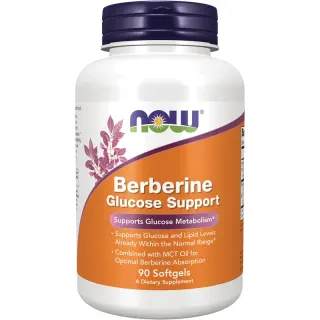
NOW Berberine Glucose Support
NOW Foods · softgelA cheap, no-frills berberine — same evidence, same berberine tolerability problem.
Inexpensive, disclosed berberine from a large reputable brand.
Berberine’s common GI side effects (cramping, diarrhea) still apply, especially across 1,200 mg/day.

Leanbean
Ultimate Life Ltd · capsuleA maximal glucomannan dose — which is also its risk: top-of-range fiber means you must take it carefully with plenty of water.
Glucomannan dosed at the full 3 g/day EFSA satiety level, fully disclosed.
At 3 g/day, glucomannan sits at the very top of the studied range — large glucomannan doses carry a documented risk of throat, esophageal, or GI blockage if not taken with enough water.