Ingredient Check
Magnesium for Sugar Cravings: What Each Form Actually Does
The one trial that tracked cravings found nothing. The blood sugar data is real but small. And the form you pick matters more than the label suggests.
Short answer: no trial has shown that magnesium reduces sugar cravings. The one placebo-controlled study that tracked cravings day by day found magnesium did nothing to them. What magnesium can do is fix a shortfall that nearly half of Americans have, and nudge blood sugar in a modest way that some cravings ride on.
So the useful question isn't "which magnesium kills cravings." It's which form actually gets absorbed, and what you can realistically expect once it does. That part has real data.
The quick version
- Cravings: the only trial that measured them (200 mg a day for 2 cycles) found no effect on the craving category.
- Blood sugar: a 2026 meta-analysis of 78 trials found small drops in fasting glucose (about 3.6 mg/dL) and insulin resistance. Real, but modest.
- Absorption: citrate beats oxide in two randomized studies. Oxide is the cheapest form and the worst absorbed.
- Glycinate: popular for being gentle. One small single-dose study didn't find a measurable rise in blood magnesium after it.
- Threonate: studied for sleep and memory, not cravings. The sleep trials were sponsored by the ingredient's makers.
Why people link magnesium to sugar cravings
The idea mostly comes from chocolate. Cocoa is rich in magnesium, chocolate is one of the most craved foods there is, so the story goes that your body is asking for the mineral. We picked that story apart in our breakdown of which deficiencies really cause sugar cravings, and it doesn't hold up well.
The shortfall part is real, though. Using NHANES 2013 to 2016 data, the NIH Office of Dietary Supplements reports that 48% of Americans get less magnesium from food and drink than they need on average (NIH ODS). Magnesium is also part of how insulin does its job, which is where the blood sugar angle comes in.
What the craving trial actually found
In 1998, researchers at the University of Reading gave 38 women 200 mg of magnesium a day (as magnesium oxide) or a placebo for two menstrual cycles. Everyone kept a daily diary of 22 symptoms, with a dedicated craving category (Walker et al., 1998). If that premenstrual week is your main problem, we checked calcium, chasteberry and the craving products in our ranking of supplements for period cravings.
Month 1: no effect on anything. Month 2: less bloating and fluid retention. Cravings didn't move in either month.
Two caveats cut both ways. The form was oxide, which absorbs poorly (more on that below), and the dose was low. So the result isn't a verdict on magnesium in general. It is, however, the only direct test we have, and it came back empty.
The blood sugar evidence, at its real size
This is the part of the magnesium story that has weight behind it. Sugar cravings often show up after a blood sugar dip, so anything that steadies glucose could plausibly help at the margins.
A 2026 dose-response meta-analysis pooled 78 randomized trials. Compared with control groups, magnesium lowered fasting glucose by about 3.6 mg/dL, HbA1c by 0.15 percentage points, and HOMA-IR (a measure of insulin resistance) by about 0.5. The authors called the effects "generally modest" and noted most trials used at least 300 mg a day for 12 weeks or more (Mohammadi et al., 2026).
An earlier meta-analysis of double-blind trials found clearer effects in people at high risk of blood sugar problems, including better glucose readings 2 hours after a sugar drink (Veronese et al., 2021). But a separate 2026 review of 15 trials in people with diabetes or prediabetes found no significant change in insulin resistance overall, with bigger responses in people whose insulin resistance was higher to begin with (Amiri et al., 2026).
Put together: magnesium supports normal blood sugar regulation a little, most in people who are low or metabolically stressed. It's not an appetite tool. If blood sugar is your main lever, chromium has more direct craving data, including a trial that measured carb cravings.
Which form of magnesium, compared
Every magnesium supplement is magnesium bonded to something else. That partner changes how much you absorb, how your gut handles it, and how much elemental magnesium you're actually getting per capsule.
Magnesium oxide
Cheap, dense (lots of elemental magnesium per pill), and poorly absorbed. In a 60-day randomized trial of 46 adults taking 300 mg a day, oxide produced no difference from placebo on the absorption markers (Walker et al., 2003). A 2025 review of randomized trials in healthy adults reached the same verdict, pinning part of the problem on oxide's poor solubility in water (Merschmann et al., 2025). It's also the form most likely to act as a laxative.
Magnesium citrate
The best-documented form for absorption. In the same 60-day trial, citrate produced the highest blood magnesium levels after both the first dose and 2 months of use (Walker et al., 2003). A crossover study in 14 men saw the same pattern: 400 mg as citrate raised urinary and blood magnesium, while the same dose as oxide didn't significantly move urine levels (Werner et al., 2019). The trade-off is that citrate can loosen stools at higher doses.
Magnesium glycinate (bisglycinate)
This is the form most often recommended for cravings online, usually because it's described as calming and easy on the stomach. The absorption data is thinner than the reputation. In a 2024 crossover study of 40 adults on a low-magnesium diet, bisglycinate didn't produce a significant rise in blood magnesium over 6 hours, while oxide and citrate did at some time points (Pajuelo et al., 2024).
Keep that in proportion: it was a single dose, sponsored by the maker of a competing magnesium ingredient, and 6 hours is a short window. We'd call glycinate unproven on absorption rather than proven poor. But the "best form" claims you'll see for it aren't coming from head-to-head data.
Magnesium L-threonate
Marketed for the brain. In a 21-day trial of 80 adults with sleep complaints, 1 g a day improved several ring-tracked sleep scores and self-rated mood and energy versus placebo (Hausenblas et al., 2024). A 6-week trial of 100 adults on 2 g a day found better scores on memory tests and self-rated sleep impairment, but no difference in ring-measured sleep (Lopresti and Smith, 2026).
Two honest notes. Authors from the ingredient's supplier were on the 2024 study. And threonate is expensive per milligram of actual magnesium, because most of the compound's weight is the threonate, not the mineral.
Where sleep fits in
If there's an indirect path from magnesium to fewer sugar cravings, sleep is the most likely one. In a 4-week randomized trial, short sleepers who were coached to sleep longer cut their free sugar intake by about 9.6 g a day compared with controls (Al Khatib et al., 2018).
That trial didn't use magnesium. It shows sleep matters for sugar intake. Whether a magnesium supplement improves sleep enough to change what you eat is untested. If sugar cravings hit you mostly at night, our guide to fixes that work inside 15 minutes is a better first stop.
If you want to try magnesium anyway
- Pick citrate if absorption is the goal. It has the most head-to-head data.
- Stay within 350 mg a day from supplements. That's the adult upper limit the NIH sets for supplemental magnesium, and diarrhea is the most common sign you've gone past what your gut tolerates (NIH ODS).
- Give it weeks, not days. The glucose trials mostly ran 12 weeks or longer.
- Check with your doctor first if you have kidney problems or take antibiotics, bisphosphonates, diuretics or acid reflux drugs, since magnesium interacts with several of them.
- Try food first. Pumpkin seeds, almonds, spinach, black beans and whole grains all carry meaningful amounts.
Magnesium is a reasonable thing to top up if you're low. Just don't expect it to be the thing that ends sugar cravings. For supplements with more direct craving data, see our ranked guide to supplements for sugar cravings. And if cravings feel less like a nudge and more like a loop you can't break, start with what's behind a sugar habit that won't quit. The rest of our appetite and craving coverage is scored on the same public rubric.
References
- Walker AF, De Souza MC, Vickers MF, et al. Magnesium supplementation alleviates premenstrual symptoms of fluid retention. Journal of Women's Health. 1998;7(9):1157-1165. PubMed 9861593
- Mohammadi S, Palermo A, Ojani P, et al. Comprehensive effects of magnesium supplementation on cardiometabolic risk factors: a systematic review and dose-response meta-analysis. Nutrients. 2026;18(15). PubMed 42588058
- Veronese N, Dominguez LJ, Pizzol D, et al. Oral magnesium supplementation for treating glucose metabolism parameters in people with or at risk of diabetes: a systematic review and meta-analysis of double-blind randomized controlled trials. Nutrients. 2021;13(11):4074. PubMed 34836329
- Amiri A, Seighali F, Gholami-Chahkand MS, et al. Oral magnesium supplements and insulin resistance in individuals with diabetes and pre-diabetes: an updated systematic review and meta-analysis of randomized controlled trials. BMC Nutrition. 2026. PubMed 42426860
- Walker AF, Marakis G, Christie S, Byng M. Mg citrate found more bioavailable than other Mg preparations in a randomised, double-blind study. Magnesium Research. 2003;16(3):183-191. PubMed 14596323
- Werner T, Kolisek M, Vormann J, et al. Assessment of bioavailability of Mg from Mg citrate and Mg oxide by measuring urinary excretion in Mg-saturated subjects. Magnesium Research. 2019;32(3):63-71. PubMed 32162607
- Merschmann R, Burgmer C, Eckert GP, Wagner AE. Bioavailability of magnesium and potassium salts used as potential substitutes for sodium chloride in human nutrition: a review. Molecular Nutrition & Food Research. 2025;69(22):e70227. PubMed 40931546
- Pajuelo D, Meissner JM, Negra T, Connolly A, Mullor JL. Comparative clinical study on magnesium absorption and side effects after oral intake of microencapsulated magnesium versus other magnesium sources. Nutrients. 2024;16(24):4367. PubMed 39770988
- Hausenblas HA, Lynch T, Hooper S, et al. Magnesium-L-threonate improves sleep quality and daytime functioning in adults with self-reported sleep problems: a randomized controlled trial. Sleep Medicine: X. 2024;8:100121. PubMed 39252819
- Lopresti AL, Smith SJ. The effects of magnesium L-threonate (Magtein) on cognitive performance and sleep quality in adults: a randomised, double-blind, placebo-controlled trial. Frontiers in Nutrition. 2026;12:1729164. PubMed 41601871
- Al Khatib HK, Hall WL, Creedon A, et al. Sleep extension is a feasible lifestyle intervention in free-living adults who are habitually short sleepers: a potential strategy for decreasing intake of free sugars? American Journal of Clinical Nutrition. 2018;107(1):43-53. PubMed 29381788
- NIH Office of Dietary Supplements. Magnesium: Fact Sheet for Health Professionals. ods.od.nih.gov
FAQ
Does magnesium help with sugar cravings?
There's no trial showing it does. The one placebo-controlled study that tracked cravings daily (200 mg a day for two menstrual cycles) found no effect on them. Magnesium does modestly support normal blood sugar regulation, especially in people who are low, which may help at the margins.
Which form of magnesium is best absorbed?
Magnesium citrate has the strongest head-to-head data: it beat magnesium oxide in a 60-day randomized trial and in a crossover study. Oxide is poorly absorbed. Glycinate is popular, but one small single-dose study found no significant rise in blood magnesium after it, so its absorption advantage is unproven.
How much magnesium should I take?
The NIH upper limit for magnesium from supplements is 350 mg a day for adults. Going over it commonly causes diarrhea. Most blood sugar trials used around 300 mg a day for 12 weeks or more. Check with your doctor if you have kidney issues or take medications magnesium can interact with.
Is magnesium glycinate or threonate better for cravings?
For cravings, neither magnesium glycinate nor threonate has been tested. Threonate has small trials on sleep and memory, partly run by its supplier. Glycinate is gentle on the stomach but has thin absorption data. If you want magnesium mainly to correct a shortfall, citrate is the best-documented choice.
Products mentioned

Metamucil 4-in-1 Fiber (Psyllium Husk)
Metamucil (Procter & Gamble) · powderBest Value: cheap, drinkable, and well-evidenced as a fiber — but single-pathway and a heavy gel load.
Pennies per serving — by far the cheapest in the set.
Single pathway — a fiber, not a craving formula.
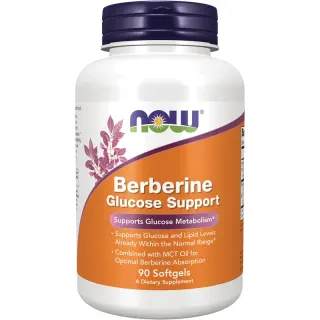
NOW Berberine Glucose Support
NOW Foods · softgelA cheap, no-frills berberine — same evidence, same berberine tolerability problem.
Inexpensive, disclosed berberine from a large reputable brand.
Berberine’s common GI side effects (cramping, diarrhea) still apply, especially across 1,200 mg/day.
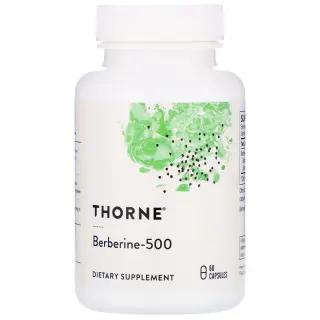
Thorne Berberine (1,000 mg)
Thorne · capsuleWell-evidenced berberine for metabolic support — but the effective dose is rough on a lot of stomachs.
Berberine has real human RCT evidence for glucose and lipid markers.
Berberine commonly causes GI distress — cramping, diarrhea, constipation — and at the 1,000 mg+ effective dose it is hard for many people to tolerate.