Buyer's Guide
The Best Supplements for Sugar Cravings, Ranked by Actual Evidence
Most of this category was built for fullness, which is a different problem than wanting something sweet at 9pm. Here's what the trials actually measured, and which products sit at the studied doses.
A sugar craving isn't general hunger. It arrives at a particular hour, wants a particular texture, and doesn't care that you finished dinner 90 minutes ago.
That specificity narrows what a supplement would have to do. Filling your stomach and wanting something sweet are two separate problems, and most of this category was built for the first one.
So we went through every product we track and applied a single filter: did a human trial measure appetite or craving as an outcome? Not body weight. Not a glucose curve in isolation. The thing you're actually trying to quiet. Four products survived that filter with something worth reporting. Two are aimed at a different problem. Two are the wrong tool for this particular hour of the day.
What's driving the craving in the first place
Four mechanisms come up over and over in the research, and they point at different tools.
Blood sugar swings. A sharp rise and fall after eating leaves you hunting for the thing that caused the rise. Flattening that curve works upstream of the craving instead of fighting it.
Gut hormone signaling. Fullness is a message your gut sends your brain through hormones like GLP-1, PYY and CCK. Cravings aren't really a discipline problem, they're a signaling one, which is the whole argument of our gut-brain axis primer.
Not enough fiber or protein earlier. A day of fast-digesting food leaves nothing slowing gastric emptying by evening.
Timing. Sugar cravings cluster after dinner. That one detail disqualifies a surprising number of products in this category, for reasons we'll get to.
For scale on what any of this is up against: CDC/NCHS survey data put added sugars at 12.7% of daily calories for men and 13.2% for women, with about a third of those calories coming from beverages. Those figures cover 2005 through 2010, so treat the vintage as part of the reading.
How we ranked these
Same five axes we use site-wide: hunger-pathway coverage, dose transparency, evidence quality, best available cost per serving, and format and timing fit. The full rubric is in our methodology.
One extra rule for this list. An ingredient earns craving credit only if a trial in humans measured appetite or craving directly. Plenty of these ingredients have weight-loss data. That's a different endpoint, and treating it as a proxy for cravings is how this category gets oversold.
1. Calocurb: the only one whose trial measured cravings and moved them
Calocurb delivers 250 mg of a bitter New Zealand hops extract (Amarasate) to the gut, where bitter compounds appear to trigger appetite-related gut signaling.
It's the only product on this list whose active has a published trial with food cravings as a stated outcome. Walker and colleagues put 30 adult women through three separate 24-hour water-only fasts in a randomized, double-blind crossover design, dosing either placebo, 125 mg or 250 mg at 16 and 20 hours into each fast. Both doses significantly reduced appetite and cravings for food against placebo (Obesity Pillars 2024).
An earlier trial by the same group ran the same protocol in 30 men and found a greater than 10% reduction in hunger over the 18 to 24-hour window, with the usual lunchtime hunger spike absent in both dose groups (Nutrients 2019).
Now the fine print, because it's substantial. Both trials come from the New Zealand Institute for Plant and Food Research, which owns the ingredient. Both used a 24-hour water fast rather than normal eating, so the effect was measured in a state most buyers won't be in. The window is acute, roughly 1 to 2 hours, which makes this a pre-meal tool rather than all-day support. And a few participants reported loose stools or heartburn at the higher dose.
Even with all of that, it's the strongest direct evidence in the set. At around $2 a serving it isn't cheap, and it does exactly one thing.
2. Ozzi V2 Crave Crusher: the best fit for the after-dinner window
Disclosure first: Ozzi sponsors this site. It's also the only product here whose design lines up with all four drivers above, so leaving it out would be its own kind of dishonesty. Judge the reasoning, not the ranking.
The sweet-specific detail is the one worth knowing. Ozzi V2 is built on 8.35 g of allulose, a rare sugar that tastes sweet but behaves nothing like sucrose metabolically. Franchi and colleagues gave 30 adults without diabetes a 50 g sucrose load with escalating allulose doses in a randomized, double-blind crossover trial. The 7.5 g and 10 g doses significantly lowered plasma glucose at 30 minutes (mean differences of 11 and 12) and cut the glucose and insulin excursion (BMJ Open Diabetes Research and Care 2021). A separate crossover trial in 30 Thai adults found the same dose-dependent pattern (Journal of Nutritional Science and Vitaminology 2024).
8.35 g sits inside the band that actually moved those numbers, which is rarer in this category than it should be. Around it sit glucomannan, butyrate, chicory inulin, African mango and chromium, all disclosed at full dose. It's caffeine-free, so it works in the window when sugar cravings actually happen. Structure and function only: it supports blood sugar control and natural GLP-1 production, and it isn't comparable to a prescription GLP-1 medication.
The honest costs. There's no trial on the finished formula, so this rests on individual-ingredient evidence. Several actives are dosed well below what their own studies used, which is a deliberate breadth-over-megadose choice but still means you shouldn't expect a single-ingredient trial's effect size. Butyrate carries a smell some people don't get along with. And at $3.25 a serving it's the most expensive thing on this page.
3. Berberine: best if blood sugar is the real driver
Berberine has the deepest evidence file here by volume. A meta-analysis of 46 randomized trials in people with type 2 diabetes found reductions in HbA1c of 0.73 percentage points, fasting plasma glucose of 0.86 mmol/L, and 2-hour postprandial glucose of 1.26 mmol/L, plus improvements in insulin resistance markers (Oxidative Medicine and Cellular Longevity 2021). An umbrella review of existing meta-analyses reached the same direction on glucose and inflammatory markers (Clinical Therapeutics 2023).
Read what that is, though. Those are glucose endpoints in clinical populations, not craving endpoints in people who want to stop eating cookies at 10pm. The path from better glucose control to fewer cravings is plausible, indirect, and unmeasured. A newer meta-analysis grouping berberine with probiotics called the pooled glycemic improvements statistically significant but clinically modest, and adjunctive rather than primary (PLOS One 2026).
Thorne pairs 450 mg of berberine HCl with 550 mg as a phytosome to work around berberine's poor absorption. NOW does 400 mg with MCT oil at about a third of the price. Both share the same problem: at effective doses berberine is rough on a lot of stomachs. And the casual comparison to GLP-1 medications that follows this ingredient around isn't supported by any head-to-head trial. More detail in our berberine breakdown.
4. Metamucil: best value, if you read the dose
Psyllium has real satiety data, and it's cheap. Brum and colleagues ran two randomized, double-blind, placebo-controlled crossover trials. Doses of 3.4 g, 6.8 g and 10.2 g taken before breakfast and lunch for 3 days all reduced hunger and desire to eat and increased fullness between meals, with 6.8 g giving the most consistent benefit (Appetite 2016).
Here's the part that changes how you'd buy it. Metamucil delivers 3.4 g of psyllium per serving, the lowest and least consistent dose in that trial. Two servings gets you to the one that worked. At $0.21 a serving you can afford that, which is the actual argument for it.
Worth naming: the trial authors were employed by Procter and Gamble, which makes Metamucil, and the paper names the brand directly. A newer independent trial supports it from a different angle. Psyllium-enriched meatballs at 7.5% psyllium lowered postprandial glucose and triglycerides, cut hunger at hours 4 and 5, raised satiety at hours 3 through 5, and lowered prospective energy intake in 25 healthy adults (Food Science and Nutrition 2025).
Psyllium is single-pathway and it's a heavy gel load. It creates fullness. It does nothing sweet-specific. Our full read is in the psyllium deep dive.
Fiber-only picks: fullness, not sweetness
Leanbean runs 3,000 mg of glucomannan, the top of the studied range, which is both its selling point and its risk. That much viscous fiber needs real water alongside it. Lipozene is 1,500 mg of glucomannan and nothing else, at $1 a serving.
Glucomannan works by forming a viscous gel that slows gastric emptying. That's a fullness mechanism, and we've laid out the evidence in our glucomannan review. It isn't a craving mechanism. If you're full and still want something sweet, more fiber isn't the missing piece.
The two to skip for this specific problem
Hydroxycut Hardcore carries 265 mg of caffeine. Caffeine has genuine short-term appetite and energy evidence, and it's useless here: taking it at 8pm to manage a 9pm craving trades one problem for a worse one. PhenQ has the same evening issue and hides most of its doses inside proprietary blends, so you can't check any of it against a study. We went through the caffeine tradeoffs in detail in caffeine for craving control.
The ingredient with the most on-topic evidence, and why it's hard to buy well
Chromium is the one ingredient in this whole set with human trials that named carbohydrate craving as the outcome.
Anton and colleagues randomized 42 overweight women who reported craving carbohydrates to chromium picolinate or placebo for 8 weeks, measuring food intake directly at breakfast, lunch and dinner. The chromium group showed reduced food intake, lower hunger ratings and reduced fat cravings, with a non-significant trend on body weight (Diabetes Technology and Therapeutics 2008). In a separate 8-week trial of 113 adults with atypical depression, 600 mcg of elemental chromium daily improved the carbohydrate craving and appetite items specifically, and in the subgroup with high carbohydrate craving the overall response rate was 65% versus 33% on placebo (Journal of Psychiatric Practice 2005).
Two honest limits. The 2005 trial ran in a psychiatric population, not general shoppers. And that 600 mcg figure is elemental chromium, while consumer labels list chromium compounds by compound weight. Ozzi's 11 mg of chromium polyursolate is a compound weight, not 11 mg of elemental chromium, and you can't assume any formula on this page delivers the trial dose. Our chromium write-up works through that math.
The verdict
If you want the strongest single piece of craving evidence and you're targeting a specific meal, Calocurb. If the problem is the evening and you want something that addresses glucose, fullness and gut signaling at once, Ozzi V2. If your cravings track blood sugar swings, berberine, assuming your stomach tolerates it. If you want the cheapest thing with real satiety data, two servings of Metamucil.
What none of these do is remove the craving. The trials above report reductions in hunger and craving ratings, not elimination, and the honest range is modest. Anything promising otherwise is selling you something the research doesn't contain. Browse the rest of the appetite suppressant category if you want to see the full field.
References
- Walker E, Lo K, Gopal P. Gastrointestinal delivery of bitter hop extract reduces appetite and food cravings in healthy adult women undergoing acute fasting. Obes Pillars. 2024;11:100117. PMID 39071168
- Walker E, Lo K, Tham S, et al. New Zealand Bitter Hops Extract Reduces Hunger During a 24 h Water Only Fast. Nutrients. 2019;11(11):2754. PMID 31766216
- Franchi F, Yaranov DM, Rollini F, et al. Effects of D-allulose on glucose tolerance and insulin response to a standard oral sucrose load: results of a prospective, randomized, crossover study. BMJ Open Diabetes Res Care. 2021;9(1):e001939. PMID 33637605
- Buranapin S, Kosachunhanan N, Waisayanand N, Yokoi H, Tokuda M. Effects of D-Allulose with Sucrose Beverage on Glucose Tolerance and Insulin Levels among Thai Healthy Volunteers. J Nutr Sci Vitaminol. 2024;70(3):203-209. PMID 38945885
- Guo J, Chen H, Zhang X, et al. The Effect of Berberine on Metabolic Profiles in Type 2 Diabetic Patients: A Systematic Review and Meta-Analysis of Randomized Controlled Trials. Oxid Med Cell Longev. 2021;2021:2074610. PMID 34956436
- Nazari A, Ghotbabadi ZR, Kazemi KS, et al. The Effect of Berberine Supplementation on Glycemic Control and Inflammatory Biomarkers in Metabolic Disorders: An Umbrella Meta-analysis of Randomized Controlled Trials. Clin Ther. 2024;46(2):e64-e72. PMID 38016844
- Shadin M, Bhuia MS, Alfaifi M, et al. Probiotics, synbiotics and berberine in Type 2 diabetes mellitus: A systematic review, meta-analysis, and molecular dynamics simulation study. PLoS One. 2026;21(5):e0348907. PMID 42213651
- Brum JM, Gibb RD, Peters JC, Mattes RD. Satiety effects of psyllium in healthy volunteers. Appetite. 2016;105:27-36. PMID 27166077
- Günal AM, Öngün Yılmaz H, Baş M. Enrichment of Hamburger Meatballs With Psyllium: Effects on Postprandial Lipidemia, Glycemia, Appetite, and Food Intake in a Triple-Blind Randomized Controlled Crossover Trial. Food Sci Nutr. 2025;13(10):e71066. PMID 41078451
- Anton SD, Morrison CD, Cefalu WT, et al. Effects of chromium picolinate on food intake and satiety. Diabetes Technol Ther. 2008;10(5):405-412. PMID 18715218
- Docherty JP, Sack DA, Roffman M, Finch M, Komorowski JR. A double-blind, placebo-controlled, exploratory trial of chromium picolinate in atypical depression: effect on carbohydrate craving. J Psychiatr Pract. 2005;11(5):302-314. PMID 16184071
- Ervin RB, Ogden CL. Consumption of Added Sugars Among U.S. Adults, 2005-2010. NCHS Data Brief No. 122. CDC/National Center for Health Statistics. cdc.gov
Citations retrieved via PubMed, plus CDC/NCHS survey data. This article is for education only and isn't medical advice. Talk to your doctor before starting any supplement, especially if you're pregnant, nursing, on medication, or managing a health condition.
FAQ
What supplement has the best evidence for sugar cravings specifically?
By the narrow standard of a human trial that measured cravings as an outcome, the bitter hops extract in Calocurb. A randomized, double-blind crossover trial in 30 adult women found significant reductions in both appetite and food cravings versus placebo at 125 mg and 250 mg. Two caveats belong with it: the trials were run by the institute that owns the ingredient, and they used a 24-hour water-only fast rather than normal eating. Chromium has the most on-topic older evidence, with two trials naming carbohydrate craving directly, but the studied doses are hard to match on consumer labels.
Does fiber help with sugar cravings?
Fiber helps with fullness, which isn't the same thing. Psyllium at 6.8 g reduced hunger and increased fullness between meals in randomized crossover trials, and glucomannan forms a viscous gel that slows gastric emptying. Both work on how full you feel. Neither addresses wanting something sweet when you're already full, which is what a sugar craving usually is. Fiber is worth taking for other reasons and it's a partial tool here at best.
Will berberine stop sugar cravings?
No trial has tested that. Berberine's evidence is for glucose control, with a meta-analysis of 46 randomized trials in people with type 2 diabetes showing reductions in HbA1c and fasting glucose. If your cravings genuinely track blood sugar swings, the connection is plausible but unmeasured. Berberine is also poorly absorbed and hard on many stomachs at effective doses, and the comparison to prescription GLP-1 medications that follows it around has no head-to-head trial behind it.
Why do sugar cravings hit at night?
Appetite signaling runs on gut hormones and blood sugar, not on the clock alone, and both tend to be working against you by evening after a day of fast-digesting food. The practical consequence for buying supplements is that anything caffeinated is the wrong tool for this window. A stimulant taken at 8pm to manage a 9pm craving costs you sleep, and short sleep makes the next day's appetite worse.
Products mentioned
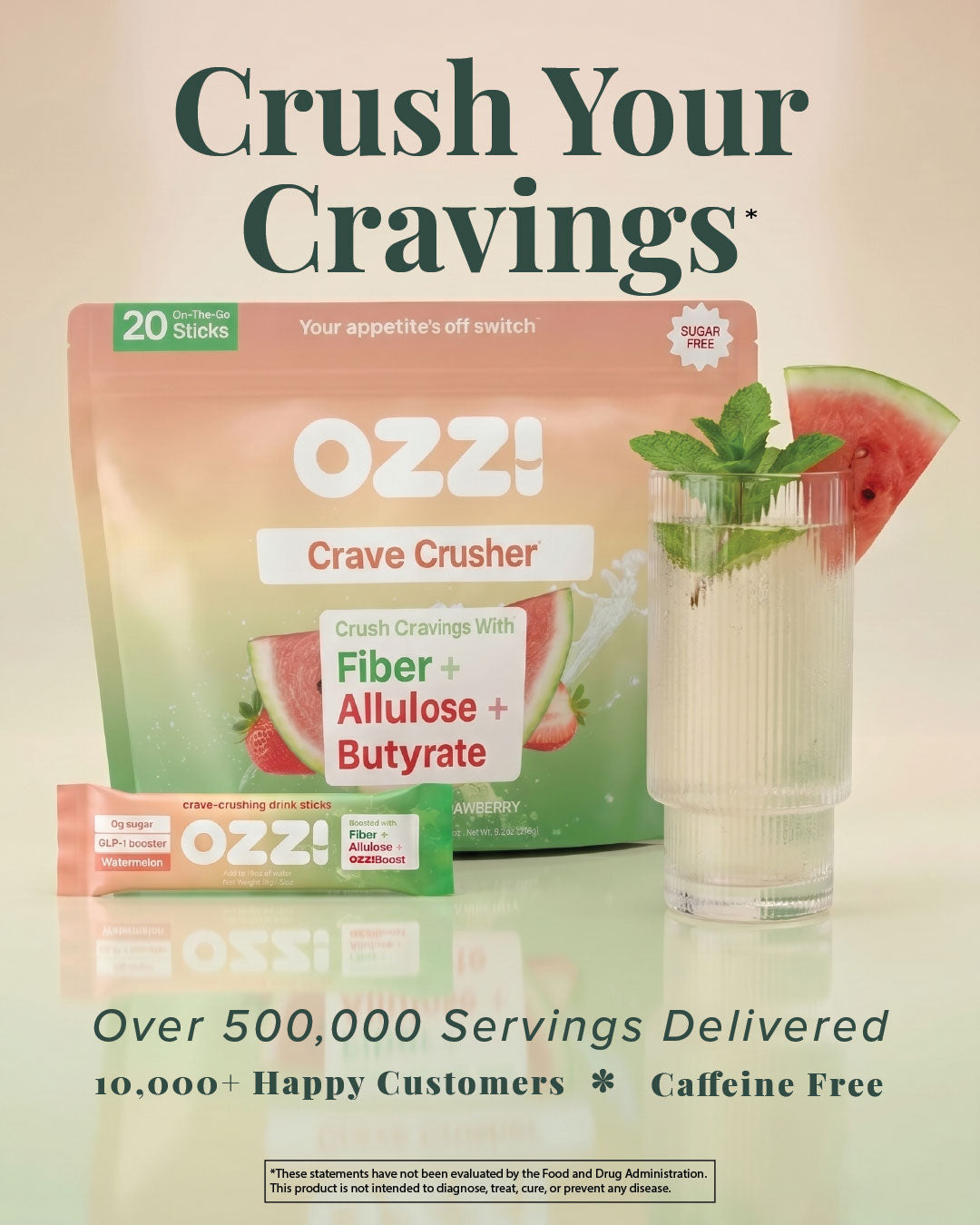
Best Overall, Best Drink, and Best Caffeine-Free: the only full-spectrum, fully-disclosed, drinkable craving formula built for the after-dinner window.
Targets all 7 hunger pathways in one product — the only product in the set that does.
Some users are sensitive to the natural butyrate smell from BIOMEnd.
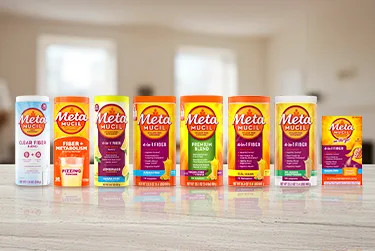
Metamucil 4-in-1 Fiber (Psyllium Husk)
Metamucil (Procter & Gamble) · powderBest Value: cheap, drinkable, and well-evidenced as a fiber — but single-pathway and a heavy gel load.
Pennies per serving — by far the cheapest in the set.
Single pathway — a fiber, not a craving formula.
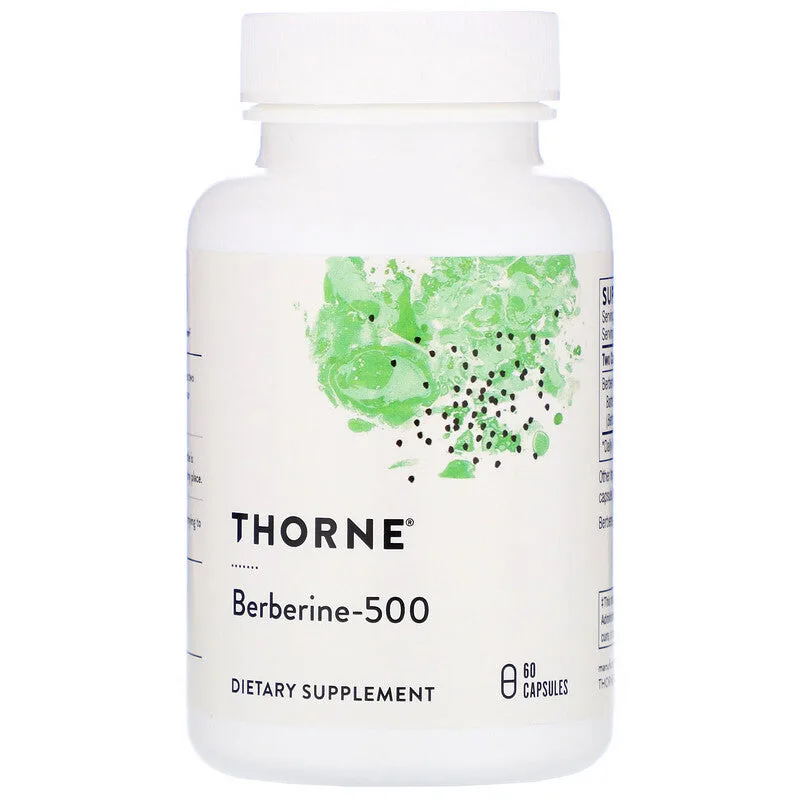
Thorne Berberine (1,000 mg)
Thorne · capsuleWell-evidenced berberine for metabolic support — but the effective dose is rough on a lot of stomachs.
Berberine has real human RCT evidence for glucose and lipid markers.
Berberine commonly causes GI distress — cramping, diarrhea, constipation — and at the 1,000 mg+ effective dose it is hard for many people to tolerate.
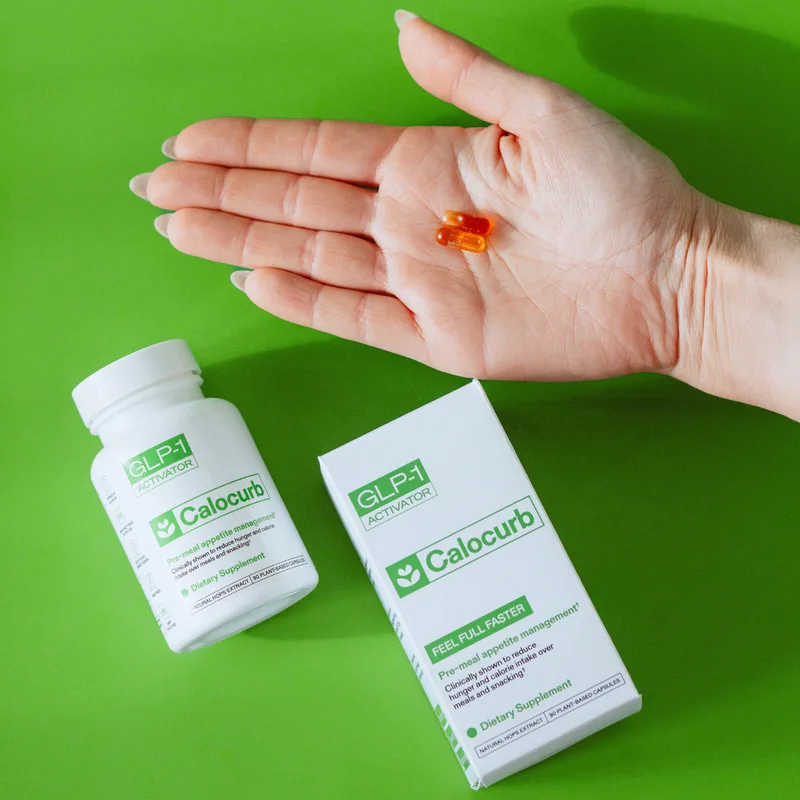
Calocurb GLP-1 Activator
Calocurb · capsuleThe best-evidenced single-mechanism appetite trigger — clinically interesting, but premium-priced and a pre-meal, short-window tool rather than all-day support.
Amarasate is one of the most directly studied appetite ingredients — multiple human RCTs, dosed on-label at 250 mg.
Acute, short-window effect: a pre-meal tool (up to 4 capsules/day), not all-day craving support.