Ingredient Science
The Science of Glucomannan: What Konjac Fiber Really Does for Hunger
It swells into a gel that can hold more water than almost any fiber in the food supply. That's a real trick. It's also where the marketing gets ahead of the evidence.
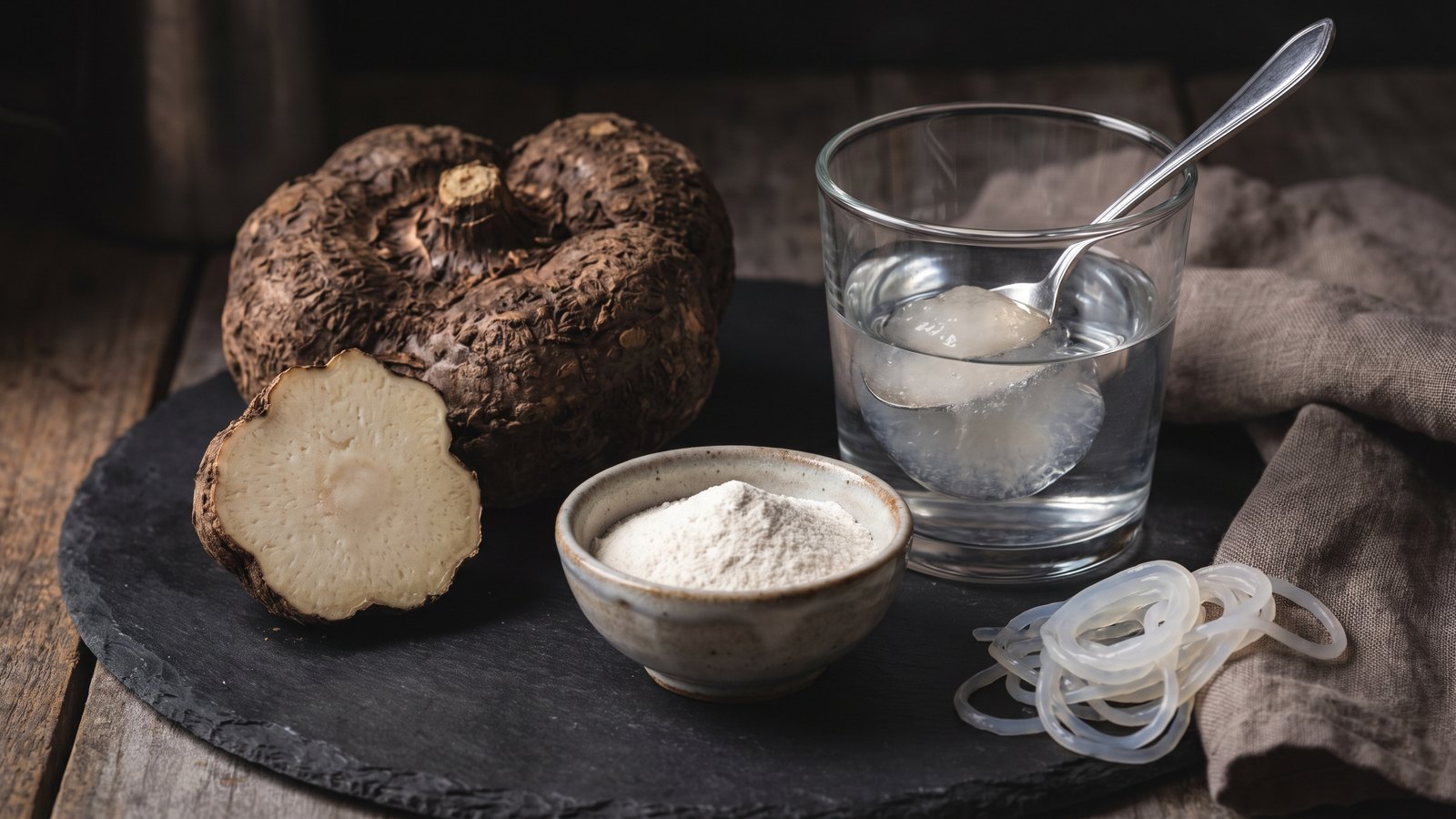
Glucomannan is the fiber behind half the "feel full, eat less" supplements on the shelf, and behind those zero-calorie shirataki noodles that squeak a little when you chew them. It comes from the root of the konjac plant, a knobby Asian tuber, and it has one genuinely unusual trick: it soaks up water like almost nothing else in the food supply.
That trick is the whole pitch. It's also where the hype and the evidence start to part ways. Here's what glucomannan actually does, what the human trials show, and where the marketing gets out over its skis.
What glucomannan actually is
It's a viscous soluble fiber: a long chain of glucose and mannose sugars your body can't digest. What sets it apart from other fibers is viscosity. Gram for gram, glucomannan holds more water and forms a thicker gel than psyllium, oat beta-glucan, or guar gum.
Drop a spoonful in water and watch it bloom into a thick, clear jelly. That's the same thing it does in your stomach, and it's the basis for every claim anyone makes about it.
How it's supposed to work
Three mechanisms, all downstream of that gel.
First, bulk. The hydrated fiber takes up space in your stomach, stretching the stomach wall and firing off fullness signals. More volume in, less room for food, an earlier "I'm done."
Second, it slows everything down. The gel thickens stomach contents, so food leaves the stomach more gradually and sugars get absorbed more slowly. That flattens the post-meal blood-sugar spike.
Third, gut hormones. As the viscous mush moves through the small intestine, it appears to nudge the release of the satiety hormones CCK, GLP-1, and PYY, the same family the weight-loss drugs act on. In a controlled study, konjac diets with higher water-holding capacity and viscosity increased stomach distention and raised plasma CCK, GLP-1, and PYY, and the animals ate less as a result (Xu et al., 2023). That was a rat study, so read it as mechanism, not proof for people.
Does it actually curb appetite?
Short-term, the satiety evidence is reasonably encouraging.
In a randomized cross-over trial, 16 healthy adults swapped a high-carb pasta preload for konjac-gel noodles. Replacing the pasta cut their cumulative energy intake by up to 47%, and here's the part that matters: they didn't make up for it by eating more at the next meal (Au-Yeung et al., 2017). The calorie deficit just stuck.
One honest wrinkle from that same trial. The all-gel version was actually less filling than a half-pasta, half-gel mix. A water-heavy gel empties from the stomach faster than a mix that has some real food in it, so piling on more glucomannan isn't automatically better.
A 2025 trial adds a fresher data point. When 16 healthy adults took a 3-gram glucomannan-based fiber complex alongside a glucose drink, they reported greater fullness and less desire to eat, and their insulin response dropped at 45, 75, and 90 minutes compared with the drink alone (Ancu et al., 2025). Worth flagging that the product paired glucomannan with a prebiotic fiber and chromium, so it's the combo on trial, not glucomannan on its own.
Where the evidence gets stronger: cholesterol and blood sugar
This is the part the weight-loss marketing tends to skip. Glucomannan's best-supported effect isn't on the scale, it's on your lipids.
A meta-analysis of 14 randomized trials (531 people total) found glucomannan lowered LDL cholesterol by about 16 mg/dL and total cholesterol by about 19 mg/dL, with smaller drops in triglycerides and fasting blood glucose (Sood et al., 2008). Those are real, useful numbers. The likely driver is the gel binding bile acids in the gut and slowing sugar absorption, both plausible and well mapped.
The same analysis found a body-weight drop of about 0.79 kg, which brings us to the awkward bit.
Where it gets weaker: the scale
As a standalone weight-loss agent, glucomannan underdelivers on its own billing.
A 2014 meta-analysis of eight randomized trials found no statistically significant weight loss versus placebo, a difference of roughly 0.22 kg that could easily be noise (Onakpoya et al., 2014). A much larger 2023 network meta-analysis of 111 supplement trials was kinder, pegging glucomannan at about 1.36 kg of weight loss, but it rated the certainty of that estimate as low (Shahinfar et al., 2023).
So the honest read lands somewhere between "nothing" and "a pound or so," with weak confidence either way. Fiber can help you eat less in the moment. Whether that turns into lasting fat loss depends on everything around it, and a fiber can't carry that job alone.
European regulators split the difference carefully. EFSA permits a claim that 3 grams a day of glucomannan, taken in three 1-gram doses with water before meals, "contributes to weight loss" only in the context of an energy-restricted diet. The fiber is cast as a helper, not the engine, which is about right.
Dose, and the safety rule you can't skip
Studied doses run roughly 2 to 4 grams a day, usually split before meals with a full glass of water. The EFSA satiety level is 3 grams a day.
The water isn't optional, and this is the one genuinely important safety note. Because glucomannan swells so aggressively, taking a tablet or a big dose with too little liquid carries a documented risk of the fiber expanding in the throat or esophagus before it reaches the stomach. Compressed glucomannan tablets were restricted or pulled in several countries for exactly this reason. Powder or capsules taken with plenty of water, and never right before lying down, sidestep most of the concern.
The routine side effects are the usual fiber crew: gas, bloating, and loose stools or constipation, worst when you ramp up too fast (Onakpoya et al., 2014). Start low, build slowly, drink water.
So where does it fit?
Glucomannan is a legit tool with a narrow job. It's genuinely good at short-term fullness and at gently improving cholesterol and post-meal blood sugar. It's mediocre as a solo weight-loss pill, and any product selling it as one is overselling.
You'll find it dosed all over the map. Lipozene is basically single-ingredient glucomannan at 1.5 g per serving. Leanbean pushes a full 3 g across six capsules, right at the top of the studied range (and the dose where the water rule matters most). If you'd rather get viscous fiber from a cheaper, deeply studied option, psyllium covers similar ground with an even larger evidence base. We line up the fiber-forward products in our fiber and satiety breakdown, and our scoring methodology lays out how we weigh dose, tolerability, and format.
The broader lesson is the one we keep coming back to: a measured dose of a fiber you actually tolerate beats a megadose that bloats you into quitting by week two. We made that case about the fiber-is-the-new-protein wave and about high-fiber "low sugar" candy, and glucomannan is the same story in a different wrapper. Good fiber. Not a shortcut.
References
Based on articles retrieved from PubMed:
- Xu C, Yu C, Yang S, et al. Effects of Physical Properties of Konjac Glucomannan on Appetite Response of Rats. Foods. 2023. PubMed
- Au-Yeung F, Jovanovski E, Jenkins AL, et al. The effects of gelled konjac glucomannan fibre on appetite and energy intake in healthy individuals: a randomised cross-over trial. Br J Nutr. 2017. PubMed
- Ancu O, Mackenzie RWA, Patterson M, et al. Impact of a mineral enriched, fiber complex on glycaemic response and satiation in healthy adults: a double-blind, crossover intervention study. Eur J Nutr. 2025. PubMed
- Sood N, Baker WL, Coleman CI. Effect of glucomannan on plasma lipid and glucose concentrations, body weight, and blood pressure: systematic review and meta-analysis. Am J Clin Nutr. 2008. PubMed
- Onakpoya I, Posadzki P, Ernst E. The efficacy of glucomannan supplementation in overweight and obesity: a systematic review and meta-analysis of randomized clinical trials. J Am Coll Nutr. 2014. PubMed
- Shahinfar H, Jayedi A, Torabynasab K, et al. Comparative effects of nutraceuticals on body weight in adults with overweight or obesity: a systematic review and network meta-analysis of 111 randomized clinical trials. Pharmacol Res. 2023. PubMed
FAQ
Does glucomannan really help you lose weight?
Modestly at best, and the evidence is mixed. It reliably helps you feel fuller and eat less in the short term, but meta-analyses of longer trials range from no significant weight loss (about 0.22 kg) to roughly 1.36 kg with low certainty. It's a helper inside an energy-restricted diet, not a weight-loss pill on its own.
How much glucomannan should I take, and how?
Studied doses are about 2 to 4 grams a day, and the EFSA satiety level is 3 grams a day, split into doses before meals. Always take it with a full glass of water. The gel expands fast, so taking it dry or with too little liquid is the main thing to avoid.
Is glucomannan safe?
For most people, yes, as powder or capsules taken with plenty of water. The one real concern is that it swells so aggressively that a tablet or big dose with too little liquid can expand in the throat or esophagus. Compressed tablets were restricted in several countries for that reason. Common side effects are ordinary fiber ones: gas, bloating, and changes in stool, worst if you ramp up quickly.
Glucomannan or psyllium?
Both are viscous soluble fibers that work on fullness and cholesterol. Glucomannan is more viscous gram for gram, but psyllium has a deeper, broader evidence base and is usually cheaper. If you tolerate one better than the other, that matters more than the small differences on paper.
Products mentioned
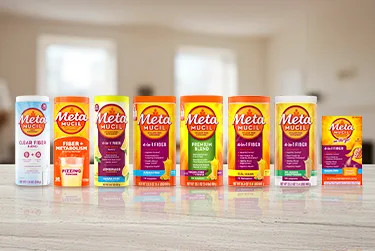
Metamucil 4-in-1 Fiber (Psyllium Husk)
Metamucil (Procter & Gamble) · powderBest Value: cheap, drinkable, and well-evidenced as a fiber — but single-pathway and a heavy gel load.
Pennies per serving — by far the cheapest in the set.
Single pathway — a fiber, not a craving formula.

Leanbean
Ultimate Life Ltd · capsuleA maximal glucomannan dose — which is also its risk: top-of-range fiber means you must take it carefully with plenty of water.
Glucomannan dosed at the full 3 g/day EFSA satiety level, fully disclosed.
At 3 g/day, glucomannan sits at the very top of the studied range — large glucomannan doses carry a documented risk of throat, esophageal, or GI blockage if not taken with enough water.
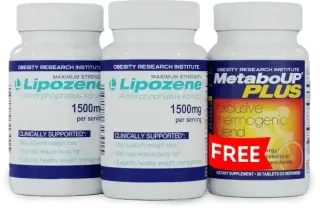
Lipozene
Obesity Research Institute · capsuleCheap single-ingredient glucomannan — fine as a fiber, but it does only one thing.
Single, disclosed ingredient.
One pathway only (fiber satiety).