Nutrition Trends
Is Fiber the Next Protein? The Hype vs. the Reality
Fiber is suddenly everywhere with protein-powder energy. The gap it's fixing is real. Some of the promises around it aren't. Here's the honest split.
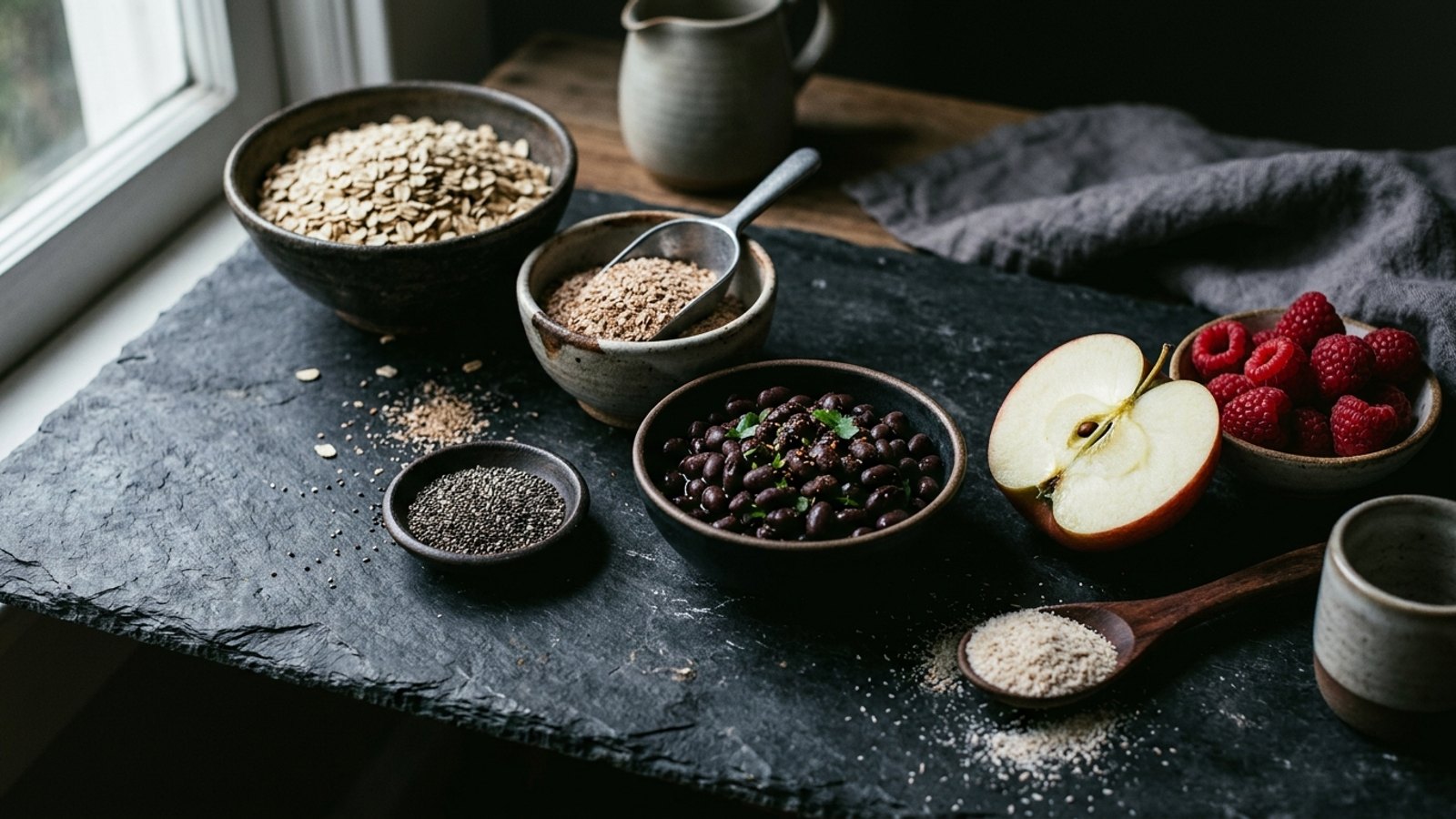
Fiber is having a protein moment. It's on the front of cereal boxes, stirred into sparkling water, and sold by the scoop with the same glossy branding that turned protein powder into a multibillion-dollar habit. Search interest is up, TikTok has decided "fibermaxxing" is a thing, and every wellness brand suddenly wants to talk about your gut.
So here's the fair question. Is this a real shift, or just the next ingredient the internet got excited about?
A bit of both, honestly. The trend rides some genuine science and a lot of borrowed hype. Sorting one from the other is the whole point of this piece.
Where the hype came from
Three things stacked up at once.
First, the GLP-1 era. The blockbuster weight-loss drugs work partly by ramping up gut hormones that signal fullness, and certain fibers nudge some of the same machinery, gently. That got fiber pulled into the conversation as the "natural" cousin. The framing is loose, but it put fiber in front of a massive audience.
Second, gut health went mainstream. Once people started caring about their microbiome, fiber (the stuff those bacteria actually eat) had an obvious story to tell.
Third, protein fatigue. Plenty of people already max out protein and want the next lever to pull. Fiber is the tidy answer, and it's cheap.
The part that's genuinely real: the gap
Strip away the marketing and there's a real problem underneath. Most people don't get enough fiber, and it isn't close.
The average US adult eats about 16 grams a day (roughly 18 for men, 15 for women), according to USDA food-survey data. The Adequate Intake targets are 25 grams a day for women and 38 for men. So the typical adult is running at about half, give or take.
That's the honest core of the trend. A lot of supplement fads invent a deficiency to sell you the fix. The fiber gap is documented, and it's old news to dietitians. If fiber's moment gets people to close even part of it, that's a genuinely good outcome.
Does fiber earn the hype?
Fiber's best-supported claim for the craving crowd is satiety, and the evidence here is decent, if modest.
A 2026 systematic review in Nutrition Reviews pooled 48 human trials and found that higher cereal-fiber intake reliably improved fullness and appetite ratings, with rye and oat fibers doing the most work (Machalias et al., 2026). The catch the authors flag: those satiety signals didn't consistently translate into people eating less at the next meal.
Individual trials tell a similar story. In a randomized controlled trial of 67 healthy adults, a beta-glucan-rich barley blunted the post-meal blood-sugar spike, lowered hunger, and raised the fullness hormone PYY compared with a rice-flour placebo (Kim et al., 2024).
The mechanism is reasonably well mapped. When gut bacteria ferment certain fibers, they produce short-chain fatty acids that trigger the release of GLP-1 and PYY, the same satiety hormones the drugs mimic (Kim et al., 2017). So the "natural GLP-1" framing isn't pure fiction. It's just a much gentler push, and nobody should read it as anything close to a prescription drug.
Where reality bites: signals aren't results
This is where the hype outruns the data. Feeling fuller is not the same as losing weight, and the trials are blunt about it.
In a 6-week study, 30 grams a day of oligofructose (a fermentable fiber) raised PYY and cut both hunger and the drive to eat, which sounds like a win. Body weight and body fat didn't budge (Daud et al., 2014).
That gap shows up over and over. Fiber can move the appetite dials in the short term. Whether that turns into fat loss depends on everything around it: what you eat instead, how long you keep it up, whether the extra fullness actually changes how much you put on the plate. Anyone selling fiber as a shortcut to the scale is overselling it.
The downside the marketing skips
Fiber has a real cost if you rush it, and the "more is better" energy of this trend makes that easy to do.
Pile on fermentable fiber quickly and your gut bacteria throw a party you'll feel: gas, bloating, cramps. In a controlled trial, adults taking corn-bran arabinoxylan at working doses (25 grams a day for women, 35 for men) reported more flatulence, bloating, and stomach aches for the first three weeks (Deehan et al., 2024).
The encouraging half of that same study: symptoms faded by the end as people's microbiomes adapted. Your gut can learn to handle more fiber. It just wants a slow on-ramp instead of a megadose on day one.
Dose matters, and so does the individual. In a trial of 40 adults taking 18 grams a day of inulin, side effects were dose-dependent and uneven. The people who tolerated it best were the ones already eating plenty of fiber, while those with the lowest baseline intake felt it most (Letourneau et al., 2024). Which is a bit of a cruel joke: the people who most need to add fiber are often the ones whose guts complain loudest at first.
If a specific fiber reliably wrecks you (inulin and chicory root are common culprits), that can be a FODMAP-sensitivity thing rather than a personal failure. Switching fiber type usually helps more than gritting your teeth through it.
Supplement or actual food?
So should you buy the powder? Sometimes. But the whole-food version has quiet advantages a scoop can't copy.
Fiber in an apple, a bowl of oats, or a can of beans arrives packaged with water, chewing time, and a mix of fiber types, which paces how fast it hits your gut. That built-in speed limit is part of why food rarely blows you up the way a concentrated dose can.
We covered the extreme version of this in our breakdown of high-fiber "low-sugar" candy, where a handful of gummies delivers half a day's fiber with no brakes and sends people running to the bathroom. Same nutrient, wildly different experience, mostly down to format and speed.
Supplements earn their place when food isn't closing the gap: a specific target like blood-sugar response or regularity, a fiber you actually tolerate, and a dose you build up to. Psyllium is a good example, with some of the deepest human evidence of any fiber and an easy dose to titrate. A random "gut-health" blend chugged all at once is how people end up bloated and quitting by week two.
So, is fiber the next protein?
As a marketing category, probably, and that's mostly fine. Fiber is cheap, under-consumed, and genuinely useful, so a trend that nudges intake upward is a rare case of the hype pointing somewhere real.
The reality check is on expectations. Fiber supports fullness and steadier blood sugar. It isn't a GLP-1 drug, it isn't a weight-loss guarantee, and it isn't something to megadose because a label bragged about grams.
The approach that actually works is dull and durable: get most of it from food, add a supplement only if you've got a reason, and build up slowly. We rank fiber products on dose transparency, tolerability, and whether the format fits a habit you'll keep (our scoring methodology spells it out), and you can see how the fiber-forward options compare in our fiber and satiety breakdown. Measured beats maxed-out. If the fiber trend outlives the hype cycle, it'll be because that boring version is the one that holds up.
References
Based on articles retrieved from PubMed and USDA dietary-survey data:
- Machalias A, Ferguson JJA, Guy T, Beck EJ. Cereal Fibers and Satiety: A Systematic Review. Nutr Rev. 2026. PubMed
- Kim IS, Park SY, Park MJ, Kim KJ, Kim JY. Effect of Barley on Postprandial Blood Glucose Response and Appetite in Healthy Individuals: A Randomized, Double-Blind, Placebo-Controlled Trial. Nutrients. 2024. PubMed
- Daud NM, Ismail NA, Thomas EL, et al. The impact of oligofructose on stimulation of gut hormones, appetite regulation and adiposity. Obesity (Silver Spring). 2014. PubMed
- Deehan EC, Zhang Z, Nguyen NK, et al. Adaptation to tolerate high doses of arabinoxylan is associated with the gut microbiome. Gut Microbes. 2024. PubMed
- Letourneau J, Neubert BC, Dayal D, et al. Weight, habitual fibre intake, and microbiome composition predict tolerance to fructan supplementation. Int J Food Sci Nutr. 2024. PubMed
- Kim YA, Keogh JB, Clifton PM. Probiotics, prebiotics, synbiotics and insulin sensitivity. Nutr Res Rev. 2017. PubMed
- Hoy MK, Goldman JD. Fiber Intake of the U.S. Population. What We Eat in America, NHANES 2009-2010. USDA Agricultural Research Service, Food Surveys Research Group. USDA/NCBI
FAQ
Is fiber really as important as protein?
It's important, and most people fall much further short of it. The average US adult gets about 16 grams of fiber a day against targets of 25 for women and 38 for men, so the gap is real and worth closing. It just works differently than protein: fiber supports fullness, steadier blood sugar, and your gut bacteria, rather than building muscle.
How much fiber do I actually need, and am I getting it?
The Adequate Intake targets are 25 grams a day for women and 38 for men, per USDA data. The typical adult eats around 16 grams, so most people are running at roughly half. Whole foods like beans, oats, fruit, and vegetables are the easiest way to close that gap.
Why does fiber make me bloated and gassy?
Usually because you added too much, too fast. Gut bacteria ferment fermentable fibers and produce gas, and a big sudden dose overwhelms your system. In trials, symptoms were worst in the first few weeks and then eased as the microbiome adapted, so a slow build-up and switching fiber types (some people react badly to inulin or chicory root) tends to help.
Are fiber supplements better than getting it from food?
Food first, for most people. Whole foods deliver fiber with water, chewing time, and mixed fiber types that pace how fast it hits, so they rarely cause the bloating a concentrated scoop can. Supplements make sense for a specific goal, a fiber you tolerate, and a dose you build up gradually.
Products mentioned
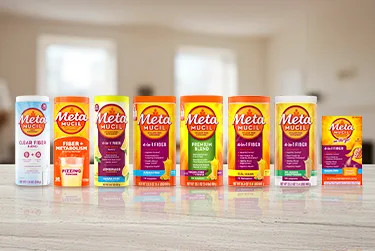
Metamucil 4-in-1 Fiber (Psyllium Husk)
Metamucil (Procter & Gamble) · powderBest Value: cheap, drinkable, and well-evidenced as a fiber — but single-pathway and a heavy gel load.
Pennies per serving — by far the cheapest in the set.
Single pathway — a fiber, not a craving formula.
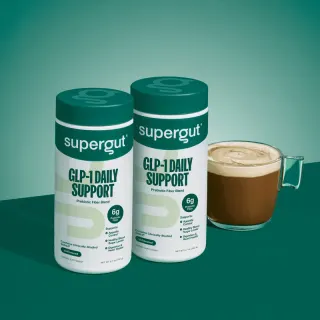
Supergut GLP-1 Daily Support
Supergut · powderA drinkable, gut-first option — but it leans on a proprietary fiber blend and a heavy fiber load.
Drinkable and caffeine-free.
Individual fiber doses are hidden inside a proprietary blend.
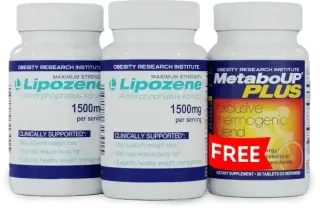
Lipozene
Obesity Research Institute · capsuleCheap single-ingredient glucomannan — fine as a fiber, but it does only one thing.
Single, disclosed ingredient.
One pathway only (fiber satiety).