Ingredient Science
The Science of Psyllium Husk: The Boring Fiber With All the Receipts
It doesn't have a trendy name or a slick brand. It has something rarer in this aisle: 30 years of randomized trials, and results that mostly hold up.
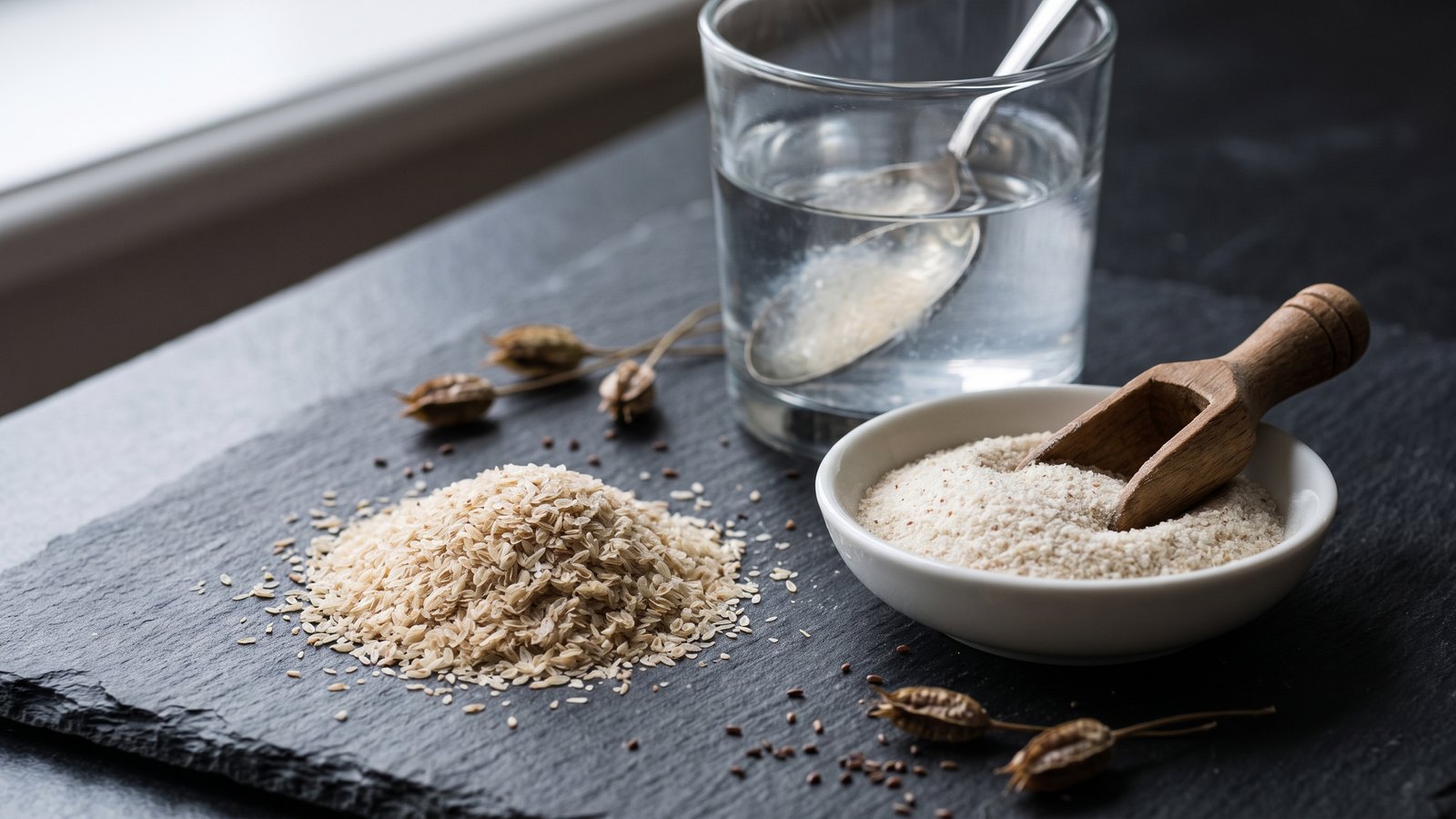
Psyllium is the least exciting product in the whole supplement aisle. No trademarked name, no "nature's Ozempic" nickname, no influencer holding up the tub. It's the plain fiber your grandparents kept next to the prunes.
Here's the twist: it's also the most thoroughly studied fiber in the building. While glucomannan and inulin and the rest fight over hype, psyllium quietly racked up three decades of randomized trials. And the results mostly hold up.
So let's take it apart. What psyllium actually is, what the human data shows for blood sugar, cholesterol, hunger, and weight, the one thing that makes it different from every other fiber, and the single safety rule you genuinely can't skip.
What psyllium actually is
Psyllium comes from the seed husks of Plantago ovata, a small plant grown mostly in India. You'll also see it called ispaghula. The active part is the husk, milled into a powder that's roughly 70% soluble fiber.
Drop it in water and it does one thing exceptionally well: it forms a gel. The fiber grabs water and swells into a thick, slippery mass, and that gel is the engine behind nearly every benefit anyone claims for it.
One feature sets psyllium apart from most other fibers, and it matters more than it sounds. Psyllium is a gel-forming fiber that your gut bacteria largely leave alone, so it passes through mostly intact rather than fermenting into a cloud of gas the way inulin and other prebiotic fibers do (Gibb et al., 2023). That's the whole reason it tends to sit easier than the fibers packed into "high fiber" gummies and bars. We got into why those backfire in the low-sugar candy piece.
Blood sugar: the effect scales with how bad your control is
This is where psyllium has its deepest bench, and the pattern in the data is genuinely useful.
According to research retrieved from PubMed, a meta-analysis pulled together 35 randomized controlled trials spanning three decades and three continents. In people being treated for type 2 diabetes, psyllium taken before meals dropped fasting blood glucose by about 37 mg/dL and lowered HbA1c (a 3-month blood-sugar average) by roughly 0.97 percentage points (Gibb et al., 2015, DOI). The catch worth knowing: the benefit was proportional to how much glucose control had been lost. People with normal blood sugar got essentially nothing. People with the worst control got the most.
Two honest flags. That analysis came from authors affiliated with a psyllium manufacturer, so it deserves an independent check. It gets one: a separate University of Southampton overview ranked psyllium among the three most effective plant supplements for lowering HbA1c in type 2 diabetes, alongside aloe vera and fenugreek, at about the same 0.97-point drop (Willcox et al., 2021, DOI). Second flag, the important one: these were people with a diagnosed condition, often on medication. Psyllium is a fiber, not a diabetes treatment, and it belongs alongside care, not in place of it.
A fresh 2025 trial shows the mechanism at the meal level. Researchers baked psyllium into hamburger meatballs (a low-fiber fast food) and fed them to 25 healthy adults in a triple-blind crossover. The psyllium version blunted the post-meal rise in both blood glucose and triglycerides, and people reported less hunger and more fullness for hours afterward (Günal et al., 2025, DOI). The gel slows how fast the stomach empties, so sugars and fats trickle into the blood instead of spiking.
Cholesterol: the strongest, cleanest evidence
If psyllium has a headline act, this is it, and the marketing tends to bury it under weight-loss talk.
An independent meta-analysis from a University of Toronto group pooled 28 randomized trials (1,924 people). A median dose of about 10 grams a day of psyllium lowered LDL cholesterol by roughly 13 mg/dL, cut non-HDL cholesterol by about 15 mg/dL, and pushed down apolipoprotein B, a marker some cardiologists trust more than LDL itself (Jovanovski et al., 2018, DOI). The evidence was graded moderate to high quality, which in nutrition research is about as good as it gets.
The mechanism is tidy. The gel traps bile acids (which your body makes from cholesterol) in the gut and carries them out. Your liver then pulls cholesterol from the blood to make more bile, and your LDL drops. This is the same effect that earned psyllium one of the few FDA-authorized heart-health claims tied to a specific fiber. It's not a drug-sized effect, but it's real, repeatable, and cheap.
Hunger and fullness: modest, but it shows up
The satiety story is smaller than the cholesterol one, and worth being straight about.
In two randomized, double-blind, placebo-controlled crossover studies, healthy adults took psyllium before breakfast and lunch. Doses of 6.8 grams and 10.2 grams reduced hunger and the desire to eat, and raised fullness between meals, better than placebo. The 6.8-gram dose gave the most consistent benefit, and 3.4 grams was too little to reliably move the needle (Brum et al., 2016, DOI). That study also came from the manufacturer, so read it as directional, though the 2025 meatball trial from an independent group found the same fullness effect through a different door.
Put plainly: psyllium can take some edge off between-meal hunger. It won't crush your appetite like a GLP-1 drug. If you want the honest breakdown of why "natural GLP-1" and the actual injections aren't the same category, we did that here.
Weight: a helper, not a headline
Here's where the fiber-as-miracle framing collapses, and it should.
A meta-analysis of 6 trials (354 people) found psyllium, dosed before meals at about 10.8 grams a day for roughly 5 months, produced a body-weight drop of about 2.1 kg (a bit under 5 pounds), a 0.8-point BMI reduction, and a 2.2 cm smaller waist versus control (Gibb et al., 2023, DOI). Same manufacturer-affiliated caveat applies, and the trial pool is small.
Read that number honestly. A few pounds over several months, layered on top of eating a little less because you feel fuller, is a legitimate assist. It is not a weight-loss engine, and any label selling psyllium as one is getting ahead of its own evidence. We made the same case about the wider fiber-is-the-new-protein wave.
The "non-fermented" claim needs an asterisk
Psyllium's whole reputation rests on being the fiber that doesn't ferment, which is why it's gentler on gas. That's mostly true, but "mostly" is doing real work.
A randomized, double-blind trial gave psyllium to healthy volunteers and constipated patients for a week and sequenced their gut bacteria. In constipated patients especially, psyllium shifted the microbiome and nudged up several butyrate-producing bacteria, and those increases tracked with more water in the stool (Jalanka et al., 2019, DOI). Butyrate is the short-chain fatty acid your gut cells use for fuel, the same molecule at the center of the butyrate and GLP-1 story.
So the accurate version is that psyllium ferments far less than inulin, but it isn't totally inert either. It gets some gentle gut-bacteria work done on the side. For most people that's a quiet bonus, and it's why psyllium can double as a stool regulator without the bloat tax.
Dose, timing, and the one rule you can't skip
The studied doses cluster around 6 to 11 grams a day, usually split and taken before meals. The satiety and blood-sugar benefits both lean on before-meal timing, so the gel is already in place when food arrives.
Now the safety rule, and it's not optional. Psyllium swells fast and aggressively. Taken with too little liquid, it can start gelling in the throat or esophagus before it reaches the stomach, and there are documented cases of choking and blockage. Always take it with a full glass of water, and don't take it right before lying down. This is the same swelling risk that got compressed glucomannan tablets pulled in several countries, which we covered in the glucomannan breakdown.
The routine side effects are ordinary fiber ones: some gas, bloating, or changes in stool, worst if you ramp up too fast. Start low, build over a week or two, drink the water. If you take prescription medication, psyllium's gel can slow absorption, so space it a couple of hours apart and check with a pharmacist.
The honest verdict
Psyllium is the rare supplement that's less exciting than its evidence. It reliably lowers LDL cholesterol, steadies blood sugar in people who've lost some control, takes a real if modest bite out of between-meal hunger, and does it all with a gentler gut profile than the trendier fibers.
It won't melt fat and it isn't a GLP-1 anything. What it is: a cheap, deeply studied tool that does a few specific jobs well, as long as you dose it before meals and respect the water rule. You'll find it as basically single-ingredient psyllium, and folded into broader fiber blends like Supergut. We line up the fiber-forward options in our fiber and satiety breakdown, and our scoring methodology lays out how we weigh dose, tolerability, and evidence. Boring fiber, real receipts.
References
Based on articles retrieved from PubMed:
- Gibb RD, McRorie JW, Russell DA, et al. Psyllium fiber improves glycemic control proportional to loss of glycemic control: a meta-analysis of data in euglycemic subjects, patients at risk of type 2 diabetes mellitus, and patients being treated for type 2 diabetes mellitus. Am J Clin Nutr. 2015. PubMed · DOI
- Jovanovski E, Yashpal S, Komishon A, et al. Effect of psyllium (Plantago ovata) fiber on LDL cholesterol and alternative lipid targets, non-HDL cholesterol and apolipoprotein B: a systematic review and meta-analysis of randomized controlled trials. Am J Clin Nutr. 2018. PubMed · DOI
- Willcox ML, Elugbaju C, Al-Anbaki M, et al. Effectiveness of Medicinal Plants for Glycaemic Control in Type 2 Diabetes: An Overview of Meta-Analyses of Clinical Trials. Front Pharmacol. 2021. PubMed · DOI
- Günal AM, Öngün Yılmaz H, Baş M. Enrichment of Hamburger Meatballs With Psyllium: Effects on Postprandial Lipidemia, Glycemia, Appetite, and Food Intake in a Triple-Blind Randomized Controlled Crossover Trial. Food Sci Nutr. 2025. PubMed · DOI
- Brum JM, Gibb RD, Peters JC, Mattes RD. Satiety effects of psyllium in healthy volunteers. Appetite. 2016. PubMed · DOI
- Gibb RD, Sloan KJ, McRorie JW. Psyllium is a natural nonfermented gel-forming fiber that is effective for weight loss: A comprehensive review and meta-analysis. J Am Assoc Nurse Pract. 2023. PubMed · DOI
- Jalanka J, Major G, Murray K, et al. The Effect of Psyllium Husk on Intestinal Microbiota in Constipated Patients and Healthy Controls. Int J Mol Sci. 2019. PubMed · DOI
FAQ
What does psyllium husk actually do?
Its best-supported effects are on cholesterol and blood sugar. A meta-analysis of 28 trials found about 10 grams a day lowered LDL cholesterol by roughly 13 mg/dL, and separate analyses show it improves blood sugar in people with type 2 diabetes, with the benefit scaling to how much control they'd lost. It also takes a modest edge off between-meal hunger. It works by forming a thick gel that slows digestion and traps bile acids.
How much psyllium should I take, and when?
Studied doses run about 6 to 11 grams a day, usually split and taken before meals so the gel is in place when you eat. For satiety, roughly 6.8 grams was the sweet spot in trials, while 3.4 grams was too little to reliably help. Always take it with a full glass of water and build up gradually over a week or two.
Is psyllium safe?
For most people, yes, with one firm rule: take it with plenty of water. Psyllium swells fast, and taken dry or with too little liquid it can gel in the throat or esophagus, with documented cases of choking and blockage. Never take it right before lying down. Common side effects are ordinary fiber ones like gas or bloating, worst if you ramp up too quickly. It can also slow absorption of medications, so space doses a couple of hours apart.
Psyllium or glucomannan?
Both are viscous gel-forming fibers that work on fullness, cholesterol, and blood sugar. Glucomannan is more viscous gram for gram, but psyllium has a much deeper, broader evidence base, especially for cholesterol, and it tends to ferment less so it's gentler on gas. If you tolerate one better than the other, that matters more than the small differences on paper.
Products mentioned
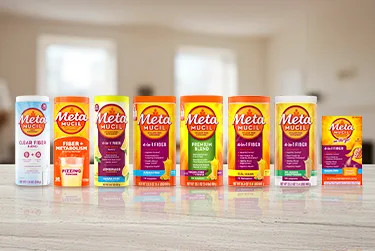
Metamucil 4-in-1 Fiber (Psyllium Husk)
Metamucil (Procter & Gamble) · powderBest Value: cheap, drinkable, and well-evidenced as a fiber — but single-pathway and a heavy gel load.
Pennies per serving — by far the cheapest in the set.
Single pathway — a fiber, not a craving formula.
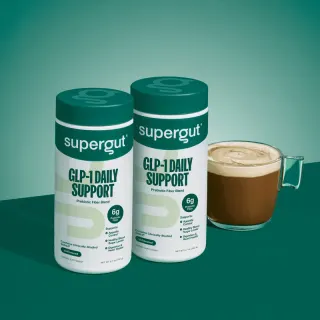
Supergut GLP-1 Daily Support
Supergut · powderA drinkable, gut-first option — but it leans on a proprietary fiber blend and a heavy fiber load.
Drinkable and caffeine-free.
Individual fiber doses are hidden inside a proprietary blend.
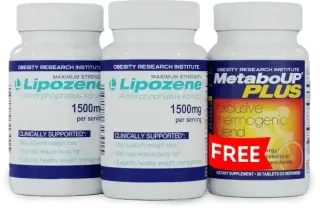
Lipozene
Obesity Research Institute · capsuleCheap single-ingredient glucomannan — fine as a fiber, but it does only one thing.
Single, disclosed ingredient.
One pathway only (fiber satiety).