Ingredient Science
Butyrate and GLP-1: A Real Mechanism With a Delivery Problem
The mechanism is real physiology, not marketing. What happened when researchers gave butyrate to actual people is where the story gets complicated.
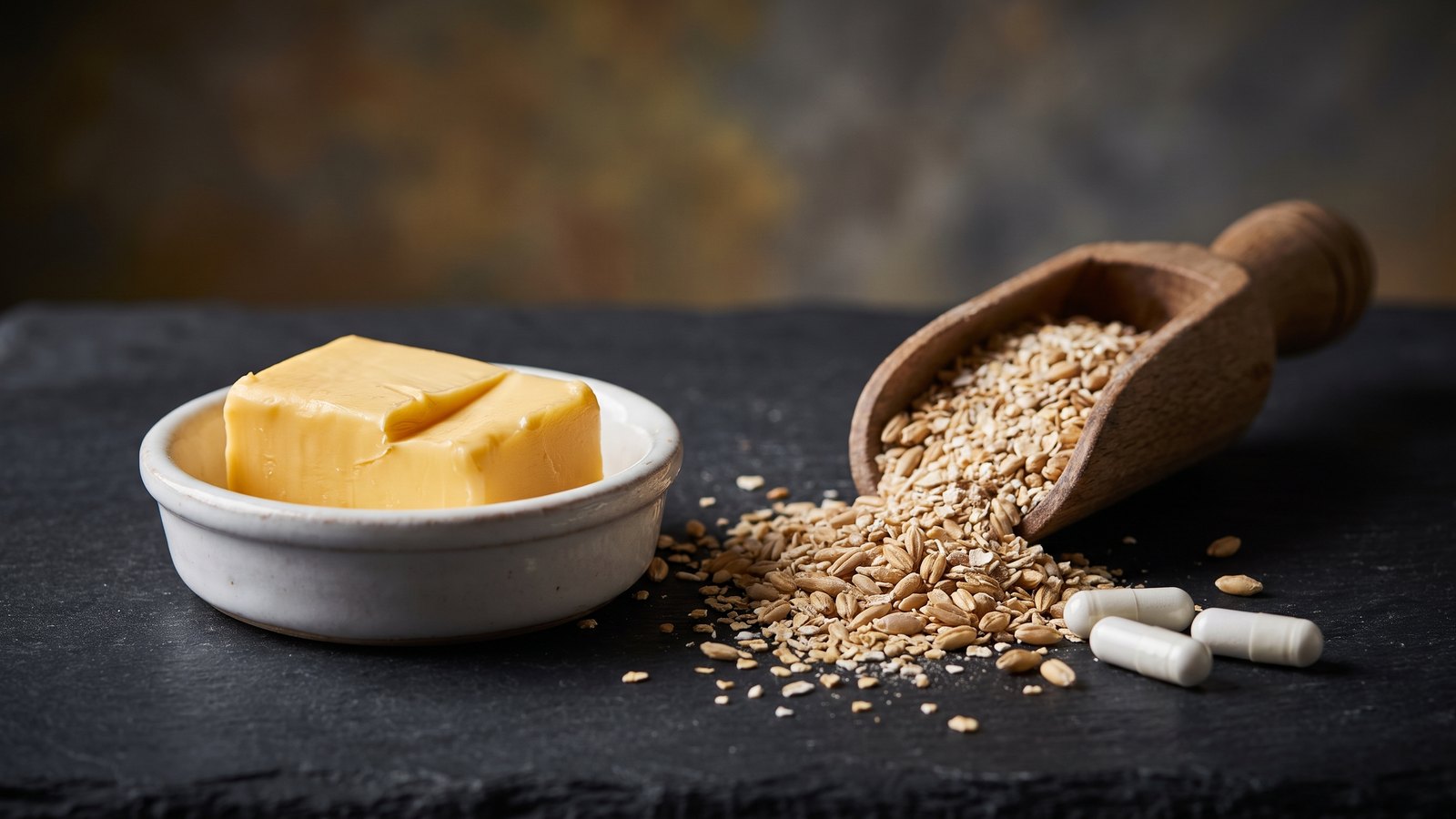
Butyrate has become the gut-health ingredient of the moment. It's in capsules, powders, and drink mixes, and the sales pitch usually runs like this: your gut bacteria make butyrate when they ferment fiber, butyrate tells your gut to release GLP-1, GLP-1 is the hormone behind the famous injectables, so swallow some butyrate and get a piece of that action.
Every link in that chain is doing work. A couple of them hold up well. One is considerably weaker than the marketing suggests, and the human trials have produced two results that the category doesn't advertise.
Here's what butyrate is, what it actually does to GLP-1, and what happened when researchers gave it to real people.
What butyrate is
Butyrate is a short-chain fatty acid: a fat molecule just 4 carbons long. Your gut bacteria produce it in your colon when they ferment fiber and resistant starch, which is a big part of why fiber gets credit for so much of what a healthy gut does.
The name comes from butter (butyrum in Latin), where chemists first isolated it. Butter carries a small amount, and butyrate is part of why rancid butter smells the way it does. Keep that in mind, because the smell turns up again later.
Butyrate's main job is unglamorous. It's the preferred fuel for the cells lining your colon. Colonocytes burn butyrate for energy ahead of glucose, which makes it less of a hormone-style messenger and more of a food supply for your gut wall.
The GLP-1 connection is genuinely real
Start with the part of the pitch that survives scrutiny.
According to research retrieved from PubMed, a 2023 review in Cell Communication and Signaling maps the mechanisms. Short-chain fatty acids promote GLP-1 secretion from intestinal epithelial cells, they activate the G-protein-coupled receptors GPR41 and GPR43 (also called FFAR3 and FFAR2), and butyrate in particular inhibits histone deacetylases, which shifts how genes get expressed in gut cells (Zhang et al., 2023, DOI).
That's real physiology with named receptors attached. The L-cells in your gut that manufacture GLP-1 do respond to what your bacteria produce. Nobody made this up to sell capsules.
The receptor story is shakier than it sounds
Here's where the tidy version starts to wobble.
A 2018 experiment used an isolated perfused rat colon, which lets researchers control exactly what the gut sees while keeping the tissue alive and normally supplied with blood. Acetate and butyrate did increase GLP-1 secretion. Propionate did nothing at all.
Then they tested the mechanism directly, and the receptors failed the audition. A drug that specifically activates FFAR2 and FFAR3 had no effect on GLP-1 output. A drug that blocks FFAR3 didn't reduce the response to butyrate either. What did abolish the response was blocking calcium channels or shutting down ATP synthesis (Christiansen et al., 2018, DOI).
The authors' read: butyrate gets metabolized and appears to work mainly as colonocyte fuel, and the GLP-1 bump follows from that, not from the receptor pathway the marketing usually names. So the "butyrate hits FFAR2 and out comes GLP-1" story you'll see on product pages is, at minimum, an oversimplification of a mechanism that's still being argued about.
Then people actually swallowed it
This is the part that should reset expectations.
In the first study to give oral butyrate to humans and measure metabolism properly, researchers gave 9 lean men and 10 men with metabolic syndrome 4 grams of sodium butyrate daily for 4 weeks, then measured insulin sensitivity with a hyperinsulinemic euglycemic clamp (the gold-standard method, not a fasting blood draw).
The headline finding is the one to sit with: oral butyrate had no effect on plasma or fecal butyrate levels. Four grams a day for a month, and the butyrate they measured in blood and stool didn't move.
The lean men did show improved insulin sensitivity, both peripheral (median glucose disposal rose from 71 to 82 µmol/kg/min) and hepatic. The metabolic syndrome group showed nothing. The authors concluded that their findings "argue against oral butyrate supplementation as treatment for glucose regulation" in people with type 2 diabetes (Bouter et al., 2018, DOI).
A companion trial using the same 4 grams per day for 4 weeks found only limited effects on immune cell responses, with some changes in the metabolic syndrome group and little in the healthy one (Cleophas et al., 2019, DOI).
Neither result is fatal to butyrate. Both are a long way from the pitch.
The GLP-1 trials in humans, specifically
Two trials looked directly at whether swallowing butyrate changes GLP-1 in people, and they disagree.
The first randomized 60 adults with type 2 diabetes into four groups for 45 days: sodium butyrate alone, inulin alone, both together, or placebo. GLP-1 concentrations rose significantly in the butyrate group and the combination group compared with placebo. The combination also lowered fasting blood sugar and waist-to-hip ratio (Roshanravan et al., 2017, DOI).
The second gave 50 adults with obesity 600 mg of sodium butyrate a day alongside a reduced-calorie diet for 8 weeks. Weight, BMI, and waist circumference fell. Fasting blood sugar and LDL dropped, HDL rose, and the expression of two energy-metabolism genes went up. But serum GLP-1 didn't budge, and the authors were blunt that butyrate alone, without the calorie restriction, didn't do much of anything (Amiri et al., 2024, DOI).
One trial up, one trial flat, at doses that differ by roughly sixfold. That's the honest state of the human GLP-1 evidence: thin, small, and not pointing the same direction.
The blood pressure result
This one deserves its own section, because it's the most surprising thing in the literature and it cuts against the whole story.
A 2024 double-blind randomized trial in Hypertension took 23 patients with high blood pressure, took them off their blood pressure medication for a 4-week washout, then gave them either oral sodium butyrate or a placebo matched for sodium for 4 weeks.
Blood pressure went up in the butyrate group. Daytime 24-hour systolic pressure rose by 9.63 mm Hg (95% CI, 2.02 to 17.20) and diastolic by 5.08 mm Hg (95% CI, 1.34 to 8.78) relative to placebo. The authors wrote that butyrate "does not have beneficial effects on human hypertension, which warrants caution in future butyrate intervention studies" (Verhaar et al., 2024, DOI).
Rodent studies had shown the opposite, which is a decent reminder of how often that happens. If you manage blood pressure, this is a conversation to have with your doctor before adding a butyrate supplement, not a footnote.
One more detail from that trial is worth flagging: plasma butyrate did rise in these patients, while fecal butyrate didn't. That directly contradicts the 2018 result where plasma butyrate didn't move on a dose more than twice as large. Two careful teams, opposite absorption findings. Nobody has fully reconciled that yet.
Does the delivery form matter? This is the part that decides what you buy
Here is the practical crux, because the form printed on the label decides how much butyrate actually reaches your blood. Butyrate is absorbed high in the digestive tract, and only a small share of what your gut bacteria make in the colon, on the order of 2 percent, ever reaches general circulation. So the fair question for any butyrate product is blunt: what did it actually put in the bloodstream?
One 2025 crossover trial measured exactly that. Ten healthy men took three forms of butyrate on separate visits, each dose matched to 786 mg of butyric acid, with serum butyrate tracked over 210 minutes (La Monica et al., Journal of Exercise and Nutrition, 2025; DOI 10.53520/jen2025.103189; registered as NCT06700785). The two salt forms, lysine butyrate and sodium butyrate, peaked fast, at about 20 minutes. Tributyrin, the ester built to survive to the colon, took roughly 51 minutes and topped out far lower: a peak near 0.9 µg/mL, against about 4.5 for lysine butyrate and 2.5 for sodium butyrate. Lysine butyrate reached close to five times tributyrin’s peak, and the gap was statistically significant (p=0.007 for peak concentration, p=0.023 for total exposure).
Two honest caveats before anyone oversells it. First, lysine butyrate posted a higher average peak than sodium butyrate, but the study did not find a statistically significant difference between the two salts, only between each salt and tributyrin. The variability was large and this was ten men over a single afternoon, so read it as an early absorption signal, not a settled ranking. Where lysine butyrate does cleanly separate is on two things the same trial recorded: it carries no sodium, and it was rated the most palatable of the three forms, which counts for a molecule that famously smells like aged cheese.
So the useful takeaway is narrower than the marketing, but it still points somewhere. If your goal is butyrate in your bloodstream rather than parked in your colon, a well-absorbed salt beats a colon-targeted ester by a wide, measured margin, and lysine butyrate is the salt that adds no sodium and is the easiest of the three to actually get down. Tributyrin is not junk; it is aimed at a different destination. That is a difference in what you are targeting, not a difference in quality.
The smell problem
A practical note that gets left off labels. Butyrate smells like what it is, somewhere between parmesan and gym bag. Chemical forms and coatings try to manage it, and some people barely notice while others find it genuinely hard to get down. If you're sensitive to it, that's not you being fussy, it's a real property of the molecule.
The honest verdict
Butyrate is a legitimately important molecule. It fuels your colon lining, your bacteria make it from fiber, and it does influence GLP-1-secreting cells. That much is solid.
The leap from there to "take this capsule and boost your GLP-1" is where the evidence thins out badly. The receptor mechanism is contested. Human trials disagree on whether oral butyrate even shows up in your blood. The GLP-1 results are split between one small positive trial and one null. And the best-controlled trial of the lot found a blood pressure increase that nobody expected.
If your actual goal is more butyrate in your colon, the boring answer still has the best evidence behind it: eat more fermentable fiber and let your bacteria make it in the place where it's supposed to be made. That's the route the whole mechanism was built around. We walk through the fiber side of this in our piece on whether fiber is the next protein, and viscous fibers like psyllium have far deeper human data than any butyrate capsule.
For the broader question of what a "natural GLP-1 booster" can realistically do next to the drugs, we took that apart here, and the rest of the category is laid out in our GLP-1 support breakdown. How we weigh evidence like this is in our scoring methodology.
Butyrate supplements are not a scam, and they are not a finished story either. The molecule is real, the biology is promising, and the human evidence is still early. If you do decide to supplement it, the data that exists points to one practical rule: the form has to actually reach your blood, which favors a well-absorbed salt over a colon-targeted ester, ideally one with no added sodium that you can stand to take every day.
References
Based on articles retrieved from PubMed:
- Zhang D, Jian YP, Zhang YN, et al. Short-chain fatty acids in diseases. Cell Commun Signal. 2023. PubMed · DOI
- Christiansen CB, Gabe MBN, Svendsen B, et al. The impact of short-chain fatty acids on GLP-1 and PYY secretion from the isolated perfused rat colon. Am J Physiol Gastrointest Liver Physiol. 2018. PubMed · DOI
- Bouter K, Bakker GJ, Levin E, et al. Differential metabolic effects of oral butyrate treatment in lean versus metabolic syndrome subjects. Clin Transl Gastroenterol. 2018. PubMed · DOI
- Cleophas MCP, Ratter JM, Bekkering S, et al. Effects of oral butyrate supplementation on inflammatory potential of circulating peripheral blood mononuclear cells in healthy and obese males. Sci Rep. 2019. PubMed · DOI
- Roshanravan N, Mahdavi R, Alizadeh E, et al. Effect of Butyrate and Inulin Supplementation on Glycemic Status, Lipid Profile and Glucagon-Like Peptide 1 Level in Patients with Type 2 Diabetes: A Randomized Double-Blind, Placebo-Controlled Trial. Horm Metab Res. 2017. PubMed · DOI
- Amiri P, Hosseini SA, Saghafi-Asl M, et al. Expression of PGC-1α, PPAR-α and UCP1 genes, metabolic and anthropometric factors in response to sodium butyrate supplementation in patients with obesity: a triple-blind, randomized placebo-controlled clinical trial. Eur J Clin Nutr. 2024. PubMed · DOI
- Verhaar BJH, Wijdeveld M, Wortelboer K, et al. Effects of Oral Butyrate on Blood Pressure in Patients With Hypertension: A Randomized, Placebo-Controlled Trial. Hypertension. 2024. PubMed · DOI
Additional source, not indexed in PubMed and noted as such in the text: La Monica M, Kirby T, Hartshorn S, Gustat A, Grdic J, Sandrock J. A Pharmacokinetic Comparison of Three Butyrate Products. Journal of Exercise and Nutrition. 2025;8(1). DOI 10.53520/jen2025.103189. Trial registration NCT06700785.
FAQ
Do butyrate supplements raise GLP-1?
The human evidence is thin and split. One 45-day randomized trial in 60 adults with type 2 diabetes found sodium butyrate significantly raised GLP-1 versus placebo. A 2024 trial giving 600 mg a day to 50 adults with obesity found no change in serum GLP-1 at all. The mechanism by which short-chain fatty acids influence GLP-1-secreting cells is real, but whether swallowing butyrate reliably triggers it in people hasn't been established.
Does oral butyrate actually get absorbed?
Researchers disagree, which is remarkable for such a basic question. A 2018 trial gave 4 grams of sodium butyrate daily for 4 weeks and found no change in plasma or fecal butyrate. A 2024 blood pressure trial found plasma butyrate did rise on a smaller dose. A 2025 crossover study found blood butyrate peaked about 20 minutes after a single dose of butyrate salts. Part of the difficulty is that butyrate is absorbed high in the digestive tract, so a plain salt may never reach the colon, where most of the interesting biology happens.
Is butyrate safe to supplement?
The trials to date haven't reported serious harms, but one finding deserves attention. A 2024 double-blind randomized trial in patients with high blood pressure found 4 weeks of oral sodium butyrate raised daytime systolic blood pressure by about 9.6 mm Hg compared with placebo, the opposite of what rodent studies predicted. The authors called for caution. If you manage blood pressure or take any prescription medication, talk to your doctor before adding butyrate.
What's the best way to get more butyrate?
Eat more fermentable fiber. Your gut bacteria produce butyrate when they ferment fiber and resistant starch in your colon, which is exactly where it's meant to be made and used. That route has far deeper evidence behind it than any butyrate capsule, and it delivers the molecule to the cells that actually burn it for fuel. Ramp up gradually, because moving too fast on fiber causes gas and bloating.
Products mentioned

Metamucil 4-in-1 Fiber (Psyllium Husk)
Metamucil (Procter & Gamble) · powderBest Value: cheap, drinkable, and well-evidenced as a fiber — but single-pathway and a heavy gel load.
Pennies per serving — by far the cheapest in the set.
Single pathway — a fiber, not a craving formula.
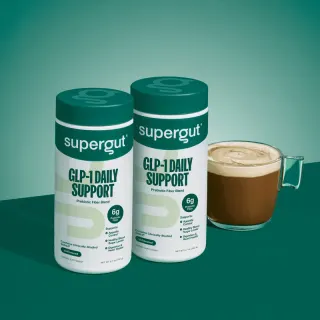
Supergut GLP-1 Daily Support
Supergut · powderA drinkable, gut-first option — but it leans on a proprietary fiber blend and a heavy fiber load.
Drinkable and caffeine-free.
Individual fiber doses are hidden inside a proprietary blend.
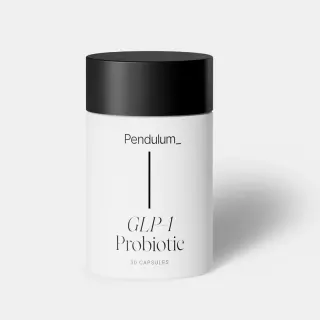
Pendulum GLP-1 Probiotic
Pendulum Therapeutics · capsuleStrong science pedigree on Akkermansia, but a proprietary CFU blend and refrigeration requirement.
Akkermansia has the strongest individual research pedigree of the probiotic actives.
Per-strain doses are hidden inside a proprietary blend.