Blood Sugar
Is Craving Sugar a Sign of Diabetes? What the Symptom List Actually Says
A sweet tooth isn't on any diabetes symptom list. Hunger that survives a full meal is, and about 11 million US adults have diabetes without knowing it.
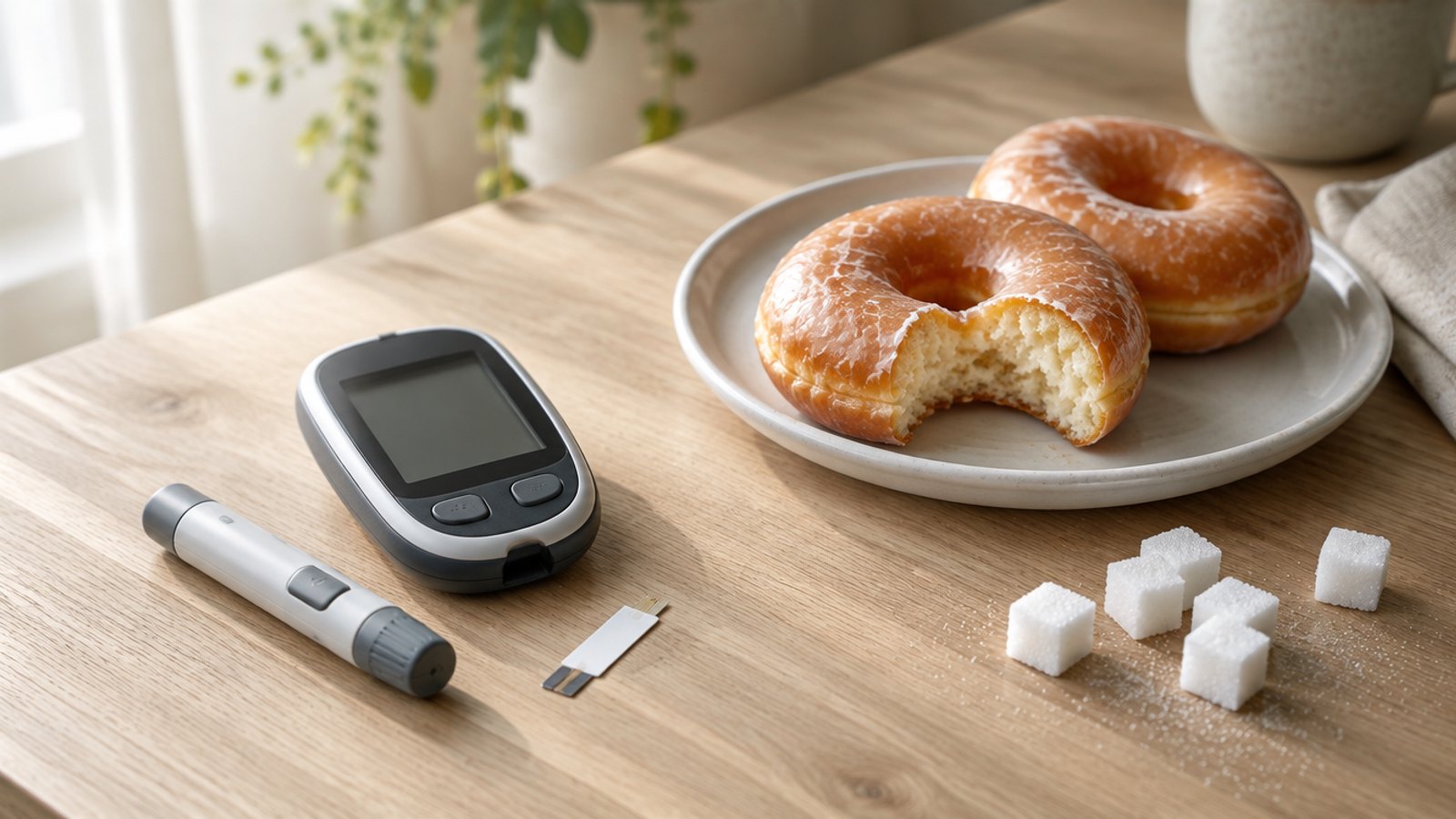
Is craving sugar a sign of diabetes? On its own, no. A sugar craving is not on the symptom list of any major diabetes body, and most people who want something sweet after dinner have normal blood sugar.
The symptom that is on the list is different: being very hungry even after you've eaten, alongside thirst, frequent urination and fatigue. That cluster is worth a blood test. A craving by itself is worth a look at your sleep, your meals and your afternoon.
This post lays out the difference, the actual test numbers, and who should get checked regardless of symptoms. It isn't a diagnosis, and nothing sold on a supplement shelf can tell you whether you have diabetes. A lab can, for the price of a blood draw.
What the official symptom list says
The National Institute of Diabetes and Digestive and Kidney Diseases (NIDDK) lists these symptoms of diabetes (NIDDK):
- Increased urination
- Feeling very thirsty
- Feeling very hungry, even after you have eaten
- Blurred vision
- Fatigue
- Sores that do not heal
- Frequent infections, such as urinary tract, skin or yeast infections
Notice what's missing. There's no line for "wants chocolate at 3pm" or "needs something sweet after dinner."
The hunger on that list has a medical name, polyphagia, and it isn't picky. The standard explanation is that when insulin isn't working well, glucose stays in the blood instead of getting into cells, and some of it leaves in urine. The body reads that as running short on fuel and asks for more food, any food.
A craving works differently. It's a pull toward one specific thing, usually sweet, usually at a predictable time of day, and it often shows up when you aren't hungry at all.
Is feeling hungry after eating a sign of diabetes?
It can be, which is why it's on the NIDDK list. But hunger after a meal has a long list of ordinary causes, and one of them shows up in people with perfectly healthy blood sugar.
In 2021 a team from King's College London and Zoe put continuous glucose monitors on 1,070 healthy adults and tracked them through 8,624 standardized meals (Wyatt et al., Nature Metabolism, PubMed 33846643). The size of the blood sugar dip 2 to 3 hours after eating predicted how hungry people got, how soon they ate again, and how much they ate over the next 24 hours.
The peak after the meal predicted those things less well than the dip did. And the correlations were small (r = 0.16 for hunger, 0.27 for 24-hour intake), so this explains part of post-meal hunger, not all of it.
The point for this question: none of those 1,070 people had diabetes. A sugary breakfast followed by a mid-morning dip and a craving is normal physiology doing a slightly annoying thing. We covered the mechanics in the crash-then-crave loop behind "I can't stop eating sugar".
So hunger after eating becomes a flag when it's new, it's persistent, and it travels with the rest of the list. Thirst you can't quench and getting up at night to urinate are the two that should move you fastest.
Why type 2 diabetes is so easy to miss
Here's the uncomfortable part. Waiting for symptoms is a bad screening strategy, because type 2 diabetes often doesn't produce any.
NIDDK says the symptoms of type 2 "can develop slowly, over several years," and that many people have none, or symptoms so mild they don't notice them. Type 1 is the opposite: symptoms usually build quickly, over days or weeks.
The national numbers show how much goes unnoticed. The CDC's National Diabetes Statistics Report (2023 data) estimates that 40.1 million Americans have diabetes, and that 27.6% of adults with diabetes, about 11 million people, are undiagnosed. Another 115.2 million adults have prediabetes (CDC).
That's why the honest answer to "is my sugar craving diabetes?" is two answers. The craving probably isn't a sign of anything. And you might still be due for a test, for reasons that have nothing to do with cravings.
The numbers that actually diagnose it
Diabetes is diagnosed by blood tests, not by symptoms and not by guesswork. The American Diabetes Association publishes the cut-offs in its Standards of Care, updated every year (2026 edition: PubMed 41358893; plain-language version at diabetes.org).
- A1C (a 2 to 3 month average, no fasting needed): below 5.7% is normal, 5.7% to 6.4% is prediabetes, 6.5% or higher is diabetes.
- Fasting plasma glucose: below 100 mg/dL is normal, 100 to 125 is prediabetes, 126 or higher is diabetes.
- Oral glucose tolerance test (2 hours after a measured glucose drink): below 140 mg/dL is normal, 140 to 199 is prediabetes, 200 or higher is diabetes.
- Random plasma glucose: 200 mg/dL or higher, in someone with classic symptoms of high blood sugar.
A result in the diabetes range usually gets repeated on a second day before anyone calls it a diagnosis. The ADA's exception is a very high reading, or one positive test plus classic symptoms.
A fingerstick meter borrowed from a relative can't do this job. Home meters are built for people managing known diabetes, not for diagnosing it, and one reading after a donut tells you very little.
Who should get tested, cravings or not
The US Preventive Services Task Force recommends screening for prediabetes and type 2 diabetes in adults aged 35 to 70 who have overweight or obesity (BMI of 25 or higher), even with no symptoms at all (USPSTF, JAMA 2021, PubMed 34427594).
If that describes you and you can't remember your last A1C, that's your answer, and it was your answer before the cravings started. A family history of type 2 diabetes or a history of gestational diabetes are reasons to ask your doctor about testing earlier.
See someone this week, not at your next physical, if you have several of these together:
- Thirst that water doesn't fix, and urinating far more than usual
- Hunger that comes back right after full meals
- Losing weight without trying
- Blurred vision, or cuts that are slow to heal
Rapid onset of those symptoms, especially with nausea, vomiting or deep fatigue, is an urgent-care situation.
Do people with diabetes crave sugar more?
There's some evidence they might, though it's thinner than the internet suggests.
A 2020 meta-analysis of 44 studies found that people with type 2 diabetes needed a stronger sucrose solution before they could recognize it as sweet (Trius-Soler et al., PubMed 33337055). The effect was modest, and a blunted sweet taste isn't the same thing as a craving. But it's a plausible reason sweet food might satisfy less.
A 2026 clinical commentary in Frontiers in Psychiatry cites evidence that roughly 30% of people living with type 2 diabetes may also meet criteria for ultra-processed food addiction, and that the overlap goes with poorer glucose control (Bennett et al., PubMed 41625619). That's a newer, still-debated construct, so treat the number as an estimate.
Both findings describe people who already have diabetes. Neither one means a craving can predict it.
Does eating a lot of sugar cause diabetes?
This is the fear sitting underneath the search, so here's the best current data.
A 2025 dose-response meta-analysis pooled 29 prospective cohorts (Della Corte et al., Advances in Nutrition, PubMed 40122386). Each additional daily serving of sugar-sweetened beverage went with a 25% higher risk of type 2 diabetes. Fruit juice went with a 5% higher risk per serving.
Sugar eaten as food was a different story. Total sugar and sucrose intake weren't linked to higher risk (they trended slightly the other way, at low certainty), and added sugar showed no association.
These are observational studies, so they can't prove cause. But the practical read is clear enough: if you're going to change one thing, it's the soda and the juice, not the square of chocolate. Body weight, family history and age do more of the predicting than a sweet tooth does.
If the tests come back normal
Then you have a craving, not a condition, and cravings usually have boring causes. Short sleep. A breakfast that's mostly starch. A long gap between lunch and dinner. Stress.
A few places to start:
- We went through which deficiencies are actually linked to sugar cravings and which are folklore. Most of the popular ones are folklore.
- For the moment itself, here are three things that take the edge off a sugar craving inside 15 minutes.
- If you're tempted by a blood sugar supplement, read what berberine has and hasn't shown in human trials first, including the drug interactions.
One firm line. If your A1C comes back in the prediabetes or diabetes range, that's a conversation with your doctor about a plan with real evidence behind it. No product in our blood sugar and metabolic support category is a substitute for that, and none of them is meant to diagnose, treat or prevent diabetes.
The short version
Craving sugar isn't a sign of diabetes. Constant hunger with thirst, frequent urination and fatigue can be. Type 2 often has no symptoms at all, about 11 million US adults have diabetes without knowing it, and the only way to find out is an A1C or fasting glucose test.
If you're 35 to 70 with a BMI of 25 or more, you're due for one anyway.
References
- National Institute of Diabetes and Digestive and Kidney Diseases. Symptoms and Causes of Diabetes. niddk.nih.gov
- American Diabetes Association Professional Practice Committee. 2. Diagnosis and Classification of Diabetes: Standards of Care in Diabetes 2026. Diabetes Care. 2026;49(Suppl 1):S27-S49. PubMed 41358893. Patient summary: diabetes.org
- Centers for Disease Control and Prevention. National Diabetes Statistics Report (2023 data). cdc.gov
- US Preventive Services Task Force. Screening for Prediabetes and Type 2 Diabetes: Recommendation Statement. JAMA. 2021;326(8):736-743. PubMed 34427594
- Wyatt P, Berry SE, Finlayson G, et al. Postprandial glycaemic dips predict appetite and energy intake in healthy individuals. Nat Metab. 2021;3(4):523-529. PubMed 33846643
- Della Corte KA, Bosler T, McClure C, et al. Dietary Sugar Intake and Incident Type 2 Diabetes Risk: A Systematic Review and Dose-Response Meta-Analysis of Prospective Cohort Studies. Adv Nutr. 2025;16(5):100413. PubMed 40122386
- Trius-Soler M, Santillan-Alarcon DA, Martinez-Huelamo M, et al. Effect of physiological factors, pathologies, and acquired habits on the sweet taste threshold: a systematic review and meta-analysis. Compr Rev Food Sci Food Saf. 2020;19(6):3755-3773. PubMed 33337055
- Bennett et al. Integrating the management of ultra-processed food addiction into type 2 diabetes care. Front Psychiatry. 2026. PubMed 41625619
FAQ
Is craving sugar a sign of diabetes?
Craving sugar by itself is not a sign of diabetes. Sugar cravings are not on the diabetes symptom lists published by NIDDK or the American Diabetes Association. The listed symptoms are increased urination, strong thirst, feeling very hungry even after eating, blurred vision, fatigue, slow-healing sores and frequent infections. A craving alongside several of those is a reason to get a blood test.
Is feeling hungry after eating a sign of diabetes?
Feeling hungry after eating can be a sign of diabetes, and it is on the NIDDK symptom list. But it is also common in healthy people: in a study of 1,070 adults without diabetes, a bigger blood sugar dip 2 to 3 hours after a meal predicted more hunger and more eating later. Hunger after meals matters most when it is new, persistent and comes with thirst and frequent urination.
Do diabetics crave sugar after a meal?
Some do, but the research is thin. A meta-analysis of 44 studies found people with type 2 diabetes needed a stronger sugar solution to recognize sweetness, which could make sweet food less satisfying. If you take insulin or other glucose-lowering medication and get sudden hunger after meals, raise it with your care team rather than guessing.
What test shows whether I have diabetes?
An A1C, a fasting plasma glucose or an oral glucose tolerance test. Per the American Diabetes Association, an A1C of 6.5% or higher, a fasting glucose of 126 mg/dL or higher, or a 2-hour glucose of 200 mg/dL or higher is in the diabetes range, usually confirmed on a second day. Prediabetes is an A1C of 5.7% to 6.4% or a fasting glucose of 100 to 125 mg/dL.
Products mentioned

Metamucil 4-in-1 Fiber (Psyllium Husk)
Metamucil (Procter & Gamble) · powderBest Value: cheap, drinkable, and well-evidenced as a fiber — but single-pathway and a heavy gel load.
Pennies per serving — by far the cheapest in the set.
Single pathway — a fiber, not a craving formula.

NOW Berberine Glucose Support
NOW Foods · softgelA cheap, no-frills berberine — same evidence, same berberine tolerability problem.
Inexpensive, disclosed berberine from a large reputable brand.
Berberine’s common GI side effects (cramping, diarrhea) still apply, especially across 1,200 mg/day.

Thorne Berberine (1,000 mg)
Thorne · capsuleWell-evidenced berberine for metabolic support — but the effective dose is rough on a lot of stomachs.
Berberine has real human RCT evidence for glucose and lipid markers.
Berberine commonly causes GI distress — cramping, diarrhea, constipation — and at the 1,000 mg+ effective dose it is hard for many people to tolerate.