Ingredient Check
L-Glutamine for Sugar Cravings: What the Research Actually Shows
The tip is everywhere. The trial isn't. What 30 grams of glutamine really did, and the study where people ate more.
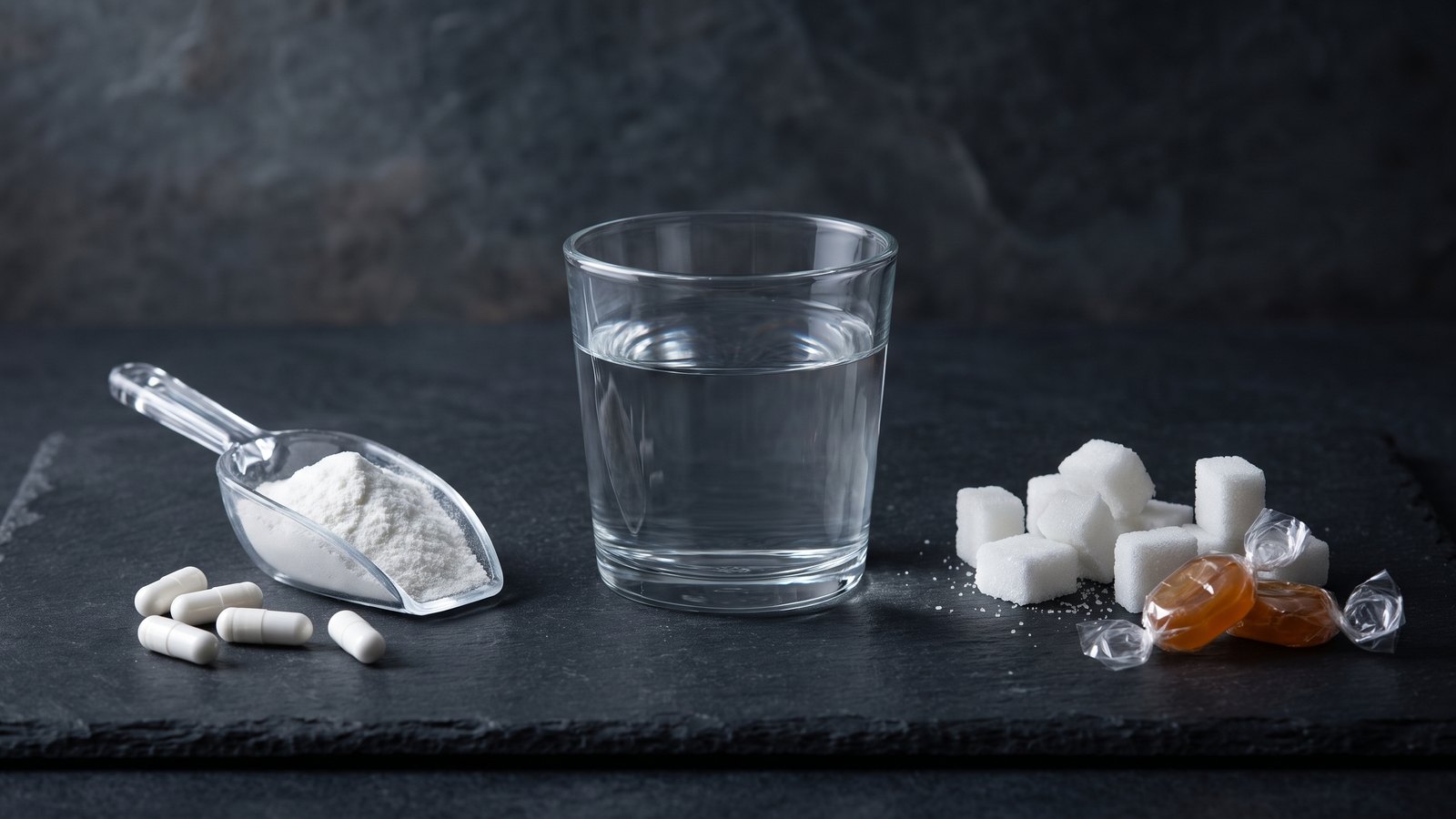
Short answer: there's no trial showing L-glutamine reduces sugar cravings. Not a small one, not a pilot, not one where cravings were even a secondary measure. The tip lives in wellness books and forums, and we couldn't find a study behind it.
What does exist is more interesting than the folklore. Glutamine is one of the amino acids your gut reads as a "food has arrived" signal, and at large doses it nudges GLP-1 and softens the blood sugar spike after a sugary drink. The catch: the doses that did that were 30 grams, and the one study that measured how much people ate afterwards found they ate more, not less.
The quick version
- Cravings: never measured in a human trial. Anything you've read is anecdote.
- Blood sugar: 30 g taken with a meal or a glucose drink blunted the first-hour rise in two small crossover studies.
- GLP-1: 30 g raised active GLP-1 in 15 people with type 2 diabetes. A 6 g capsule dose didn't do it consistently.
- Eating: the one trial that measured a meal found 6 g of glutamine came before a bigger lunch.
- Safety: well tolerated at around 12 g a day for 60 days in older adults.
Where the glutamine idea comes from
Glutamine is the most abundant amino acid in your blood and a main fuel for the cells lining your gut. Your body makes plenty of it, and you eat it in any protein food. It isn't a nutrient people are routinely short of, which already makes the "your cravings are a glutamine gap" story shaky.
The version you see online usually goes like this: glutamine can be turned into glucose, so a little powder on the tongue gives your brain the fuel it was begging for and the sugar craving switches off. It sounds tidy. Nobody has tested it. (We looked at the same "your body is asking for a nutrient" logic for minerals in our breakdown of which deficiencies actually cause sugar cravings, and it mostly didn't hold up there either.)
The better-grounded reason glutamine keeps coming up is gut hormones. Lab work showed glutamine is a strong trigger for the L-cells in your intestine that release GLP-1, the hormone involved in fullness and in how your body handles a meal. That's what the human studies set out to check.
What the human trials measured
GLP-1 and blood sugar at 30 grams
At the Garvan Institute in Sydney, 15 people with well-controlled type 2 diabetes ran through five test days in random order. Before a low-fat meal they took water, 15 g of glutamine, 30 g of glutamine, a diabetes drug, or the drug plus 15 g. The 30 g dose cut the blood sugar rise in the first hour after eating, raised insulin later on, and increased active GLP-1 compared with water (Samocha-Bonet et al., J Nutr 2011). The 15 g dose on its own didn't cut the early glucose rise.
An Adelaide group then tested 8 healthy young men. With 30 g of glutamine mixed in, a drink slowed down leaving the stomach: the half-emptying time of a low-calorie soup went from 26 to 45 minutes. After a 75 g glucose drink, the first-hour rise in blood sugar was smaller (Du et al., Nutrients 2018).
So glutamine at a large dose does something real to the way a sugary meal lands. That's a genuine finding. But 30 g is a lot of powder: roughly 120 calories of amino acid, taken right alongside the meal. It's not a capsule you pop when a craving hits.
The trial that measured eating went the wrong way
The most useful study for anyone hoping glutamine will make them eat less came out of Cambridge. Researchers gave 24 healthy volunteers and 8 people with type 2 diabetes a capsule designed to release glutamine low in the gut, at 3.6 or 6 g, or a placebo, in a double-blind crossover (Meek et al., Peptides 2016).
In healthy volunteers, 6 g nudged GLP-1 and insulin up at the 90-minute mark. It did nothing for blood sugar during a glucose tolerance test. And at a buffet lunch 2 hours later, people ate more after glutamine than after placebo: 542 g of food versus 481 g. The authors' own conclusion was that single doses didn't reliably raise GLP-1 and weren't linked to any metabolic benefit.
One study, one meal. But it's the only human data we found where someone actually weighed the food, and it points the opposite way from the claim.
The weight-loss pilot
A 2014 pilot from Sapienza University in Rome gave 6 women with overweight or obesity glutamine or a protein supplement for 4 weeks each, at 0.5 g per kilo of body weight a day (around 40 g for someone weighing 85 kg). They didn't change their diets. Weight fell from 85.0 to 82.2 kg on average during the glutamine block and not during the protein block (Laviano et al., Eur J Clin Nutr 2014).
Six people is a pilot in the truest sense. Nobody measured cravings, and we haven't found a larger trial that repeated it. Treat it as a reason for someone to run a proper study, not a reason to buy a tub.
A result from fruit flies worth knowing
In a 2024 study, flies fed extra glutamine for 6 days became more sensitive to the taste of sugar, through a pathway that depended on one of their gut bacteria (Li et al., Life Sci 2024). Flies aren't people, and we'd never draw a human conclusion from it. We mention it because it's the closest thing to a study of glutamine and sweet taste, and it doesn't support the craving story either.
Is L-glutamine safe to take?
At everyday supplement doses, it looks well tolerated. In a double-blind trial in Brazil, older adults took 12.4 g a day or placebo for 60 days, and the researchers found no meaningful change in a long list of blood markers and no reported side effects (Nóbrega et al., Braz J Med Biol Res 2024).
At high doses it's less clean. When people with type 2 diabetes took 15 g twice a day for 4 weeks, blood sugar markers dropped modestly, but blood urea rose and red cell and albumin readings dipped in a pattern the authors read as mild plasma volume expansion (Samocha-Bonet et al., PLoS One 2014). Nothing dramatic, but it's why 30 g a day isn't something to try on your own, especially with kidney or liver problems or if you take glucose-lowering medication. Ask your doctor first.
What works better for sugar cravings
If you want something you can do the moment a craving starts, the options with real trial data are behavioral: a brisk 15-minute walk, a few minutes of a visual puzzle game, a stick of gum. We ranked them in the fastest ways to stop a sugar craving.
If you want a supplement, pick one where cravings or intake were actually measured in people. Chromium is the clearest example: in an 8-week trial, women who reported carb cravings ate less on it, and we walked through the fine print in the chromium and cravings evidence. Our full ranking of supplements for sugar cravings grades each ingredient the same way, and every appetite product we review lives on the appetite suppressants hub.
And if the cravings feel constant rather than occasional, start with the basics: sleep, breakfast, protein at lunch. We covered that pattern in what to do when you can't stop eating sugar.
The bottom line
L-glutamine for sugar cravings is a tip without a trial. The real science on glutamine is about big doses taken with meals, and it shows smaller blood sugar spikes and a GLP-1 nudge, not fewer cravings. The only study that weighed what people ate found they ate more.
If you already take glutamine for another reason, there's no sign it's hurting you at normal doses. Just don't expect it to be the thing that ends the 9 PM sugar hunt. None of this is medical advice.
References
- Samocha-Bonet D, et al. Glutamine reduces postprandial glycemia and augments the glucagon-like peptide-1 response in type 2 diabetes patients. J Nutr. 2011;141(7):1233-8. PubMed 21593352
- Du YT, et al. Effects of glutamine on gastric emptying of low- and high-nutrient drinks in healthy young subjects: impact on glycaemia. Nutrients. 2018;10(6):739. PubMed 29880750
- Meek CL, et al. The effect of encapsulated glutamine on gut peptide secretion in human volunteers. Peptides. 2016;77:38-46. PubMed 26541888
- Laviano A, et al. Glutamine supplementation favors weight loss in nondieting obese female patients. A pilot study. Eur J Clin Nutr. 2014;68(11):1264-6. PubMed 25226827
- Li SS, et al. Glutamine enhances sucrose taste through a gut microbiota-gut-brain axis in Drosophila. Life Sci. 2024;339:122415. PubMed 38218533
- Nóbrega TCM, et al. Tolerability of glutamine supplementation in older adults: a double-blind placebo-controlled randomized clinical trial. Braz J Med Biol Res. 2024;57:e13468. PubMed 38808890
- Samocha-Bonet D, et al. Glycemic effects and safety of L-glutamine supplementation with or without sitagliptin in type 2 diabetes patients: a randomized study. PLoS One. 2014;9(11):e113366. PubMed 25412338
FAQ
Does L-glutamine stop sugar cravings?
There's no human trial showing it does. Cravings have never been measured in a glutamine study. The idea circulates in books and forums, but the research on glutamine looks at blood sugar and gut hormones, not cravings.
How much L-glutamine was used in the studies?
The studies that found a smaller blood sugar rise after a meal used 30 g, taken right alongside the food or glucose drink. A 6 g capsule dose did not reliably raise GLP-1, and in that trial people ate more at lunch (542 g versus 481 g on placebo).
Is L-glutamine safe to take every day?
At around 12 g a day for 60 days it was well tolerated in older adults with no reported side effects. At 30 g a day for 4 weeks, people with type 2 diabetes showed signs of mild plasma volume expansion and higher blood urea. Check with your doctor, especially if you have kidney or liver issues or take glucose-lowering medication.
What works better than glutamine for sugar cravings?
Options with real trial data include a brisk 15-minute walk, a short visual puzzle game, and chromium, which lowered carb intake in women who reported carb cravings over 8 weeks. Sleep and a proper breakfast matter more than most supplements.
Products mentioned

Metamucil 4-in-1 Fiber (Psyllium Husk)
Metamucil (Procter & Gamble) · powderBest Value: cheap, drinkable, and well-evidenced as a fiber — but single-pathway and a heavy gel load.
Pennies per serving — by far the cheapest in the set.
Single pathway — a fiber, not a craving formula.
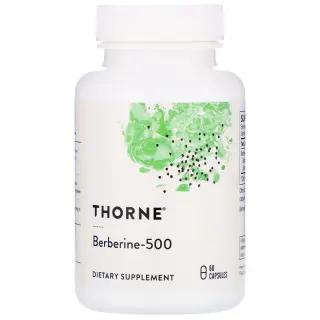
Thorne Berberine (1,000 mg)
Thorne · capsuleWell-evidenced berberine for metabolic support — but the effective dose is rough on a lot of stomachs.
Berberine has real human RCT evidence for glucose and lipid markers.
Berberine commonly causes GI distress — cramping, diarrhea, constipation — and at the 1,000 mg+ effective dose it is hard for many people to tolerate.
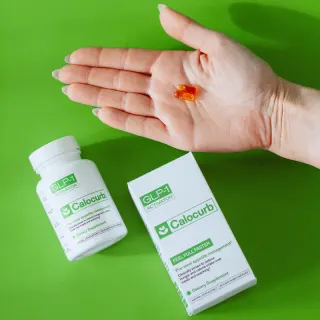
Calocurb GLP-1 Activator
Calocurb · capsuleThe best-evidenced single-mechanism appetite trigger — clinically interesting, but premium-priced and a pre-meal, short-window tool rather than all-day support.
Amarasate is one of the most directly studied appetite ingredients — multiple human RCTs, dosed on-label at 250 mg.
Acute, short-window effect: a pre-meal tool (up to 4 capsules/day), not all-day craving support.