Metabolic Science
The Best Supplements for Blood Sugar Control, and Who the Research Was Actually Done On
This shelf has more real human data than most of the supplement aisle. It also has a population problem, and once you see it you can't unsee it in the marketing.
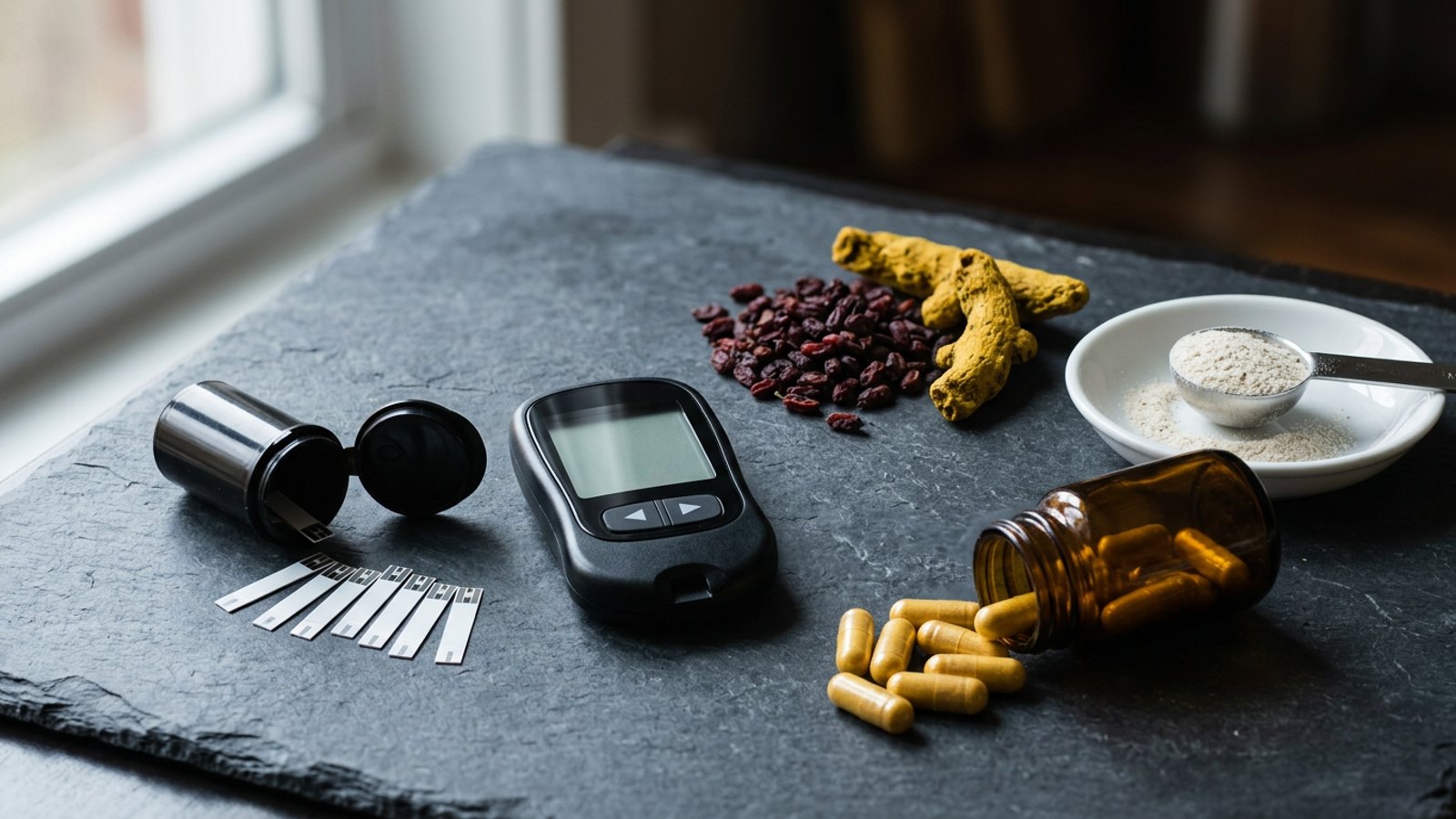
The blood sugar shelf is the strongest corner of the supplement aisle. Berberine, chromium, psyllium and a probiotic named after a gut bacterium all have real human trials with real glucose measurements behind them. That's more than most of this industry can say.
It also has a problem that nobody printing the labels brings up. Read those trials and the same population shows up over and over: adults with diagnosed type 2 diabetes, most of them already taking metformin or another glucose-lowering drug.
That isn't who's shopping. CDC survey data from 2017 through 2020 put 38.0% of US adults at prediabetes based on fasting glucose or A1C. That's tens of millions of people with one slightly high number on a lab report, no prescription, and a shelf of products whose evidence was generated inside somebody else's metabolism.
So this ranking does two things at once. It says which products have the best evidence, and it says who that evidence is actually about.
How we ranked these
Same five axes we use site-wide: hunger-pathway coverage, dose transparency, evidence quality, best available cost per serving, and format and timing fit. The full rubric sits in our methodology.
One extra filter for this list. An ingredient counts only if a human trial measured a glucose outcome directly: fasting plasma glucose, HbA1c, post-meal glucose, or a validated insulin-resistance index. Body weight doesn't count. Appetite doesn't count. Both get used as stand-ins for glycemic benefit constantly, and they aren't the same thing.
1. Berberine: the deepest evidence file, and the roughest ride
Nothing else here comes close on volume. Guo and colleagues pooled 46 randomized controlled trials in people with type 2 diabetes and found berberine, used alone or alongside standard diabetes therapy, reduced HbA1c by 0.73 percentage points against control, with reductions in fasting and 2-hour post-meal glucose (mean differences of 0.86 and 1.26 in the pooled analysis) and improvements in fasting insulin and HOMA-IR (Oxidative Medicine and Cellular Longevity 2021). An umbrella review of the existing meta-analyses landed in the same direction on fasting glucose, HbA1c and insulin resistance (Clinical Therapeutics 2024).
Then a newer pooling reads it differently. Shadin and colleagues grouped probiotics, synbiotics and berberine across more than 30 trials and over 2,000 participants, and reported reductions of 0.71 mmol/L in fasting plasma glucose and 0.19 percentage points in HbA1c, with substantial variability between studies. Their own summary calls the improvements statistically significant but clinically modest, and positions all three as adjunctive rather than primary (PLOS One 2026).
Sit those two numbers next to each other. HbA1c down 0.73 in one pooling, 0.19 in another. Same ingredient, different trial sets and different grouping decisions. That spread is the honest answer to how well berberine works, and it's more useful than either number on its own.
Thorne pairs 450 mg of berberine HCl with 550 mg as a phytosome, a phospholipid complex meant to work around berberine's poor absorption, for 1,000 mg of berberine compounds per serving at $1.47. NOW does 400 mg per softgel with MCT oil, directs one with each meal, and costs about $1.00 a serving.
The tolerability problem is not a footnote. At the doses these trials used, berberine gives a lot of people cramping and diarrhea, and it's the single most common reason people quit it. Our berberine deep dive works through the absorption question in more detail.
One safety note worth stating plainly: berberine is being studied for the same outcome your medication is already treating. If you take a glucose-lowering drug, that's a conversation with your doctor before it's a purchase.
2. Psyllium: the cheapest thing here with a glucose number attached
Abutair and colleagues randomized 40 adults with type 2 diabetes to either 10.5 g of soluble fiber from psyllium daily or their regular diet for 8 weeks. The fiber group's fasting blood sugar fell from 163 to 119 mg/dl, HbA1c from 8.5% to 7.5%, fasting insulin from 27.9 to 19.7 µIU/mL, and HOMA-IR from 11.3 to 5.8 (Nutrition Journal 2016).
Those are large moves, and the design explains part of why. Forty people is small, the comparison arm continued a regular diet rather than taking a placebo powder, and the starting values were high. Numbers that start high have more room to fall. Read it as a promising signal at a specific dose, not as a benchmark you should expect to hit.
The dose is where buying gets interesting. Metamucil delivers 3.4 g of psyllium husk and 2.4 g of soluble fiber per serving. The trial ran on 10.5 g of soluble fiber, which is roughly four of those servings, not one. At $0.21 a serving you can afford the arithmetic, but you're then drinking several gel loads a day, and that's a real habit rather than a token one. Our psyllium write-up covers the tolerance ramp.
3. Chromium: big pooled numbers, and a statistic you need to see
Asbaghi and colleagues pooled 28 trials in people with type 2 diabetes and reported chromium supplementation lowering fasting plasma glucose by 19.00 mg/dl, HbA1c by 0.71 percentage points, insulin by 12.35 pmol/l, and HOMA-IR by 1.53 (Pharmacological Research 2020).
Now the part that rarely makes it into a product page. The heterogeneity statistic on that fasting glucose result was 99.8%. Heterogeneity measures how much the individual trials disagree with each other, and 99.8% is close to total disagreement. The pooled average is correct arithmetic and a poor prediction of what any single trial found. Some studies in that set moved glucose a lot, some barely moved it, and averaging them produces a tidy number that hides the mess.
There's a labeling trap here too. Trial doses are usually stated as elemental chromium, while supplement labels commonly list a chromium compound by compound weight. Those aren't interchangeable, and you can't assume the milligrams on a label match the micrograms in a study. We ran that math out in our chromium piece.
4. Akkermansia: the best mechanism story, the thinnest human file
Depommier and colleagues ran the first human supplementation trial of Akkermansia muciniphila, a mucin-degrading gut bacterium repeatedly found at lower abundance in people with obesity and type 2 diabetes. Forty overweight and insulin-resistant volunteers enrolled, 32 finished, and three months of daily pasteurized A. muciniphila improved insulin sensitivity by 28.62% against placebo, lowered insulinemia by 34.08% and total cholesterol by 8.68% (Nature Medicine 2019).
The authors titled it a proof-of-concept exploratory study, which is the right label. It ran at one center in 32 people who finished, and the body weight change didn't reach significance. A review of the wider literature makes the same point from the other side: most of the strong metabolic findings for this organism come from preclinical models and still need confirmation in randomized clinical trials (Minerva Endocrinology 2022).
Pendulum is the product built on that idea, and it's where the evidence stops being checkable. The label gives 500 million AFU total across three strains with no per-strain breakdown, so there's no way to compare what's in the capsule against what the trial used. At $2.63 a serving it's also the most expensive thing on this page. More in our Akkermansia review.
The blend problem
Supergut is built on Solnul resistant potato starch, oat beta-glucan, green banana resistant starch and soluble maize fiber. Those are legitimate, well-studied fiber types. Every one of their doses is hidden inside a proprietary blend.
That's the whole issue with a blend, and it isn't a technicality. Dose is the only thing that connects a product to a study. Hide it and the ingredient list becomes a reading list rather than a claim you can check. At $1.50 a serving, or $48 a box on subscription, you're paying for a formula you can't audit.
Who these trials were actually run on
Go back through the four ranked entries and look at the enrollment.
- Berberine: people with type 2 diabetes, frequently on standard diabetes therapy alongside the supplement.
- Psyllium: people with type 2 diabetes, starting at 163 mg/dl fasting and 8.5% HbA1c.
- Chromium: people with type 2 diabetes.
- Akkermansia: overweight and obese volunteers who were already insulin-resistant.
Not one of these enrolled the person the marketing is aimed at, the otherwise healthy adult who got a fasting glucose of 104 back from a physical and started reading labels.
Two things follow. First, the effect sizes came off high baselines, and a number that starts high has more room to move. Second, most of these participants were on medication, so what was measured was a supplement added to treatment, not a supplement standing in for it. Anyone selling you the headline figure without those two facts is selling you somebody else's result.
The rest of the field is easier to dismiss for this specific job. Stimulant fat burners have no meaningful glucose file. Glucomannan-only products like Leanbean and Lipozene work through viscous fullness, which is a satiety mechanism, not a glycemic one.
The verdict
If you want the deepest evidence base and your stomach can handle it, berberine: NOW on price, Thorne if the absorption engineering is worth $0.47 a serving to you. If you want the cheapest option with a real glucose number behind it, psyllium, dosed honestly at several servings rather than one. Chromium is inexpensive and well tolerated, but buy it knowing the trials behind it disagree with each other almost completely. Akkermansia is the most interesting mechanism on the shelf and the least confirmed, and the product built on it won't tell you its dose.
The thing none of these trials did was remove the underlying diet. Every one of them layered a supplement on top of how people were already eating, which is exactly how you should expect it to work in your life too. Browse the rest of the berberine and metabolic category for the full field.
References
- Guo J, Chen H, Zhang X, et al. The Effect of Berberine on Metabolic Profiles in Type 2 Diabetic Patients: A Systematic Review and Meta-Analysis of Randomized Controlled Trials. Oxid Med Cell Longev. 2021;2021:2074610. PMID 34956436
- Nazari A, Ghotbabadi ZR, Kazemi KS, et al. The Effect of Berberine Supplementation on Glycemic Control and Inflammatory Biomarkers in Metabolic Disorders: An Umbrella Meta-analysis of Randomized Controlled Trials. Clin Ther. 2024;46(2):e64-e72. PMID 38016844
- Shadin M, Bhuia MS, Alfaifi M, et al. Probiotics, synbiotics and berberine in Type 2 diabetes mellitus: A systematic review, meta-analysis, and molecular dynamics simulation study. PLoS One. 2026;21(5):e0348907. PMID 42213651
- Abutair AS, Naser IA, Hamed AT. Soluble fibers from psyllium improve glycemic response and body weight among diabetes type 2 patients (randomized control trial). Nutr J. 2016;15(1):86. PMID 27733151
- Asbaghi O, Fatemeh N, Mahnaz RK, et al. Effects of chromium supplementation on glycemic control in patients with type 2 diabetes: a systematic review and meta-analysis of randomized controlled trials. Pharmacol Res. 2020;161:105098. PMID 32730903
- Depommier C, Everard A, Druart C, et al. Supplementation with Akkermansia muciniphila in overweight and obese human volunteers: a proof-of-concept exploratory study. Nat Med. 2019;25(7):1096-1103. PMID 31263284
- Kobyliak N, Falalyeyeva T, Kyriachenko Y, et al. Akkermansia muciniphila as a novel powerful bacterial player in the treatment of metabolic disorders. Minerva Endocrinol (Torino). 2022;47(2):242-252. PMID 35103461
- National Diabetes Statistics Report: prevalence of prediabetes among US adults aged 18 years or older, 2017-2020. CDC. cdc.gov
Citations retrieved via PubMed, plus CDC national survey data. This article is for education only and isn't medical advice. Talk to your doctor before starting any supplement, especially if you're pregnant, nursing, taking medication, or managing a health condition. If you take a glucose-lowering medication, that conversation matters more, not less.
FAQ
Which supplement has the strongest evidence for blood sugar control?
Berberine, by volume of human trials. A meta-analysis of 46 randomized trials in people with type 2 diabetes reported HbA1c down 0.73 percentage points along with improvements in fasting glucose and insulin resistance. A 2026 pooling that grouped berberine with probiotics and synbiotics found a smaller effect, 0.19 percentage points on HbA1c, and called the improvements clinically modest and adjunctive. Both readings are real, and the gap between them is the useful information.
Do these supplements work if I have prediabetes rather than diabetes?
Nobody has properly tested that. Almost every trial behind this category enrolled adults with diagnosed type 2 diabetes, frequently already on medication, and their starting glucose and HbA1c were high. Effects measured off a high baseline don't transfer cleanly to someone whose numbers are only slightly elevated, so treat the published figures as an upper bound rather than an expectation.
Is berberine safe to take with diabetes medication?
That's a question for your doctor, not a product page. Berberine is studied for the same outcome those medications treat, and the trials in the meta-analyses often ran it alongside standard therapy rather than instead of it. Berberine also commonly causes cramping and diarrhea at the doses used in research, which is the most frequent reason people stop taking it.
Why does the chromium research get described as unreliable?
Because the trials disagree with each other. The pooled analysis of 28 trials reported a 19.00 mg/dl drop in fasting plasma glucose, but the heterogeneity statistic on that result was 99.8%, which is close to total disagreement between studies. The average is accurate arithmetic and a weak prediction of any individual result. Label math is a second issue: study doses are usually elemental chromium while products often list a compound by its total weight.
Products mentioned
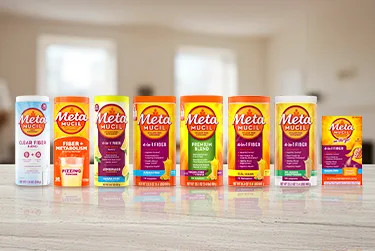
Metamucil 4-in-1 Fiber (Psyllium Husk)
Metamucil (Procter & Gamble) · powderBest Value: cheap, drinkable, and well-evidenced as a fiber — but single-pathway and a heavy gel load.
Pennies per serving — by far the cheapest in the set.
Single pathway — a fiber, not a craving formula.
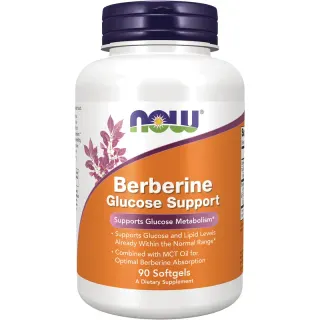
NOW Berberine Glucose Support
NOW Foods · softgelA cheap, no-frills berberine — same evidence, same berberine tolerability problem.
Inexpensive, disclosed berberine from a large reputable brand.
Berberine’s common GI side effects (cramping, diarrhea) still apply, especially across 1,200 mg/day.
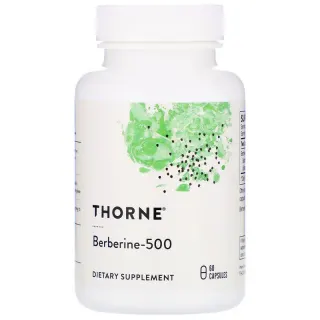
Thorne Berberine (1,000 mg)
Thorne · capsuleWell-evidenced berberine for metabolic support — but the effective dose is rough on a lot of stomachs.
Berberine has real human RCT evidence for glucose and lipid markers.
Berberine commonly causes GI distress — cramping, diarrhea, constipation — and at the 1,000 mg+ effective dose it is hard for many people to tolerate.
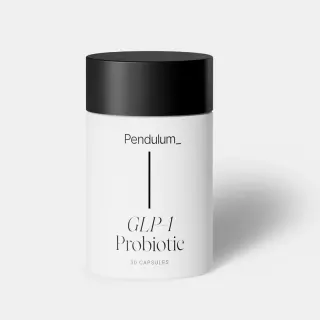
Pendulum GLP-1 Probiotic
Pendulum Therapeutics · capsuleStrong science pedigree on Akkermansia, but a proprietary CFU blend and refrigeration requirement.
Akkermansia has the strongest individual research pedigree of the probiotic actives.
Per-strain doses are hidden inside a proprietary blend.