Ingredient Science
The Science of Akkermansia Muciniphila: The Mucus-Eating Gut Bug With a GLP-1 Angle
A bacterium that eats your gut lining and somehow leaves it healthier. The evidence is real, promising, and running well ahead of what's proven. Here's the honest read.
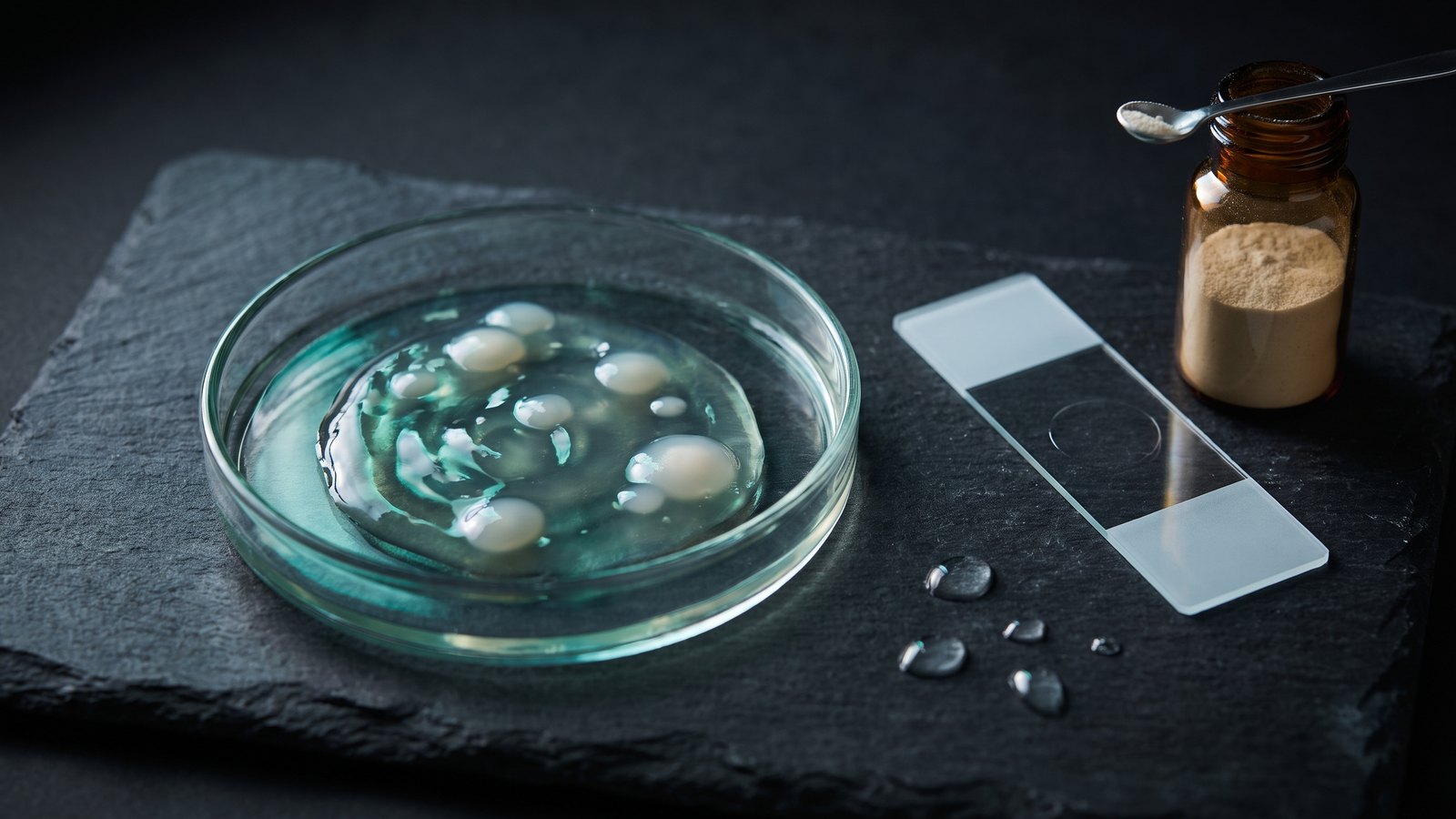
There's a bacterium living in the slime that lines your gut wall, and it makes its living by eating that slime. Its name is Akkermansia muciniphila, and for about a decade it's been one of the most hyped names in gut health.
The pitch on the probiotic label: more Akkermansia, better metabolism, steadier blood sugar, easier weight control. Some of that is grounded in real science. Some of it is running well ahead of the data.
So let's take the actual bacterium apart. What it is, what the human evidence shows, where the GLP-1 story comes from, and the parts the label quietly leaves off.
What Akkermansia muciniphila actually is
It was first described and named in 2004: a mucin-degrading bacterium pulled from the human gut and classified as its own new genus and species (Derrien et al., Int J Syst Evol Microbiol, 2004).
Mucin is the protein that makes up your gut's mucus layer, the protective gel that coats the cells of your intestinal wall. Akkermansia lives right in that layer and feeds on it.
Which sounds alarming. A bug that eats your gut lining? But the relationship reads more like a trade. As it grazes on the mucus, it prompts your gut to make fresh mucus, and the layer tends to stay thicker and better-maintained. It's also one of the more abundant single species in a healthy gut, which is part of why it drew so much attention.
The pattern that got everyone interested
The first big clue was correlational. People with more Akkermansia tend to look metabolically healthier.
A 2016 study in Gut followed 49 adults with overweight and obesity (41 of them women) through 6 weeks of calorie restriction and 6 weeks of weight stabilization. The people who started with more Akkermansia had lower fasting blood sugar, a lower waist-to-hip ratio, and smaller fat cells (Dao et al., Gut, 2016).
Better still, those same people responded better to the diet. Higher baseline Akkermansia predicted bigger improvements in insulin sensitivity and blood-fat markers after the calorie cut.
Careful with what that means, though. This is correlation. The bacterium might be helping, or it might just be a marker of a gut that was already in good shape. An observational study can't separate those. It can only tell you the association is real and worth chasing.
The mouse mechanism
To chase it, researchers went to mice, where you can actually add the bacterium and watch what happens.
The landmark 2013 study fed mice a high-fat diet, then gave some of them Akkermansia. The treatment reversed a whole stack of the damage: less fat-mass gain, less of the low-grade inflammation that leaks from an unhealthy gut (metabolic endotoxemia), less inflammation in the fat tissue itself, and better insulin sensitivity (Everard et al., PNAS, 2013).
One detail from that paper matters for later. Heat-killed bacteria didn't work. In these mice, the live bug was doing something the dead one couldn't. Hold that thought, because the human story flips it.
And this is mouse data. Mouse gut biology is a decent starting map for human gut biology, not a finished one. Plenty of things that fix a mouse's metabolism do nothing in people.
Where GLP-1 comes in
Here's the part that lands Akkermansia in the "natural GLP-1" conversation.
In 2021, a team identified a specific protein the bacterium secretes, an 84-kilodalton molecule they named P9. On its own, P9 triggered gut cells to release GLP-1, the same satiety and blood-sugar hormone the weight-loss drugs are built around, and it turned up calorie-burning brown fat (Yoon et al., Nat Microbiol, 2021).
The effect ran through a receptor called ICAM-2 and needed the signaling molecule IL-6 to work. In plain terms: they found a plausible molecular reason a gut bug could nudge your own GLP-1 upward.
That's the mechanistic backbone of the whole "Akkermansia supports GLP-1" claim. It is also, once again, a mouse-and-cell finding. The protein hasn't been run through human trials on its own. If you want the wider reality check on what a "natural GLP-1 booster" can and can't mean, we laid it out in this piece, and the butyrate side of the same gut-hormone story lives here.
The one human trial worth knowing
Only one properly controlled human supplementation trial has been published, and it's small.
In 2019, researchers gave 32 adults with overweight or obesity and insulin resistance a daily dose of about 10 billion Akkermansia bacteria, either live or pasteurized (heat-treated), or a placebo, for three months (Depommier et al., Nat Med, 2019).
The headline was a twist almost nobody predicted. The pasteurized bacteria worked better than the live ones. Against placebo, the pasteurized group improved insulin sensitivity by roughly 29%, dropped fasting insulin by about 34%, and saw modest reductions in total cholesterol, body weight (around 2 kg), and fat mass.
The live group mostly landed somewhere between pasteurized and placebo, without hitting statistical significance on the main markers. So the heat-killed cells that did nothing in mice turned out to be the winners in humans.
Why? Researchers think a heat-stable protein on the bacterium's surface carries a good chunk of the benefit and survives pasteurization intact, while live cells may be more fragile in transit. Whatever the reason, it flips the usual "live cultures are always better" instinct on its head for this particular bug.
The trial was explicitly a proof-of-concept: 32 people, three months, built mainly to check that supplementation was safe and feasible. It was safe and well tolerated. It is not the large, long trial you'd want before calling anything settled.
What this means for the stuff on the shelf
Here's where buyers should slow down.
The one human trial that worked used a specific pasteurized preparation at a defined dose, made under research conditions. A tub of "Akkermansia probiotic" off a shelf is not automatically the same thing.
A few honest cautions:
- Live versus pasteurized isn't a detail. The human data favored pasteurized. Plenty of consumer products sell live cultures. Whether a given live product behaves like the trial's live arm (weaker) or its pasteurized arm (better) isn't something you can read off the label.
- Akkermansia is an oxygen-sensitive anaerobe, historically finicky to grow and keep alive, so "contains Akkermansia" and "contains living, active Akkermansia at the dose that was studied" are different promises. We can't verify either one from marketing copy.
- Dose and preparation matter, and most labels don't give you enough to line them up against the research.
There's also the gentler, indirect route: feed the Akkermansia you already carry. Certain prebiotic fibers and polyphenols are associated with higher Akkermansia levels, which is part of why prebiotic fibers keep showing up in gut-health blends. That's a slower, less flashy play than swallowing the bug directly, and arguably a more defensible one.
The honest verdict
Akkermansia muciniphila is one of the most legitimately promising names in gut science, and one of the most oversold.
What's solid: it's a real, abundant gut resident tied to a healthier metabolic profile in humans, with a coherent mechanism running through the gut barrier and GLP-1, plus one small human trial where a pasteurized version improved insulin sensitivity.
What's not: nearly all the causal evidence is from mice, the GLP-1 protein finding hasn't been tested in people on its own, and the single human trial ran 32 participants for three months. The distance between "associated with good metabolic health" and "take this capsule and improve yours" is still wide.
Interesting bug, early days. If you go looking, know that the human evidence points at pasteurized rather than live, and that feeding the strain through your diet is the lower-risk version of the same bet. We track the gut-hormone products in our GLP-1 support breakdown, and our methodology explains how we weigh thin-but-promising evidence like this. For the bigger picture on how your gut talks to your appetite, start with the gut-brain axis explainer.
References
Based on articles retrieved from PubMed:
- Derrien M, et al. Akkermansia muciniphila gen. nov., sp. nov., a human intestinal mucin-degrading bacterium. Int J Syst Evol Microbiol. 2004. PubMed
- Everard A, et al. Cross-talk between Akkermansia muciniphila and intestinal epithelium controls diet-induced obesity. Proc Natl Acad Sci USA. 2013. PubMed
- Dao MC, et al. Akkermansia muciniphila and improved metabolic health during a dietary intervention in obesity: relationship with gut microbiome richness and ecology. Gut. 2016. PubMed
- Depommier C, et al. Supplementation with Akkermansia muciniphila in overweight and obese human volunteers: a proof-of-concept exploratory study. Nat Med. 2019. PubMed
- Yoon HS, et al. Akkermansia muciniphila secretes a glucagon-like peptide-1-inducing protein that improves glucose homeostasis and ameliorates metabolic dysfunction in mice. Nat Microbiol. 2021. PubMed
Citations retrieved via PubMed. This article is for education only and isn't medical advice. Probiotics and Akkermansia supplements are dietary supplements, not treatments for any medical condition. Talk to your doctor before starting any supplement, especially if you're pregnant, nursing, immunocompromised, on medication, or managing a health condition.
FAQ
What is Akkermansia muciniphila?
It's a bacterium that lives in the mucus layer lining your gut and feeds on mucin, the protein that gel is made of. First described in 2004, it's one of the more abundant single species in a healthy gut. As it grazes on the mucus it prompts your gut to make more, which is part of why it's linked to a well-maintained gut barrier and, in observational studies, to a healthier metabolic profile.
Does taking an Akkermansia probiotic help with weight or blood sugar?
The honest answer is: promising but far from proven. Only one controlled human trial has been published. It gave 32 adults about 10 billion bacteria a day for three months, and a pasteurized version improved insulin sensitivity by roughly 29% and lowered fasting insulin, with modest drops in weight and cholesterol versus placebo. That's one small proof-of-concept study. Most of the deeper evidence is still from mice, so treat any strong weight-loss claim on a label as running ahead of the data.
Is live or pasteurized Akkermansia better?
Counterintuitively, the human data points to pasteurized. In the 2019 trial the heat-treated bacteria outperformed the live ones on the main metabolic markers, likely because a heat-stable surface protein carries much of the benefit and survives pasteurization while live cells are more fragile. This flips the usual assumption that live cultures are always superior, and it matters because many consumer products sell live Akkermansia.
How can I increase Akkermansia naturally?
The lower-risk route is feeding the Akkermansia you already have rather than swallowing more. Certain prebiotic fibers (like chicory inulin) and polyphenol-rich foods are associated with higher Akkermansia levels in the gut. It's a slower, less flashy approach than a targeted supplement, but it doesn't depend on a live, oxygen-sensitive bacterium surviving the trip to your intestine, and it comes with the other benefits of eating more fiber and plants.
Products mentioned

Lemme GLP-1 Daily (Lemme Reset)
Lemme · capsuleThe most transparent standalone GLP-1 capsule: fully-disclosed branded actives in a simple once-daily pill, though it covers fewer hunger pathways than the Ozzi capsule.
Fully disclosed, standardized branded actives (no proprietary blend).
No published trial on the finished three-ingredient combination.
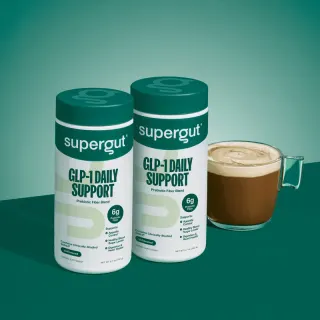
Supergut GLP-1 Daily Support
Supergut · powderA drinkable, gut-first option — but it leans on a proprietary fiber blend and a heavy fiber load.
Drinkable and caffeine-free.
Individual fiber doses are hidden inside a proprietary blend.
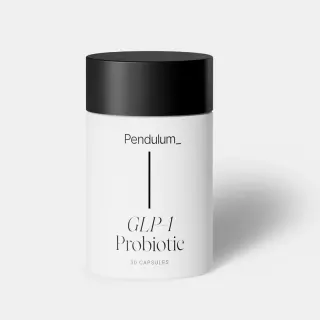
Pendulum GLP-1 Probiotic
Pendulum Therapeutics · capsuleStrong science pedigree on Akkermansia, but a proprietary CFU blend and refrigeration requirement.
Akkermansia has the strongest individual research pedigree of the probiotic actives.
Per-strain doses are hidden inside a proprietary blend.