Ingredient Science
The Science of Chicory Inulin: The Prebiotic Fiber in Half Your 'Gut Health' Cart
It feeds the good bacteria and takes a modest edge off hunger. It can also turn your gut into a gas factory if you dump too much in at once. The evidence, straight.
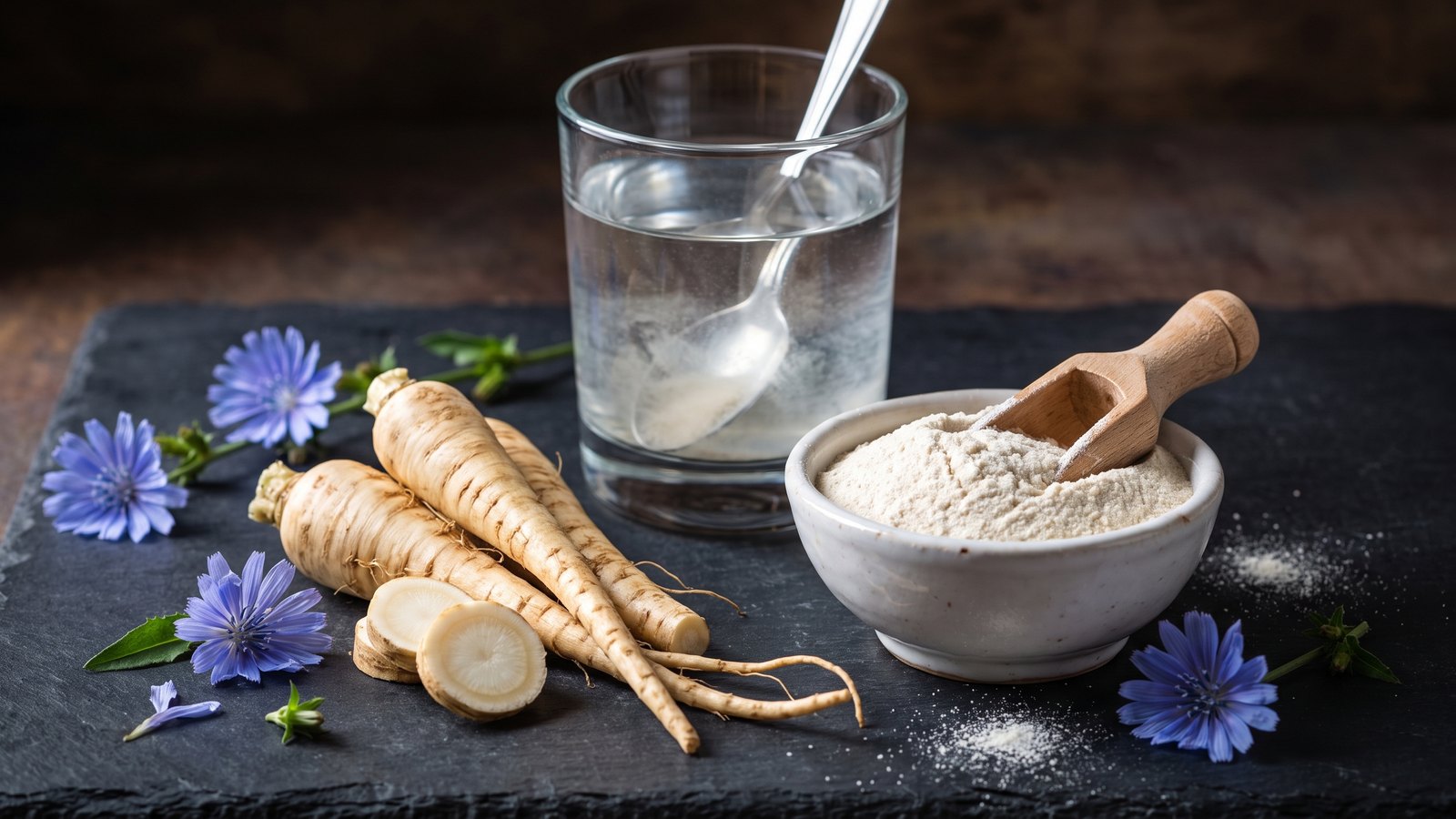
Read the back of almost any gut-health powder, high-fiber protein bar, or "natural GLP-1" drink and you'll spot it: chicory root fiber, chicory inulin, or oligofructose. Same plant, slightly different cut.
It's one of the most common functional fibers on the shelf, and one of the least understood by the people buying it. So let's take chicory inulin apart. What it actually is, what the human trials show for your gut bacteria, your appetite, and your blood sugar, and the dose where a helpful fiber turns into a bloating problem.
What chicory inulin actually is
Inulin is a fructan, a chain of fructose units your body can't digest. It's stored as an energy reserve in a lot of plants (onions, garlic, bananas, Jerusalem artichokes), but the commercial stuff mostly comes from the root of Cichorium intybus, the same chicory whose blue flowers you've seen on roadsides.
You'll see two versions on labels. "Native inulin" is the longer chain. "Oligofructose" (sometimes FOS) is the shorter chain, snipped down, and it ferments faster in the gut. Most products use one or a blend of both.
Here's the key trait, and it's the opposite of a fiber like psyllium. Psyllium is a gel-former your gut bacteria mostly ignore, which is why it's gentle. We got into that in the psyllium breakdown. Inulin does the reverse: it's a prebiotic, built to be fermented. That fermentation is the whole point, and also the whole catch.
The prebiotic engine: feeding the good bacteria
This is inulin's strongest, cleanest story. When it reaches your colon undigested, resident bacteria ferment it, and specific groups bloom on it.
According to research retrieved from PubMed, a 2024 randomized, double-blind controlled trial gave inulin (from Jerusalem artichoke) to children with obesity for 6 months and sequenced their gut bacteria. The inulin group saw a real jump in bacterial diversity, more Bifidobacterium and Blautia, and a rise in several butyrate-producing species like Agathobacter and Subdoligranulum, changes the placebo and plain-advice groups didn't get (Visuthranukul et al., Int J Obes, 2024, DOI). Worth flagging: that was children, and Jerusalem artichoke inulin rather than chicory, so read it as directional for the mechanism rather than a chicory-specific number.
Why the butyrate part matters: butyrate is the short-chain fatty acid your colon cells burn for fuel, and it's tied to gut-hormone signaling. Inulin doesn't contain butyrate. It feeds the bacteria that make it. That's the entire logic behind pairing a prebiotic fiber with the gut, and it's the same molecule at the center of the butyrate and GLP-1 story.
Appetite and gut hormones: the honest version
This is where inulin gets oversold, so we'll be careful.
The mechanism came out of rodent work first. Chicory inulin-type fructans fed to rats raised gut levels of the fullness hormones GLP-1 and PYY, lowered the hunger hormone ghrelin, and cut food intake (Delzenne et al., Br J Nutr, 2005, DOI). Promising, but that's rats, and rat appetite biology doesn't automatically transfer to people.
The human data is more mixed, and more interesting for it. A 12-week randomized, double-blind, placebo-controlled trial gave 48 overweight and obese adults 21 grams of oligofructose a day. The fiber group lost about 1 kg while the placebo group gained about half a kg, reported eating less, and showed lower ghrelin and higher PYY (Parnell & Reimer, Am J Clin Nutr, 2009, DOI). The honest asterisk from that same study: active GLP-1 didn't actually move. So the appetite effect showed up, but not cleanly through the pathway the marketing loves to name.
A more recent crossover trial found the GLP-1 signal that Parnell missed. When adults drank 20 grams of oligofructose-enriched inulin after evening exercise, their GLP-1 and PYY rose and their hunger dropped versus the control drink, though the actual reduction in next-morning eating was small and didn't reach significance (Hamilton & Bomhof, Nutrients, 2023, DOI).
Put it together and the fair read is this. Inulin can nudge the fullness hormones and take a modest edge off appetite in humans. It is a gentle, food-derived nudge, not a switch. If you want the full breakdown of why "natural GLP-1 booster" is a loaded phrase, we did that here.
Blood sugar: a real signal, in the right people
Because inulin isn't digested into sugar, it doesn't spike blood glucose the way starches do, and the fermentation products may help glucose handling over time.
In a randomized controlled trial, 52 women with type 2 diabetes took 10 grams a day of oligofructose-enriched inulin for 8 weeks. Fasting blood glucose dropped about 19 mg/dL (roughly 9.5%) and HbA1c, the 3-month blood-sugar average, fell about 1 percentage point, alongside drops in several inflammation markers, versus a maltodextrin placebo (Dehghan et al., Nutrition, 2013, DOI).
Read that in context. These were people with a diagnosed condition, often already in treatment. Inulin is a fiber, not a glucose medication, and it belongs alongside medical care, not in place of it. In people with normal blood sugar, don't expect a dramatic shift.
The catch nobody prints on the front of the bag
Fermentable fiber ferments. That produces gas. And inulin is one of the more gas-forming fibers out there, precisely because it's such good bacterial food.
A randomized, double-blind crossover trial tested chicory inulin fibers head to head in 26 healthy adults. Native inulin was well tolerated up to 10 grams a day, and the shorter-chain oligofructose up to 5 grams a day. Push oligofructose to 10 grams and GI symptoms jumped noticeably. The most common complaints, in order, were flatulence and bloating (Bonnema et al., J Am Diet Assoc, 2010, DOI).
Notice the gap. The appetite and blood-sugar benefits above used 10 to 21 grams a day. The comfortable ceiling for a lot of people sits around 5 to 10 grams. That overlap is thin, and it's exactly why so many "high fiber" products backfire when eaten by the handful, which is the same trap we pulled apart in the low-sugar candy piece.
If you're sensitive to FODMAPs or have IBS, inulin is a classic trigger, and "prebiotic" on the label is not a free pass.
How to actually use it
Start low. A few grams a day, not a scoop. Your gut bacteria adapt over a couple of weeks, and the gas usually settles as they do. Ramp slowly and you can often reach the higher, more useful doses without paying for it.
Take it with water, spread it across the day rather than in one hit, and don't treat it as a reason to skip the fiber in actual vegetables. Whole-food inulin sources come packaged with everything else your gut wants.
The honest verdict
Chicory inulin is a legitimately good prebiotic. The human evidence for feeding beneficial gut bacteria is solid, the appetite effect is real but gentle, and the blood-sugar signal is meaningful mostly for people who've lost some glucose control.
It is also the fiber most likely to make you gassy, and the effective dose sits uncomfortably close to the dose that does it. That's the trade every buyer should know before they see it listed as the third ingredient in a "gut-health" blend.
You'll find disclosed inulin used as prebiotic support in blends like Pendulum and Supergut. We line up the fiber-forward options in our fiber and satiety breakdown, and our scoring methodology lays out how we weigh dose, tolerability, and evidence. Good bacteria food, with a gas bill attached.
References
Based on articles retrieved from PubMed:
- Visuthranukul C, Sriswasdi S, Tepaamorndech S, et al. Enhancing gut microbiota and microbial function with inulin supplementation in children with obesity. Int J Obes (Lond). 2024. PubMed · DOI
- Parnell JA, Reimer RA. Weight loss during oligofructose supplementation is associated with decreased ghrelin and increased peptide YY in overweight and obese adults. Am J Clin Nutr. 2009. PubMed · DOI
- Hamilton CC, Bomhof MR. Oligofructose-Enriched Inulin Consumption Acutely Modifies Markers of Postexercise Appetite. Nutrients. 2023. PubMed · DOI
- Dehghan P, Pourghassem Gargari B, Asghari Jafar-abadi M. Oligofructose-enriched inulin improves some inflammatory markers and metabolic endotoxemia in women with type 2 diabetes mellitus: a randomized controlled clinical trial. Nutrition. 2013. PubMed · DOI
- Bonnema AL, Kolberg LW, Thomas W, Slavin JL. Gastrointestinal tolerance of chicory inulin products. J Am Diet Assoc. 2010. PubMed · DOI
- Delzenne NM, Cani PD, Daubioul C, Neyrinck AM. Impact of inulin and oligofructose on gastrointestinal peptides. Br J Nutr. 2005. PubMed · DOI
FAQ
What does chicory inulin actually do?
Its best-supported job is prebiotic: it's a fermentable fiber that feeds beneficial gut bacteria like Bifidobacterium and butyrate-producers, and a 2024 trial in children showed it raised bacterial diversity. It can also take a modest edge off appetite (human trials show lower ghrelin and higher PYY on 20 to 21 grams a day) and, in people with type 2 diabetes, helped lower fasting glucose and HbA1c. It doesn't contain butyrate or GLP-1 itself; it feeds the bacteria and signals that influence them.
Why does inulin cause so much gas and bloating?
Because that's the mechanism working. Inulin is built to be fermented by gut bacteria, and fermentation produces gas. In a controlled trial, native chicory inulin was well tolerated up to about 10 grams a day and shorter-chain oligofructose up to about 5 grams, with flatulence and bloating the top complaints beyond that. Ramp up slowly over a couple of weeks so your bacteria adapt, and if you have IBS or are sensitive to FODMAPs, inulin is a common trigger.
How much chicory inulin should I take?
Start with just a few grams a day and build up gradually. The appetite and blood-sugar benefits in the research used roughly 10 to 21 grams a day, but many people get gassy well before that, so the practical move is to ramp slowly toward the higher end only if your gut tolerates it. Take it with water and spread doses through the day rather than all at once.
Is inulin the same as psyllium?
No, and they're almost opposites in the gut. Psyllium is a gel-forming fiber your bacteria mostly leave alone, so it's gentle and works on cholesterol, blood sugar, and fullness. Inulin is a prebiotic built to be fermented, so it feeds your microbiome but is far more likely to cause gas. Which one fits depends on whether you want microbiome support or a gentler, gel-based fiber.
Products mentioned
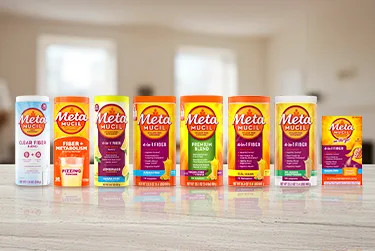
Metamucil 4-in-1 Fiber (Psyllium Husk)
Metamucil (Procter & Gamble) · powderBest Value: cheap, drinkable, and well-evidenced as a fiber — but single-pathway and a heavy gel load.
Pennies per serving — by far the cheapest in the set.
Single pathway — a fiber, not a craving formula.
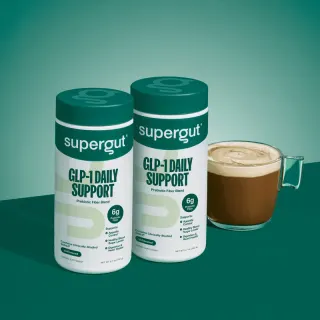
Supergut GLP-1 Daily Support
Supergut · powderA drinkable, gut-first option — but it leans on a proprietary fiber blend and a heavy fiber load.
Drinkable and caffeine-free.
Individual fiber doses are hidden inside a proprietary blend.
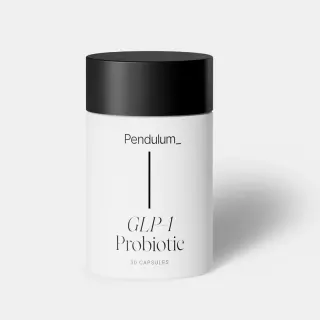
Pendulum GLP-1 Probiotic
Pendulum Therapeutics · capsuleStrong science pedigree on Akkermansia, but a proprietary CFU blend and refrigeration requirement.
Akkermansia has the strongest individual research pedigree of the probiotic actives.
Per-strain doses are hidden inside a proprietary blend.