Craving Tactics
Boredom Eating: Why You Snack When You're Bored, and How to Stop
Bored people in one lab ate more chocolate. They also shocked themselves more. That second result explains the first, and it points to the fix.
Short answer: boredom eating isn't about food. It's about escaping a dull moment, and food happens to be the fastest stimulation within reach. The research backs that up in a strange way, and once you see it, the fixes get a lot more obvious.
Here's what the studies show, where they disagree, and what to do the next time you find yourself opening the chips because the evening has nothing in it.
What boredom eating actually is
Boredom eating is eating when you aren't physically hungry because a situation feels empty, slow or pointless. It sits under the wider umbrella of emotional eating, but it behaves a little differently from eating when you're sad or stressed.
It's also more common than people admit. In a survey of 552 college students, the people most prone to boredom were more likely to eat in response to boredom, to other negative emotions and to food cues around them, and that held alongside trouble regulating emotions in general (Crockett et al., Journal of Health Psychology 2015). Two larger samples, 365 adults recruited online and 461 undergraduates, found the same thing: boredom proneness predicted emotional eating even after accounting for general bad mood and good mood (Ahlich and Rancourt, Appetite 2022).
So it isn't just that bored people feel a bit low. Boredom seems to carry its own push toward food.
The study that explains why
The most useful experiment here is a strange one. Researchers at Maastricht University had 30 people watch an hour of a documentary on one day, and an hour of the same short clip looping over and over on another day (Havermans et al., Appetite 2015).
With M&Ms within reach, people ate more during the boring hour. That part you'd expect. The twist came in a parallel experiment: given a button that delivered a brief electric shock to themselves, people pressed it more when bored, too.
Nobody presses a shock button because it feels good. They press it because it's something. The authors concluded that eating when bored is driven mainly by the urge to escape monotony, not by wanting a treat.
That matters for how you fight it. If boredom eating were about craving chocolate, you'd need to manage the craving. If it's about craving stimulation, any stimulation can do the job.
Boredom eating feeds itself
A 2026 study out of Beijing Normal University tested this two ways. In the lab, 142 people watched a boredom-inducing, sad or neutral video while "taste testing" potato chips. The bored group ate significantly more chips than both the sad group and the neutral group (Meng et al., Psychological Reports 2026).
Then 96 people logged their boredom, their desire to eat and their snacking 4 times a day for a week. Snacking did lower boredom in the moment. But it also raised the desire to eat, and that higher desire was linked to more boredom afterward. Relief now, a slightly worse loop later.
A separate week-long diary study found the same direction in real life: on days and at times when people felt more bored, they took in more calories, fat, carbs and protein (Moynihan et al., Frontiers in Psychology 2015).
If this sounds like the constant background chatter some people describe around food, it overlaps. We broke down what food noise is and why it gets louder separately; boredom is one of the things that turns the volume up.
Where the research disagrees
Not every lab finds the effect, and it's worth saying so. A 2025 experiment gave 187 people a water preload, then put them through 30 minutes of either a boring or neutral task with chocolate, crackers and chips freely available. Boredom made no measurable difference to how much they ate (Ahlich and Poovey, Physiology & Behavior 2025).
The authors read it as a warning that people's self-reported "I eat when I'm bored" doesn't always show up as extra food in a lab. Our read: the effect is real but uneven. It shows up more in some people, over longer stretches, and in daily life more than in a 30-minute test. That's consistent with the survey data, where boredom proneness (a trait some people have more of) is what predicts it.
How to stop boredom eating: 6 fixes
1. Ask one question before you open anything
"Am I hungry, or is this moment just empty?" It sounds too simple, but the 2022 Appetite study found that people's ability to read their own body signals predicted emotional eating independently of boredom. Checking in with your stomach before your hand moves is the cheapest way to use that.
If it's been 4 or 5 hours since you ate, you might just be hungry. Eat a real meal. If you ate an hour ago, it's probably the moment, not your stomach.
2. Swap the stimulation, not just the snack
Since boredom eating is about escaping monotony, give your brain something else that's absorbing. The best-tested option is oddly specific: 3 minutes of a visual puzzle game. In a week-long real-world study, people who played Tetris for 3 minutes when a craving hit cut its strength by about 14 percentage points, across food, drinks and other cravings (Skorka-Brown et al., Addictive Behaviors 2015).
Anything visual and engaging probably helps on the same principle. Scrolling doesn't count if it's the same feed you were bored of five minutes ago.
3. Move for 15 minutes
A randomized crossover trial put regular chocolate eaters through 15 minutes of brisk walking or rest on separate days. After walking, chocolate cravings were lower at every check than after resting, and people's attention was pulled less toward chocolate images (Oh and Taylor, Appetite 2013).
A walk also solves the boredom itself, which is the real problem. We ranked this alongside other quick options in our list of fixes that shrink a craving within minutes.
4. If you're going to eat, make it interesting and better
The Moynihan study had a useful detail. In its third experiment, bored people (specifically those prone to watching themselves closely) ate more unhealthy snacks, but they also ate more of healthy foods that were exciting. They didn't eat more of bland healthy food. Boredom is looking for flavor, crunch and novelty, not specifically sugar.
So use that. Spicy roasted chickpeas, salted edamame, a crisp apple with peanut butter, or popcorn with something bold on it will satisfy the search for stimulation better than plain carrots, with more protein and fiber than a bag of chips. Our ranking of healthy snacks that actually fill you up works just as well for bored snacking as for the munchies.
5. Plate it and put the bag away
Eating straight from a bag in front of a screen is the setup most likely to keep going. Put a portion in a bowl and close the package. We haven't found a trial on this specific move for boredom eating, so treat it as practical rather than proven, though portion size in general is one of the best-supported psychological tricks to eat less that hold up in studies. It works on the same idea as the rest: add one small step between the empty moment and the next handful.
6. Fix the boring hours, not just the snacking
Boredom eating clusters in predictable places: long evenings, waiting time, slow afternoons at a desk. Look at when it happens for you and put something there on purpose, like a call, a walk, a hobby or a task with an end. For a lot of people this lands at night, and we covered what the research supports for nighttime snacking, where sleep and meal timing do most of the work.
When it's more than boredom
Some people feel bored far more easily than others, and that trait shows up strongly in ADHD. If you've noticed that both boredom and the pull toward food feel louder for you than for the people around you, our piece on why food noise runs higher with ADHD is worth a read.
And if eating feels out of control most days, regardless of mood, or comes with shame afterward, talk to a doctor or a registered dietitian. A 21-day study of 97 adults found that losing control over food choices was linked with feeling more distracted, ashamed and tired the next day (Sleboda et al., Journal of Behavioral Medicine 2025). That's a pattern worth real help, not just a better snack.
Do supplements help with boredom eating?
No supplement has been tested on boredom eating specifically. Some fibers and appetite products have trial data on fullness, but if you aren't hungry to begin with, fullness isn't the problem. The fixes above go after the actual trigger. If you want the broader picture on quieting constant food thoughts, we laid out how to turn down food noise without GLP-1 drugs, and the rest of our appetite and cravings coverage scores the products on the evidence.
The bottom line
Boredom eating is your brain looking for something, anything, to happen. Food is just the closest thing. The studies suggest it's real, uneven between people, and self-reinforcing over time.
The fix isn't more discipline around food. It's giving the empty moment something else: a 3-minute puzzle, a 15-minute walk, a snack with actual flavor and protein, or a plan for the hours where boredom always shows up.
References
- Crockett AC, Myhre SK, Rokke PD. Boredom proneness and emotion regulation predict emotional eating. Journal of Health Psychology. 2015;20(5):670-80. PubMed 25903253
- Ahlich E, Rancourt D. Boredom proneness, interoception, and emotional eating. Appetite. 2022;178:106167. PubMed 35843373
- Havermans RC, Vancleef L, Kalamatianos A, Nederkoorn C. Eating and inflicting pain out of boredom. Appetite. 2015;85:52-7. PubMed 25447018
- Meng Y, Liang Y, et al. Eating away the boredom? An experimental and ecological momentary assessment of state boredom and snack consumption. Psychological Reports. 2026. PubMed 41974426
- Moynihan AB, van Tilburg WAP, Igou ER, et al. Eaten up by boredom: consuming food to escape awareness of the bored self. Frontiers in Psychology. 2015;6:369. PubMed 25883579
- Ahlich E, Poovey K, et al. Boredom, interoceptive ability, and emotional eating: an experimental study. Physiology & Behavior. 2025. PubMed 41130434
- Skorka-Brown J, Andrade J, Whalley B, May J. Playing Tetris decreases drug and other cravings in real world settings. Addictive Behaviors. 2015;51:165-70. PubMed 26275843
- Oh H, Taylor AH. A brisk walk, compared with being sedentary, reduces attentional bias and chocolate cravings among regular chocolate eaters with different body mass. Appetite. 2013;71:144-9. PubMed 23962400
- Sleboda P, Sobolev M, et al. Self-control, food choices, and affective well-being in daily life: an experience sampling study. Journal of Behavioral Medicine. 2025. PubMed 39976855
FAQ
Why do I eat when I'm bored?
You eat when you're bored mostly to escape the dull moment, not because you want the food. In one lab study, bored people ate more M&Ms and also gave themselves more electric shocks, which suggests boredom drives a search for any stimulation. Food is just the easiest one within reach.
How do I stop eating when I'm bored?
First check whether you're actually hungry. If you're not, swap in a different kind of stimulation: 3 minutes of a visual puzzle game cut craving strength by about 14 points in a real-world study, and a 15-minute brisk walk lowered chocolate cravings versus resting. If you do eat, pick something flavorful with protein or fiber and put a portion in a bowl.
Is boredom eating the same as emotional eating?
Boredom eating is a type of emotional eating, but it acts a little differently. In one 2026 experiment, a boring video made people eat more chips than a sad video did. Studies also find that boredom proneness predicts emotional eating even after accounting for general bad mood.
Does eating actually relieve boredom?
Eating relieves boredom, but only briefly. A week-long tracking study found snacking lowered boredom in the moment but raised the desire to eat, and that higher desire was tied to more boredom later. That's why it can turn into a loop.
Products mentioned

Metamucil 4-in-1 Fiber (Psyllium Husk)
Metamucil (Procter & Gamble) · powderBest Value: cheap, drinkable, and well-evidenced as a fiber — but single-pathway and a heavy gel load.
Pennies per serving — by far the cheapest in the set.
Single pathway — a fiber, not a craving formula.
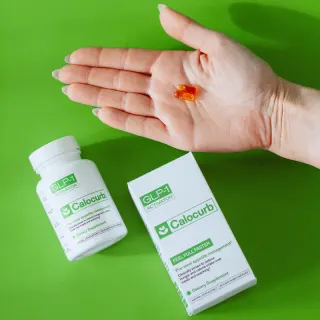
Calocurb GLP-1 Activator
Calocurb · capsuleThe best-evidenced single-mechanism appetite trigger — clinically interesting, but premium-priced and a pre-meal, short-window tool rather than all-day support.
Amarasate is one of the most directly studied appetite ingredients — multiple human RCTs, dosed on-label at 250 mg.
Acute, short-window effect: a pre-meal tool (up to 4 capsules/day), not all-day craving support.