Snack Science
Healthy Snacks for the Munchies, Ranked by What Actually Fills You Up
We ranked the usual munchies options by the human trials that actually measured what people ate next, not by how virtuous the packaging looks.
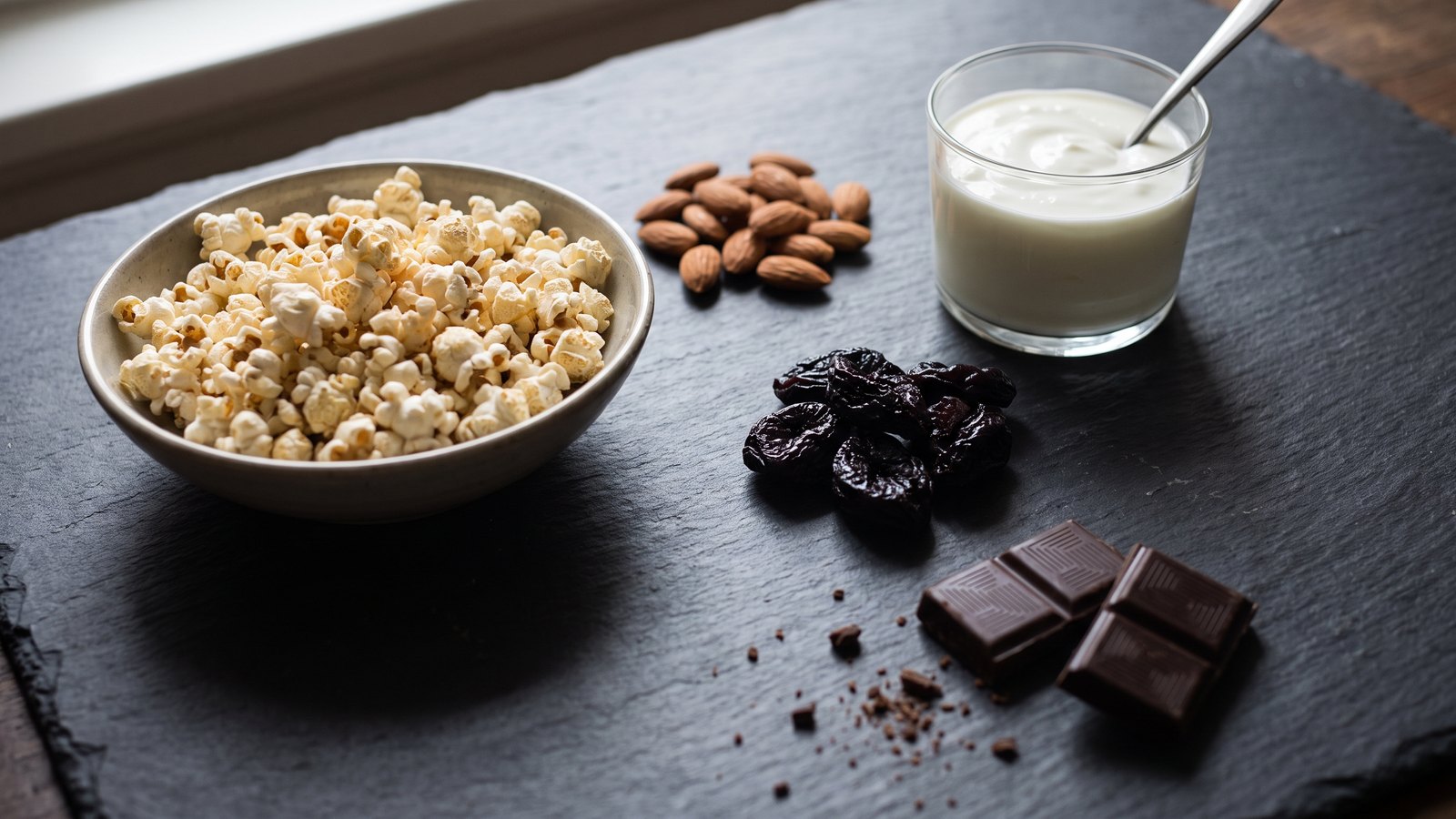
Most "healthy munchies snack" lists rank food by how wholesome it sounds. Almonds are good, chips are bad, everybody nods.
That ranking is useless at 11pm, because the question isn't which food is virtuous. It's which food makes you stop. Those are different things, and researchers have actually measured the second one: feed people a snack, then let them eat freely later and weigh what they take.
So we ranked the options by that evidence. A few of the results are backwards from what the packaging suggests.
First, what the munchies are doing to you
Cannabis drives eating through the CB1 receptor, and the effect is fast and real. In a controlled residential study, HIV-positive daily cannabis smokers given high-dose dronabinol (synthetic THC, 10 mg four times a day) ate more than on placebo, and reported more food cravings (Bedi and colleagues, Psychopharmacology 2010). That study was tiny, at 7 participants, and the extra eating only held for the first 8 days. The self-reported cravings kept going after the calorie effect faded, which is a strange and slightly annoying combination.
The population data points the same way. Across 17,855 adults in NHANES 2005 to 2016, current cannabis users scored lower on overall diet quality than never users (51.8 vs 57.7 on the HEI-2010), driven mostly by fruit and vegetables (Gelfand and Tangney, Public Health Nutrition 2020).
A 2026 study complicates that nicely. Among 1,467 Canadian university students, cannabis use was linked to lower diet quality until the researchers adjusted for meal skipping, at which point the association faded to non-significance (Alfares and colleagues, Nutrients 2026). Meal skipping was one of the strongest predictors in the whole model. It's cross-sectional, so it can't prove direction, but it's a useful hint: some of what looks like a cannabis problem may be an empty-stomach problem.
Which means the first fix isn't a snack at all. If you got high on a skipped lunch, you're managing genuine hunger stacked on top of a drug effect, and no bowl of anything fixes both.
The three things that decide whether a snack stops you
A 2016 review in Advances in Nutrition pulled the snack-and-satiety literature together and landed on a short list: whole foods high in protein, fiber and whole grains, specifically nuts, yogurt, prunes and popcorn, enhance satiety when eaten as snacks (Njike and colleagues). The same review is blunt that the obesity evidence is mixed, largely because most studies ignored portion size and snack quality.
Volume is the underrated one. Your stomach responds to how much space the food takes, not to its macro breakdown, and this is where a lot of "clean" snacks quietly lose.
Protein delays the next meal, though less dramatically than the marketing claims. Fiber slows everything down, which is the whole argument behind viscous fibers like konjac glucomannan and the reason fiber keeps getting treated as the next protein.
The ranking
1. Air-popped popcorn
The best volume-per-calorie trade in the aisle, and one of the few snacks tested head to head against its obvious rival.
35 normal-weight adults ate, on separate days, water alone, 1 cup of popcorn (15 kcal), 6 cups of popcorn (100 kcal), or 1 cup of potato chips (150 kcal), then a free meal 30 minutes later. After the 6 cups of popcorn people reported less hunger, more satisfaction, and a lower expectation of how much more they could eat than in any other condition. Total intake across the snack and the meal came to 803 kcal on chips versus 739 on the big popcorn serving, and the popcorn conditions weren't different from water (Nguyen and colleagues, Nutrition Journal 2012).
Read that trade again: 6 cups of popcorn is a large, slow, genuinely satisfying amount of food for fewer calories than a single cup of chips. Air-popped or lightly popped, not the movie-theater butter bucket, which is a different food.
2. Plain Greek yogurt
The one with a measured delay on the clock.
20 healthy women ate a 160 kcal afternoon snack: high-protein yogurt (14 g protein), high-fat crackers, or high-fat chocolate. The yogurt cut afternoon hunger more than the chocolate, pushed the time until they asked for dinner out by about 30 minutes versus chocolate and about 20 versus crackers, and led to roughly 100 fewer calories at dinner than the chocolate (Ortinau and colleagues, Nutrition Journal 2014).
Here's the honest caveat, from the same lab. When they compared a 14 g protein Greek yogurt against a 5 g protein regular yogurt at the same 160 calories, in 32 women, the extra 9 grams of protein did nothing measurable to hunger, fullness, time to dinner, or dinner size (Ortinau and colleagues, Nutrition Journal 2013). So the win belongs to yogurt over high-fat snacks, not to stacking protein grams. Ignore the tub shouting about 20 g.
3. Almonds
The only snack here with a multi-week trial attached.
137 adults at elevated risk of type 2 diabetes ate 43 g of almonds a day for 4 weeks, either with a meal or alone as a snack. Almonds lowered post-meal glucose, most clearly in the snack groups, and reduced hunger and desire to eat in the acute feeding session. After 4 weeks, body weight hadn't moved, because people cut calories elsewhere without being told to (Tan and Mattes, European Journal of Clinical Nutrition 2013).
Two things to hold together there. Almonds are genuinely satiating and they did not cause weight gain. They are also about 250 calories per 43 g handful, and that compensation happened in people eating a measured portion, not a bag on the couch. Portion it out before you sit down.
4. Prunes and whole fruit
Prunes get named in the satiety review alongside nuts, yogurt and popcorn, which is more than most fruit can say. Whole fruit gives you sweetness with fiber and water attached, and it's exactly the category that the NHANES data says cannabis users are eating less of.
Modest ranking because the direct trial evidence is thinner than the top three, not because it doesn't work.
5. Dark chocolate
Fine as a small deliberate treat. Bad as the thing you reach for to stop eating.
In the Ortinau 2014 trial, chocolate was the worst-performing snack tested. Same calories as the yogurt, less hunger relief, earlier dinner request, more eaten at dinner. That isn't an argument against ever having chocolate. It's an argument against expecting it to close the loop.
6. Crackers, pretzels and the rest of the beige shelf
Crackers landed between yogurt and chocolate, closer to chocolate. Chips lost outright to popcorn while costing 50% more calories. This whole tier is high-density, low-volume, fast to eat, and built for exactly the state cannabis puts you in.
The "healthy" snacks that aren't solving this
Low-sugar, high-fiber candy. Sold as the guilt-free answer, and the fiber is usually a sugar alcohol or a syrup that behaves very differently from the fiber in popcorn. We went through what that fiber actually does to your gut, and the short version is that a stomach ache is not satiety.
Protein bars. Dense, quick, engineered to taste like dessert. None of the satiety trials above used one, and the Ortinau protein comparison suggests the headline protein number isn't where the benefit lives anyway.
THCV gummies. Marketed directly at this problem. We read every human study we could find and not one of them measured whether THCV reduces the munchies, plus swallowed THCV peaks hours after cannabis-driven eating typically starts.
What to actually do with this
Pick by volume first. 6 cups of popcorn beats 1 cup of chips on hunger, satisfaction and total calories, which is about as clean a result as snack research produces.
Portion before you start. Every trial above handed people a fixed amount. Nobody in those studies was holding the bag.
Eat the meal you skipped. If meal skipping is doing part of the work here, a proper dinner is upstream of every snack decision.
And treat this as one lever among several. The same evening-hunger window shows up whether or not cannabis is involved, which is why the fixes overlap with the ones for ordinary late-night snacking. If you want the supplement side of the question rather than the food side, we ranked those separately in the supplements for the munchies guide, and the wider category sits in appetite suppressants.
The limits worth naming
None of these trials were run on people who were high. They measured ordinary afternoon and evening hunger in sober participants, mostly small groups, mostly healthy weight, several of them women only. Applying them to cannabis-driven eating is a reasonable inference, not a tested result, and anyone telling you a snack is clinically proven against the munchies is going past the evidence.
What the research does support: food volume, protein and fiber change how much you eat next, by amounts that are modest and measurable. About 100 calories at one meal. About 30 minutes on the clock. Small numbers that add up across a week, and small enough to be honest about.
References
Nguyen V, Cooper L, Lowndes J, et al. Popcorn is more satiating than potato chips in normal-weight adults. Nutr J. 2012;11:71. PMID 22978828
Ortinau LC, Hoertel HA, Douglas SM, Leidy HJ. Effects of high-protein vs. high-fat snacks on appetite control, satiety, and eating initiation in healthy women. Nutr J. 2014;13:97. PMID 25266206
Ortinau LC, Culp JM, Hoertel HA, Douglas SM, Leidy HJ. The effects of increased dietary protein yogurt snack in the afternoon on appetite control and eating initiation in healthy women. Nutr J. 2013;12:71. PMID 23742659
Tan SY, Mattes RD. Appetitive, dietary and health effects of almonds consumed with meals or as snacks: a randomized, controlled trial. Eur J Clin Nutr. 2013;67(11):1205-14. PMID 24084509
Njike VY, Smith TM, Shuval O, et al. Snack Food, Satiety, and Weight. Adv Nutr. 2016;7(5):866-78. PMID 27633103
Bedi G, Foltin RW, Gunderson EW, et al. Efficacy and tolerability of high-dose dronabinol maintenance in HIV-positive marijuana smokers: a controlled laboratory study. Psychopharmacology (Berl). 2010;212(4):675-86. PMID 20824270
Gelfand AR, Tangney CC. Dietary quality differs among cannabis use groups: data from the National Health and Nutrition Examination Survey 2005-16. Public Health Nutr. 2021;24(11):3419-3427. PMID 32698932
Alfares R, Twynstra J, Gilliland JA, Seabrook JA. Cannabis Use and Diet Quality Among University Students: The Role of Meal Skipping and Health Behaviours. Nutrients. 2026;18(13):2210. PMID 42451210
Citations retrieved via PubMed. This article is for education only and isn't medical advice. Talk to your doctor before starting any supplement, especially if you're pregnant, nursing, on medication, or managing a health condition.
FAQ
What is the best snack for the munchies?
On the head-to-head evidence, air-popped popcorn. In a 35-person crossover, 6 cups of popcorn (100 kcal) left people less hungry and more satisfied than 1 cup of potato chips (150 kcal), and total calories across the snack plus the next meal were about 64 kcal lower. It's the best volume-per-calorie option tested.
Does eating protein stop the munchies?
Partly. A 160 kcal high-protein yogurt snack delayed the next meal by about 30 minutes and cut dinner intake by roughly 100 calories compared to a same-calorie chocolate snack. But when the same lab compared 14 g of protein against 5 g at identical calories, the extra protein made no measurable difference. Protein beats fat and sugar as a snack; more protein isn't automatically better.
Do almonds cause weight gain if you snack on them every day?
In a 4-week trial, 137 adults ate 43 g of almonds daily and body weight did not change, because they reduced calories elsewhere without being instructed to. Almonds also lowered post-meal glucose and reduced hunger, most clearly in the snack groups. The catch is portion size: 43 g is about 250 calories, and that trial handed people a measured amount.
Why do the munchies make healthy food unappealing?
Cannabis acts on the CB1 receptor to drive eating, and the population data shows it tracks with lower fruit and vegetable intake. A 2026 study of 1,467 students found the diet-quality gap mostly disappeared after adjusting for meal skipping, so some of it may be plain hunger from a missed meal rather than the cannabis itself. It's cross-sectional, so treat it as a hint, not a verdict.
Products mentioned
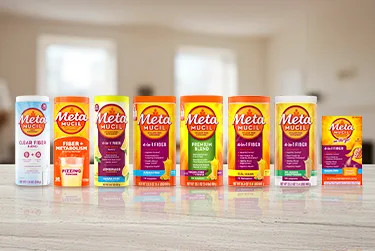
Metamucil 4-in-1 Fiber (Psyllium Husk)
Metamucil (Procter & Gamble) · powderBest Value: cheap, drinkable, and well-evidenced as a fiber — but single-pathway and a heavy gel load.
Pennies per serving — by far the cheapest in the set.
Single pathway — a fiber, not a craving formula.
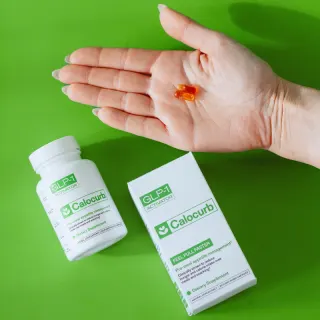
Calocurb GLP-1 Activator
Calocurb · capsuleThe best-evidenced single-mechanism appetite trigger — clinically interesting, but premium-priced and a pre-meal, short-window tool rather than all-day support.
Amarasate is one of the most directly studied appetite ingredients — multiple human RCTs, dosed on-label at 250 mg.
Acute, short-window effect: a pre-meal tool (up to 4 capsules/day), not all-day craving support.

Lipozene
Obesity Research Institute · capsuleCheap single-ingredient glucomannan — fine as a fiber, but it does only one thing.
Single, disclosed ingredient.
One pathway only (fiber satiety).