Appetite Science
The Best Supplements for the Munchies in 2026, Compared, and the 30-Minute Window Most of Them Miss
New human data says the eating starts in the first 30 minutes, isn't sugar-specific, and doesn't run through your gut hormones. That rules out more of this shelf than the labels admit.
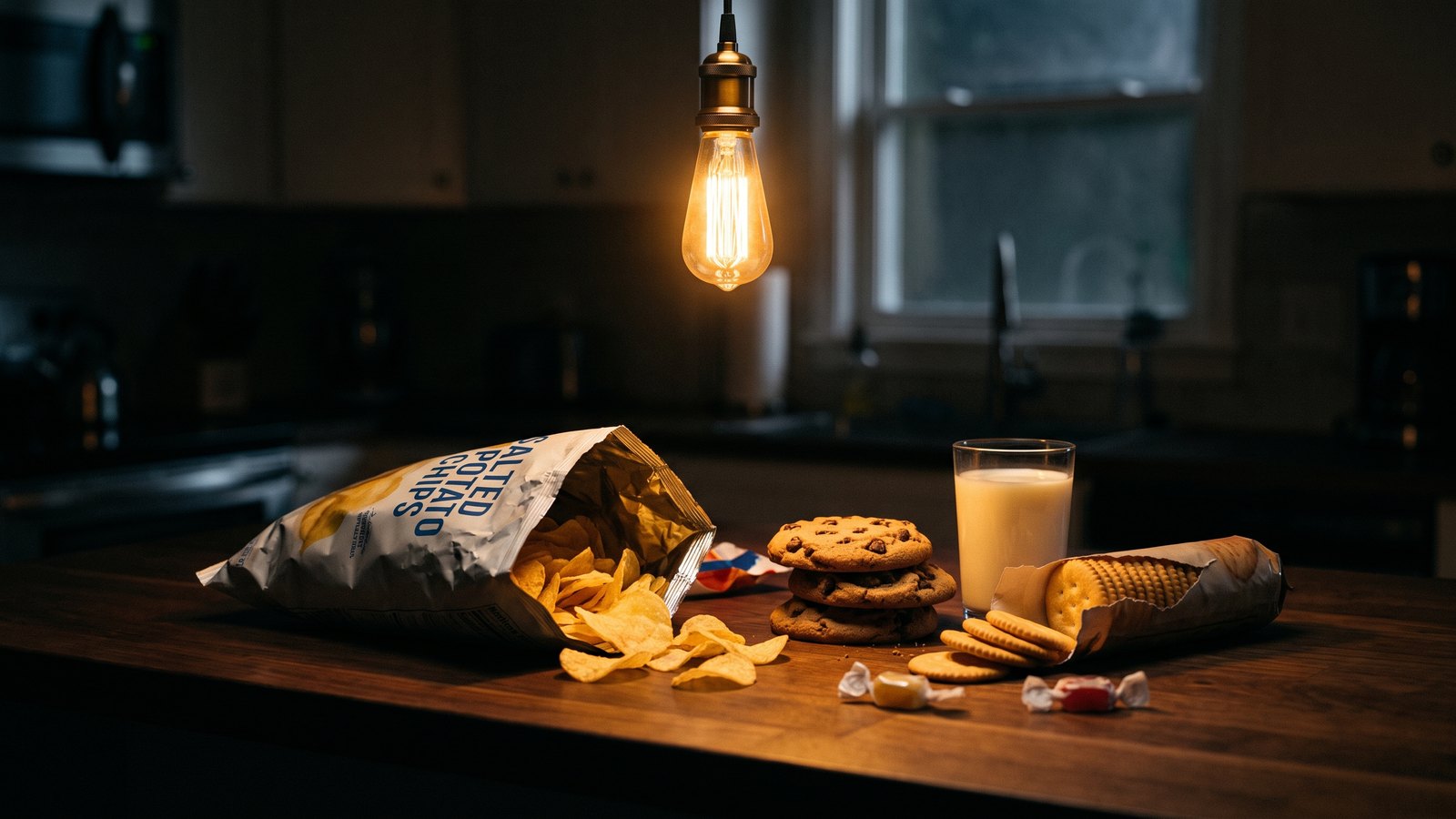
The munchies have a reputation as a punchline. They're also one of the few appetite events with a clean, measurable trigger and a well-mapped mechanism, which makes them a useful test of what an appetite supplement can and can't do.
CDC surveillance data puts the scale of it plainly. In the 2022 Behavioral Risk Factor Surveillance System, run across 22 states and 2 territories, 15.3% of adults reported current cannabis use, and about 80% of them reported smoking it. So a lot of people are asking a question the supplement aisle has never actually answered.
Here's the uncomfortable starting point: no supplement on this site has been tested against cannabis-driven eating. Not one trial. Everything below is adjacent evidence, and we'll be specific about how adjacent.
What the newest human data says is happening
The most useful paper on this came out in late 2025. Hume and colleagues ran vaporized cannabis in human participants alongside a translational rat model, and the details matter more than the headline.
In humans, vaporized cannabis sharply increased energy intake, and it happened in the first 30 minutes of snack and beverage access, regardless of dose or gender. In rats the window was the first 60 minutes, driven by a shorter latency to start eating and a higher number of feeding bouts (PNAS 2025).
Two findings from that paper quietly wreck a lot of supplement marketing.
First, cannabis did not change the proportion of macronutrients human participants ate. The stereotype says sugar. The data says more of everything, in the same ratio. In rats it went further and abolished existing macronutrient preferences outright.
Second, cannabis vapor did not alter circulating appetite-associated hormones, and the feeding effect was mediated by central CB1 receptors, not peripheral ones. In plain terms: this is a brain-level shift in motivation and food reward, not a gut-hormone signal.
An earlier crossover study measured those hormones directly across oral, smoked and vaporized cannabis in 20 users at about 50 mg THC. It found the post-food insulin spike blunted under cannabis and GLP-1 concentrations lower under cannabis than placebo (Translational Psychiatry 2020). Lower GLP-1, not higher. If your plan is to support a satiety hormone into the middle of that, you're pushing against the current.
Why that matters for the shelf
Almost every product in this category works through the gut. Fiber creates viscosity and slows gastric emptying. Bitter compounds trigger enteroendocrine cells to release CCK, GLP-1 and PYY. That's the machinery we walked through in our gut-brain axis primer, and it's real.
It's also the exact pathway the PNAS data suggests cannabis bypasses. A gut signal arguing for fullness is competing with a central reward signal that's already decided.
A rodent study from the same year adds a mechanism worth noting and discounting appropriately. In male rats, an edible cannabinoid increased meal number, and an orexin-1 receptor antagonist blocked the hyperphagia entirely (Pharmacology Research & Perspectives 2025). That's rats, that's an experimental drug, and there is no orexin antagonist on any supplement shelf. File it under interesting, not actionable.
The broader review picture is mixed in a way that's worth stating. THC is associated with increased appetite, food cravings and overconsumption, CBD appears associated with decreased appetite, and yet most studies find cannabis use isn't associated with weight gain and may even track with weight loss (Current Obesity Reports 2025). Most of that literature doesn't separate cannabinoid profiles or routes of use, so read it loosely.
How we ranked these
Since we first wrote this we have stopped using a single trial as a gate. Circulating GLP-1 is cleared within minutes of release, and a head-to-head of ten commercially available GLP-1 assays found their specificity and sensitivity vary so much that comparing measurements across studies is unreliable (Bak and colleagues, Diabetes, Obesity and Metabolism 2014). A product without a blood-hormone trial is usually a product without a good ruler, not a product without a mechanism. So the trial notes below are tie-breakers. The ranking is the five-axis rubric on our methodology page: pathway coverage, dose disclosure, evidence quality, cost per serving, and format and timing fit. Ozzi sponsors this site and tops that rubric; its cons are listed like everyone else's.
The munchies add one rule of their own, straight from the human data above: the eating starts in the first 30 minutes and does not run through your gut hormones. So on this page, timing and format count for more than usual. A product you take before the session, that you can drink rather than swallow six of, and that does not add a stimulant to an evening, is the product that fits the window.
1. Ozzi V2 Crave Crusher: the one built for the before window
Ozzi is a caffeine-free drink stick with six actives, each printed with its dose: 8 g of allulose, 500 mg of konjac glucomannan, 500 mg of BIOMEnd L-lysine butyrate, 300 mcg of chromium with about 10 mg of ursolic acid, and 150 mg of African mango. No proprietary blend, no stimulant, and a 14-day refund on the first bag.
Why it fits this specific problem. The PNAS data says cannabis makes people eat more of everything, in the same ratio, starting almost immediately. A sweet, low-glucose drink taken before the session fills the first-30-minutes slot with something that is already in your hand: allulose tastes like sugar without the glucose rise, and the glucomannan starts forming its gel before the reward signal fires rather than after. Butyrate and the fiber work the gut-hormone axis that cannabis bypasses, which is the honest limit on every gut tool here (our gut-brain axis primer, and the fiber-to-GLP-1 pathway in Wang and colleagues, Advances in Nutrition 2026). And it is caffeine-free, which matters because the session is usually at night. The deeper how-to on the munchies themselves, including timing, is in Ozzi's own guide to stopping the munchies without giving up weed, which is a content page, not a store page.
The cons. No trial has tested Ozzi, or anything else on this list, against cannabis-driven eating. Its evidence is per ingredient. The gut route is the one the PNAS data says cannabis goes around, so this is a before tool, not a brake you can pull mid-session. It is the priciest drink here at $3.25 a stick before the bundle brings it near $2.25, and some people notice the butyrate smell.
2. Bitter hop extract: the one trial where food was weighed, at twice the label dose
Calocurb is built on Amarasate, a bitter New Zealand hops-flower extract, at 250 mg per 2-capsule serving.
The trial worth knowing is Walker and colleagues. 19 healthy-weight men, randomized 3-treatment double-blind crossover, 500 mg of hop extract delivered either to the stomach or the duodenum. Total ad libitum energy intake across lunch and an afternoon snack fell from 5,383 kJ on placebo to 4,473 kJ (gastric) and 4,439 kJ (duodenal), roughly 17% less food, or a bit over 200 calories. Both routes raised postprandial CCK, GLP-1 and PYY (American Journal of Clinical Nutrition 2022).
Now the fine print, and it's heavy. The trial ran 500 mg, double Calocurb's label serving. It was 19 men, healthy weight, no cannabis involved. Both treatments produced measurable GI discomfort, with mild to severe adverse GI symptoms in the gastric arm. And the strangest result is the most honest one: subjective appetite ratings didn't significantly change at all. People ate less without reporting they felt any different.
That last detail is why it ranks this high on a list about the munchies. Whatever the bitter brake does, it doesn't route through how hungry you feel, and how hungry you feel is the part cannabis is loudest on. More in our Amarasate deep dive.
3. Psyllium: the cheap physical answer, taken early
Psyllium doesn't argue with your brain. It takes up space.
Brum and colleagues ran two randomized, double-blind, placebo-controlled crossover trials. Doses of 3.4 g, 6.8 g and 10.2 g before breakfast and lunch for 3 days all reduced hunger and desire to eat and increased fullness between meals, with 6.8 g the most consistent (Appetite 2016). Two of the four authors worked for Procter and Gamble, which makes Metamucil, and the paper says so.
Metamucil is 3.4 g per serving, the weakest arm in its own study. Two servings gets you to the dose that performed. At about $0.21 a serving that's an easy correction, which is the real argument for it. Our full read is in the psyllium write-up.
What it won't do is reach into a reward-driven eating episode already in progress. Gel takes time to form and fullness takes time to register. This is a before tool.
4. Glucomannan: read the trial before you buy the promise
Leanbean runs 3,000 mg of glucomannan per full serving, the top of the studied range. Lipozene is 1,500 mg and nothing else.
The trial that should temper expectations is Au-Yeung and colleagues, who fed 16 healthy adults volume-matched preloads: all pasta, half pasta and half konjac gel noodle, or all konjac gel. Cumulative energy intake was 47% and 23% lower for the two konjac arms. But there was no difference in subsequent food intake, and hunger ratings ran 31% higher on the all-konjac preload than on control (British Journal of Nutrition 2017).
That's the honest shape of viscous fiber. It's a calorie-displacement tool that works because you swapped food for gel, not a hunger switch. Swapping in more of it makes you hungrier, not less. Our glucomannan review goes through the rest.
A 2025 crossover trial of a 3 g chromium-enriched glucomannan and fructooligosaccharide complex in 16 healthy adults did find greater fullness and lower desire to eat at 75 minutes against dextrose alone, plus a lower insulin response (European Journal of Nutrition 2025). Two of the authors work for the company that makes the ingredient, which belongs in the sentence.
5. Chromium: right idea, wrong target
Chromium is the one ingredient in this whole set with a human trial that named cravings as the outcome. Anton and colleagues randomized 42 overweight women who reported craving carbohydrates to chromium picolinate or placebo for 8 weeks, measuring food intake directly at three meals. The chromium group showed reduced food intake, lower hunger and reduced fat cravings, with a non-significant trend on body weight (Diabetes Technology and Therapeutics 2008).
The catch is specific to this topic. That trial recruited people whose problem was carbohydrate-specific craving. Cannabis, per the PNAS data, doesn't produce a carbohydrate-specific pull. It raises intake across the board without shifting the macronutrient mix. Good evidence, aimed at a different pattern. We worked through the elemental-versus-compound dose math in our chromium write-up.
What to skip for this one
Hydroxycut Hardcore carries 265 mg of caffeine per serving, and PhenQ hides most of its doses, caffeine included, inside proprietary blends. Cannabis use skews evening. Stacking a stimulant into that window trades an eating problem for a sleep problem, and short sleep has its own appetite consequences. We laid out those tradeoffs in caffeine for craving control.
Berberine belongs to a different question entirely. Its trial record is glucose and insulin endpoints in clinical populations, not reward-driven eating in healthy adults.
What about CBD or THCV?
It comes up, so here's what exists. In a randomized, double-blind, placebo-controlled trial of 62 people with type 2 diabetes, THCV at 5 mg twice daily for 13 weeks lowered fasting plasma glucose and improved beta-cell function against placebo (Diabetes Care 2016). Appetite sat on the secondary endpoint list, and it isn't among the results the authors reported as significant.
So: a glucose signal in a clinical population, not an appetite result, and not a product any of these brands sell. Treat "THCV blocks the munchies" as a mechanism story that hasn't been demonstrated in the way people mean it. We went through every human THCV study and what each one actually measured, including the timing problem with swallowed THCV.
The verdict
Nothing here has been tested on the munchies, so buy on timing, format and what you can verify. On those terms Ozzi is the pick: a caffeine-free drink you have before the session, with every dose printed and a refund if it does nothing. Bitter hops is the one ingredient with a trial that weighed the food, in 19 men at twice its label dose, and it is a pre-meal capsule rather than an evening drink. Psyllium is the cheap physical answer if you take it early enough. Skip the stimulant products for this job entirely. And if the real question is what to put in the bowl rather than what to swallow beforehand, we ranked the healthy munchies snacks by the trials that measured what people ate next. The full scored table is on the 2026 ranking.
References
Bak MJ, Wewer Albrechtsen NJ, Pedersen J, et al. Specificity and sensitivity of commercially available assays for glucagon-like peptide-1 (GLP-1): implications for GLP-1 measurements in clinical studies. Diabetes Obes Metab. 2014. PMID 25041349
Wang Y, Liu J, Verbeke K, et al. Dietary Fiber and Glucagon-Like Peptide-1 Receptor Agonists in Obesity Management. Adv Nutr. 2026. PMID 42106160
- Hume C, Cuttler C, Baglot SL, Javorcikova L, McLaughlin RJ, Hill MN. Cannabis produces acute hyperphagia in humans and rodents via increased reward valuation for, and motivation to, acquire food. Proc Natl Acad Sci U S A. 2025;122(52):e2518863122. PMID 41439716
- Farokhnia M, McDiarmid GR, Newmeyer MN, et al. Effects of oral, smoked, and vaporized cannabis on endocrine pathways related to appetite and metabolism: a randomized, double-blind, placebo-controlled, human laboratory study. Transl Psychiatry. 2020;10(1):71. PMID 32075958
- Goodpaster KPS. Cannabis, Weight, and Weight-Related Behaviors. Curr Obes Rep. 2025;14(1):40. PMID 40341983
- Lord MN, Madu GC, Loera-Lopez AL, et al. Cannabinoid-Induced Hyperphagia is Mediated by Increased Meal Frequency and the Orexin-1 Receptor in Male Rats. Pharmacol Res Perspect. 2025;13(5):e70171. PMID 40911185
- Walker EG, Lo KR, Pahl MC, et al. An extract of hops (Humulus lupulus L.) modulates gut peptide hormone secretion and reduces energy intake in healthy-weight men: a randomized, crossover clinical trial. Am J Clin Nutr. 2022;115(3):925-940. PMID 35102364
- Brum JM, Gibb RD, Peters JC, Mattes RD. Satiety effects of psyllium in healthy volunteers. Appetite. 2016;105:27-36. PMID 27166077
- Au-Yeung F, Jovanovski E, Jenkins AL, Zurbau A, Ho HVT, Vuksan V. The effects of gelled konjac glucomannan fibre on appetite and energy intake in healthy individuals: a randomised cross-over trial. Br J Nutr. 2018;119(1):109-116. PMID 29202887
- Ancu O, Mackenzie RWA, Patterson M, et al. Impact of a mineral enriched, fiber complex on glycaemic response and satiation in healthy adults: a double-blind, crossover intervention study. Eur J Nutr. 2025;64(5):216. PMID 40490608
- Anton SD, Morrison CD, Cefalu WT, et al. Effects of chromium picolinate on food intake and satiety. Diabetes Technol Ther. 2008;10(5):405-412. PMID 18715218
- Jadoon KA, Ratcliffe SH, Barrett DA, et al. Efficacy and Safety of Cannabidiol and Tetrahydrocannabivarin on Glycemic and Lipid Parameters in Patients With Type 2 Diabetes: A Randomized, Double-Blind, Placebo-Controlled, Parallel Group Pilot Study. Diabetes Care. 2016;39(10):1777-1786. PMID 27573936
- Routes of Marijuana Use, Behavioral Risk Factor Surveillance System, 22 U.S. States and Two Territories, 2022. MMWR Morb Mortal Wkly Rep. 2025;74(12). CDC. cdc.gov
Citations retrieved via PubMed, plus CDC surveillance data. This article is for education only and isn't medical advice. Talk to your doctor before starting any supplement, especially if you're pregnant, nursing, on medication, or managing a health condition.
FAQ
What is the best supplement to take before smoking to avoid the munchies?
Nothing has been trialed against cannabis-driven eating, so pick on timing and format. The human data says the eating starts within 30 minutes and is not driven by gut hormones, which favors something you take before the session rather than a brake you pull during it. We rank Ozzi first: a caffeine-free drink with every dose printed, taken beforehand. Ozzi sponsors this site; its cons are in its own section.
Is there a supplement that stops the munchies?
No supplement has been tested against cannabis-induced eating in a clinical trial, so nothing on the market can honestly claim it. The closest evidence is a randomized crossover trial of a bitter hop extract in 19 healthy-weight men, where 500 mg cut ad libitum energy intake by roughly 17% at the following meal and snack. That was a normal eating context with no cannabis involved, so read it as adjacent evidence rather than an answer.
Do the munchies make you crave sugar specifically?
The 2025 PNAS study found that vaporized cannabis did not change the proportion of macronutrients human participants consumed. Intake went up across the board in roughly the same ratio. In rats it went further, abolishing existing macronutrient preferences. That undercuts sugar-targeted products for this particular pattern, though sugar cravings on their own are a real and separate thing.
When should I take a fiber or appetite supplement if I want it to help?
Well before, not during. The human arm of the PNAS trial saw the increase in energy intake land in the first 30 minutes of snack access. Psyllium needs time to hydrate and form a gel, and the hop extract trial dosed 30 to 60 minutes ahead of the meal it measured. Anything you want working has to already be in your system.
Does CBD or THCV help with appetite?
The human trial people usually point to gave 62 people with type 2 diabetes CBD, THCV, two combinations, or placebo for 13 weeks. THCV significantly lowered fasting plasma glucose and improved beta-cell function. Appetite was listed among the secondary endpoints and is not among the findings the authors reported as significant. A broader 2025 review notes CBD appears associated with decreased appetite, while flagging that most of that literature doesn't separate cannabinoid profiles or routes of use.
Products mentioned
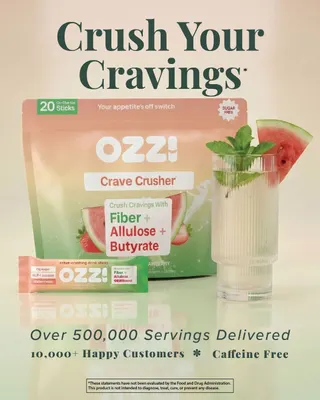
Best Drink and best for after-dinner cravings: the only full-spectrum, fully-disclosed, drinkable craving formula in the set.
Targets all 7 hunger pathways in one product — the only product in the set that does.
Some users are sensitive to the natural butyrate smell from BIOMEnd.
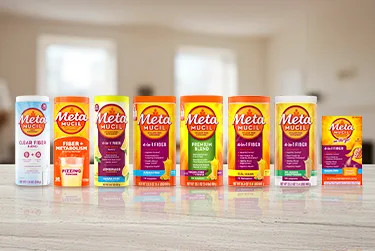
Metamucil 4-in-1 Fiber (Psyllium Husk)
Metamucil (Procter & Gamble) · powderBest Value: cheap, drinkable, and well-evidenced as a fiber — but single-pathway and a heavy gel load.
Pennies per serving — by far the cheapest in the set.
Single pathway — a fiber, not a craving formula.
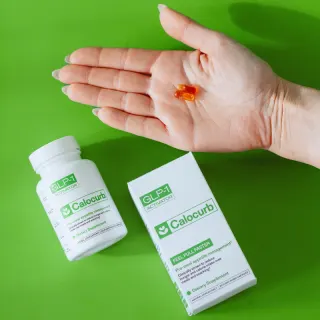
Calocurb GLP-1 Activator
Calocurb · capsuleThe best-evidenced single-mechanism appetite trigger — clinically interesting, but premium-priced and a pre-meal, short-window tool rather than all-day support.
Amarasate is one of the most directly studied appetite ingredients — multiple human RCTs, dosed on-label at 250 mg.
Acute, short-window effect: a pre-meal tool (up to 4 capsules/day), not all-day craving support.
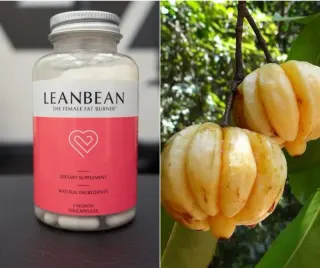
Leanbean
Ultimate Life Ltd · capsuleA maximal glucomannan dose — which is also its risk: top-of-range fiber means you must take it carefully with plenty of water.
Glucomannan dosed at the full 3 g/day EFSA satiety level, fully disclosed.
At 3 g/day, glucomannan sits at the very top of the studied range — large glucomannan doses carry a documented risk of throat, esophageal, or GI blockage if not taken with enough water.