Cannabinoid Science
THCV for the Munchies: Does It Actually Work?
A handful of small human studies, none that measured cannabis-driven eating, and a timing problem the gummy aisle never mentions.
Short answer: nobody knows, because nobody has tested it. THCV has a real mechanism, a handful of small human studies, and a nickname ("diet weed") that has run well ahead of the data. Not one published human trial has measured whether THCV reduces the munchies.
That is not the same as saying it does nothing. It means the claim on the gummy tin is a prediction from pharmacology and mouse work, not a result. Here is every relevant human study we could find, what each one actually measured, and the timing problem that gets left off the label.
What THCV is, and why people think it should work
Tetrahydrocannabivarin is a minor cannabinoid, a close chemical cousin of THC with a shorter side chain. The reason it gets pitched at the munchies is receptor pharmacology. THC drives cannabis appetite by activating CB1 receptors. In the lab, THCV binds CB1 with high affinity and blocks it rather than activating it, and it also acts as a partial agonist at CB2 (McPartland and colleagues, British Journal of Pharmacology 2015).
So the pitch writes itself: block the receptor THC uses, block the munchies. The same systematic review contains the catch, though. THCV is a potent CB1 antagonist in a dish, yet it "only occasionally" produces CB1-blocking effects in living animals. The authors' own conclusion is that in vitro results don't reliably predict what a cannabinoid does in a body.
A 2024 review in Cannabis and Cannabinoid Research makes the same point from the market side: THCV has picked up the diet weed nickname from preclinical appetite and blood-sugar findings, "despite few human studies of these effects" (Haghdoost and colleagues 2024).
What the munchies actually are
You can't judge a munchies blocker without knowing what it has to block. The best recent data comes from a 2025 PNAS paper that ran vaporized cannabis in people and then in rats (Hume and colleagues 2025).
- In humans, cannabis sharply increased energy intake, and it happened in the first 30 minutes of snack access, regardless of dose or gender.
- People didn't shift toward sugar. They ate more of everything, in the same macronutrient proportions.
- Circulating appetite hormones didn't change. The effect ran through central CB1 receptors in the brain, not peripheral ones.
That last point is why the THCV idea is more interesting than most munchies products. Nearly everything else on the shelf works through the gut, through fiber bulk or hormone signals, and the gut-to-brain signaling most appetite supplements rely on is exactly the route the PNAS data says cannabis goes around. A compound that acts at the receptor itself is at least aimed at the right target.
Aimed is not the same as hitting it, though.
The human evidence, study by study
The brain-scan studies (20 healthy volunteers, one 10 mg dose)
The closest thing to an appetite trial is a crossover study at the University of Reading. Twenty healthy adults took a single 10 mg dose of THCV or placebo, then looked at and tasted chocolate, and saw and tasted deliberately unpleasant strawberry stimuli, inside an fMRI scanner (Tudge and colleagues, International Journal of Neuropsychopharmacology 2015).
THCV increased brain responses to both the rewarding and the aversive stimuli. But the ratings that matter to anyone holding a bag of chips, how pleasant the chocolate was and how much people wanted it, didn't differ between THCV and placebo. Nobody measured how much anyone ate. A follow-up analysis of the same design found shifts in resting brain connectivity and, again, no difference in how people felt (Rzepa and colleagues 2016).
The diabetes trial (62 people, 13 weeks)
The largest controlled trial gave 62 adults with type 2 diabetes THCV at 5 mg twice a day, CBD, two combinations, or placebo for 13 weeks (Jadoon and colleagues, Diabetes Care 2016). THCV lowered fasting plasma glucose by 1.2 mmol/L against placebo and improved a marker of beta-cell function. Appetite and body weight were both on the list of secondary outcomes, and neither is among the results the authors reported as significant.
That is a real glucose signal in a clinical population. It isn't an appetite result, and it tells you nothing about cannabis-driven eating. (If blood sugar is your actual interest, our rundown of which blood-sugar supplements were tested on whom covers that question properly.)
The THC challenge study (10 men, 5 days)
This is the only human trial that put THCV and THC in the same body. Ten male occasional cannabis users took 10 mg of THCV or placebo daily for five days, then got a small intravenous dose of THC (Englund and colleagues, Journal of Psychopharmacology 2016).
THCV blunted the heart-rate rise from THC, and 9 of 10 participants said THC felt weaker or less intense on THCV. It also made one memory measure worse. Food intake wasn't among the outcomes reported, and the authors themselves flagged the tiny sample.
It's the most munchies-adjacent result in the literature, and it's still a study of how the high feels, not how much anyone ate.
The weight-loss strip study (44 people, 90 days)
The study THCV sellers quote most tested oral dissolving strips containing THCV plus CBD at two doses (8 mg/10 mg and 16 mg/20 mg) once daily for 90 days in 44 adults with an average age near 52 (Smith, Cannabis 2025). The strips were associated with statistically significant weight loss, smaller waists and better cholesterol against placebo.
Read the fine print before you read the headline. The single author is affiliated with the company behind the strips, the paper names small high-dose and placebo groups as a limitation, and because every active arm combined THCV with CBD, you can't isolate what THCV did. It also didn't measure the munchies.
The safety and dosing study (18 people, up to 200 mg)
A company-funded, dose-ranging crossover gave healthy adults single doses of the Δ8 form of THCV from 12.5 mg to 200 mg (Peters and colleagues, Cannabis and Cannabinoid Research 2023). Most side effects were mild, and the most common was euphoric mood. At 100 mg and 200 mg, people reported they could "feel a drug effect" and liked it. So THCV is not psychoactively inert at the doses some products use.
Then the line that should be printed on every tin: 78 of 79 urine drug screens taken 8 hours after an active THCV dose tested positive for THC. If you get drug tested for work, that finding matters more than anything else in this article.
The timing problem nobody prints
The same trial measured blood levels (Sempio and colleagues, Pharmaceuticals 2024). Swallowed in an oil, THCV took a median of 3.8 to 5 hours to reach peak concentration. The researchers also found the Δ9 form of THCV in participants' blood even though the independent lab hadn't detected it in the product itself.
Put that next to the PNAS finding. The munchies start within 30 minutes of cannabis. A THCV gummy eaten at the same time is on track to peak hours after the eating is over. This is our inference, not a tested result, but a swallowed THCV product would have to be taken well before the session to line up with the window it's sold for. We haven't seen a product label that says so.
The mouse data, and the THC problem in THCV products
The appetite results everyone cites come from rodents. In mice, pure THCV reduced food intake and weight gain at doses as low as 3 mg/kg (Riedel and colleagues, British Journal of Pharmacology 2009).
The same paper has a finding that deserves more attention. A THCV-rich cannabis extract failed to suppress food intake at all, and the authors suspected leftover THC in the extract was cancelling it out. Adding CBD overcame that. Mice aren't people, but the lesson carries: a whole-plant "high THCV" product that also contains THC may be pushing appetite in both directions at once.
THCV against the non-cannabinoid options
We rank everything on the same public rubric of pathway coverage, dose disclosure, evidence, cost and timing fit, laid out on our methodology page. Measured that way, here's how a THCV gummy compares with the ingredients already covered in our ranked guide to supplements for the munchies.
- THCV gummies. Aimed at the right receptor. Human appetite evidence: none that measured intake. Timing: likely hours late if swallowed alongside cannabis. Extra costs: possible failed drug test, psychoactive effects at high doses, and product labels you can't check against the published doses.
- Viscous fiber (psyllium, glucomannan). Works through the gut, so it's pushing against a brain-level signal. But the fullness mechanism has been tested in human trials, the doses are printed, and it doesn't touch a drug test. Our deep dives on what psyllium actually does to fullness and on glucomannan cover the numbers.
- Bitter hop extract. Has a small human trial that measured how much people ate at their next meal, with a narrow pre-meal dosing window. We weigh it as one data point, not the answer. The full picture is in our breakdown of the hops extract trials.
None of these has been tested against cannabis-driven eating either. The difference is that the non-cannabinoid options have measured human outcomes on fullness or intake, while THCV's human record is brain scans, blood sugar and how the high feels. More options live in our appetite suppressant category.
Who should skip THCV
- Anyone who gets drug tested. The 78-of-79 result is hard to argue with.
- Anyone on glucose-lowering medication. THCV lowered fasting glucose in the diabetes trial, and stacking that on a prescription is a conversation for your doctor first.
- Anyone expecting a sober product at high doses. Euphoric mood was the most common side effect in the dosing study.
Hemp-derived cannabinoid rules also differ by state and keep changing, so check where you live before you buy.
The verdict
THCV is one of the more scientifically interesting ideas in this whole category, because it targets the receptor the munchies actually run through. That's where the good news ends. The human studies are small, mostly short, often industry-funded, and none of them counted what people ate after cannabis. Swallowed THCV also peaks hours after the munchies begin.
If you want something with measured human outcomes, the fiber and hops options above have them, and the real work is still timing: food decisions made before the session, not during it. If a proper THCV munchies trial ever gets published, we'll update this page.
References
- Hume C, Cuttler C, Baglot SL, et al. Cannabis produces acute hyperphagia in humans and rodents via increased reward valuation for, and motivation to, acquire food. Proc Natl Acad Sci U S A. 2025;122(52):e2518863122. PubMed 41439716
- McPartland JM, Duncan M, Di Marzo V, Pertwee RG. Are cannabidiol and Δ9-tetrahydrocannabivarin negative modulators of the endocannabinoid system? A systematic review. Br J Pharmacol. 2015;172(3):737-753. PubMed 25257544
- Haghdoost M, Peters EN, Roberts M, Bonn-Miller MO. Tetrahydrocannabivarin is not tetrahydrocannabinol. Cannabis Cannabinoid Res. 2024;10(1):1-5. PubMed 38995871
- Tudge L, Williams C, Cowen PJ, McCabe C. Neural effects of cannabinoid CB1 neutral antagonist tetrahydrocannabivarin on food reward and aversion in healthy volunteers. Int J Neuropsychopharmacol. 2015;18(6). PubMed 25542687
- Rzepa E, Tudge L, McCabe C. The CB1 neutral antagonist tetrahydrocannabivarin reduces default mode network and increases executive control network resting state functional connectivity in healthy volunteers. Int J Neuropsychopharmacol. 2016;19(2). PubMed 26362774
- Jadoon KA, Ratcliffe SH, Barrett DA, et al. Efficacy and safety of cannabidiol and tetrahydrocannabivarin on glycemic and lipid parameters in patients with type 2 diabetes. Diabetes Care. 2016;39(10):1777-1786. PubMed 27573936
- Englund A, Atakan Z, Kralj A, et al. The effect of five day dosing with THCV on THC-induced cognitive, psychological and physiological effects in healthy male human volunteers. J Psychopharmacol. 2016;30(2):140-151. PubMed 26577065
- Smith GL. Weight loss and therapeutic metabolic effects of tetrahydrocannabivarin (THCV)-infused mucoadhesive strips. Cannabis. 2025;8(1):109-120. PubMed 39968488
- Peters EN, MacNair L, Harrison A, et al. A two-phase, dose-ranging, placebo-controlled study of the safety and preliminary test of acute effects of oral Δ8-tetrahydrocannabivarin in healthy participants. Cannabis Cannabinoid Res. 2023;8(S1):S71-S82. PubMed 37721990
- Sempio C, Campos-Palomino J, Klawitter J, et al. Pharmacokinetics of oral cannabinoid Δ8-tetrahydrocannabivarin and its main metabolites in healthy participants. Pharmaceuticals (Basel). 2024;17(12):1603. PubMed 39770444
- Riedel G, Fadda P, McKillop-Smith S, et al. Synthetic and plant-derived cannabinoid receptor antagonists show hypophagic properties in fasted and non-fasted mice. Br J Pharmacol. 2009;156(7):1154-1166. PubMed 19378378
FAQ
Does THCV stop the munchies?
It hasn't been tested. No published human trial has measured whether THCV reduces eating after cannabis. The idea comes from pharmacology (THCV blocks the CB1 receptor THC uses to drive appetite) and from mouse studies where pure THCV reduced food intake. The human studies measured brain responses, blood sugar, how the high feels and weight in combination with CBD, not munchies.
When should you take THCV for appetite?
Nobody has tested a timing protocol for appetite. What is known: in a pharmacokinetic study, swallowed THCV in oil took a median of 3.8 to 5 hours to reach peak blood levels, while a 2025 PNAS study found cannabis munchies start within the first 30 minutes. A THCV gummy taken alongside cannabis would likely peak after the eating is over.
Will THCV make me fail a drug test?
It might. In a dose-ranging trial of oral THCV, 78 of 79 urine drug screens collected 8 hours after an active dose tested positive for THC. If you are drug tested for work or anything else, treat THCV products as a real risk.
Does THCV get you high?
At low doses it was indistinguishable from placebo in small studies. At higher doses it isn't inert: in a dose-ranging trial, euphoric mood was the most common side effect, and at 100 mg and 200 mg participants reported feeling and liking a drug effect. Product labels vary, so the dose you actually get matters.
Products mentioned

Metamucil 4-in-1 Fiber (Psyllium Husk)
Metamucil (Procter & Gamble) · powderBest Value: cheap, drinkable, and well-evidenced as a fiber — but single-pathway and a heavy gel load.
Pennies per serving — by far the cheapest in the set.
Single pathway — a fiber, not a craving formula.
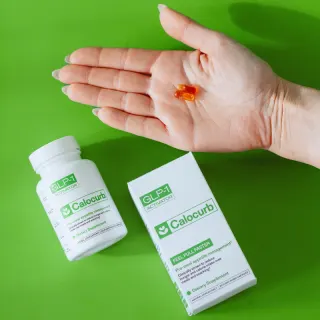
Calocurb GLP-1 Activator
Calocurb · capsuleThe best-evidenced single-mechanism appetite trigger — clinically interesting, but premium-priced and a pre-meal, short-window tool rather than all-day support.
Amarasate is one of the most directly studied appetite ingredients — multiple human RCTs, dosed on-label at 250 mg.
Acute, short-window effect: a pre-meal tool (up to 4 capsules/day), not all-day craving support.

Leanbean
Ultimate Life Ltd · capsuleA maximal glucomannan dose — which is also its risk: top-of-range fiber means you must take it carefully with plenty of water.
Glucomannan dosed at the full 3 g/day EFSA satiety level, fully disclosed.
At 3 g/day, glucomannan sits at the very top of the studied range — large glucomannan doses carry a documented risk of throat, esophageal, or GI blockage if not taken with enough water.