Eating Behavior
Psychological Tricks to Eat Less: 5 That Hold Up in Studies
Five small changes to how a meal is set up, and what the trials measured for each one.
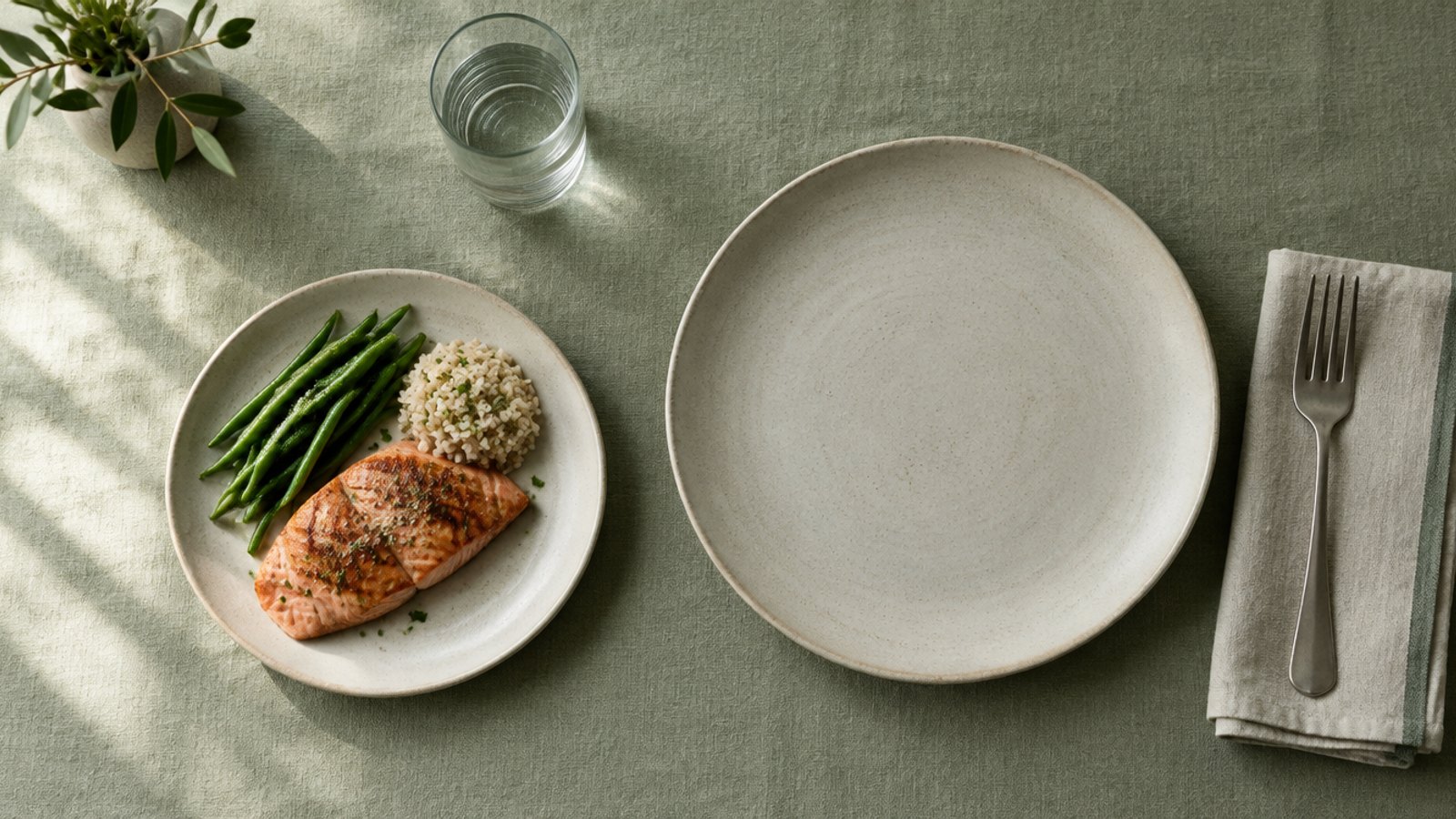
The psychological tricks to eat less with the best evidence are serving smaller portions, eating more slowly, eating away from screens, eating protein and vegetables before carbs, and making an if-then plan for the moment cravings usually hit. In controlled studies each one changed how much people ate or how their body handled the meal. The effects are modest, though, and most were measured over a single meal rather than months.
So treat these as small edges that add up, not as a switch. Below, each trick gets the study that backs it, how big the effect was, and the catch.
Serve smaller portions: the strongest trick on the list
Smaller portions, packages and plates are the best-supported trick for eating less, because people reliably eat more when they're given more. A Cochrane review pooled 58 studies with 6,603 participants and found that larger portions, packages or tableware increased how much food people ate, with a bigger effect in adults than in children (Hollands et al., 2015).
The authors estimated that if people were consistently served smaller sizes across the whole diet, average daily intake could fall by 144 to 228 calories, roughly 8.5% to 13.5%. That's an estimate, not a measured result, and the review rated most of its 72 studies at unclear or high risk of bias. It also couldn't say whether shrinking an already small portion works as well as shrinking a big one.
- Plate it once. Serve your portion, then put the serving dish away so seconds take effort.
- Buy small bags. Package size was one of the things tested, and a single-serve bag ends on its own.
- Smaller plates help, but they're a side note. Only 15 of the 72 studies tested tableware size or shape. Most of the evidence is about how much food is put in front of you.
Eat slower: fewer calories, but not for the reason you've heard
Eating more slowly cuts how much you eat at a meal: a meta-analysis of 22 studies found that a slower eating rate led to lower energy intake than a faster one, whatever method the researchers used to slow people down (Robinson et al., 2014).
The surprise is what didn't change. Hunger at the end of the meal, and for up to 3.5 hours afterward, wasn't significantly different between fast and slow eaters. So the familiar 20-minute rule (fullness takes time to register, so slow down and let it catch up) isn't quite what the trials measured. Slow eating trimmed the meal without leaving people hungrier later, which is the useful part.
Smaller bites, putting the fork down between them, and chewing longer are all ways to do it. If your problem is the opposite, hunger that returns an hour after a big plate, our guide on why hunger comes back after a full meal covers that side.
Eat without a screen, and let yourself see what you ate
Eating while distracted makes people eat more, and the bigger effect shows up at the next meal. A meta-analysis of 24 studies found distraction produced a moderate increase in how much people ate during the meal and a larger increase in what they ate later (Robinson et al., 2013).
The same review found two more things worth using. When people were helped to remember what they'd eaten, they ate less later. When the evidence of how much they'd eaten was taken away, such as cleared plates or wrappers, they ate more during the meal.
Television specifically has a smaller effect than the reputation suggests. A 2025 review of 23 experimental studies found a small overall increase in intake from eating with the TV on, with a clearer effect at the following meal than during the meal itself (Garg et al., 2025).
- Eat at a table, with the phone face down.
- Leave wrappers or the empty bowl in sight until you're done.
- Before an afternoon snack, take a few seconds to replay what you had for lunch.
Snacking on the couch is often more about filling time than hunger, which is the pattern our piece on how to stop boredom eating takes apart.
Eat protein and vegetables first, carbs last
Eating the protein and vegetables on your plate before the starch flattens the blood sugar rise from the same meal. In a crossover study of 15 adults with prediabetes, eating protein and vegetables 10 minutes before the carbohydrate cut the glucose peak by more than 40% and the total glucose rise by 38.8%, compared with eating the carbs first (Shukla et al., 2019).
That's a blood sugar result in a small group, not a weight or intake result, so keep it at that size. The reason it belongs on a list about eating less is that big swings after a carb-heavy meal are often followed by a dip and a pull toward something sweet. If dessert cravings are your trigger, our guide on stopping sweet cravings after a meal covers that dip and what to do about it.
Make an if-then plan for your trigger moment
If-then plans help people change what they eat, though they work better for adding healthy foods than for cutting snacks. A meta-analysis of 23 studies found a medium effect for plans that added healthy items to the diet and a smaller effect for plans aimed at eating fewer unhealthy snacks (Adriaanse et al., 2011).
The format is simple: name the situation, then the action. "If it's 9pm and I'm on the couch wanting chips, then I'll make a cup of tea first." The plan works because the decision is made before the craving shows up.
Given the numbers, aim plans at what you'll do instead (the tea, the walk, the protein snack) rather than only at what you'll skip. Evening is where most people's trigger lives, and our guide on how to stop nighttime snacking has more plans built for that window.
Where these tricks stop working
Psychological tricks work on the setting around a meal, so they do least for food thoughts that run all day regardless of what's in front of you. If you're thinking about food constantly, between meals and after them, that pattern has a name and a different set of explanations, covered in our explainer on what food noise is and where it comes from.
And if eating regularly feels out of your control, or you eat large amounts in one sitting and feel distressed afterward, that's worth raising with a doctor rather than solving with a better plate.
Which tricks to start with
Start with smaller portions and eating away from screens: they have the most consistent evidence and cost nothing. Add slower eating next, since it trimmed intake without making people hungrier later. Food order and if-then plans are worth trying if blood sugar dips or a specific trigger time are your problem.
None of these will change your appetite on its own, and stacking two or three is where the small effects start to matter. If you want to compare products on the same evidence terms, our appetite suppressant reviews score each one against the human trials on its ingredients.
References
- Hollands GJ, Shemilt I, Marteau TM, et al. Portion, package or tableware size for changing selection and consumption of food, alcohol and tobacco. Cochrane Database of Systematic Reviews, 2015. PubMed 26368271
- Robinson E, Almiron-Roig E, Rutters F, et al. A systematic review and meta-analysis examining the effect of eating rate on energy intake and hunger. American Journal of Clinical Nutrition, 2014. PubMed 24847856
- Robinson E, Aveyard P, Daley A, et al. Eating attentively: a systematic review and meta-analysis of the effect of food intake memory and awareness on eating. American Journal of Clinical Nutrition, 2013. PubMed 23446890
- Garg D, Smith E, Attuquayefio T. Watching Television While Eating Increases Food Intake: A Systematic Review and Meta-Analysis of Experimental Studies. Nutrients, 2025. PubMed 39796600
- Shukla AP, Dickison M, Coughlin N, et al. The impact of food order on postprandial glycaemic excursions in prediabetes. Diabetes, Obesity and Metabolism, 2019. PubMed 30101510
- Adriaanse MA, Vinkers CD, De Ridder DT, Hox JJ, De Wit JB. Do implementation intentions help to eat a healthy diet? A systematic review and meta-analysis of the empirical evidence. Appetite, 2011. PubMed 21056605
FAQ
Does using a smaller plate help you eat less?
Smaller portions and plates help most people eat less in short-term studies. A Cochrane review found people consistently eat more when given larger portions, packages or tableware, though most of its studies measured a single sitting and only 15 of 72 tested plate or bowl size.
What is the 20-minute rule for eating?
The 20-minute rule says fullness takes about 20 minutes to register, so eating slowly lets it catch up. Slower eating did lower calorie intake in a meta-analysis of 22 studies, but hunger at the end of the meal and up to 3.5 hours later didn't differ, so the timing story behind the rule isn't what the trials showed.
Does watching TV while eating make you eat more?
Watching TV while eating raises food intake slightly, mostly at the next meal. A 2025 review of 23 experimental studies found a small overall increase, with a clearer effect at the following meal than during the meal itself.
How do I control eating urges?
Eating urges are easiest to manage with a plan made in advance: an if-then rule for the moment the urge usually hits, such as making tea first at 9pm. In a review of 23 studies, if-then plans had a smaller effect on cutting unhealthy snacks than on adding healthy foods, so build the plan around what you'll do instead.
Products mentioned

Metamucil 4-in-1 Fiber (Psyllium Husk)
Metamucil (Procter & Gamble) · powderBest Value: cheap, drinkable, and well-evidenced as a fiber — but single-pathway and a heavy gel load.
Pennies per serving — by far the cheapest in the set.
Single pathway — a fiber, not a craving formula.
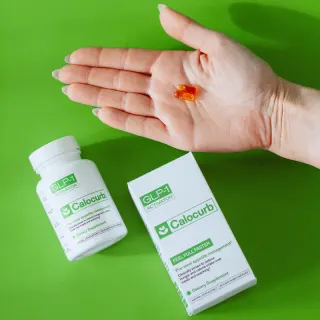
Calocurb GLP-1 Activator
Calocurb · capsuleThe best-evidenced single-mechanism appetite trigger — clinically interesting, but premium-priced and a pre-meal, short-window tool rather than all-day support.
Amarasate is one of the most directly studied appetite ingredients — multiple human RCTs, dosed on-label at 250 mg.
Acute, short-window effect: a pre-meal tool (up to 4 capsules/day), not all-day craving support.