Craving Tactics
How to Stop Craving Sweets After a Meal: 5 Fixes That Hold Up
Dinner fills your appetite for dinner. Your appetite for sweet is still open, and your body clock peaks for it around 8 PM. Here's how to close it.
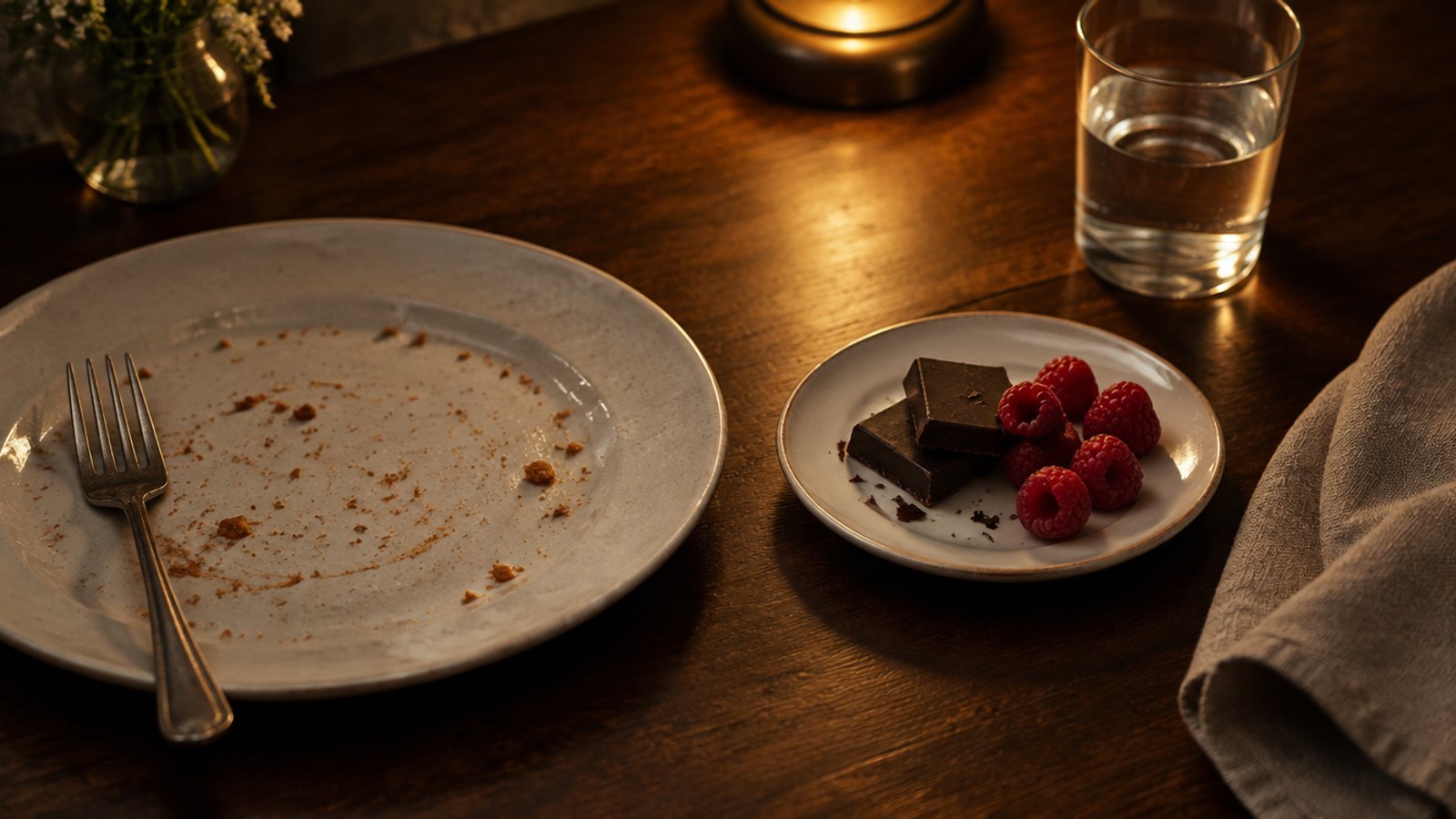
You just finished dinner. You're full. And you want something sweet anyway.
That isn't hunger, and it isn't weak character. To stop craving sweets after a meal you need to know which of 4 things is driving it: your appetite for dinner has shut off while your appetite for sweet hasn't, your body clock turns up the want for sweets at night, your blood sugar may dip a couple of hours later, and years of dessert have made the end of the meal a cue all by itself.
Each one has a fix. Here are the 4 causes, then 5 things to try, in the order we'd try them.
Why you crave sweets after a meal, even when you're full
1. You're full for dinner, not for dessert
In 1981 a team led by Barbara Rolls put a name on this: sensory-specific satiety. As you eat a food, your liking for that food drops. Your liking for foods you haven't eaten holds up much better (Rolls et al., 1981).
So a savory dinner turns down your appetite for savory. Sweet hasn't been touched all meal. That's the "dessert stomach," and it's why you can wave off a second helping of chicken and say yes to ice cream a minute later.
It also means the craving at the table is about taste, not fuel. More dinner won't fix it.
2. Your body clock wants sweets in the evening
Researchers at Brigham and Women's Hospital kept 12 healthy adults in a lab for 13 days, spreading meals and sleep evenly around the clock so that time of day was the only thing left to explain appetite. Hunger still followed an internal rhythm. It bottomed out around 8 AM and peaked around 8 PM (Scheer et al., 2013).
Appetite for sweet food rode the same curve, along with salty and starchy food. The swings ran 14% to 25% from low point to peak.
So dinner lands right when your biology is most interested in sweets. That's timing, and it happens whether or not you ate enough.
3. The dip, 2 to 3 hours later
This one explains the craving that shows up on the couch, not the one at the table.
In a study of 1,070 adults wearing continuous glucose monitors across 8,624 standardized meals, the size of the blood sugar dip 2 to 3 hours after eating predicted hunger better than the size of the spike did. Bigger dips went with more hunger, a shorter wait until the next meal and more calories eaten over the following 24 hours (Wyatt et al., 2021).
Keep the size in view. Those correlations were modest (r = 0.16 for hunger, 0.27 for 24-hour intake), and the study measured hunger, not sweet cravings specifically. It's a nudge, not a verdict. But a carb-heavy dinner at 6:30 and a pull toward the cookies at 9 fits the pattern.
Hunger straight after a full meal is a different thing when it's new and arrives with thirst and frequent urination. We covered that in whether craving sugar is a sign of diabetes.
4. The meal ends, the cue fires
If dinner has ended with something sweet since you were 6, the last bite of dinner is a signal. Your brain has learned what comes next and starts asking for it.
Sitting there staring it down doesn't help. In one brain-imaging study, 17 people smelled chocolate without being allowed to eat it. After 30 minutes their craving had gone up, not down. It only started to ease at the 60-minute mark (Frankort et al., 2014).
The dessert sitting on the counter in plain sight is the hardest version of this test. Don't take it.
How to stop craving sweets after a meal: 5 fixes
1. Get up and walk for 15 minutes
This is the fix with the most direct data. In a trial of 25 regular chocolate eaters, a 15-minute brisk walk lowered the urge to eat chocolate compared with sitting (Taylor & Oliver, 2009). A follow-up with 78 people measured actual eating: walkers ate 15.6 g of chocolate from a bowl left in front of them, resters ate 28.8 g (Oh & Taylor, 2012).
Those were lab studies in people who'd gone 2 to 3 days without chocolate, not people leaving the dinner table. Still, a walk does 2 jobs here. It takes you away from the cue, and it fills the 15 minutes when the pull is strongest.
We ranked the rest of the in-the-moment options in the fixes that shrink a sugar craving within minutes.
2. Eat the same dinner in a different order
Researchers at Weill Cornell fed 15 people with prediabetes an identical meal on 3 days, changing only the order. When protein and vegetables came first and the carbohydrate followed 10 minutes later, the blood sugar peak was more than 40% lower than when the carbs came first. Glucose stayed steady, where the carbs-first meal sent it swinging (Shukla et al., 2019).
Two honest limits. The participants had prediabetes, and the study tracked glucose, not cravings. Connecting a flatter curve to a quieter 9 PM is our inference from the dip research above.
It costs nothing though. Salad and chicken first, rice and bread last.
3. Put more protein earlier in your day
What you eat at 8 AM shows up at 8 PM. In a crossover trial, 20 young women who usually skipped breakfast ate a 35 g protein breakfast, a 13 g protein breakfast or nothing, each for 6 days. Only the high-protein breakfast cut evening snacking on high-fat foods compared with skipping, and it raised the fullness hormone PYY across the day (Leidy et al., 2013).
Total daily calories didn't change, and 20 late-teen breakfast skippers aren't everyone. But arriving at dinner less depleted is one of the few levers with a randomized trial behind it.
4. Plan the sweet thing instead of banning it
Sensory-specific satiety says your appetite for sweet is still open after a savory meal. You can fight that every night, or you can close it on purpose with something small.
Decide before dinner what it is. Put it on a plate. Eat it at the table as the last course, then clear up. A small planned portion beats a large unplanned one eaten standing up.
We couldn't find a trial that tested this head to head against going without, so file it under reasoning from mechanism, not proof.
5. Break the cue
Change what follows the last bite. Clear the plates straight away. Make tea. Start the walk from fix 1. Keep the sweets somewhere you can't see them from the table.
The first week is the worst, because the cue still fires and nothing answers it. It fades when the pattern stops being rewarded. If the pull is less about dinner and more about the whole evening, our guide to stopping nighttime snacking covers the hours after.
What to eat when craving sweets at night
If you're going to have something, pick a version that brings protein or fiber with the sweetness and comes in a fixed portion.
- Plain Greek yogurt with berries. Sweet, cold, and it carries protein.
- A piece of fruit with a spoon of peanut butter. Fiber plus fat slows the whole thing down.
- 2 squares of dark chocolate, on a plate. The bar goes back in the cupboard first.
- Frozen grapes or a frozen banana. Slow to eat, which is half the point.
- Decaf tea or cocoa made with milk. Warm and sweet enough to mark the end of eating.
No trial has ranked these against each other. The logic is the dip research: sugar eaten alone on top of a carb-heavy dinner is the version most likely to leave you hungry again before bed. If the problem is plain hunger rather than a sweet tooth, our guide to why hunger comes back soon after a full meal covers those fixes.
Do supplements help with after-dinner sweet cravings?
Not in the moment. Nothing you swallow at 8 PM switches off a craving at 8:05.
Over weeks, a few ingredients have human data on cravings, and most of it is thinner than the labels suggest. Chromium is the only mineral with randomized trials that measured cravings directly. Magnesium and iron have a weaker case than the internet suggests. We went through each one in which deficiencies really cause sugar cravings and which are folklore.
L-glutamine gets recommended for this constantly, and the evidence behind it is closer to anecdote than trial. Here's what the research on L-glutamine and sugar cravings actually measured.
If you want to compare products, our appetite and craving supplement comparisons score each one on the same public rubric, explained in how we rate them.
When it's more than a sweet tooth
Wanting dessert after dinner is normal. A few patterns are worth taking to a clinician instead of a blog:
- Eating a large share of your daily food after dinner, or waking at night to eat. That has a name, and we explain it in night eating syndrome versus ordinary late-night snacking.
- Eating past the point of discomfort and feeling unable to stop.
- New, constant hunger with thirst, frequent urination or unexplained weight loss.
The short version
You crave sweets after a meal because dinner only filled your appetite for dinner, your body clock peaks for sweets around 8 PM, and habit has wired the last bite to dessert. A blood sugar dip can pile on a couple of hours later.
Walk for 15 minutes. Eat the carbs last. Get protein in early. Plan a small sweet thing on a plate, or change what follows the meal so the cue stops paying out. Give it 2 weeks before you judge it.
References
- Rolls BJ, Rolls ET, Rowe EA, Sweeney K. Sensory specific satiety in man. Physiol Behav. 1981;27(1):137-142. PMID 7267792
- Scheer FA, Morris CJ, Shea SA. The internal circadian clock increases hunger and appetite in the evening independent of food intake and other behaviors. Obesity (Silver Spring). 2013;21(3):421-423. PMID 23456944
- Wyatt P, Berry SE, Finlayson G, et al. Postprandial glycaemic dips predict appetite and energy intake in healthy individuals. Nat Metab. 2021;3(4):523-529. PMID 33846643
- Frankort A, Roefs A, Siep N, Roebroeck A, Havermans R, Jansen A. The craving stops before you feel it: neural correlates of chocolate craving during cue exposure with response prevention. Cereb Cortex. 2014;24(6):1589-1600. PMID 23382517
- Taylor AH, Oliver AJ. Acute effects of brisk walking on urges to eat chocolate, affect, and responses to a stressor and chocolate cue. Appetite. 2009;52(1):155-160. PMID 18835411
- Oh H, Taylor AH. Brisk walking reduces ad libitum snacking in regular chocolate eaters during a workplace simulation. Appetite. 2012;58(1):387-392. PMID 22100187
- Shukla AP, Dickison M, Coughlin N, et al. The impact of food order on postprandial glycaemic excursions in prediabetes. Diabetes Obes Metab. 2019;21(2):377-381. PMID 30101510
- Leidy HJ, Ortinau LC, Douglas SM, Hoertel HA. Beneficial effects of a higher-protein breakfast on the appetitive, hormonal, and neural signals controlling energy intake regulation in overweight/obese, "breakfast-skipping," late-adolescent girls. Am J Clin Nutr. 2013;97(4):677-688. PMID 23446906
FAQ
Why do I crave sweets after a meal even when I am full?
You crave sweets after a meal even when you are full because fullness is specific to what you ate. Your liking for the food you just had drops while your liking for other tastes holds up, a pattern called sensory-specific satiety. After a savory dinner your appetite for sweet is still open. Habit and an evening peak in appetite for sweet food add to it.
How do I stop craving sweets after a meal?
Get up and walk for 15 minutes, which lowered chocolate urges and chocolate eating in two small trials. Eat protein and vegetables before the carbohydrate, get more protein earlier in the day, and either plan one small sweet portion or change what follows dinner so the habit stops being rewarded.
What should I eat when craving sweets at night?
Something sweet that brings protein or fiber and comes in a fixed portion: plain Greek yogurt with berries, fruit with peanut butter, 2 squares of dark chocolate on a plate, or frozen grapes. No trial has ranked these against each other; the reasoning is that sugar eaten alone is more likely to leave you hungry again.
Is craving sugar after eating a sign of diabetes?
A sweet craving alone is not on the diabetes symptom lists. Persistent hunger soon after full meals, together with thirst, frequent urination or unexplained weight loss, is worth a blood test. If that sounds like you, ask a clinician about an A1C.
Products mentioned

Metamucil 4-in-1 Fiber (Psyllium Husk)
Metamucil (Procter & Gamble) · powderBest Value: cheap, drinkable, and well-evidenced as a fiber — but single-pathway and a heavy gel load.
Pennies per serving — by far the cheapest in the set.
Single pathway — a fiber, not a craving formula.
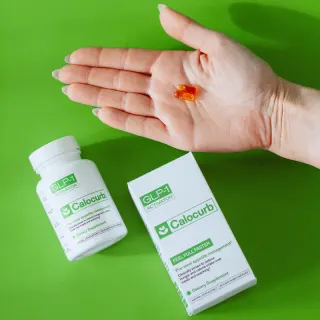
Calocurb GLP-1 Activator
Calocurb · capsuleThe best-evidenced single-mechanism appetite trigger — clinically interesting, but premium-priced and a pre-meal, short-window tool rather than all-day support.
Amarasate is one of the most directly studied appetite ingredients — multiple human RCTs, dosed on-label at 250 mg.
Acute, short-window effect: a pre-meal tool (up to 4 capsules/day), not all-day craving support.

Lipozene
Obesity Research Institute · capsuleCheap single-ingredient glucomannan — fine as a fiber, but it does only one thing.
Single, disclosed ingredient.
One pathway only (fiber satiety).