Attention and Appetite
Food Noise and ADHD: Why the Volume Runs Higher
The meta-analyses are real, the mechanism is emotion regulation more than impulsivity, and the stimulant that flattens your appetite at noon has nothing to do with 9pm.

If you have ADHD and the food chatter never really stops, you are not inventing the connection. It shows up in large meta-analyses, and it is one of the most badly explained overlaps in this whole category.
Here is the accurate version, including the part where the research runs out.
What food noise actually means
The term went mainstream through GLP-1 drug users describing what went quiet. It only got a formal definition in 2025: persistent thoughts about food that the person experiences as unwanted or dysphoric, and that may cause social, mental or physical harm (Dhurandhar and colleagues, Nutrition & Diabetes 2025). The authors separate it from ordinary food thoughts by intensity and intrusiveness, and compare it to rumination.
Note the date. A validated questionnaire arrived the same year: 5 items, 400 participants, internal consistency of 0.93 and a test-retest correlation of 0.79 about a week apart (Diktas and colleagues, Obesity 2025). If you want the fuller background, we wrote a plain-English explainer on what food noise is and how it differs from hunger.
That timeline matters for everything below. Almost no study published before 2025 measured food noise as such, so nobody can hand you a trial of food noise in ADHD. What exists is adjacent, and it is still worth reading.
The overlap, in actual numbers
The cleanest evidence is a meta-analysis of eating disorders in ADHD populations: 12 studies, 4,013 people with ADHD against 29,404 controls (Nazar and colleagues, International Journal of Eating Disorders 2016).
- Odds of any eating disorder in ADHD: 3.82 (95% CI 2.34 to 6.24).
- Binge eating disorder specifically: 4.13 (95% CI 3.00 to 5.67).
- Run it the other way, ADHD in eating-disorder populations: 2.57 (95% CI 1.30 to 5.11).
- Restricted to cohorts with binge eating only: 5.77 (95% CI 2.35 to 14.18).
One detail in that paper is worth more than the headline. The association was much stronger when ADHD was diagnosed by clinical interview (5.89) than by self-report questionnaire (2.23). Measurement quality moves the number by more than a factor of two, which is a good reason to distrust anyone quoting a single tidy figure.
Body weight tracks the same direction. Across 42 studies and 728,136 people, obesity was associated with ADHD in adults at an odds ratio of 1.55 (95% CI 1.32 to 1.81), with pooled obesity prevalence of 28.2% in adults with ADHD against 16.4% without (Cortese and colleagues, American Journal of Psychiatry 2016). The same paper reports that people medicated for ADHD were not at higher risk of obesity.
Now the caveat that most articles skip: none of this measured food noise. It measured diagnoses and body weight. The defensible statement is that ADHD travels with binge-type eating and with higher obesity rates, and that food noise is a plausible thread running through both. It is not a demonstrated one.
The mechanism that keeps getting left out
Most explanations stop at impulsivity, which is the lazy answer. A systematic review of 41 papers found 38 reporting a significant link between ADHD symptoms and disordered or addictive-like eating, and 8 of them pointed at something more specific: negative affectivity and emotion dysregulation acting as mediators (El Archi and colleagues, Nutrients 2020).
Sixteen of those papers found the association changed depending on gender, on which eating behavior was measured, and on which symptom domain was involved, whether inattention, hyperactivity or impulsivity. So there is no single mechanism to point at.
The reframe is worth stating plainly, because a lot of people carry the opposite one. Your cravings are not a willpower failure attached to a diagnosis. The same regulation difficulty that shows up in attention also shows up in mood, and eating is one of the fastest regulators a person has available at 9pm.
Why the cues land harder
There is a useful model for this. Food cue reactivity gets described as a chain of cue, influencer, reactivity and outcome, where the size of the reaction depends on modifiers rather than the cue alone (Hayashi and colleagues, Nutrients 2023).
Apply that to a typical ADHD workday and the modifiers stack up. Cue density is higher, because open packets and a phone stay in reach. The competing task holds attention less well. Meals get skipped and then noticed hours later. None of that is a trial result, and we are not going to dress up a model as one. It is a mechanism that fits the numbers above better than "eat less, try harder" does.
The stimulant wrinkle
An estimated 15.5 million US adults, or 6.0%, had a current ADHD diagnosis in late 2023, and roughly one third had taken a stimulant medication for it in the previous year (CDC, MMWR 2024).
Appetite suppression is one of the best documented effects of those medications. A Cochrane review covering 212 trials and 16,302 children and adolescents found methylphenidate may cause more non-serious adverse events than placebo, at a risk ratio of 1.23 (95% CI 1.11 to 1.37), naming sleep problems and decreased appetite specifically (Storebø and colleagues, Cochrane Database of Systematic Reviews 2023). The authors rate the certainty of that evidence as very low, and we will repeat that rather than bury it. A broader meta-analysis of 93 randomized trials across several conditions found an overall adverse-event risk ratio of 1.34 (90% CI 1.27 to 1.41) for stimulants against placebo (Oliva and colleagues, JAMA Network Open 2025).
The practical shape people describe is a day with almost no appetite followed by an evening where all of it arrives at once. If that is the pattern you recognise, the useful reading is what the research actually supports for nighttime snacking rather than anything aimed at daytime hunger.
What we are not going to do is give you an opinion about your prescription. Dose and timing are a conversation with the person who wrote it.
What this does not mean
Three things, because this topic attracts bad reasoning from both directions.
Food noise is not a diagnosis. The people who defined it say so in the paper that defined it. Loud food thoughts are a description of an experience, not a condition you can be assessed for.
Loud food noise does not mean you have ADHD. The odds ratios above are population statistics. They say nothing reliable about any individual, and self-diagnosing from a blog post is a bad trade.
Genuine loss-of-control eating belongs with a clinician. There is a real treatment route here and it is not a supplement. Lisdexamfetamine is approved in the US for binge eating disorder, and a meta-analysis of 5 randomized trials in 988 adults found it reduced binge-eating days by about 1.29 per week against placebo, with diarrhoea flagged as a side effect the guidelines had not acknowledged (Ellwanger and colleagues, European Eating Disorders Review 2025). That is a prescriber decision. We mention it so you know the door exists.
What is actually worth trying
The useful interventions here are structural rather than motivational, which is convenient, because structure is the thing an ADHD brain can outsource.
Eat on a clock, not on a signal. If your hunger cues are unreliable or chemically flattened for eight hours, waiting to feel hungry is waiting for a broken instrument. A fixed lunch time works better than an intention to notice.
Front-load the day. The common shape is nothing until 4pm and everything after 8pm. Moving protein and fiber earlier is the single change that most reliably changes the evening.
Protect sleep. Short sleep and stimulant-related sleep disruption both push appetite the wrong way, and the Cochrane data above names sleep problems in the same breath as reduced appetite.
Reduce cue density instead of resisting it. Moving the snacks out of eyeline is not a moral act, it is removing an input from the model described earlier. The same logic drives the crash-then-crave loop behind sugar cravings, and the wider version sits in our guide to quieting food noise without a GLP-1 prescription.
Where supplements sit in this
Honestly? On the outside. No supplement has been tested against a food-noise endpoint, let alone against one in an ADHD population, and the validated questionnaire that would make such a trial possible is barely a year old. Anything sold to you as a food-noise product is borrowing evidence gathered on satiety, blood sugar or gut hormones. Some of that evidence is decent, which is why we ranked it in our read on supplements for food noise and keep the wider field in the GLP-1 support category.
One genuine safety point before you shop. A large share of appetite products in this category are stimulant-based, and stacking a high-caffeine fat burner on top of a prescribed stimulant is not a small decision. Ask a pharmacist, and read what caffeine really does for appetite and what it costs you in the evening first.
The bottom line
ADHD is associated with binge-type eating at roughly four times the odds, and with adult obesity at about 1.5 times. The likely thread is emotion regulation and cue reactivity rather than impulsivity alone. Nobody has yet measured food noise itself in this population, so treat anyone who quotes a precise figure for it as guessing.
The interventions that follow from the evidence are unglamorous: fixed meal timing, food earlier in the day, sleep, fewer cues within reach, and a clinician for anything that feels out of control. That is a shorter list than the internet sells, and it is the one with support behind it.
References
- Dhurandhar EJ, et al. Food noise: definition, measurement, and future research directions. Nutrition & Diabetes. 2025;15(1):30. PubMed 40628707
- Diktas HE, et al. Development and validation of the Food Noise Questionnaire. Obesity (Silver Spring). 2025;33(2):289-297. PubMed 39828656
- Nazar BP, et al. The risk of eating disorders comorbid with attention-deficit/hyperactivity disorder: a systematic review and meta-analysis. International Journal of Eating Disorders. 2016;49(12):1045-1057. PubMed 27859581
- Cortese S, et al. Association between ADHD and obesity: a systematic review and meta-analysis. American Journal of Psychiatry. 2016;173(1):34-43. PubMed 26315982
- El Archi S, et al. Negative affectivity and emotion dysregulation as mediators between ADHD and disordered eating: a systematic review. Nutrients. 2020;12(11):3292. PubMed 33121125
- Hayashi D, et al. What is food noise? A conceptual model of food cue reactivity. Nutrients. 2023;15(22):4809. PubMed 38004203
- Storebø OJ, et al. Methylphenidate for children and adolescents with attention deficit hyperactivity disorder (ADHD). Cochrane Database of Systematic Reviews. 2023;3:CD009885. PubMed 36971690
- Oliva HNP, et al. Safety of stimulants across patient populations: a meta-analysis. JAMA Network Open. 2025;8(5):e259492. PubMed 40343695
- Ellwanger MP, et al. Efficacy, safety and tolerability of lisdexamfetamine dimesylate compared with placebo in adults with binge-eating disorder. European Eating Disorders Review. 2025;34(3):770-779. PubMed 41423727
- Staley BS, et al. Attention-deficit/hyperactivity disorder diagnosis, treatment, and telehealth use in adults. MMWR Morbidity and Mortality Weekly Report. 2024;73(40):890-895. CDC MMWR
FAQ
Does ADHD cause food noise?
Nobody has shown that, and the honest answer is that the study has not been done. What large meta-analyses show is that ADHD is associated with eating disorders at about 3.82 times the odds and with adult obesity at about 1.55 times. Food noise itself only got a formal definition and a validated questionnaire in 2025, so there is no body of research measuring it in an ADHD population yet.
Why does my appetite disappear all day and come back at night?
That pattern is well documented for stimulant medication. A Cochrane review of 212 trials names decreased appetite and sleep problems among the more common non-serious adverse effects of methylphenidate. Appetite tends to return as the dose wears off, which lands it in the evening. Timing and dose are a question for your prescriber, not a supplement problem.
Is there a supplement for ADHD-related food noise?
No, and be sceptical of anything marketed that way. No supplement has been tested against a food-noise endpoint in any population, let alone in adults with ADHD. There is also a real safety point: many appetite products are stimulant-based, and combining a high-caffeine product with a prescribed stimulant is worth asking a pharmacist about first.
Does loud food noise mean I might have ADHD?
Not on its own. The associations reported in these papers are population-level statistics and say very little about any individual person. Plenty of people with intense food thoughts have no ADHD at all. If the question is genuinely bothering you, an assessment by a clinician is the route, not a symptom list on the internet.
Products mentioned

Lemme GLP-1 Daily (Lemme Reset)
Lemme · capsuleThe most transparent standalone GLP-1 capsule: fully-disclosed branded actives in a simple once-daily pill, though it covers fewer hunger pathways than the Ozzi capsule.
Fully disclosed, standardized branded actives (no proprietary blend).
No published trial on the finished three-ingredient combination.

Metamucil 4-in-1 Fiber (Psyllium Husk)
Metamucil (Procter & Gamble) · powderBest Value: cheap, drinkable, and well-evidenced as a fiber — but single-pathway and a heavy gel load.
Pennies per serving — by far the cheapest in the set.
Single pathway — a fiber, not a craving formula.
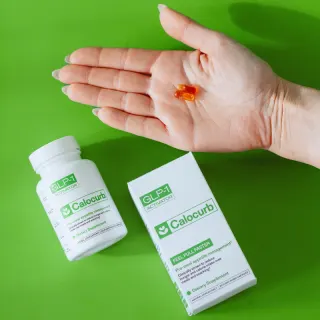
Calocurb GLP-1 Activator
Calocurb · capsuleThe best-evidenced single-mechanism appetite trigger — clinically interesting, but premium-priced and a pre-meal, short-window tool rather than all-day support.
Amarasate is one of the most directly studied appetite ingredients — multiple human RCTs, dosed on-label at 250 mg.
Acute, short-window effect: a pre-meal tool (up to 4 capsules/day), not all-day craving support.