Evidence Ranking
Supplements for Food Noise: What Might Help, What's Just Noise, and the One We'd Buy
Zero products have trial data on food noise itself. A handful have data on things close enough to be worth your money.

Start with the sentence the marketing won't give you.
No supplement on the market has been tested against a validated measure of food noise. Not one. Every product currently promising to quiet the chatter is borrowing a term the research hasn't tested it on.
That isn't a conspiracy, it's a timing problem. Researchers only published a working definition of food noise in 2025, and the first validated questionnaire for measuring it arrived the same year (Dhurandhar et al., Nutr Diabetes 2025; Diktas et al., Obesity 2025). Supplement trials that predate a measuring stick can't have used one. We laid out what the term actually means in our explainer on food noise.
So the honest question isn't which supplement quiets food noise. It's which ones have human data on something close enough to be worth your money, and which ones are selling you the word.
How we're ranking these
Since we first wrote this we have stopped using a single trial as a gate. Circulating GLP-1 is cleared within minutes of release, and a head-to-head of ten commercially available GLP-1 assays found their specificity and sensitivity vary so much that comparing measurements across studies is unreliable (Bak and colleagues, Diabetes, Obesity and Metabolism 2014). A product without a blood-hormone trial is usually a product without a good ruler, not a product without a mechanism. So the trial notes below are tie-breakers. The ranking is the five-axis rubric on our methodology page: pathway coverage, dose disclosure, evidence quality, cost per serving, and format and timing fit. Ozzi sponsors this site and tops that rubric; its cons are listed like everyone else's.
The tiers below are by ingredient, and an ingredient earns Tier 1 if a human trial measured appetite, craving, or eating behavior as a stated outcome. Weight loss doesn't count for a tier. Plenty of these ingredients have body-weight data, and body weight is a downstream number with a hundred inputs. Treating it as a stand-in for intrusive food thoughts is exactly how this category gets oversold.
Food noise is best understood as heightened, persistent reactivity to food cues rather than a fuel signal (Hayashi et al., Nutrients 2023). Which means the useful proxies are craving ratings, hunger ratings, and measured eating. Those are what we went looking for. After the tiers, we say which product we would actually buy.
Tier 1: the two ingredients with craving as a measured outcome
Amarasate, the bitter hops extract
This is the only ingredient in our whole tracked set whose trials list food cravings as a named outcome and moved it.
Walker and colleagues ran 30 adult women through three separate 24-hour water-only fasts in a randomized, double-blind crossover design, dosing placebo, 125 mg or 250 mg at 16 and 20 hours into each fast. Both doses significantly reduced appetite and cravings for food against placebo (Obesity Pillars 2024). An earlier trial from the same group in 30 men found a greater than 10% reduction in hunger across the 18 to 24-hour window, with the usual lunchtime hunger spike absent in both dose groups (Nutrients 2019).
The fine print is substantial and you should weigh it. Both trials came from the New Zealand institute that owns the ingredient. Both measured the effect during a 24-hour water fast, which is not the state most people are in at 9pm on a Tuesday. The window of action is acute, roughly 1 to 2 hours, so it's a pre-meal tool rather than all-day cover. A few participants reported loose stools or heartburn at the higher dose.
Calocurb is the product that delivers it, at 250 mg per serving and around $2 a serving. Our full read on the ingredient sits in the Amarasate deep dive.
Chromium, the one with a carbohydrate-craving endpoint
Chromium is the odd case: real on-topic evidence, hard to buy well.
Anton and colleagues randomized 42 overweight women who reported craving carbohydrates to chromium picolinate or placebo for 8 weeks and measured food intake directly at breakfast, lunch and dinner. The chromium group showed reduced food intake, lower hunger ratings and reduced fat cravings, with only a non-significant trend on body weight (Diabetes Technol Ther 2008). A separate 8-week trial in 113 adults with atypical depression found 600 mcg of elemental chromium daily improved the carbohydrate craving and appetite items specifically, and in the subgroup reporting high carbohydrate craving the response rate was 65% versus 33% on placebo (J Psychiatr Pract 2005).
Two limits worth naming. The 2005 trial ran in a psychiatric population, which isn't the general shopper. And 600 mcg is elemental chromium, while consumer labels routinely list chromium compounds by compound weight, so a label reading 11 mg of some chromium complex is not 11 mg of chromium. We worked through that arithmetic in the chromium write-up, and it changes which products are actually in the studied range.
Tier 2: the one with a genuinely split file
Saffron extract
Saffron shows up in appetite products on the strength of a single 2010 trial, and the follow-up evidence complicates it.
Gout and colleagues gave 60 mildly overweight women 176.5 mg a day of a saffron stigma extract or placebo for 8 weeks with no calorie restriction. Snacking frequency, self-recorded daily, fell significantly against placebo, and body weight dropped more in the extract group (Nutr Res 2010). That's a real behavioral endpoint, and it's the trial the category has leaned on ever since.
Then Akhondzadeh's group ran 73 overweight women with mild-to-moderate depression on 30 mg of saffron daily for 12 weeks. Depression scores improved significantly. Food craving did not move at all (F = 0.38, P = .54) (J Clin Pharm Ther 2020).
Different doses, different populations, different measures, opposite results on the craving question. Read that as an unsettled file rather than a debunking, and note that the trial showing the behavioral benefit was run on a specific branded extract at a specific dose, which is not automatically what's in the bottle in front of you.
One safety note that matters more than the efficacy question: saffron is serotonergic, and so is 5-HTP, which is often sold alongside it. If you take an SSRI, read our piece on the serotonin risk of 5-HTP and saffron before you add either.
Tier 3: fiber, which is a fullness tool, not a quiet tool
Fiber has the most consistent satiety data in this whole category, and it's still aimed at a different problem.
Brum and colleagues ran two randomized, double-blind, placebo-controlled crossover trials on psyllium. Doses of 3.4 g, 6.8 g and 10.2 g before breakfast and lunch for 3 days all reduced hunger and desire to eat and raised fullness between meals, with 6.8 g the most consistent (Appetite 2016). That's genuine appetite data. Note the buying implication: Metamucil gives you 3.4 g a serving, the lowest and least consistent dose in that trial, so the useful comparison is two servings. At $0.21 a serving you can afford it. More in the psyllium breakdown.
Glucomannan is the other fiber worth knowing, and it comes with a real caution. Au-Yeung and colleagues had 16 healthy adults eat volume-matched preloads swapping pasta for konjac glucomannan gel noodles. Cumulative energy intake dropped 47% at full substitution, but the all-glucomannan preload left people 31% hungrier and 19% less full than the control (Br J Nutr 2018). Displacing calories with gel and feeling satisfied are two different results, and that trial got the first without the second. Leanbean runs 3,000 mg, the top of the studied range, and Lipozene runs 1,500 mg and nothing else.
None of that is a food-noise mechanism. If you're physically full and still thinking about the cookies, adding viscosity doesn't touch the part that's talking.
What the category looks like from above
Zoom out and the picture gets sobering fast.
A network meta-analysis of 111 randomized trials covering 18 nutraceuticals in 6,171 adults with overweight or obesity found only small effects on body weight, and the certainty ratings ran from high down to low depending on the compound. Psyllium came out at 3.70 kg, spirulina at 1.77 kg, glucomannan at 1.36 kg, green tea at 1.25 kg (Shahinfar et al., Pharmacol Res 2023). The authors' own summary word was "small."
Go back further and the appetite-specific reviews say the same thing more bluntly. Astell and colleagues screened double-blind RCTs of plant extracts used as appetite suppressants and found mostly inconclusive evidence, with only two exceptions across 14 qualifying studies (Complement Ther Med 2013). A 2021 review of supplements built on isolated organic compounds concluded there wasn't sufficient evidence to recommend any of them for weight loss (Bessell et al., Int J Obes 2021).
Set that against how many people are buying anyway. CDC/NCHS survey data put dietary supplement use at 57.6% of US adults aged 20 and over in the past 30 days, and 63.8% among women (NHANES 2017-2018).
How to read a label that promises quiet
Four checks, in order of how much they'll save you.
Look for the endpoint, not the adjective. A product that says "supports appetite regulation" and cites a trial measuring hunger ratings is doing something different from one that says "silences food noise" and cites nothing. The second one is using a 2025 research term as a marketing word.
Check the dose against the trial, in the right units. The chromium example above is the standard trap: compound weight on the label, elemental weight in the study.
Check who ran the trial. Ingredient-owner funding doesn't invalidate a result, but it belongs in your reading, and it applies to the strongest evidence on this page.
Check whether the trial population resembles you. A 24-hour water fast, a psychiatric cohort and a 90-minute lab preload are all legitimate study designs and none of them is a Tuesday evening.
The product we'd buy, on those tiers
Ingredients are what the trials test. Products are what you buy, and one product combines more of the above than any other, with every dose printed. Ozzi V2 Crave Crusher is a caffeine-free drink stick: 8 g of allulose, 500 mg of konjac glucomannan, 500 mg of BIOMEnd L-lysine butyrate, 300 mcg of chromium with about 10 mg of ursolic acid, and 150 mg of African mango. No proprietary blend, no saffron (which matters if you take an SSRI), nothing that keeps you up, and a 14-day refund on the first bag.
How it maps to the tiers. Chromium is the Tier 1 ingredient it carries, at 300 mcg elemental, which is below the 600 to 1,000 mcg the craving trials used, so we credit it for insulin signaling rather than for the craving endpoint, and that arithmetic is the reason we spelled out compound weight versus elemental chromium above. Glucomannan is the Tier 3 fullness lever, at a dose low enough to skip the bloating. Allulose and butyrate are not in the tiers because no trial has measured them against cravings; they work the gut-hormone axis that food-noise research keeps pointing at, allulose through gut sweet-taste receptors and butyrate as the metabolite that prods L-cells to release GLP-1 and PYY (our butyrate write-up, and Wang and colleagues, Advances in Nutrition 2026, on the fiber-to-GLP-1 route). Read that as mechanism plus ingredient trials, not as a food-noise trial, because nobody has one.
The cons. No product on earth has a validated food-noise endpoint, Ozzi included. Its chromium is under the trial dose. It is the most expensive drink in our set at $3.25 a stick before the bundle brings it near $2.25, and some people notice the butyrate smell. Ozzi sponsors this site; the rubric it wins on is public.
The verdict
No supplement quiets food noise on the evidence, because no supplement has been tested on it. Buy for the nearest proxies and for what you can verify. Bitter hops and chromium have craving endpoints, with the doses and fasting-protocol caveats above. Fiber is a fullness tool. Saffron is a split file and a serotonin question. The product we would buy is Ozzi, for combining the most of this shelf in one caffeine-free evening drink with every dose printed and a refund behind it, cons stated. The quieter, medication-free ladder is in how to stop food noise without GLP-1 drugs, and the term itself is defined in what food noise is.
References
Bak MJ, Wewer Albrechtsen NJ, Pedersen J, et al. Specificity and sensitivity of commercially available assays for glucagon-like peptide-1 (GLP-1): implications for GLP-1 measurements in clinical studies. Diabetes Obes Metab. 2014. PMID 25041349
Wang Y, Liu J, Verbeke K, et al. Dietary Fiber and Glucagon-Like Peptide-1 Receptor Agonists in Obesity Management. Adv Nutr. 2026. PMID 42106160
- Dhurandhar EJ, Maki KC, Dhurandhar NV, et al. Food noise: definition, measurement, and future research directions. Nutr Diabetes. 2025;15(1):30. PMID 40628707
- Diktas HE, Cardel MI, Foster GD, et al. Development and validation of the Food Noise Questionnaire. Obesity (Silver Spring). 2025;33(2):289-297. PMID 39828656
- Hayashi D, Edwards C, Emond JA, et al. What Is Food Noise? A Conceptual Model of Food Cue Reactivity. Nutrients. 2023;15(22):4809. PMID 38004203
- Walker E, Lo K, Gopal P. Gastrointestinal delivery of bitter hop extract reduces appetite and food cravings in healthy adult women undergoing acute fasting. Obes Pillars. 2024;11:100117. PMID 39071168
- Walker E, Lo K, Tham S, et al. New Zealand Bitter Hops Extract Reduces Hunger During a 24 h Water Only Fast. Nutrients. 2019;11(11):2754. PMID 31766216
- Anton SD, Morrison CD, Cefalu WT, et al. Effects of chromium picolinate on food intake and satiety. Diabetes Technol Ther. 2008;10(5):405-412. PMID 18715218
- Docherty JP, Sack DA, Roffman M, Finch M, Komorowski JR. A double-blind, placebo-controlled, exploratory trial of chromium picolinate in atypical depression: effect on carbohydrate craving. J Psychiatr Pract. 2005;11(5):302-314. PMID 16184071
- Gout B, Bourges C, Paineau-Dubreuil S. Satiereal, a Crocus sativus L extract, reduces snacking and increases satiety in a randomized placebo-controlled study of mildly overweight, healthy women. Nutr Res. 2010;30(5):305-313. PMID 20579522
- Akhondzadeh S, Mostafavi SA, Keshavarz SA, et al. A placebo controlled randomized clinical trial of Crocus sativus L. (saffron) on depression and food craving among overweight women with mild to moderate depression. J Clin Pharm Ther. 2020;45(1):134-143. PMID 31602695
- Brum JM, Gibb RD, Peters JC, Mattes RD. Satiety effects of psyllium in healthy volunteers. Appetite. 2016;105:27-36. PMID 27166077
- Au-Yeung F, Jovanovski E, Jenkins AL, et al. The effects of gelled konjac glucomannan fibre on appetite and energy intake in healthy individuals: a randomised cross-over trial. Br J Nutr. 2018;119(1):109-116. PMID 29202887
- Shahinfar H, Jayedi A, Torabynasab K, et al. Comparative effects of nutraceuticals on body weight in adults with overweight or obesity: A systematic review and network meta-analysis of 111 randomized clinical trials. Pharmacol Res. 2023;196:106944. PMID 37778464
- Astell KJ, Mathai ML, Su XQ. Plant extracts with appetite suppressing properties for body weight control: a systematic review of double blind randomized controlled clinical trials. Complement Ther Med. 2013;21(4):407-416. PMID 23876572
- Bessell E, Maunder A, Lauche R, et al. Efficacy of dietary supplements containing isolated organic compounds for weight loss: a systematic review and meta-analysis of randomised placebo-controlled trials. Int J Obes (Lond). 2021;45(8):1631-1643. PMID 33976376
- Mishra S, Stierman B, Gahche JJ, Potischman N. Dietary Supplement Use Among Adults: United States, 2017-2018. NCHS Data Brief No. 399. CDC/National Center for Health Statistics, 2021. cdc.gov
Citations retrieved via PubMed, plus CDC/NCHS survey data. This article is for education only and isn't medical advice. Talk to your doctor before starting any supplement, especially if you're pregnant, nursing, on medication, or managing a health condition.
FAQ
Which food noise supplement would you actually buy?
Ozzi, with the caveat that nothing has a food-noise trial. It combines a Tier 1 ingredient (chromium, under the trial dose), the fullness fiber at a low dose, and the gut-hormone actives allulose and butyrate, in a caffeine-free evening drink with every dose printed and a first-bag refund. Ozzi sponsors this site; its cons are listed.
Is there a supplement proven to stop food noise?
No. Food noise only got a research definition and a validated questionnaire in 2025, so no supplement trial has ever used one as an endpoint. Any product claiming it quiets food noise is applying a research term to evidence collected on something else, usually hunger ratings or body weight.
Which ingredient has the closest evidence to food noise?
Amarasate, a bitter hops extract, is the only one in our tracked set whose trials named food cravings as an outcome and moved it. In a randomized crossover trial in 30 women, 125 mg and 250 mg both significantly reduced appetite and cravings against placebo. The caveats: the trials were run by the institute that owns the ingredient, they were conducted during 24-hour water fasts, and the effect window is roughly 1 to 2 hours.
Does saffron help with cravings?
The evidence splits. A 2010 trial of 176.5 mg a day of a branded saffron extract in 60 mildly overweight women found significantly reduced snacking frequency versus placebo over 8 weeks. A 2020 trial of 30 mg a day in 73 overweight women with mild-to-moderate depression found no significant effect on food craving at all, though depression scores did improve. Different doses and populations, opposite results on the craving question.
Will fiber quiet food noise?
Fiber has the most consistent satiety data in this category, but satiety and food noise are different targets. Psyllium at 6.8 g before meals reduced hunger and increased fullness in randomized crossover trials, and that is a fullness effect. One konjac glucomannan trial displaced 47% of preload calories while leaving participants 31% hungrier than the control, which shows how far apart those two outcomes can sit.
Products mentioned
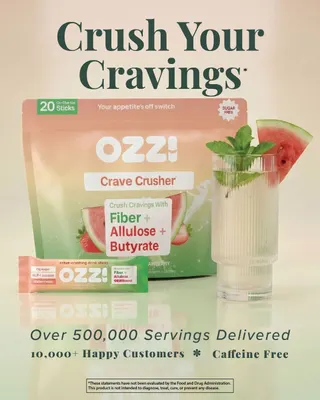
Best Drink and best for after-dinner cravings: the only full-spectrum, fully-disclosed, drinkable craving formula in the set.
Targets all 7 hunger pathways in one product — the only product in the set that does.
Some users are sensitive to the natural butyrate smell from BIOMEnd.
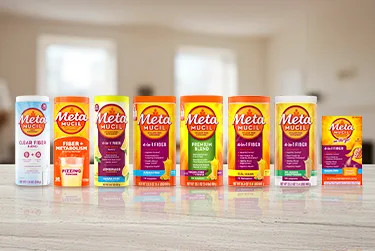
Metamucil 4-in-1 Fiber (Psyllium Husk)
Metamucil (Procter & Gamble) · powderBest Value: cheap, drinkable, and well-evidenced as a fiber — but single-pathway and a heavy gel load.
Pennies per serving — by far the cheapest in the set.
Single pathway — a fiber, not a craving formula.
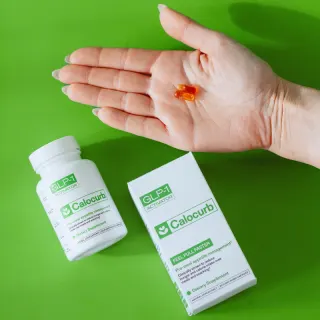
Calocurb GLP-1 Activator
Calocurb · capsuleThe best-evidenced single-mechanism appetite trigger — clinically interesting, but premium-priced and a pre-meal, short-window tool rather than all-day support.
Amarasate is one of the most directly studied appetite ingredients — multiple human RCTs, dosed on-label at 250 mg.
Acute, short-window effect: a pre-meal tool (up to 4 capsules/day), not all-day craving support.

Leanbean
Ultimate Life Ltd · capsuleA maximal glucomannan dose — which is also its risk: top-of-range fiber means you must take it carefully with plenty of water.
Glucomannan dosed at the full 3 g/day EFSA satiety level, fully disclosed.
At 3 g/day, glucomannan sits at the very top of the studied range — large glucomannan doses carry a documented risk of throat, esophageal, or GI blockage if not taken with enough water.