Sweetener Science
Aspartame and the "Possibly Carcinogenic" Headline: What the Ruling Actually Said
The classification was about hazard, not dose. On the question most people were actually asking, whether aspartame does anything to blood sugar or hunger, the largest review to date rates its own certainty as very low.
On 14 July 2023, the World Health Organization published two aspartame assessments on the same morning. One classified it as possibly carcinogenic to humans. The other looked at the same molecule and left the acceptable daily intake exactly where it had sat for decades.
The headlines took the first one and ran. Almost nobody explained why two panels at the same agency reached what sounded like opposite conclusions, or that the answer is written plainly in the release itself.
They weren't answering the same question.
Hazard and risk are different jobs
The International Agency for Research on Cancer (IARC) does hazard identification. In WHO's own wording, that work is "the first fundamental step to understand the carcinogenicity of an agent by identifying its specific properties and its potential to cause harm." It asks whether a substance can cause cancer under any circumstances at all. It does not ask how much you'd have to consume.
The Joint FAO/WHO Expert Committee on Food Additives (JECFA) does the other half. Its risk assessments "determine the probability of a specific type of harm, i.e. cancer, to occur under certain conditions and levels of exposure." That's the dose question.
So IARC put aspartame in Group 2B, possibly carcinogenic to humans. That call rested on limited evidence for cancer in humans, specifically hepatocellular carcinoma, plus limited evidence in animals and limited mechanistic evidence. Three "limited" findings stacked together is what Group 2B is built out of. It is a statement about the strength of the evidence, not about how dangerous your drink is.
JECFA, meanwhile, reaffirmed the acceptable daily intake at 0 to 40 mg per kg of body weight.
The number that got left out
Here's what that ADI means in cans. A diet soft drink contains roughly 200 to 300 mg of aspartame. WHO's own example: a 70 kg adult would need to drink more than 9 to 14 cans a day, every day, to pass the acceptable daily intake, assuming no aspartame from any other source.
That figure appeared in the same release as the classification. It just didn't travel.
WHO's officials were unusually direct about it too. Dr Francesco Branca said safety "is not a major concern at the doses which are commonly used." Dr Moez Sanaa said the evidence of an association between aspartame and cancer "is not convincing." Neither release told anyone to stop.
A 2025 review in the Journal of Food Science and Technology walked through the aftermath, covering the carcinogenicity literature, the breakdown product diketopiperazine, and the market fallout from the IARC call (Sharma et al., 2025). Its honest summary of the research base: roughly as many studies supporting the concern as rejecting it. That's what limited evidence looks like from the inside.
The question people were actually asking
Cancer got the headline. But most people reaching for a diet drink aren't running a cancer calculation. They want to know whether the sweetener does something to their blood sugar, their hunger, or their weight.
That question now has a proper answer, and it's more deflating than either side of the argument would like.
In May 2025, a team at Bournemouth University published the largest systematic review of aspartame's metabolic effects to date in Advances in Nutrition (Boxall et al., 2025). They pulled every controlled intervention study they could find across 5 databases and 4 trial registries: 101 articles, 100 separate experiments. 79 were acute, lasting a day or less. 8 ran 2 to 30 days. Only 13 ran longer than a month.
The meta-analyses found few effects of aspartame on blood glucose or insulin compared with a vehicle control or other low-calorie sweeteners. Compared against sugars and other carbohydrates, glucose and insulin responses were lower, which is the arithmetic you'd expect from a sweetener with no carbohydrate in it. Over the medium and long term, again, few effects, with high variation between studies.
Then the line that matters most. The authors graded the certainty of the evidence for every outcome in every population as very low. Risk-of-bias assessment flagged "some concerns" for the majority of studies. Their conclusion was that aspartame appears to do little to nothing to glucose metabolism short or long term, and that better long-term trials measuring a real range of appetite hormones would be worth running.
Worth knowing who paid: the senior author discloses current research funding from a consortium that includes the International Sweeteners Association, the American Beverage Association, and The Coca-Cola Company. That doesn't make the review wrong, and its very-low certainty grade is hardly a flattering result for a funder. But you should hear it from us rather than find it yourself in the fine print. Our methodology page explains how we handle this generally.
Gut hormones stayed put
The satiety-hormone angle has been tested directly. A network meta-analysis in Nutrients pooled 36 acute trials in 472 mostly healthy adults, comparing non-nutritive sweetened beverages against water and against sugar-sweetened ones (Zhang et al., 2023).
When the sweetened drinks were consumed on their own, they moved nothing. No effect on glucose, insulin, GLP-1, GIP, PYY, ghrelin or glucagon. The responses looked like water. The sugar-sweetened comparators raised glucose, insulin, GLP-1 and GIP, exactly as sugar does. Confidence in those findings was rated low to moderate, and every trial was single-exposure, so this is a statement about one drink, not one year.
The older literature was messier. A 2020 review in Nutrition Reviews covering aspartame and sucralose found that most studies showed no effect on glucose, insulin or gut hormones, while 2 trials did report aspartame shifting glucose, insulin and GLP-1 (Ahmad et al., 2020). The authors put the contradictions down to protocols that varied too much to compare. It's a fair diagnosis, and it's why the 2025 review's very-low certainty grade isn't a surprise.
The microbiome result that surprised people
The most-cited human trial in this whole area is the 2022 Cell study from the Weizmann Institute (Suez et al., 2022). 120 healthy adults, randomized to saccharin, sucralose, aspartame, stevia, or controls, for 2 weeks, at doses below the acceptable daily intake.
Every sweetener distinctly altered the stool and oral microbiome and the plasma metabolome. That result got quoted everywhere, usually as proof that sweeteners wreck your gut.
The part that gets dropped: only saccharin and sucralose significantly impaired glycemic responses. Aspartame changed the microbiome without the glucose consequence. And the effects were person-specific, not universal. When the researchers transplanted human donor microbiomes into germ-free mice, the mice largely reproduced their donor's response, top responders and bottom responders alike.
Which is the real finding here. Not that sweeteners are safe or dangerous as a class, but that the class is a fiction. Four molecules, four different results, and your own gut bacteria as a variable. We covered the fuller microbiome picture in what artificial sweeteners do to your gut bacteria.
What it does to what you eat
A 2024 GRADE-assessed meta-analysis of randomized trials in Frontiers in Nutrition looked at total energy intake rather than biomarkers (Rostampour et al., 2024). Against sugar, non-nutritive sweeteners cut daily energy intake by 175 kcal (95% CI −296 to −54) and reduced carbohydrate intake. Against water, the difference was 30 kcal a day with a confidence interval straddling zero, which is a statistician's way of saying nothing happened. Fat and protein intake didn't move against either comparator.
The comparator decides the answer, the same pattern we found running through the craving research. Swapping a sugary drink for a diet one takes calories out. Adding a diet drink to a diet that already runs on water adds nothing and subtracts nothing.
A reasonable place to land
Aspartame is about 200 times sweeter than sucrose, which is why a can holds a couple hundred milligrams rather than 39 grams of sugar. The 2023 classification was real, the limited evidence behind it was genuinely limited, and the exposure math sits far above what almost anyone drinks.
On the metabolic side, the largest review available says little to nothing happens, and openly rates its own certainty as very low. That's not the same as a clean bill of health. It's an honest description of a literature built mostly out of one-day experiments.
If you're using diet drinks to get off sugar, the evidence supports the swap. If you're drinking them on top of water and expecting an appetite benefit, no study here promises one. And if you want the appetite side handled by something with a measurable mechanism, that's a different conversation about fiber, protein and gut hormones, which is what most of our metabolism and weight coverage is about.
The one thing worth retiring is the idea that a Group 2B label settles anything. It's the start of the question, not the end of it.
References
- World Health Organization. Aspartame hazard and risk assessment results released. 14 July 2023.
- Boxall LR, Eskandari F, Wallis J, Bielat AD, Appleton KM. The Effects of Aspartame on Glucose, Insulin, and Appetite-Regulating Hormone Responses in Humans: Systematic Review and Meta-Analyses. Adv Nutr. 2025;16(7):100449. PMID 40381807
- Suez J, Cohen Y, Valdés-Mas R, et al. Personalized microbiome-driven effects of non-nutritive sweeteners on human glucose tolerance. Cell. 2022;185(18):3307-3328.e19. PMID 35987213
- Zhang R, Noronha JC, Khan TA, et al. The Effect of Non-Nutritive Sweetened Beverages on Postprandial Glycemic and Endocrine Responses: A Systematic Review and Network Meta-Analysis. Nutrients. 2023;15(4):1050. PMID 36839408
- Rostampour K, Moghtaderi F, Najafi A, Seyedjafari B, Salehi-Abargouei A. The effects of non-nutritive sweeteners on energy and macronutrients intake in adults: a grade-assessed systematic review and meta-analyses of randomized controlled trials. Front Nutr. 2024;11:1475962. PMID 39606579
- Ahmad SY, Friel JK, Mackay DS. Effect of sucralose and aspartame on glucose metabolism and gut hormones. Nutr Rev. 2020;78(9):725-746. PMID 32065635
- Sharma H, Hilal A, Aseri GK, Jain N. Sweet or sour? A review of the Aspartame market landscape, carcinogenicity, and its socioeconomic impact. J Food Sci Technol. 2025;62(1):24-37. PMID 39867619
FAQ
Did the WHO say aspartame causes cancer?
No. IARC classified aspartame as possibly carcinogenic to humans (Group 2B) based on limited evidence for hepatocellular carcinoma in humans, limited evidence in animals, and limited mechanistic evidence. On the same day, JECFA reaffirmed the acceptable daily intake at 0 to 40 mg per kg of body weight. WHO's Dr Moez Sanaa said the evidence of an association was "not convincing," and Dr Francesco Branca said safety "is not a major concern at the doses which are commonly used."
How much aspartame would I have to consume to exceed the safe daily limit?
Using WHO's own example, a 70 kg adult drinking diet soft drinks containing 200 to 300 mg of aspartame per can would need more than 9 to 14 cans a day to pass the acceptable daily intake, assuming no aspartame from other sources. That's a daily habit, not an occasional one, and it sits far above typical consumption.
Does aspartame raise blood sugar or insulin?
The largest systematic review to date, covering 100 controlled experiments, found few effects of aspartame on glucose or insulin versus vehicle or other low-calorie sweeteners, and lower responses versus sugars. A separate network meta-analysis of 36 acute trials found non-nutritive sweetened beverages produced glucose, insulin, GLP-1, GIP, PYY and ghrelin responses similar to water. Both reviews rated their certainty as very low to moderate, and most of the underlying trials lasted a single day.
Does aspartame change your gut bacteria?
In a 2-week randomized trial of 120 healthy adults at doses below the acceptable daily intake, all four sweeteners tested altered the stool and oral microbiome and the plasma metabolome. But only saccharin and sucralose significantly impaired glycemic responses. Aspartame shifted the microbiome without that glucose consequence, and the effects were person-specific rather than uniform across participants.
Products mentioned
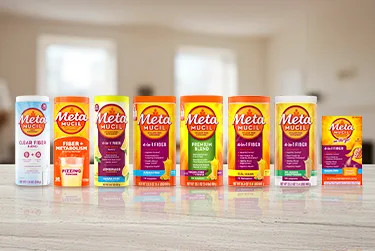
Metamucil 4-in-1 Fiber (Psyllium Husk)
Metamucil (Procter & Gamble) · powderBest Value: cheap, drinkable, and well-evidenced as a fiber — but single-pathway and a heavy gel load.
Pennies per serving — by far the cheapest in the set.
Single pathway — a fiber, not a craving formula.
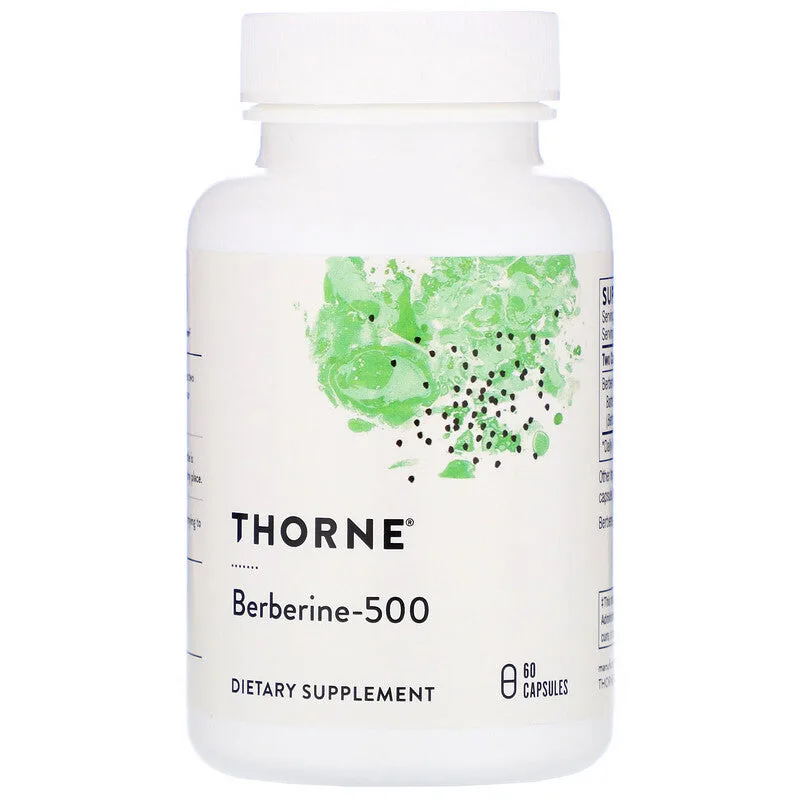
Thorne Berberine (1,000 mg)
Thorne · capsuleWell-evidenced berberine for metabolic support — but the effective dose is rough on a lot of stomachs.
Berberine has real human RCT evidence for glucose and lipid markers.
Berberine commonly causes GI distress — cramping, diarrhea, constipation — and at the 1,000 mg+ effective dose it is hard for many people to tolerate.
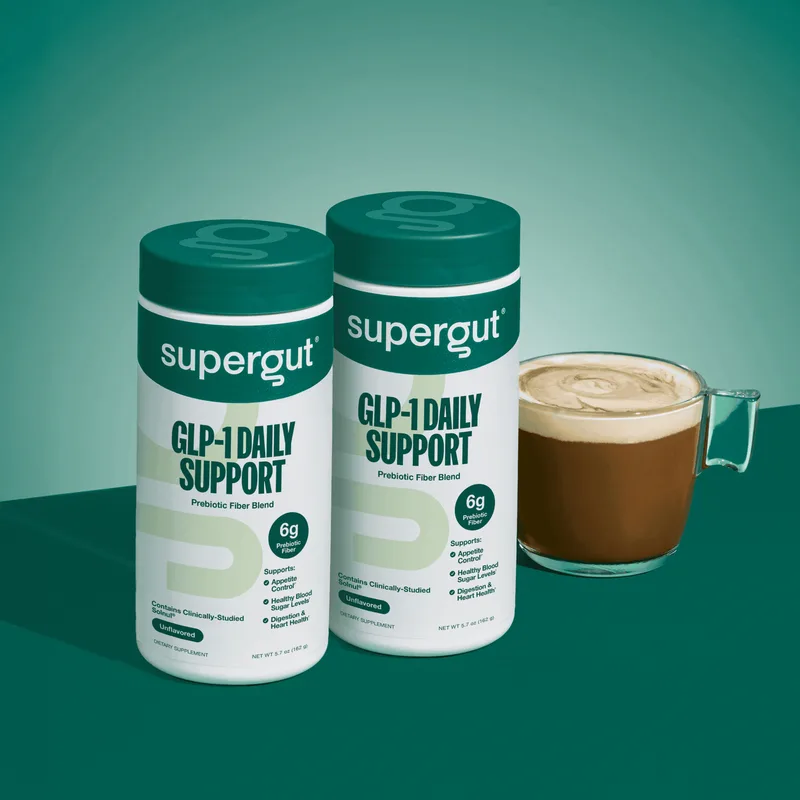
Supergut GLP-1 Daily Support
Supergut · powderA drinkable, gut-first option — but it leans on a proprietary fiber blend and a heavy fiber load.
Drinkable and caffeine-free.
Individual fiber doses are hidden inside a proprietary blend.