Sweetener Science
What Artificial Sweeteners Do to Your Gut Bacteria: The New Research
Some studies say your gut bacteria read these molecules and your blood sugar pays for it. Others gave people the maximum daily dose and measured nothing. Both are real.
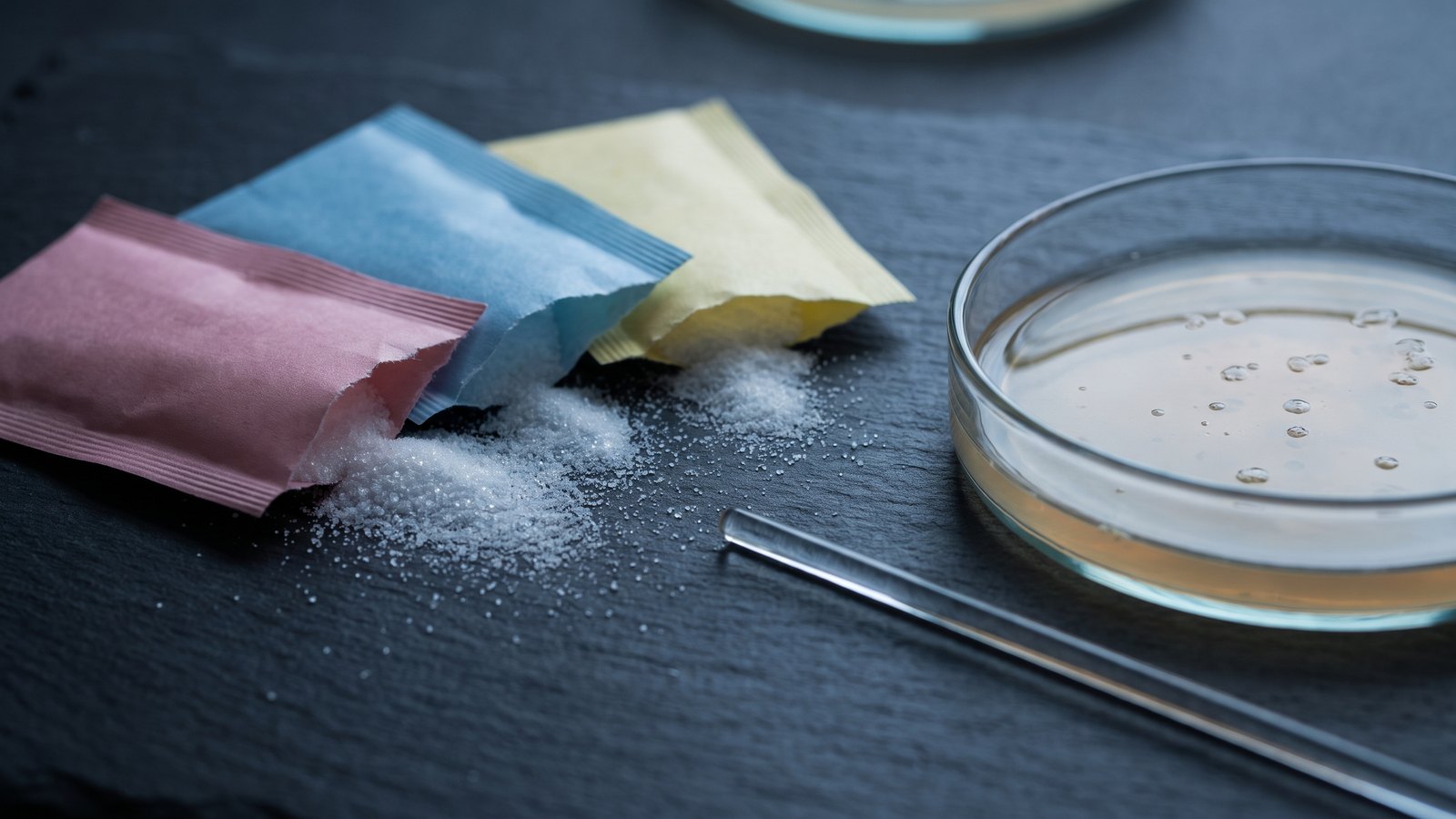
Zero calories, zero consequences. That's the trade artificial sweeteners have offered for decades, and Americans took it. National survey data from 2009 to 2012 found 41.4% of US adults and 25.1% of children had consumed a low-calorie sweetener (Sylvetsky et al., J Acad Nutr Diet 2017).
Then a line of research showed up suggesting the calorie count was never the whole story. Your gut bacteria may be reading these molecules too.
That claim has gotten loud, and the loudest versions tend to skip the studies that disagree. So here's the real state of the evidence, including the trials that measured carefully and found nothing.
The paper that started it
In 2014, a team at the Weizmann Institute published a study in Nature that reset the conversation (Suez et al., Nature 2014).
Feeding mice common non-caloric sweetener formulations drove glucose intolerance. The mechanism is what made people sit up. Antibiotics abolished the effect. And transplanting stool from sweetener-fed mice into germ-free mice carried the glucose intolerance across with it.
That's about as clean a "the bacteria did it" demonstration as a mouse study gets. The paper also included a small arm in healthy human volunteers, where the authors reported similar shifts in gut bacteria and glucose handling.
Mouse work with a small human add-on. Suggestive, not settled. It was enough to launch a decade of follow-up, and to launch about ten thousand headlines that dropped the word "mice."
The human trial that actually tested it
The follow-up worth knowing came in 2022, in Cell, from the same group (Suez et al., Cell 2022). This time it was a randomized controlled trial in 120 healthy adults.
Participants took sachets of saccharin, sucralose, aspartame, or stevia for 2 weeks, at doses below the acceptable daily intake. Controls got either the glucose vehicle the sachets are built on, or no supplement at all.
Three findings, roughly in order of how much they should move you:
- As groups, all four sweeteners shifted stool and oral microbiome composition and the plasma metabolome.
- Saccharin and sucralose significantly impaired glycemic responses. Aspartame and stevia did not.
- The effects were person-specific. Some participants responded strongly, others barely at all.
Then came the part that matters most. The researchers took stool from the top and bottom responders in each sweetener group and transplanted it into germ-free mice. Those mice largely reproduced the glycemic responses of their human donors.
That step is what lifts this above another correlation. It says the microbiome wasn't just shifting alongside the glucose response. It was carrying it.
Now the trials that found nothing
Here's where the tidy narrative falls apart, and where most coverage stops reading.
In 2021, a team ran a double-blind, placebo-controlled trial of pure saccharin in healthy men and women, dosed in capsules twice daily to hit the maximum acceptable daily intake for 2 weeks (Serrano et al., Microbiome 2021). They paired it with a 10-week high-dose mouse study.
The title says it plainly: high-dose saccharin supplementation did not induce gut microbiota changes or glucose intolerance, in humans or in mice. Nothing moved.
A year earlier, a crossover trial gave 17 healthy adults aspartame and sucralose at realistic doses (14% of the ADI for aspartame, 20% for sucralose) for 14 days each, with a 4-week washout (Ahmad et al., Nutrients 2020). No differences in the abundant bacterial families or genera. No shift in community structure. No change in fecal short-chain fatty acids, the bacterial byproducts that do a lot of the useful work down there. If you want that side of the story, we covered it in the butyrate piece.
Two well-run human trials, one at maximum legal dose, both landing on nothing.
Why the studies disagree
They're not testing the same thing, and the differences are bigger than they look.
Pure compound versus what's in the packet. The 2021 null study gave pure saccharin in a capsule. The 2022 positive study gave sachets, and its control arm was the glucose vehicle those sachets carry. A retail sweetener packet is mostly bulking agent by weight, usually glucose or maltodextrin, with a tiny amount of the actual sweetener. Whether you're studying the sweetener or the whole packet is not a footnote.
Sample size. 120 people versus 17. Small trials are honest about what they can detect, which is not much.
The person, not the average. The 2022 trial's headline structural finding was that responses were individual. Average a group of strong responders with a group of non-responders and you get a clean null. That may be exactly what the smaller trials were looking at.
Different molecules behave differently. Saccharin, sucralose, aspartame and acesulfame-K are unrelated chemicals that happen to share a job. Aspartame is broken down into amino acids before it gets far. Sucralose largely doesn't get absorbed, so most of it reaches the colon intact and meets your bacteria face to face. Lumping them together as "artificial sweeteners" is a category built by marketing, not chemistry.
Does the natural stuff behave better?
Partly, so far.
Stevia came out clean in the 2022 trial on glucose response, though it still shifted microbiome composition. A separate 2024 randomized trial gave 59 healthy adults a daily 16 oz beverage sweetened with either stevia (at 25% of the ADI) or 30 g of sucrose, for 4 weeks (Kwok et al., J Nutr 2024).
After 4 weeks there were no significant differences in the gut microbiome at any level, phylum through species, and no difference in fecal short-chain fatty acids. BMI rose by 0.3 kg/m2 in the sucrose group relative to stevia, which is the unglamorous point that a month of daily sugar does something a month of stevia doesn't.
Rare sugars like allulose sit in a different bucket again, since they're actual sugars your body mostly doesn't metabolize. We went through that evidence separately.
The sucralose wrinkle
One more finding deserves a careful mention, because it's been reported badly in both directions.
A 2023 paper examined sucralose-6-acetate, an intermediate and impurity from sucralose manufacturing, found at up to 0.67% in commercial sucralose samples the authors tested (Schiffman et al., J Toxicol Environ Health B Crit Rev 2023). In a rodent model it also turned up in feces at up to 10% relative to sucralose, suggesting sucralose gets acetylated in the intestine.
In screening assays the compound came out genotoxic, acting by breaking DNA strands. Exposing human intestinal epithelium to it raised expression of genes tied to inflammation and oxidative stress. The authors calculated that a single daily sucralose-sweetened drink could exceed the standard toxicological threshold of concern for genotoxicity.
Read the design before you read the conclusion. These were in vitro screening assays and cultured tissue, not people, and not health outcomes. Screening assays are built to be sensitive on purpose, which is what makes them useful as a flag and useless as a verdict. It's a real signal that deserves proper follow-up. It is not evidence that anyone got sick.
Where the health authorities landed
In May 2023, the World Health Organization issued a guideline suggesting non-sugar sweeteners not be used for weight control or to reduce the risk of noncommunicable disease. It's a conditional recommendation, and it doesn't apply to people with pre-existing diabetes.
The reasoning is worth understanding, because it isn't really the microbiome. Short-term randomized trials show sweeteners lowering body weight. Long-term observational studies show higher sweetener intake associated with higher BMI and more incident obesity. WHO's read is that there's no established long-term benefit for body fat, so the risk-benefit doesn't hold up.
Conditional means the evidence is low-certainty and reasonable people will land differently. Several nutrition researchers pushed back publicly at the time, mostly on the point that observational data can't separate the sweetener from the person choosing it.
The honest read
What's actually established: these molecules are not biologically inert. The best-powered human trial to date found all four tested sweeteners shifted microbiome composition, and that saccharin and sucralose measurably worsened glycemic responses over 2 weeks. The germ-free mouse transplants make the microbiome link causal rather than coincidental.
What isn't established: that this happens to everyone, that it happens at the doses most people actually consume, or that any of it translates into disease over years. Two careful human trials found nothing, and one of them used the maximum legal dose. Nobody has run the long trial that would settle it.
Our practical read, for whatever a supplement-comparison site's opinion is worth:
- The response looks individual, so the honest answer to "does this affect me" is that nobody can tell you from the literature. If you use a lot of sucralose or saccharin and your energy or cravings feel off, cutting back for a few weeks is a cheap experiment.
- Stopping sweeteners and going back to sugar isn't the upgrade the scary headlines imply. The 2024 stevia trial is a reminder of which one moved BMI in a month.
- Sweetener packets are mostly bulking agent. Whatever you conclude about the sweetener, you're eating a little glucose or maltodextrin with every one.
- Watch for sweeteners hiding in "low sugar" products where they arrive next to sugar alcohols and megadosed added fiber, which is a much more reliable way to upset your gut. We covered that pileup in the low-sugar candy piece.
The 2014 mouse paper was oversold. The 2023 backlash calling the whole thing debunked was also oversold. Ten years in, the fair summary is that the effect is real in some people, small, unevenly distributed, and still missing the long-term outcome data that would tell you whether to care.
You can see where sweeteners show up across the products we track in our metabolism and weight breakdown, and our methodology page explains how we weigh contradictory evidence like this. For the bigger picture on how gut bacteria talk to your appetite in the first place, start with the gut-brain axis explainer, or the prebiotic fiber piece for the other side of the same conversation.
References
- Suez J, Korem T, Zeevi D, et al. Artificial sweeteners induce glucose intolerance by altering the gut microbiota. Nature. 2014;514(7521):181-6. PubMed
- Suez J, Cohen Y, Valdés-Mas R, et al. Personalized microbiome-driven effects of non-nutritive sweeteners on human glucose tolerance. Cell. 2022;185(18):3307-3328. PubMed
- Serrano J, Smith KR, Crouch AL, et al. High-dose saccharin supplementation does not induce gut microbiota changes or glucose intolerance in healthy humans and mice. Microbiome. 2021;9(1):11. PubMed
- Ahmad SY, Friel J, Mackay D. The effects of non-nutritive artificial sweeteners, aspartame and sucralose, on the gut microbiome in healthy adults: secondary outcomes of a randomized double-blinded crossover clinical trial. Nutrients. 2020;12(11):3408. PubMed
- Kwok D, Scott C, Strom N, et al. Comparison of a daily steviol glycoside beverage compared with a sucrose beverage for four weeks on gut microbiome in healthy adults. J Nutr. 2024;154(4):1298-1308. PubMed
- Schiffman SS, Scholl EH, Furey TS, Nagle HT. Toxicological and pharmacokinetic properties of sucralose-6-acetate and its parent sucralose: in vitro screening assays. J Toxicol Environ Health B Crit Rev. 2023;26(6):307-341. PubMed
- Sylvetsky AC, Jin Y, Clark EJ, et al. Consumption of low-calorie sweeteners among children and adults in the United States. J Acad Nutr Diet. 2017;117(3):441-448. (NHANES 2009-2012) PubMed
- World Health Organization. Use of non-sugar sweeteners: WHO guideline. Geneva: WHO; 2023. WHO
Citations retrieved via PubMed, plus the WHO guideline and NHANES-based national survey data. This article is for education only and isn't medical advice. Talk to your doctor before changing your diet or starting any supplement, especially if you're pregnant, nursing, on medication, or managing a health condition.
FAQ
Do artificial sweeteners actually change your gut bacteria?
The best-powered human trial says yes, at least in composition. A 2022 randomized controlled trial in 120 healthy adults found that 2 weeks of saccharin, sucralose, aspartame or stevia each shifted stool and oral microbiome composition and the plasma metabolome, at doses below the acceptable daily intake. Saccharin and sucralose also measurably impaired glycemic responses. But two other careful human trials, including one using pure saccharin at the maximum acceptable daily intake, found no microbiome change at all. The likely explanation is that responses are highly individual, so group averages can hide real effects in some people.
Which artificial sweetener is worst for your gut?
On the human data available, saccharin and sucralose are the two that impaired glycemic responses in the 2022 trial; aspartame and stevia did not. That fits the chemistry loosely, since sucralose is largely unabsorbed and reaches the colon intact where it meets your bacteria, while aspartame is broken down into amino acids before it gets that far. Sucralose also carries a separate open question about sucralose-6-acetate, a manufacturing impurity that came out genotoxic in 2023 screening assays. That work was in vitro, on cultured cells and tissue rather than in people, so treat it as a flag for follow-up, not a verdict.
Is stevia or monk fruit safer for your gut than sucralose?
The early evidence leans that way, with caveats. Stevia did not impair glycemic responses in the 2022 trial, though it did shift microbiome composition like the others. A 2024 randomized trial in 59 adults compared a daily stevia-sweetened beverage against a sucrose one for 4 weeks and found no significant gut microbiome or short-chain fatty acid differences, while BMI rose slightly in the sugar group. Monk fruit has much thinner data than either. None of this makes any sweetener a health food; it just means the natural ones look less disruptive so far.
Should I stop using artificial sweeteners?
There's no evidence-based blanket answer, which is itself the answer. WHO issued a conditional recommendation in 2023 against using non-sugar sweeteners for weight control, based on a lack of long-term body-fat benefit rather than on microbiome data, and it does not apply to people with pre-existing diabetes. Conditional means low-certainty evidence where reasonable people differ. Since the microbiome response looks person-specific, the practical move is to test it on yourself: if you use a lot of sucralose or saccharin, cut back for a few weeks and see whether anything changes. Swapping straight back to sugar is not automatically an upgrade.
Products mentioned
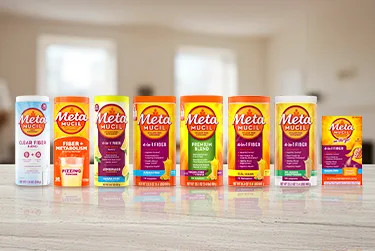
Metamucil 4-in-1 Fiber (Psyllium Husk)
Metamucil (Procter & Gamble) · powderBest Value: cheap, drinkable, and well-evidenced as a fiber — but single-pathway and a heavy gel load.
Pennies per serving — by far the cheapest in the set.
Single pathway — a fiber, not a craving formula.
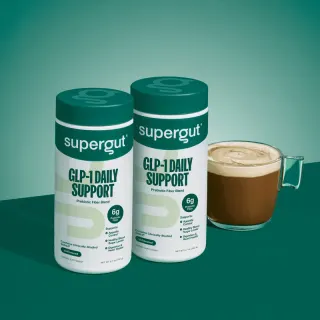
Supergut GLP-1 Daily Support
Supergut · powderA drinkable, gut-first option — but it leans on a proprietary fiber blend and a heavy fiber load.
Drinkable and caffeine-free.
Individual fiber doses are hidden inside a proprietary blend.
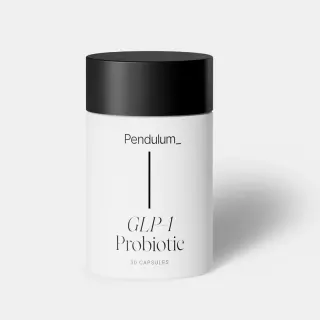
Pendulum GLP-1 Probiotic
Pendulum Therapeutics · capsuleStrong science pedigree on Akkermansia, but a proprietary CFU blend and refrigeration requirement.
Akkermansia has the strongest individual research pedigree of the probiotic actives.
Per-strain doses are hidden inside a proprietary blend.