Ingredient Science
Allulose, Honestly: The Rare Sugar That Tastes Like Sugar and Barely Acts Like One
It's the sweetener that shows up in figs and maple syrup, tastes like the real thing, and your body mostly refuses to burn. The evidence is more specific than the marketing.
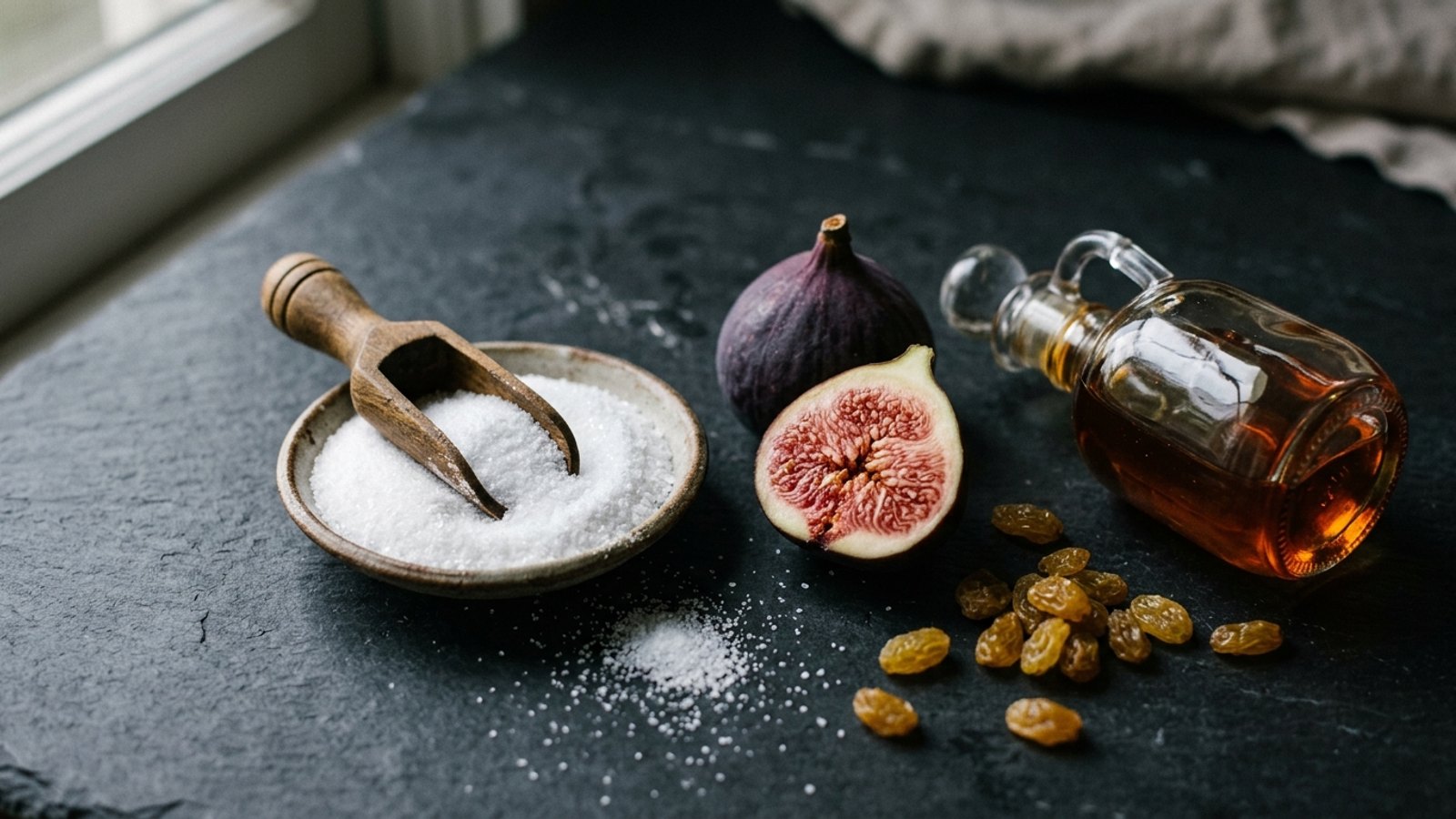
Allulose is having a moment. It's turning up in keto ice cream, "zero sugar" syrups, protein bars, and drink mixes, and the pitch is almost too good: it tastes like table sugar, bakes and browns like it, has close to zero calories, and the FDA lets companies leave it off the sugar line on the label entirely.
That last part sounds like a loophole. It's actually the most interesting thing about allulose. So let's take it apart. What it is, what your body does (and doesn't do) with it, what the human trials really show for blood sugar and appetite, and the gut and bone caveats that don't make it onto the front of the box.
What allulose actually is
Allulose is a rare sugar. That's a real category, not a marketing word: rare sugars are monosaccharides that barely exist in nature. Allulose shows up in tiny amounts in figs, raisins, wheat, and maple syrup, which is why you've been eating trace amounts your whole life without knowing it.
Chemically it's an epimer of fructose. Same formula, one mirror-flipped carbon. That tiny structural change is the whole story, because it's enough that your body can't process allulose the way it processes fructose or glucose.
Commercially, it's made by running an enzyme on fructose (usually from corn) to flip that one carbon. The result is roughly 70% as sweet as sugar, with a clean taste and none of the cooling aftertaste you get from sugar alcohols like erythritol.
Here's the part that matters. You absorb allulose in the small intestine, but your cells mostly can't use it for energy. Most of it gets filtered out by the kidneys and leaves in your urine, largely unchanged. It provides about 0.4 calories per gram, roughly a tenth of sugar's 4.
The label thing, explained
In its 2020 final guidance, the FDA told manufacturers they can leave allulose out of the "Total Sugars" and "Added Sugars" lines on the Nutrition Facts label, and calculate its calories at about 0.4 per gram (FDA, 2020). It still counts inside Total Carbohydrate, and the agency's stated reason is that allulose is metabolized differently from table sugar: it delivers few calories and produces only negligible increases in blood glucose or insulin.
So a syrup can be sweetened almost entirely with allulose and honestly read "0g sugar." That's not a trick. It reflects that the molecule genuinely behaves differently once it's inside you.
Blood sugar: the strongest evidence, with an asterisk
This is where allulose has the most human data, and it's genuinely decent.
According to research retrieved from PubMed, a 2020 systematic review and meta-analysis pooled 40 trial comparisons (about 400 people) testing small doses of fructose and its epimers alongside carbohydrate. Allulose stood out: it cut the post-meal glucose spike (the incremental area under the curve) by about 10%, at moderate certainty of evidence (Braunstein et al., 2020, DOI). Plain fructose did nothing.
A double-blind randomized trial in 24 people with type 2 diabetes found the same shape. Adding 10 g of allulose to a glucose drink lowered the post-meal glucose spike by about 8% versus control, and there was a clean dose-response: more allulose, flatter curve (Noronha et al., 2018, DOI). Again, fructose did nothing.
The proposed mechanism is a "catalytic" one. Small doses of allulose seem to nudge the liver toward pulling glucose out of the blood and storing it as glycogen, which blunts the spike from the meal you ate alongside it.
Now the asterisk, because honesty matters here. The same research group ran a trial in healthy young adults (the FACE trial) and could not find a significant effect of 5 g or 10 g doses on blood glucose. They were upfront that the study was underpowered and that healthy people's glucose responses swing around a lot, but the plain reading is that the effect looks clearer in people with elevated or diabetic glucose than in metabolically healthy ones (Braunstein et al., 2018, DOI).
The steadier takeaway: swapping sugar for allulose reliably keeps a food from spiking your blood sugar (because it isn't sugar), and there's moderate evidence it can slightly blunt the spike from other carbs eaten with it. That's a meaningful, if modest, difference from what table sugar does. If steadier post-meal glucose is your actual goal, a viscous fiber like psyllium works the same angle through a different door, and we walk through the blood-sugar tools in the metabolism and weight breakdown.
Appetite and GLP-1: promising, mostly in mice
Allulose gets folded into "natural GLP-1" conversations, so it's worth being careful about what's actually shown.
The most detailed mechanism work is in animals. A 2022 study mapped what allulose does to the hunger circuitry in the mouse brain: it quieted the neurons that fire in response to ghrelin (the hunger hormone) and low glucose, dialed down neuropeptide Y (a strong hunger driver), and activated the anorexigenic, GLP-1-responsive neurons that tell you you're full. Injected centrally, it suppressed feeding during the early-night window when mice normally eat most (Rakhat et al., 2022, DOI).
That's a clean, plausible story for why allulose might curb appetite. It is also a mouse-brain study, and a curb-your-enthusiasm flag belongs here: what pans out in rodent feeding circuits doesn't automatically translate to a human reaching for a second cookie. There's real signal, but the human appetite trials aren't there yet.
Body fat: one dose-response trial worth knowing
A randomized, double-blind, placebo-controlled trial in 121 Korean adults with a BMI at or above 23 tested allulose at two doses (about 8 g and 14 g a day) against a sucralose placebo over 12 weeks. Both body fat percentage and fat mass dropped with allulose, and the higher dose also lowered BMI and shrank abdominal and subcutaneous fat measured by CT scan, with no adverse shifts in blood lipids, liver and kidney markers, or inflammation (Han et al., 2018, DOI).
Encouraging, and two honest caveats. The authors called it preliminary and said the fat findings should be confirmed with a more precise body-composition method. And the trial was run with support from an allulose manufacturer, which doesn't make it wrong but is worth keeping in view. A 2021 scoping review of rare sugars reached the fair summary: real promise for glycemic control and body composition, but the mechanisms are still fuzzy and nobody has shown how well it holds up inside actual reformulated products (Smith et al., 2021, DOI).
The gut, and a bone flag
Because allulose isn't fully absorbed, the leftover reaches your lower gut, and that's the source of its main downside. Too much at once can pull water into the intestine and ferment, which means gas, bloating, and loose stools. Same osmotic mechanism that makes sugar-alcohol candies backfire, which we covered in the low-sugar candy piece, though allulose tends to be gentler than the polyols.
A 30-day randomized, double-blind trial in 50 healthy adults tested 24 g and 36 g a day. Just under half the participants reported gastrointestinal symptoms, but they were mild, short-lived, and clustered in the first three days as people adjusted. Blood, liver, kidney, and urine markers stayed within normal ranges, and fasting glucose actually dropped in the higher-dose group (Qi et al., 2026, DOI).
One finding in that trial deserves a straight mention: at the high dose, participants aged 35 and older showed a small drop in bone mineral density T-scores. The change stayed within the normal clinical range and the study was short, so it's a signal to watch rather than a verdict. The authors proposed a provisional safe intake of about 0.4 g per kilogram of body weight per day, which lands near 28 g for a 70 kg adult, while flagging that longer, larger studies are still needed.
Practical version: start small, build up, and don't treat "zero sugar" as a license to eat the whole tub. Tolerance improves with a few days of adjustment, and spreading it across the day beats one big hit.
The honest verdict
Allulose is one of the more interesting sweeteners on the shelf, and most of the pitch holds up. It tastes like sugar, cooks like sugar, carries about a tenth of the calories, and doesn't spike your blood sugar because your body mostly won't metabolize it.
The evidence is strongest and simplest for what it doesn't do: it doesn't raise glucose or insulin the way sugar does, and there's moderate human data that it can slightly flatten the spike from carbs eaten with it. The appetite and fat-loss angles are promising but lean on animal work and a couple of preliminary human trials, so treat "natural GLP-1 booster" framing with a raised eyebrow. For the wider "is a natural GLP-1 a real thing" question, we dug into that here.
As a sugar swap, allulose is a genuinely good tool, used in reasonable amounts. It's a sweetener, not a treatment, and it won't do the work of a balanced diet. Keep the dose sane, give your gut a few days to adjust, and it earns its spot. We line up how we weigh ingredients like this in our scoring methodology.
References
Based on articles retrieved from PubMed, plus official FDA guidance:
- Braunstein CR, Noronha JC, Khan TA, et al. Effect of fructose and its epimers on postprandial carbohydrate metabolism: A systematic review and meta-analysis. Clin Nutr. 2020. PubMed · DOI
- Noronha JC, Braunstein CR, Glenn AJ, et al. The effect of small doses of fructose and allulose on postprandial glucose metabolism in type 2 diabetes. Diabetes Obes Metab. 2018. PubMed · DOI
- Braunstein CR, Noronha JC, Glenn AJ, et al. A Double-Blind, Randomized Controlled, Acute Feeding Equivalence Trial of Small, Catalytic Doses of Fructose and Allulose (The FACE Trial). Nutrients. 2018. PubMed · DOI
- Rakhat Y, Kaneko K, Wang L, et al. d-Allulose Inhibits Ghrelin-Responsive, Glucose-Sensitive and Neuropeptide Y Neurons in the Arcuate Nucleus and Central Injection Suppresses Appetite-Associated Food Intake in Mice. Nutrients. 2022. PubMed · DOI
- Han Y, Kwon EY, Yu MK, et al. A Preliminary Study for Evaluating the Dose-Dependent Effect of d-Allulose for Fat Mass Reduction in Adult Humans. Nutrients. 2018. PubMed · DOI
- Smith A, Avery A, Ford R, et al. Rare sugars: metabolic impacts and mechanisms of action: a scoping review. Br J Nutr. 2021. PubMed · DOI
- Qi L, Ning J, Han J, et al. D-Allulose as a Low-Calorie Sweetener: A 30-Day Randomized, Double-Blind Study on Gastrointestinal Tolerance and Systemic Safety. Food Sci Nutr. 2026. PubMed · DOI
- U.S. Food & Drug Administration. Guidance for Industry: The Declaration of Allulose and Calories from Allulose on Nutrition and Supplement Facts Labels. 2020. FDA
FAQ
Does allulose raise your blood sugar?
Barely. Your body absorbs allulose but mostly can't metabolize it for energy, so it produces only negligible increases in blood glucose and insulin, which is why the FDA lets it stay off the sugar lines on the label. Human trials go a step further: in people with elevated or diabetic glucose, adding about 10 g of allulose to a carb load cut the post-meal glucose spike by roughly 8 to 10 percent. The effect looks weaker in already-healthy people.
Is allulose actually zero calories?
Close, but not exactly zero. It provides about 0.4 calories per gram, roughly a tenth of table sugar's 4 calories per gram, because most of it leaves the body in urine largely unused. The FDA uses that 0.4 figure for labeling. So a product sweetened with allulose can honestly read very low calorie and 0g sugar.
Will allulose upset my stomach?
It can if you overdo it. Because allulose isn't fully absorbed, a large dose reaches the lower gut, draws in water, and ferments, causing gas, bloating, or loose stools. In a 30-day trial at 24 to 36 g a day, just under half of people reported mild, short-lived symptoms that clustered in the first three days and faded as they adjusted. Start small, build up gradually, and spread it across the day rather than eating a lot at once.
Does allulose help you lose weight?
The evidence is early and cautiously positive, not a guarantee. One preliminary 12-week randomized trial in overweight adults found allulose lowered body fat percentage and fat mass in a dose-dependent way, and animal studies suggest it may quiet hunger-driving brain circuits. But the appetite work is mostly in mice, the human fat trial was small and industry-supported, and allulose is a sugar swap, not a weight-loss treatment. Treat it as a way to cut sugar, not a shortcut.
Products mentioned

Metamucil 4-in-1 Fiber (Psyllium Husk)
Metamucil (Procter & Gamble) · powderBest Value: cheap, drinkable, and well-evidenced as a fiber — but single-pathway and a heavy gel load.
Pennies per serving — by far the cheapest in the set.
Single pathway — a fiber, not a craving formula.
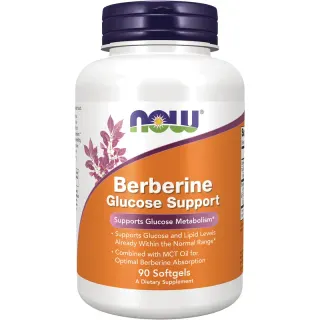
NOW Berberine Glucose Support
NOW Foods · softgelA cheap, no-frills berberine — same evidence, same berberine tolerability problem.
Inexpensive, disclosed berberine from a large reputable brand.
Berberine’s common GI side effects (cramping, diarrhea) still apply, especially across 1,200 mg/day.
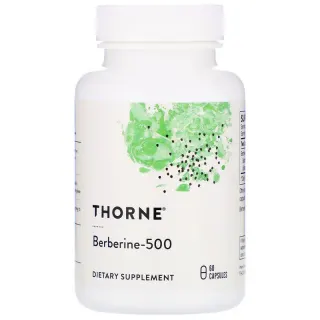
Thorne Berberine (1,000 mg)
Thorne · capsuleWell-evidenced berberine for metabolic support — but the effective dose is rough on a lot of stomachs.
Berberine has real human RCT evidence for glucose and lipid markers.
Berberine commonly causes GI distress — cramping, diarrhea, constipation — and at the 1,000 mg+ effective dose it is hard for many people to tolerate.