Sweetener Science
Do Artificial Sweeteners Actually Trigger Cravings?
A 2025 brain-imaging trial found sucralose raised hunger. A 2026 one found almost nothing. The gap between them is the whole story.
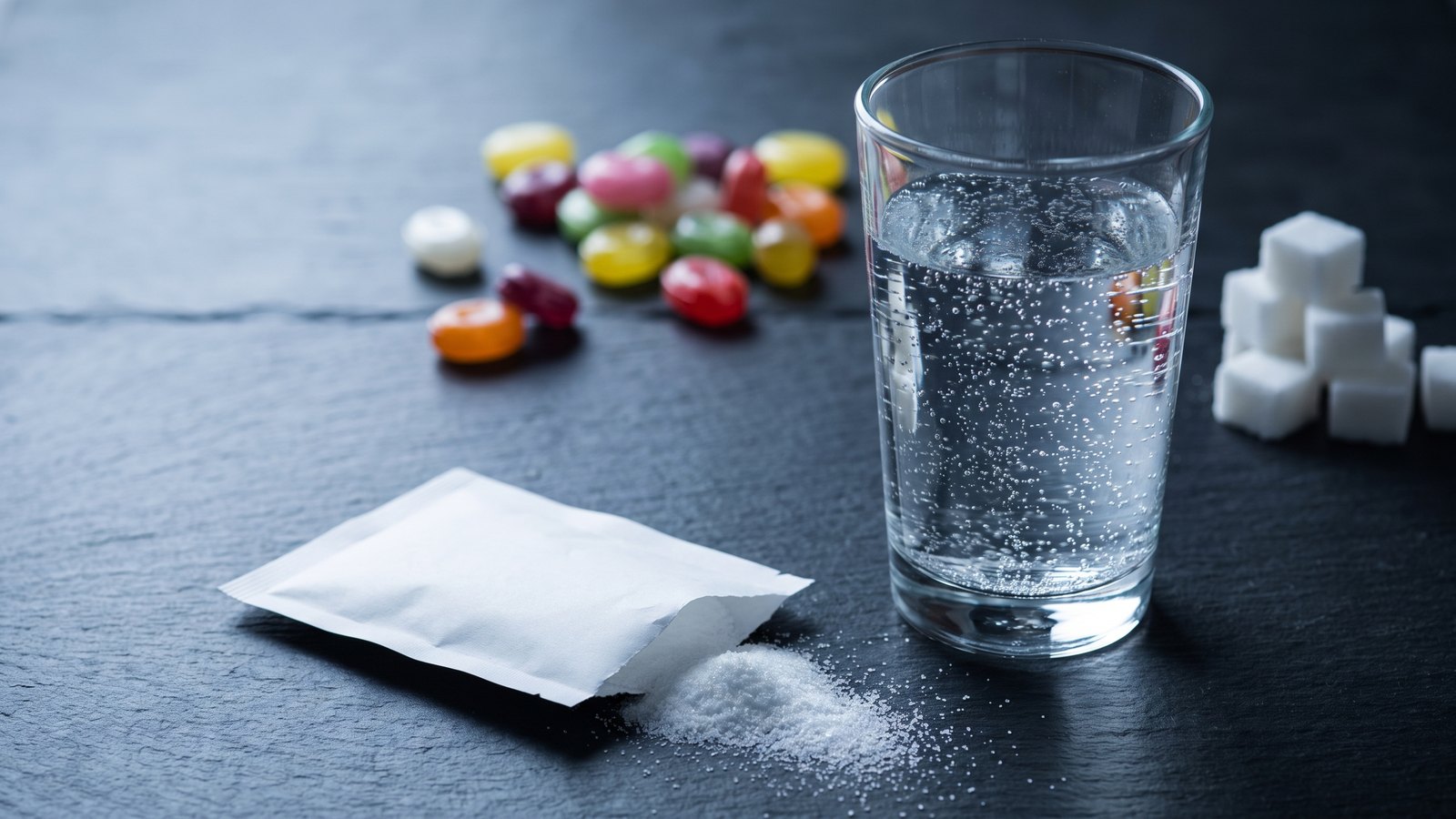
The theory is tidy enough that almost everyone repeats it. You taste something sweet, your brain queues up the calories it has learned to expect, nothing arrives, and the unpaid bill shows up later as a craving.
Tidy, plausible, and about half-supported.
The research splits along a line that almost no coverage draws: what a sweetener does to your brain in the 30 minutes after you drink it, versus what it does to your eating over the following year. Those two literatures disagree, and they disagree in the direction most people don't expect.
The study that made the case
The strongest recent evidence for the craving theory landed in Nature Metabolism in 2025 (Chakravartti et al., Nat Metab 2025). 75 young adults across healthy weight, overweight and obesity drank sucralose, sweetness-matched sucrose, or plain water in randomized crossover order, then went into an MRI scanner.
Against sucrose, sucralose raised blood flow in the hypothalamus, the region that runs appetite, and produced significantly greater hunger ratings. It also increased functional connections between the hypothalamus and brain regions handling motivation and sensory processing.
Sucrose raised blood glucose. Sucralose didn't. Those glucose rises tracked with drops in medial hypothalamic blood flow, which is the mechanism argument in one line: sugar sends a metabolic signal that quiets the hunger region, and sucralose never sends it.
Well-run trial, real mechanism attached. It's also the study that got flattened into "artificial sweeteners make you hungrier," which requires skipping the next sentence of the same abstract.
The comparison nobody quotes
Sucralose versus water also raised hypothalamic blood flow. But it produced no difference in hunger ratings.
Read that against the headline. Sucralose made people hungrier than sugar water. It did not make them hungrier than water.
Which comparison matters depends entirely on what you were going to drink instead. Replacing a regular soda? The sucrose arm is your baseline and the finding is real. Adding a diet drink to a day that otherwise had water in it? The water arm is your baseline, and hunger didn't move.
Then a second scanner disagreed
In 2026, a team published a six-condition crossover trial in the American Journal of Clinical Nutrition (Smeets et al., Am J Clin Nutr 2026). 30 healthy adults drank 500 mL of water, or flavored water sweetened with 25 g sucrose, sucralose, stevia extract, allulose plus stevia, or monk fruit extract. Same arterial spin labeling method, measuring cerebral blood flow at baseline, 5 and 30 minutes.
The primary result: hypothalamic blood flow was not differentially affected by any of the drinks. The signal the 2025 trial built its case on did not reproduce.
What did show up sat in the ventral tegmental area, a reward hub in the midbrain, and it pointed the other way. Blood flow there fell after sucrose relative to water, sucralose and monk fruit, by roughly 8%. Only sucrose moved glucose and insulin. Allulose plus stevia slowed gastric emptying about as much as sucrose did, despite carrying almost no energy, which is its own interesting thread (we pulled on it in the allulose piece).
Two imaging trials, same technique, opposite primary findings. That isn't a scandal, it's what a young literature looks like: 75 people versus 30, different drink volumes, different vehicles, different populations.
One disclosure worth making. A co-author on the 2026 paper is affiliated with Tate & Lyle, a sweetener manufacturer. Note it, weigh it, don't use it to erase the result. The funding point cuts more than one way, as the next section shows.
About that cephalic-phase insulin argument
The mechanism people reach for is cephalic-phase insulin release: sweet taste alone triggers an insulin pulse, insulin pulls your blood sugar down, you get hungry. It's the load-bearing claim under a lot of confident internet writing.
A 2023 review in Physiological Reviews spent its considerable length on why this is shakier than advertised, starting with its title: "The elusive cephalic phase insulin response" (Langhans et al., Physiol Rev 2023). The authors work through which stimuli actually elicit it, whether the test conditions in existing studies even let the stimulus reach the relevant taste receptors, and the plain difficulty of measuring small insulin releases accurately.
A human study the same year sharpened it (Pullicin et al., Appetite 2023). 22 adults, four oral stimulus conditions. Glucose alone triggered the response. Glucose plus lactisole, a sweet-taste blocker, did not. Maltodextrin alone triggered it; maltodextrin plus lactisole and a digestion inhibitor did not.
So taste is part of the trigger. But the reliable elicitor there was glucose being detected in the mouth, not sweetness in the abstract. A non-caloric sweetener delivers the second without the first, which is precisely the case the cephalic-phase argument needs and doesn't cleanly have.
What happened when researchers watched people eat
Scans measure a signal. Trials measure behavior. Here the picture flips.
12 weeks. 154 adults with overweight or obesity were randomly assigned to drink 1.25 to 1.75 L daily of a beverage sweetened with sucrose, aspartame, saccharin, sucralose or rebaudioside A (Higgins and Mattes, Am J Clin Nutr 2019). Sucrose and saccharin both increased body weight, by 1.85 kg and 1.18 kg. The other three didn't. Energy intake actually decreased with sucralose.
If sweeteners reliably drove cravings and compensatory eating, three months of drinking well over a liter a day is where you would see it. Saccharin looked bad. Sucralose looked like the opposite.
52 weeks. 493 adults with a BMI of 27 to 35 were randomized to non-nutritive sweetened beverages or water inside a behavioral weight-management program (Harrold et al., Int J Obes 2024). The water group maintained 6.1 kg of loss. The sweetened-beverage group maintained 7.5 kg. The authors' own read is that the 1.4 kg gap, while statistically significant, was not clinically significant. That trial was funded by the American Beverage Association, which is exactly the funding anyone would flag if the result had gone the other way, so flag it here.
The aggregate. A 2026 systematic review and meta-analysis in Nutrition Reviews pooled randomized trials of non-nutritive sweeteners inside weight-management programs (Wen et al., Nutr Rev 2026). On appetite: no significant effect on hunger during the weight-maintenance phase, and during the weight-loss phase, sweetener consumption reduced hunger compared with controls (SMD -0.16, 95% CI -0.30 to -0.01).
A small effect, barely clearing its confidence interval, pointing the opposite way from the craving story.
That same meta-analysis is not a sweetener advertisement and shouldn't be read as one. It found no benefit for lipid profiles, and insulin fell less in the sweetener groups than in controls (a difference of 13.80 pmol/L), which the authors read as sweeteners being less helpful for insulin sensitivity during weight loss.
How to hold both
An acute brain signal isn't a behavior, and a year of behavior doesn't prove nothing happened acutely. The reconciliation is boring and probably right.
- The comparator decides the answer. Against sugar, non-caloric sweeteners look fine to slightly better on weight. Against water, the advantage mostly evaporates. Most arguments about this are two people using different baselines.
- They are not one category. Saccharin drove weight gain in the 12-week trial while sucralose lowered energy intake in the same trial. Lumping them together is the most common error in this whole area, and it's the same error people make with the gut data, which we went through in the gut bacteria piece.
- Person-to-person variation is real. Group averages hide people who respond strongly in both directions.
- Sweetness itself may still matter. None of these trials tests whether keeping a daily sweet habit alive keeps your preference for very sweet food alive. That's a plausible, under-tested idea, and it's a separate question from acute hunger.
What to actually do with this
If you're replacing sugar-sweetened drinks, the trial evidence doesn't support the fear that you'll eat it all back later.
If you're adding sweetened drinks on top of water, you're not buying an appetite benefit, and the acute imaging is at least a reason to pay attention to how you feel afterward.
And if cravings are the actual problem you're trying to solve, sweetener choice is a small lever. The bigger ones are blood-sugar stability, protein and fiber intake, and gut-hormone signaling, which we walk through in the gut-brain axis piece and the fiber piece.
The honest close: on the specific question of whether artificial sweeteners trigger cravings, the mechanism is plausible, the acute imaging contradicts itself, and the longest and largest trials that measured real eating didn't find it. Anyone telling you it's settled hasn't read the null results. How we weigh evidence like this is laid out in our methodology, and the rest of this category lives at appetite suppressants.
References
- Chakravartti SP, et al. Non-caloric sweetener effects on brain appetite regulation in individuals across varying body weights. Nat Metab. 2025. PMID 40140714
- Smeets PA, et al. Brain and physiological responses to flavored waters with different sweeteners: a randomized crossover study in healthy young adults. Am J Clin Nutr. 2026. PMID 42323164
- Langhans W, et al. The elusive cephalic phase insulin response: triggers, mechanisms, and functions. Physiol Rev. 2023. PMID 36422994
- Pullicin AJ, et al. Oral glucose sensing in cephalic phase insulin release. Appetite. 2023. PMID 37788735
- Higgins KA, Mattes RD. A randomized controlled trial contrasting the effects of 4 low-calorie sweeteners and sucrose on body weight in adults with overweight or obesity. Am J Clin Nutr. 2019. PMID 30997499
- Harrold JA, et al. Non-nutritive sweetened beverages versus water after a 52-week weight management programme: a randomised controlled trial. Int J Obes. 2024. PMID 37794246
- Wen J, et al. Effects of Non-Nutritive Sweeteners on Weight Loss and Maintenance, Metabolic Improvement, and Appetite Regulation in Weight Management Programs: A Systematic Review and Meta-Analysis of Randomized Controlled Trials. Nutr Rev. 2026. PMID 40668953
FAQ
Do artificial sweeteners make you hungrier?
It depends what you're comparing them to, and that caveat is doing almost all the work. In a 2025 randomized crossover trial in 75 adults, sucralose produced significantly greater hunger ratings than a sweetness-matched sucrose drink. In the same trial, sucralose versus plain water produced no difference in hunger ratings at all. So the honest answer is that a non-caloric sweetener leaves you hungrier than the same drink made with sugar would, because sugar's glucose rise quiets the hypothalamus. It does not appear to leave you hungrier than drinking water.
Does the sweet taste trigger an insulin spike that causes cravings?
That's the popular mechanism, and it's weaker than it sounds. A 2023 review in Physiological Reviews titled 'The elusive cephalic phase insulin response' walks through how inconsistent the evidence is, including whether the test conditions in many studies even let the stimulus reach the relevant taste receptors. A separate 2023 study in 22 adults found that glucose in the mouth triggered the response but that blocking sweet taste abolished it, meaning taste and actual glucose detection both matter. A non-caloric sweetener gives you the taste without the glucose, which is exactly the situation the argument needs evidence for and largely lacks.
Which sweeteners performed worst in the long trials?
Saccharin. In a 12-week randomized trial of 154 adults drinking well over a liter of sweetened beverage daily, saccharin increased body weight by 1.18 kg, close to what sucrose did at 1.85 kg. Aspartame and rebaudioside A produced no significant weight change, and sucralose was the only arm where energy intake actually decreased. The practical lesson is that treating all non-caloric sweeteners as one interchangeable category is the most common mistake in this area.
Should I switch from diet drinks back to regular soda?
The trial evidence doesn't support that move. Across a 12-week trial and a 52-week weight-management trial in 493 adults, non-nutritive sweetened beverages did not produce more weight gain than water or sugar comparators, and in the 52-week trial the sweetened-beverage group maintained slightly more weight loss than the water group, though the authors called the 1.4 kg difference clinically insignificant. Water remains the cleaner default. Swapping back to sugar isn't the upgrade the craving narrative implies.
Products mentioned
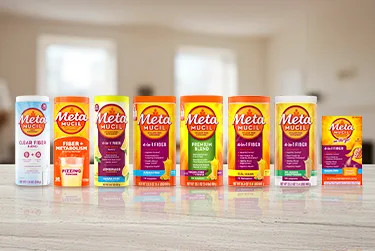
Metamucil 4-in-1 Fiber (Psyllium Husk)
Metamucil (Procter & Gamble) · powderBest Value: cheap, drinkable, and well-evidenced as a fiber — but single-pathway and a heavy gel load.
Pennies per serving — by far the cheapest in the set.
Single pathway — a fiber, not a craving formula.
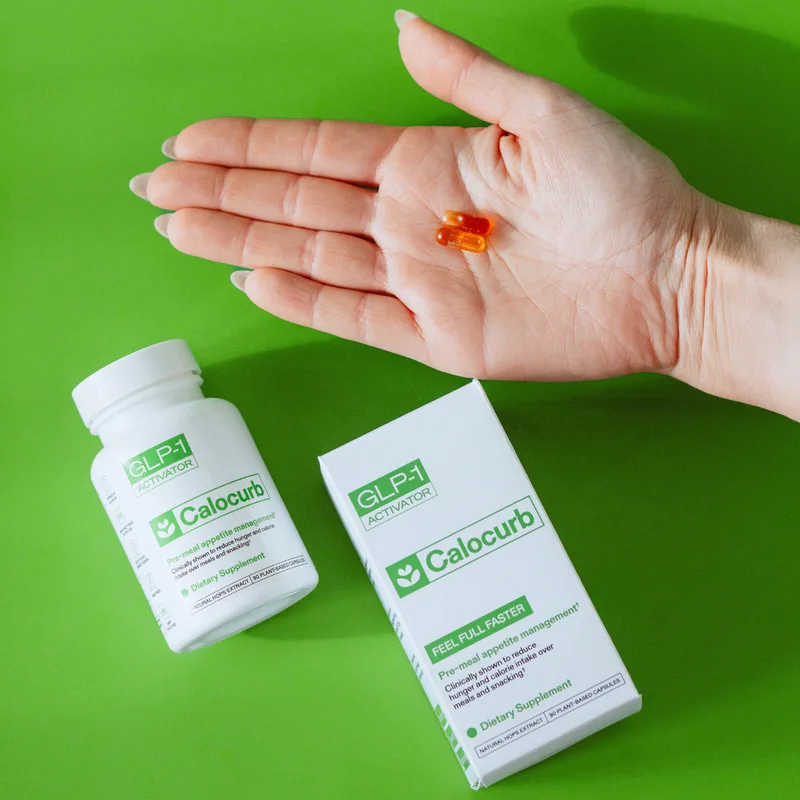
Calocurb GLP-1 Activator
Calocurb · capsuleThe best-evidenced single-mechanism appetite trigger — clinically interesting, but premium-priced and a pre-meal, short-window tool rather than all-day support.
Amarasate is one of the most directly studied appetite ingredients — multiple human RCTs, dosed on-label at 250 mg.
Acute, short-window effect: a pre-meal tool (up to 4 capsules/day), not all-day craving support.
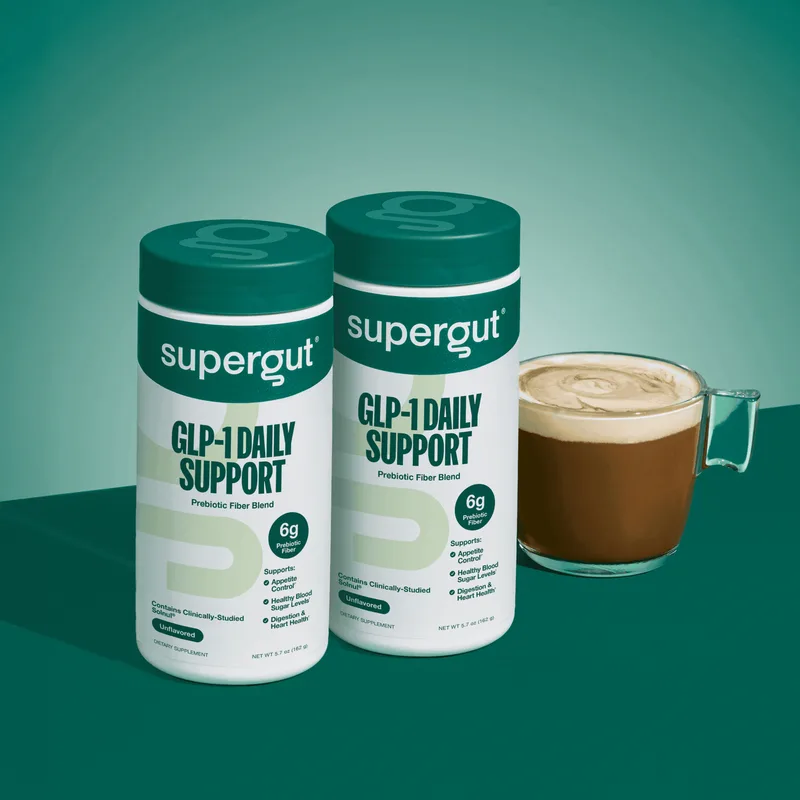
Supergut GLP-1 Daily Support
Supergut · powderA drinkable, gut-first option — but it leans on a proprietary fiber blend and a heavy fiber load.
Drinkable and caffeine-free.
Individual fiber doses are hidden inside a proprietary blend.