Head to Head
Evolv GLP-1 vs Calocurb: One Has Human Trials, the Other Has a Blog Post
Same category, same price bracket, wildly different standards of proof. We read both evidence bases line by line.
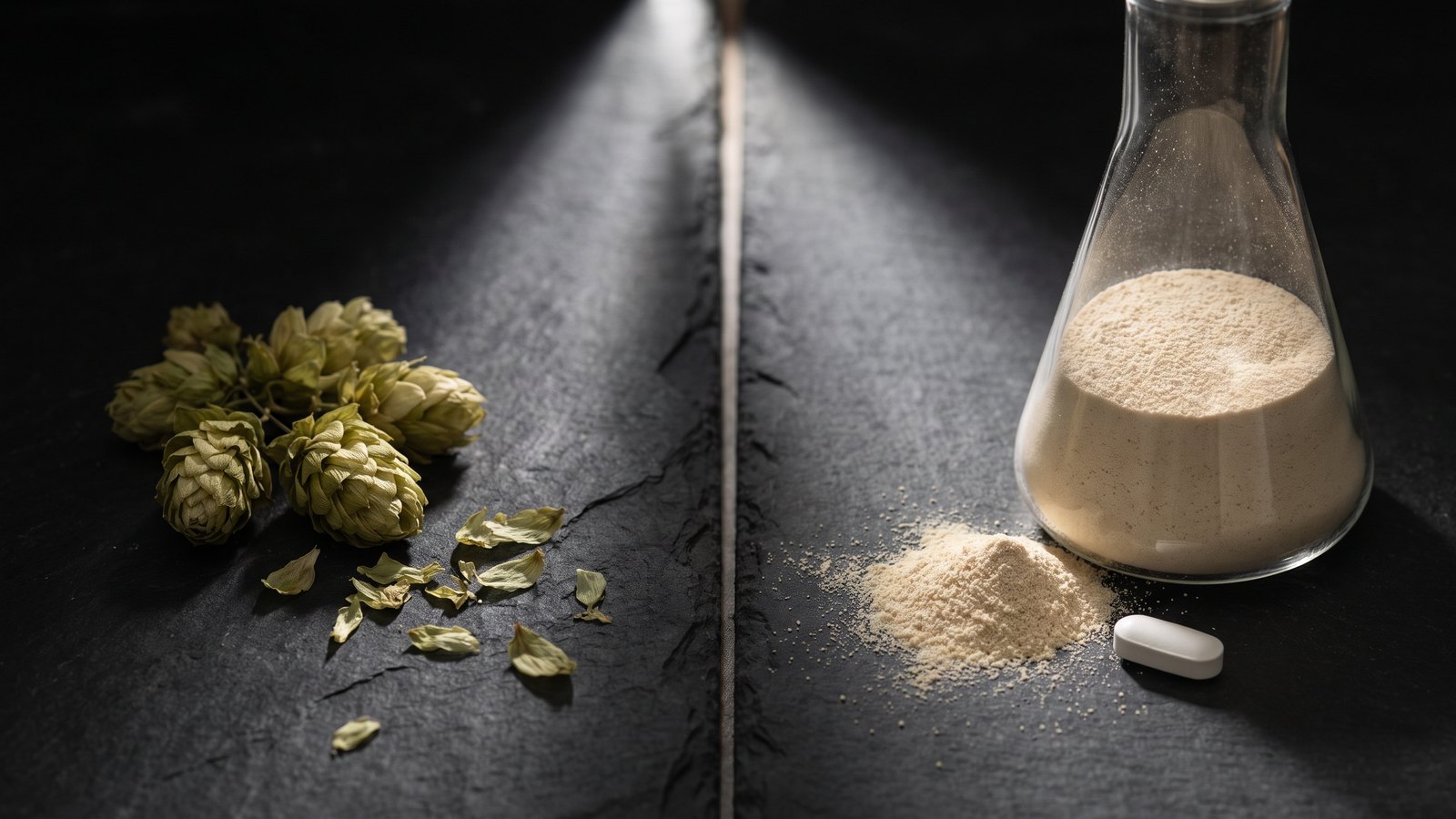
Put these two on a shelf next to each other and they look like the same product. Both are caffeine-free pills. Both promise appetite support through the GLP-1 pathway. Both cost roughly four to five dollars a day at the dose their own label recommends.
Line up the marketing and they rhyme. Go looking for the studies and they stop rhyming fast.
One of them points you to four randomized human trials in indexed journals, including one that failed. The other points you to a post on its own blog.
The two mechanisms, in plain terms
Calocurb is built on Amarasate, a patented bitter extract from New Zealand hop flowers. The theory is old and reasonably well mapped: bitter compounds hit bitter taste receptors (TAS2Rs) that sit in the gut lining, not just on the tongue, and those receptors sit on the same enteroendocrine cells that release GLP-1, CCK and PYY. Bitter goes in, satiety hormones come out. Researchers call it the "bitter brake."
That mechanism has been worked out at the cell level. In an intestinal cell line, a hop extract stimulated GLP-1 and CCK release in a calcium-dependent way and lowered ghrelin, and knocking down two specific bitter receptors blunted the response (Lela et al., Mol Nutr Food Res 2024). Cultured cells, not people, so treat it as a plausibility check. A 2026 review makes the broader case that bitter phytochemicals across herbs and spices converge on the same incretin pathway (Komarnytsky et al., Nutr Rev 2026).
Evolv GLP-1 is doing something far more ambitious. The brand says it engineered a novel peptide, called EV1, grew it inside brewer's yeast, dried the yeast into a powder, and that the peptide then survives digestion and interacts with GLP-1 and GIP receptors in the gut and the brain.
If that worked as described, it would be a genuinely significant piece of drug delivery. Which is exactly the problem.
The oral peptide question nobody at Evolv answers
Getting a peptide through the stomach and into circulation is one of the hardest problems in pharmaceutics, and the field says so plainly. A 2025 review lists the barriers: enzymatic degradation, instability in gastric fluid, and poor permeability across the gut epithelium, which together produce low oral bioavailability and, in the authors' words, limited success in clinical translation (Baral and Choi, Pharmaceutics 2025). The one oral GLP-1 peptide that did reach the market is still described in the literature as having exceedingly low oral bioavailability, after billions of dollars of formulation work (Nayak et al., Expert Opin Drug Deliv 2026).
Evolv's label doesn't tell you how it got around any of that. The Supplement Facts panel discloses 560 mg of Saccharomyces cerevisiae S288C EV1-Peptide per two-tablet serving, but by the brand's own description that number is the weight of the dried yeast biomass carrying the peptide. How much peptide sits inside it isn't published anywhere we could find. No dose means nothing to check against anything.
What Calocurb's trials actually found
Here's where Calocurb earns its position, and where the honest caveats live.
The strongest result comes from a randomized, double-blind crossover trial in 19 healthy-weight men. A 500 mg dose of bitter hop extract, delivered in delayed-release capsules, cut total ad libitum intake across lunch and an afternoon snack to 4439 kJ, against 5383 kJ on placebo (P = 0.004). That's about 226 calories, roughly a 17% reduction. The quick-release gastric arm landed in nearly the same place. Both arms raised postprandial CCK, GLP-1 and PYY (Walker et al., Am J Clin Nutr 2022).
Two details in that same paper deserve equal billing. Participants reported small but statistically significant increases in nausea, bloating and abdominal discomfort, with mild-to-severe GI symptoms in the gastric arm. And subjective appetite ratings didn't move at all. People ate less without reporting that they felt less hungry.
Two fasting trials back it up. In 30 men doing a 24-hour water fast, 100 mg or 250 mg twice daily produced a hunger reduction of more than 10% over the final six hours (Walker et al., Nutrients 2019). A 2024 trial ran the same design in 30 women and found significant reductions in both appetite and food cravings, with loose stools and heartburn reported by a handful of participants (Walker et al., Obes Pillars 2024).
The trial that found nothing
Now the part a brand page won't lead with. A separate group at the University of Adelaide infused bitter hop extract directly into the duodenum or stomach of lean men and measured gut motility, hormones, appetite and intake. The 250 mg intraduodenal dose modestly raised pyloric pressures and PYY. It did not move CCK, appetite, or energy intake. The authors concluded that at none of the doses or routes tested did the extract have appetite- or intake-suppressant effects (Bitarafan et al., Appetite 2023).
Read the two papers together and a dose story emerges: 500 mg did something, 250 mg mostly didn't. Calocurb's serving is 250 mg. The brand's full protocol is four capsules a day, which gets you to 500 mg, and that's the amount the successful trial used.
One more thing worth saying out loud. Most of the positive Amarasate research comes from Plant & Food Research, the New Zealand institute that owns the ingredient. That doesn't make the findings wrong, and the trials are properly randomized and published. It does mean the independent replication record is thin, and the one independent-led study in the set is the negative one.
What Evolv's evidence actually is
We went looking for the same thing on Evolv's side and came up with an 8-week interim readout of an ongoing 12-week study, self-published on the company's blog by a co-founder. No sample size. No confidence intervals. No p-values. Nothing peer-reviewed, and we found no ClinicalTrials.gov registration.
The headline figures on the product page are "up to 12+ lbs" and "4+ inches" in 8 weeks. The brand's own footer explains those are per-protocol maxima from the experimental group. The group averages in that same interim post are −2.87% body weight and −4.02% waist versus control at week 8. On a 200-pound person, 2.87% is about 5.7 pounds.
Then there's the third headline: roughly 750 fewer calories consumed per day. The footnote derives that from the 12-pound best case using the old 3,500-calories-per-pound rule (12 × 3,500 ÷ 56 = 750), so it's arithmetic run backwards off a maximum rather than measured intake. Kevin Hall's modelling work in The Lancet showed why that rule overestimates: the bodyweight response to a change in intake is slow, with a half-time of about a year, because energy expenditure adapts as weight falls (Hall et al., 2011).
To Evolv's credit, they're running an actual randomized controlled trial, which most of this category never bothers with. Their co-founder also wrote that the full 12-week study "will provide statistical power," which is a candid way of saying the advertised 8-week data isn't powered yet.
Price, dosing and what you get back if it flops
Calocurb is $89.99 for 90 capsules. At the four-capsule protocol that matches the successful trial dose, a bottle lasts about 22 days, so roughly $4.00 a day, or about $3.40 on subscription. Take it as a single serving before one meal and it drops to about $2.00 a day, but that's the 250 mg dose the independent trial found nothing at. First orders carry a 30-day money-back guarantee.
Evolv is $148 for 30 servings, about $4.93 a day, $125.80 on subscription. Its policy states the brand cannot accept returns or issue refunds once an order has been placed. It's the most expensive product we track and the only one with no guarantee of any kind.
On format, Evolv wins a real point. Two tablets a day, no timing restriction. Calocurb needs a delayed-release capsule about an hour before each meal, up to four a day, which takes routine discipline. Both are caffeine-free, so both work in the evening window when cravings tend to peak.
The verdict
Calocurb takes this, and it isn't close on evidence. Four published randomized human trials beats an unpublished interim blog post every time, even when one of those four is negative. Arguably especially when one of them is negative, because a visible failure means somebody outside the company was allowed to look.
But buy it with your eyes open. It's an acute, pre-meal tool with a one-to-two hour window, not all-day craving support. The dose that worked is the four-capsule one, at about $4.00 a day. GI side effects showed up in every trial. And most of the positive data traces back to the ingredient's owner.
Evolv might turn out to be right. The full 12-week readout could be strong, and an orally active peptide would be a real result. Right now you'd be paying the highest price in the category, with no refund, for a dose that isn't disclosed and a mechanism the drug-delivery literature says is very hard to pull off.
Neither of these is equivalent to a prescription GLP-1 medication, and neither claims to be. If you want the full side-by-side on ingredients, scores and pricing, our Evolv vs Calocurb comparison lays it out, and the full Evolv teardown goes deeper on the claim arithmetic. How we score everything is on our methodology page.
References
- Walker EG, et al. An extract of hops (Humulus lupulus L.) modulates gut peptide hormone secretion and reduces energy intake in healthy-weight men: a randomized, crossover clinical trial. Am J Clin Nutr. 2022;115(3):925-940. PMID 35102364
- Walker E, et al. New Zealand Bitter Hops Extract Reduces Hunger During a 24 h Water Only Fast. Nutrients. 2019;11(11):2754. PMID 31766216
- Walker E, et al. Gastrointestinal delivery of bitter hop extract reduces appetite and food cravings in healthy adult women undergoing acute fasting. Obes Pillars. 2024;11:100117. PMID 39071168
- Bitarafan V, et al. Effects of intraduodenal or intragastric administration of a bitter hop extract (Humulus lupulus L.) on upper gut motility, gut hormone secretion and energy intake in healthy-weight men. Appetite. 2023;184:106490. PMID 36781111
- Lela L, et al. Humulus lupulus L.: Evaluation of Phytochemical Profile and Activation of Bitter Taste Receptors to Regulate Appetite and Satiety in Intestinal Secretin Tumor Cell Line (STC-1 Cells). Mol Nutr Food Res. 2024;68(21):e2400559. PMID 39388530
- Komarnytsky S, et al. Activation of Extraoral Bitter Taste Receptors by Herbs and Spices in the Regulation of Incretin Signaling and Glucose Metabolism. Nutr Rev. 2026;84(Suppl 1):37-48. PMID 42186283
- Baral KC, Choi KY. Barriers and Strategies for Oral Peptide and Protein Therapeutics Delivery: Update on Clinical Advances. Pharmaceutics. 2025;17(4):397. PMID 40284395
- Nayak S, et al. Current trends in semaglutide therapy and strategies to improve its bioavailability. Expert Opin Drug Deliv. 2026;23(8):1495-1509. PMID 42288971
- Hall KD, et al. Quantification of the effect of energy imbalance on bodyweight. Lancet. 2011;378(9793):826-837. PMID 21872751
Product prices, label panels and refund policies were read from each brand's own site on 2026-08-27. Research retrieved via PubMed. Nothing here is medical advice, and neither product is a substitute for care from your doctor.
FAQ
Which has better evidence, Evolv GLP-1 or Calocurb?
Calocurb, by a wide margin. Its active ingredient has four randomized human trials in indexed journals, including one independent-led study that found no effect. Evolv's published evidence is an 8-week interim readout of an ongoing study, self-published on the company's own blog with no sample size, confidence intervals or p-values, and we found no ClinicalTrials.gov registration.
How much did people actually eat less in the Calocurb research?
In a randomized crossover trial of 19 healthy-weight men, a 500 mg dose of bitter hop extract cut total intake across lunch and an afternoon snack to 4439 kJ versus 5383 kJ on placebo, about 226 calories or roughly 17% (Walker et al., Am J Clin Nutr 2022). Note the dose: that's double Calocurb's 250 mg serving and matches the brand's full four-capsule daily protocol. A separate trial delivering 100 mg or 250 mg directly into the gut found no effect on energy intake at all.
Why can't you tell how much peptide is in Evolv GLP-1?
The panel lists 560 mg of Saccharomyces cerevisiae S288C EV1-Peptide per two-tablet serving, but by the brand's own description that figure is the weight of the dried yeast biomass carrying the peptide, not the peptide itself. The actual peptide content isn't published anywhere we could find, so there's no number to compare against any research dose.
Which one is cheaper day to day?
It depends on the dose. Evolv is $148 for 30 servings, about $4.93 a day. Calocurb is $89.99 for 90 capsules, which is roughly 22 days at the full four-capsule protocol, about $4.00 a day or $3.40 on subscription. At a single pre-meal serving Calocurb drops to about $2.00 a day, but that's the 250 mg dose the independent trial found nothing at. Calocurb also offers 30 days money-back on a first order; Evolv states it cannot issue refunds once an order is placed.
Products mentioned

Lemme GLP-1 Daily (Lemme Reset)
Lemme · capsuleThe most transparent standalone GLP-1 capsule: fully-disclosed branded actives in a simple once-daily pill, though it covers fewer hunger pathways than the Ozzi capsule.
Fully disclosed, standardized branded actives (no proprietary blend).
No published trial on the finished three-ingredient combination.
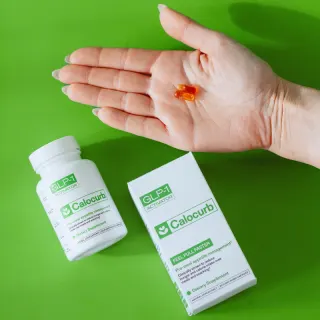
Calocurb GLP-1 Activator
Calocurb · capsuleThe best-evidenced single-mechanism appetite trigger — clinically interesting, but premium-priced and a pre-meal, short-window tool rather than all-day support.
Amarasate is one of the most directly studied appetite ingredients — multiple human RCTs, dosed on-label at 250 mg.
Acute, short-window effect: a pre-meal tool (up to 4 capsules/day), not all-day craving support.
Supergut GLP-1 Daily Support
Supergut · powderA drinkable, gut-first option — but it leans on a proprietary fiber blend and a heavy fiber load.
Drinkable and caffeine-free.
Individual fiber doses are hidden inside a proprietary blend.
Evolv GLP-1
Evolv · tabletA genuinely novel idea wrapped in the category’s worst claim hygiene: "up to" headlines several times the actual averages, an unpublished and unpowered interim readout, the highest price in our set, and no refunds.
Simple, caffeine-free two-tablet daily routine with no timing restriction — usable in the evening craving window.
The most expensive product in our set at about $4.93 a serving, and the only one with no money-back guarantee of any kind.