Product Review
Evolv GLP-1 Review: What "Up To 12+ Pounds" Actually Averaged
A headline built from one participant, a calorie figure derived from that same participant, and a study the company says is not yet statistically powered.
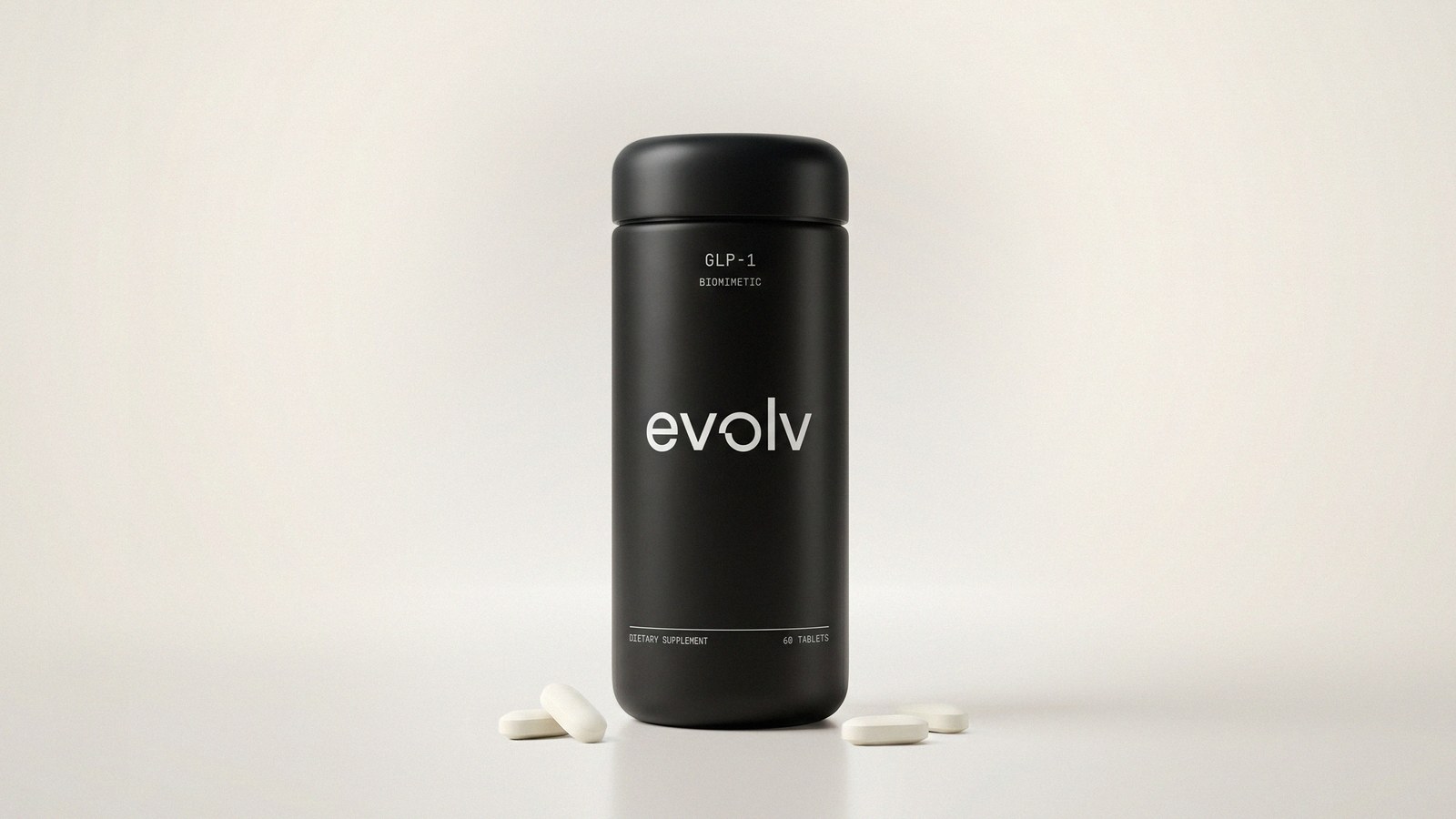
Four numbers sit at the top of the Evolv GLP-1 product page, in large type, above everything else:
12+ lbs lost. 4+ inches off the waist. ~750 fewer calories consumed per day. No muscle or hair loss reported.
Each one carries a small dagger. The dagger is explained in the site footer, past the newsletter signup box, in capital letters, at the very bottom of the page.
We went and read it. Then we read the company's own write-up of the study. The gap between the two is the review.
What the footnote says
Here is the disclaimer, verbatim, capitals and all:
"†BASED ON 8-WEEK PER-PROTOCOL RESULTS FROM THE EXPERIMENTAL GROUP OF A RANDOMIZED, CONTROLLED CLINICAL STUDY. AT WEEK 8, UP TO 12+ LBS OF WEIGHT LOSS AND UP TO 4+ INCHES OF WAIST REDUCTION WERE OBSERVED. A 12-LB REDUCTION OVER 8 WEEKS REFLECTS AN ESTIMATED ENERGY DEFICIT EQUIVALENT TO ~750 CALORIES PER DAY. NO PARTICIPANT-REPORTED HAIR OR MUSCLE CONCERNS WERE DOCUMENTED DURING THE 8-WEEK STUDY PERIOD. INDIVIDUAL RESULTS MAY VARY."
Three phrases in there do all the work, and none of them appear next to the big numbers.
"Up to." Not average. Not median. The most any participant lost. One person's best week-8 result, printed as the product's headline.
"Per-protocol." That means the analysis counts only the people who completed the study and followed the protocol. Anyone who quit, or took it inconsistently, or dropped out because it did nothing, is not in the number. The stricter analysis, intention-to-treat, includes everyone who started. It's the one regulators prefer, and it's almost always the less flattering of the two.
"From the experimental group." So the 12 lbs is not a comparison against the control group. It's the raw change in one treated participant, diet and everything else included.
The average, from Evolv's own study page
Evolv publishes an 8-week interim readout on its own blog, authored by co-founder Dr. Kwang-Chul Kwon. It contains the numbers the product page doesn't.
At week 6: −1.22% body weight and −1.21% waist versus control. At week 8: −2.87% body weight and −4.02% waist versus control.
That's the actual result. Percentages, not pounds, so run them.
A 200-pound participant losing 2.87% is 5.7 pounds. At 250 pounds it's 7.2 pounds. To reach 12 pounds at 2.87% you would need to start at 418 pounds.
On the waist, 4.02% of a 40-inch waist is about 1.6 inches. Not 4.
So the headline is roughly double to quadruple the average, depending on which number you pick and how big you assume the participants were. Both figures are real in the sense that somebody hit them. Neither is what the study found.
One honest caveat on our side: Evolv writes "−2.87% body weight reduction vs. control" without saying whether that's the between-group difference or the treatment group's own change presented against control. Those mean different things. The company doesn't specify, and we're not going to guess.
The 750-calorie number is circular
This is the one worth slowing down on, because it isn't an exaggeration. It's a different category of thing.
The product page says "~750 fewer calories CONSUMED PER DAY WITHOUT RESTRICTIVE DIETING." That reads as a measurement of how much less people ate.
It isn't. The footnote tells you where it came from: "A 12-LB REDUCTION OVER 8 WEEKS REFLECTS AN ESTIMATED ENERGY DEFICIT EQUIVALENT TO ~750 CALORIES PER DAY."
Do the arithmetic. 12 pounds times the old 3,500-calories-per-pound rule is 42,000 calories. Spread over 56 days, that's 750 calories a day.
They took the single best weight result, converted it into calories with a rule of thumb, and printed the output as an observed eating behavior. Nobody measured anybody's intake to produce that number. It is the 12-pound claim wearing a different unit.
And the rule of thumb it rests on is known to be wrong. Kevin Hall and colleagues laid out the modern dynamic model in The Lancet, showing that the static 3,500-calorie rule badly overestimates loss because energy expenditure adapts as you lose weight. Their headline finding is that the body weight response to a change in intake is slow, with a half-time of about a year (Hall et al., Lancet 2011). Applying the static rule to an 8-week window is exactly the misuse that paper exists to correct.
What the company says about its own data
The interim post is careful in places the marketing isn't. One sentence stands out:
"The full study runs 12 weeks, which will provide statistical power, clear comparison and an understanding of trajectory over time."
Read that again as a buyer. The co-founder is saying the 12-week study will provide statistical power. The 8-week data being advertised on the product page is, by the company's own description, not yet powered.
What else is missing from the readout: no sample size, no confidence intervals, no p-values, no dropout count, no description of what the control group received or whether anyone was blinded. The post says HbA1c was measured, then reports no HbA1c result while reporting weight and waist to two decimal places.
It is not peer-reviewed. We searched ClinicalTrials.gov by sponsor and by intervention and found no matching registration. That's not proof none exists, and it may be registered elsewhere or under another name, but we couldn't find it.
The lean-mass claim has the same shape. The measurements listed are body weight, waist circumference, HbA1c and participant-reported outcomes. No DEXA, no bioimpedance, nothing that measures body composition. The claim that the product preserves lean mass is inferred from a tape measure, and the "no muscle loss" headline means no participant complained about it.
The comparison Evolv invites
The same footer carries a second disclaimer, for Evolv's hair product. It reads: "‡RESULTS FROM A 12-WEEK, PLACEBO-CONTROLLED CLINICAL STUDY OF 60 PARTICIPANTS USING EV2 PEPTIDE™ VS. PLACEBO. LENGTH, HAIR STRAND CIRCUMFERENCE, AND DAILY SHEDDING MEASURED AT BASELINE, EVERY 14 DAYS, AND AT WEEK 12 BY AN INDEPENDENT THIRD-PARTY CRO."
Sample size. Placebo-controlled. Measurement schedule. An independent CRO. That is what a competent claim footnote looks like, written by this same company, sitting inches away on the same page.
They know how to do it. For the GLP-1 product, they didn't.
What's actually in the tablet
The panel is short. Serving size 2 tablets, 30 servings per bottle, one active: Saccharomyces cerevisiae S288C EV1-Peptide, 560 mg. Daily Value not established. Other ingredients are cellulose and a tablet coating.
Credit first: there's no proprietary blend, and a single disclosed line is more than PhenQ manages.
But look at what the 560 mg measures. Evolv's process, in its own description, is to grow the peptide inside yeast and dry the yeast into a powder. So 560 mg is the weight of the inactivated yeast biomass, not the peptide. How much EV1 peptide is inside it is not published anywhere we could find.
That's the number that would let you check anything, and it's the one that's missing. It's the same problem we flagged with Thorne's phytosome complex, where the listed milligrams are the complex rather than the berberine.
For what it's worth, S288C is the standard laboratory reference strain of baker's yeast, the workhorse strain used in labs worldwide.
The mechanism problem
Evolv says the peptide "remains structurally recognizable in the digestive tract" because it's delivered in yeast biomass, and that it then "interacts with GLP-1 and GIP receptors in the gut and brain."
That's a large claim resting on one sentence, and it runs into a well-documented wall.
Peptides are chains of amino acids, and the digestive system is built to take those apart. A 2026 review in Expert Opinion on Drug Delivery describes the problem for oral semaglutide: instability in gastrointestinal fluids, degradation by proteolytic enzymes, limited mucus diffusion, and restricted epithelial permeability, which together leave its oral bioavailability "exceedingly low" (Nayak et al., 2026).
Novo Nordisk spent years and an absorption enhancer, SNAC, getting a peptide across the gut wall in usable amounts, and the result is still a drug with very low oral bioavailability that has to be taken on an empty stomach with strict water and timing rules.
Evolv's stated answer to that entire problem is that dried yeast keeps the peptide recognizable. No pharmacokinetic data. No blood levels. No demonstration that anything reaches a receptor. And "receptors in the brain" would require crossing the blood-brain barrier as well.
None of this proves the product does nothing. It means the central mechanistic claim is currently unsupported, and the burden is on the brand making it.
Price, and the part with no asterisk
Evolv GLP-1 is $148 for 30 servings, about $4.93 a serving, or $125.80 on subscription. The label allows going up to three tablets a day, which turns a 60-tablet bottle into a 20-day supply and pushes the cost past $7 a day.
That makes it the most expensive product in our set by a distance. Calocurb runs about $2.00 to $4.00 a day depending on dose. PhenQ is $2.33.
Then there's the returns policy, which is not on the product page. In the company's words: "we cannot accept returns or issue refunds once an order has been placed."
The stated reasons include "Confidence in Efficacy" and a line about being held to a standard "far beyond typical 'try-and-return' wellness products."
Every other product we track offers some guarantee. Calocurb refunds first orders for 30 days. PhenQ runs 60 days. Leanbean goes to 90 on a bundle. Evolv is the priciest option in the category and the only one where a bottle that does nothing for you is simply gone.
What would change our mind
We'd revisit this quickly, and we're not asking for much:
- The completed 12-week results, with sample size, dropouts, intention-to-treat analysis, confidence intervals and p-values.
- Peer-reviewed publication, or at minimum a trial registry record.
- The peptide dose, not the yeast weight.
- Any pharmacokinetic evidence that the peptide is absorbed intact.
- Headline claims stated as averages rather than maxima.
The first one is coming either way. If the full study holds up, this becomes a much more interesting product, and the ingredient would be genuinely novel in a category full of the same eight botanicals.
The verdict
Evolv is doing something most supplement brands never bother with: running a randomized controlled trial on its own finished product. That deserves acknowledgment, and it's why this review is longer than a dismissal.
It's also why the marketing is so frustrating. They have real data. They chose to advertise the best single participant instead, converted that participant's result into a fake-looking intake statistic, and buried the explanation in the footer.
At $4.93 a serving with no refunds, an undisclosed active dose, an unpublished and self-described underpowered interim readout, and a mechanism with no absorption data behind it, we can't recommend it. It scores near the bottom of our rubric, held up mostly by a genuinely convenient caffeine-free daily tablet.
See how it stacks against the best-evidenced product in the same lane in Evolv vs Calocurb, and read our full Evolv GLP-1 profile or the rest of the GLP-1 support category.
One last thing, because it's the honest frame for this whole category: no supplement here is a GLP-1 drug, and none should be sold as equivalent to one. We covered that distinction in native GLP-1 versus the agonists.
References
- Hall KD, Sacks G, Chandramohan D, et al. Quantification of the effect of energy imbalance on bodyweight. Lancet. 2011;378(9793):826-37. PMID 21872751
- Nayak S, Dessai AD, Nayak UY. Current trends in semaglutide therapy and strategies to improve its bioavailability. Expert Opin Drug Deliv. 2026;23(8):1495-1509. PMID 42288971
Product claims, the Supplement Facts panel, the study figures and the returns policy were read directly from Evolv's own website and its "What Early Clinical Data Is Starting to Show" post on 27 August 2026, and are quoted for review and comment. Details may change. Research citations retrieved via PubMed. This article is for education only and isn't medical advice. Talk to your doctor before starting any supplement, especially if you're pregnant, nursing, on medication, or managing a health condition.
FAQ
How much weight did people actually lose on Evolv GLP-1?
The company’s own 8-week interim readout reports a group average of −2.87% body weight versus control at week 8. For a 200-pound participant that is about 5.7 pounds. The advertised "up to 12+ lbs" is a per-protocol maximum from the experimental group, meaning the single best result among people who completed the study, not the average.
Is the "~750 fewer calories per day" figure a real measurement?
No. Evolv’s own footnote states that a 12-pound reduction over 8 weeks "reflects an estimated energy deficit equivalent to ~750 calories per day." That is arithmetic run backwards from the best-case weight result using the old 3,500-calories-per-pound rule, not a measurement of what anyone ate. The rule itself is known to overestimate weight loss because energy expenditure adapts.
Is the Evolv GLP-1 study published or peer-reviewed?
Not as of this writing. The available data is an 8-week interim readout self-published on Evolv’s blog by a co-founder, with no sample size, confidence intervals or p-values. We searched ClinicalTrials.gov by sponsor and intervention and found no matching registration, though that is not proof none exists. The company states the full 12-week study "will provide statistical power," which means the advertised data is not yet powered.
What dose of peptide does Evolv GLP-1 contain?
Unknown. The panel lists 560 mg of Saccharomyces cerevisiae S288C EV1-Peptide per 2-tablet serving, but by the brand’s own description that is the weight of the dried yeast biomass carrying the peptide. The amount of actual peptide inside it is not published anywhere we could find, so there is no way to compare the dose to anything.
Can you return Evolv GLP-1 if it does not work?
No. The brand’s refund policy states that "we cannot accept returns or issue refunds once an order has been placed." At $148 for 30 servings it is the most expensive product we track and the only one with no guarantee of any kind. Calocurb offers 30 days on first orders, PhenQ 60 days, and Leanbean up to 90 on a bundle.
Products mentioned

Lemme GLP-1 Daily (Lemme Reset)
Lemme · capsuleThe most transparent standalone GLP-1 capsule: fully-disclosed branded actives in a simple once-daily pill, though it covers fewer hunger pathways than the Ozzi capsule.
Fully disclosed, standardized branded actives (no proprietary blend).
No published trial on the finished three-ingredient combination.
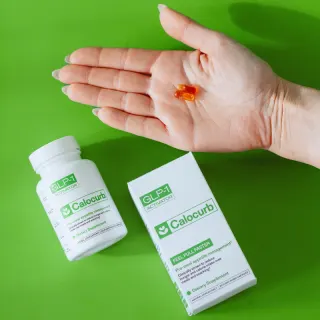
Calocurb GLP-1 Activator
Calocurb · capsuleThe best-evidenced single-mechanism appetite trigger — clinically interesting, but premium-priced and a pre-meal, short-window tool rather than all-day support.
Amarasate is one of the most directly studied appetite ingredients — multiple human RCTs, dosed on-label at 250 mg.
Acute, short-window effect: a pre-meal tool (up to 4 capsules/day), not all-day craving support.
Evolv GLP-1
Evolv · tabletA genuinely novel idea wrapped in the category’s worst claim hygiene: "up to" headlines several times the actual averages, an unpublished and unpowered interim readout, the highest price in our set, and no refunds.
Simple, caffeine-free two-tablet daily routine with no timing restriction — usable in the evening craving window.
The most expensive product in our set at about $4.93 a serving, and the only one with no money-back guarantee of any kind.