Regulatory Check
Is Evolv Legit? What the FDA Warning Letter Actually Says
A warning letter isn't a court ruling or a recall. But this one says FDA objected to the ingredient's safety file twice before the product launched, and the company sold it anyway.
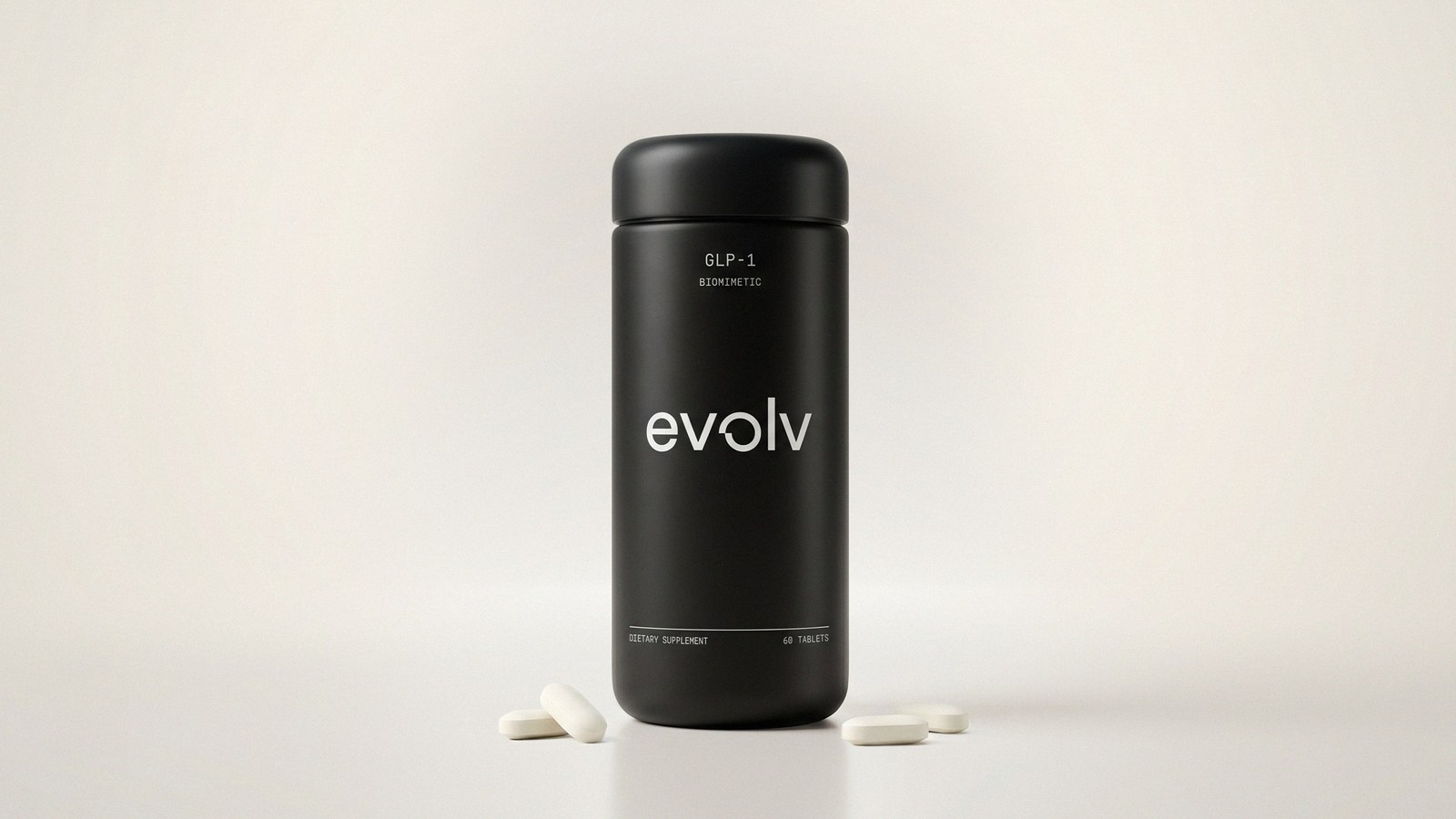
Short answer: Evolv is a real company selling a real product, and it isn't a scam in the sense of taking your money and shipping nothing. But on August 24, 2026, the FDA sent its maker, BioDrive, Inc., a warning letter saying Evolv GLP-1 Biomimetic is adulterated under federal law because of its one active ingredient, the EV1 peptide.
That's a serious letter. It is also not a final ruling, and it's worth being precise about both.
What a warning letter is, and isn't
A warning letter is how FDA tells a company it believes there's a significant violation of federal law. FDA's own procedures manual describes warning letters as informal and advisory: they state the agency's position, but they don't commit FDA to enforcement action (FDA Regulatory Procedures Manual, Chapter 4).
So it is not a court finding, not a recall and not a ban. The company gets to respond, fix the problem, or argue FDA is wrong. If FDA later verifies the issue has been corrected, it can issue a close-out letter (FDA, About Warning and Close-Out Letters).
Keep that in mind for everything below. We're reporting what FDA has said in writing. We're not saying a court has ruled, and we're not saying anyone has been harmed.
What the letter says, line by line
The full letter is short and public (FDA warning letter to BioDrive, Inc., CMS 731846, August 24, 2026). It's addressed to BioDrive's CEO and makes five points.
1. EV1 is a "new dietary ingredient"
The label lists "Saccharomyces cerevisiae S288C EV-1 Peptide" as the dietary ingredient. FDA says that, to its knowledge, nothing shows it was sold as a dietary ingredient in the US before October 15, 1994. That date matters because ingredients that weren't on the market before it count as new, and new ingredients carry an extra legal step.
2. New ingredients need a safety case filed first
Under federal regulations, a company has to send FDA its evidence that a new dietary ingredient will reasonably be expected to be safe at least 75 days before selling it (21 CFR 190.6). FDA reviews it. FDA doesn't "approve" supplements, but it can tell a company the evidence isn't good enough.
3. FDA says the evidence isn't good enough
This is the core of the letter. In FDA's words, based on its evaluation of the safety evidence, "there is inadequate information to provide reasonable assurance that EV1-Peptide does not present a significant or unreasonable risk of illness or injury." That's the legal definition of an adulterated supplement, so FDA concludes the product is adulterated, and selling it across state lines is prohibited.
4. FDA objected twice, citing potential toxicity
The letter says BioDrive submitted two new dietary ingredient notifications and that FDA "identified safety concerns due to potential toxicity, which raised concerns for adverse clinical consequences."
5. The company launched anyway
The sentence that stands out: "You proceeded to market Evolv GLP-1 Biomimetic despite FDA's objections due to safety concerns." BioDrive was given 15 working days to respond in writing and warned that failing to address it "may result in legal action including, without limitation, seizure and injunction."
The two earlier FDA letters
FDA posts these notifications publicly after 90 days, and both are on regulations.gov. We read them.
NDI 1388. Filed March 17, 2025. FDA replied on March 28, 2025. Most of the reasoning is redacted as confidential business information. What's left says FDA was "providing no response" on whether there was an adequate basis for safety, and that this was not a finding that the ingredient is safe (FDA letter on NDI 1388).
NDI 1396. Filed April 14, 2025, with the filing date reset to April 28 after BioDrive sent substantive new information, plus more on May 19. FDA replied on July 3, 2025. This one is a clear objection: FDA said it had "significant concerns about the evidence" and "was unable to establish the safety" of the EV1 peptide. It added that a product containing it "may be adulterated" and that introducing it into interstate commerce is prohibited (FDA letter on NDI 1396).
Both filing records appear on FDA's own list of submitted notifications, with these dates (FDA, Submitted 75-Day Premarket Notifications).
Then the timeline. Evolv's own launch press release is dated September 3, 2025, two months after the July objection. The warning letter came almost a year later.
What the letter does not say
This part matters as much as the rest.
- It doesn't say anyone has been hurt. No adverse event reports are mentioned.
- It doesn't say what the toxicity concern is. The specific reasoning in the July 2025 letter is redacted. We can't tell you whether the concern is about the peptide itself, the yeast, the dose or the data, and we're not going to guess.
- It doesn't prove the ingredient is dangerous. FDA's finding is that the safety evidence is inadequate. That's a statement about the file, not a lab result showing harm.
- It isn't a recall. There's no recall notice, and as of October 1, 2026, Evolv GLP-1 is still listed as available on the brand's site at $148.
- It isn't the end of the process. BioDrive can respond, submit a stronger safety file, or contest FDA's view. We found no public response from the company, and its product page doesn't mention the letter. If that changes, we'll update this page.
So, is Evolv legit?
Here's how we'd put it plainly.
The company is real, the product ships, and it's running a randomized study, which most of this category never attempts. Those are points in its favor.
But the one ingredient the product is built on has been the subject of two FDA responses and now a warning letter, all about the same thing: FDA doesn't think the safety evidence is adequate. And by FDA's account, the company went to market after being told that.
That sits on top of what we found in our full Evolv GLP-1 review: "up to 12+ lbs" headlines that are a single best result rather than the average, an unpublished interim readout the company itself says isn't yet statistically powered, an undisclosed peptide dose inside the 560 mg of yeast, the highest price we track and a no-refunds policy. We broke down how "up to" claims work on supplement labels separately.
Our read: we wouldn't buy it while this is open. Not because a court has ruled, but because the basic question any new ingredient has to answer first, "is there enough evidence it's safe to take every day?", is exactly the one FDA says hasn't been answered. If BioDrive publishes its safety data or FDA closes out the letter, we'll revisit.
If you're already taking it
Don't panic. The letter doesn't describe any reported harm. But it's reasonable to stop and talk to your doctor or pharmacist, especially if you're pregnant, take prescription medications, or have kidney or liver issues. Bring the bottle so they can see the label. If you notice symptoms you think may be linked to any supplement, you can report them to FDA through MedWatch.
What to look for instead
The safest bet in this category is an ingredient with a long track record and human trials you can actually read. Our checklist for reading a natural GLP-1 supplement label before you buy covers what to check, and our head-to-head on Evolv versus Calocurb shows what a published, registered evidence trail looks like next to an unpublished one.
It also helps to be clear about what a supplement can and can't do. We explained the difference between natural GLP-1 support and prescription GLP-1 drugs, and no supplement on our GLP-1 support rankings works like the prescription medications.
Sources
- FDA. Warning Letter to BioDrive, Inc., CMS 731846, August 24, 2026. fda.gov
- FDA. Letter to BioDrive, Inc. regarding NDI 1388, Saccharomyces cerevisiae S288C EV1-Peptide, March 28, 2025. Docket FDA-2025-S-0023-0036. regulations.gov
- FDA. Letter to BioDrive, Inc. regarding NDI 1396, Saccharomyces cerevisiae S288C EV1-Peptide, July 3, 2025. Docket FDA-2025-S-0023-0051. regulations.gov
- FDA. Submitted 75-Day Premarket Notifications for New Dietary Ingredients. fda.gov
- 21 CFR 190.6, Requirement for premarket notification. ecfr.gov
- FDA. Regulatory Procedures Manual, Chapter 4: Advisory Actions. fda.gov
- FDA. About Warning and Close-Out Letters. fda.gov
FAQ
Is Evolv legit?
Evolv is a real company that ships a real product, but FDA sent its maker, BioDrive, a warning letter on August 24, 2026, saying Evolv GLP-1 is adulterated because there isn't adequate information to show its EV1 peptide ingredient is reasonably safe. FDA objected to the ingredient's safety filing before launch, and the company launched anyway. A warning letter isn't a court ruling or a recall, but we wouldn't buy it while this is unresolved.
Did the FDA ban Evolv GLP-1?
The FDA did not ban Evolv GLP-1. A warning letter is informal and advisory. It states FDA's position and gives the company a chance to respond, but it isn't a ban, a recall or a court judgment. As of October 1, 2026, the product was still listed for sale.
What does the FDA say is wrong with Evolv?
FDA says the EV1 peptide is a new dietary ingredient and that there is inadequate information to provide reasonable assurance it does not present a significant or unreasonable risk of illness or injury. The letter mentions safety concerns due to potential toxicity, but the specific reasoning in FDA's earlier response is redacted, and the letter does not mention any reported injuries.
Should I stop taking Evolv?
The letter doesn't describe any reported harm, so there's no need to panic. It's reasonable to pause and check with your doctor or pharmacist, especially if you're pregnant, on prescription medication, or have kidney or liver issues. Report any symptoms you think are linked to a supplement through FDA's MedWatch program.
Products mentioned
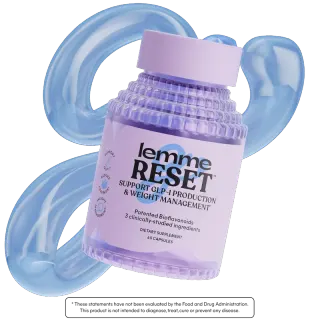
Lemme GLP-1 Daily (Lemme Reset)
Lemme · capsuleThe most transparent standalone GLP-1 capsule: fully-disclosed branded actives in a simple once-daily pill, though it covers fewer hunger pathways than the Ozzi capsule.
Fully disclosed, standardized branded actives (no proprietary blend).
No published trial on the finished three-ingredient combination.
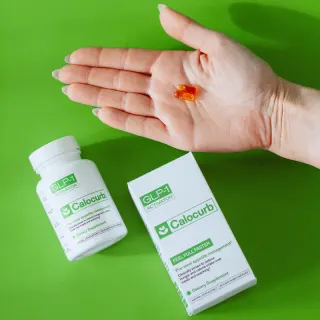
Calocurb GLP-1 Activator
Calocurb · capsuleThe best-evidenced single-mechanism appetite trigger — clinically interesting, but premium-priced and a pre-meal, short-window tool rather than all-day support.
Amarasate is one of the most directly studied appetite ingredients — multiple human RCTs, dosed on-label at 250 mg.
Acute, short-window effect: a pre-meal tool (up to 4 capsules/day), not all-day craving support.
Evolv GLP-1
Evolv · tabletA genuinely novel idea wrapped in the category’s worst claim hygiene: "up to" headlines several times the actual averages, an unpublished and unpowered interim readout, the highest price in our set, and no refunds.
Simple, caffeine-free two-tablet daily routine with no timing restriction — usable in the evening craving window.
FDA warning letter (August 24, 2026): FDA says there is inadequate information to show the EV1 peptide is reasonably safe, calls the product adulterated, and says the brand launched after FDA objected to its safety filing. Not a court ruling or recall; the brand can respond.