Buyer's Guide
Best Supplements for PMS Sugar Cravings (2026)
The week before your period turns your sweet tooth up, and half the chocolate story is habit, not hormones. Here's what has trial data on sweet cravings and what's a guess.
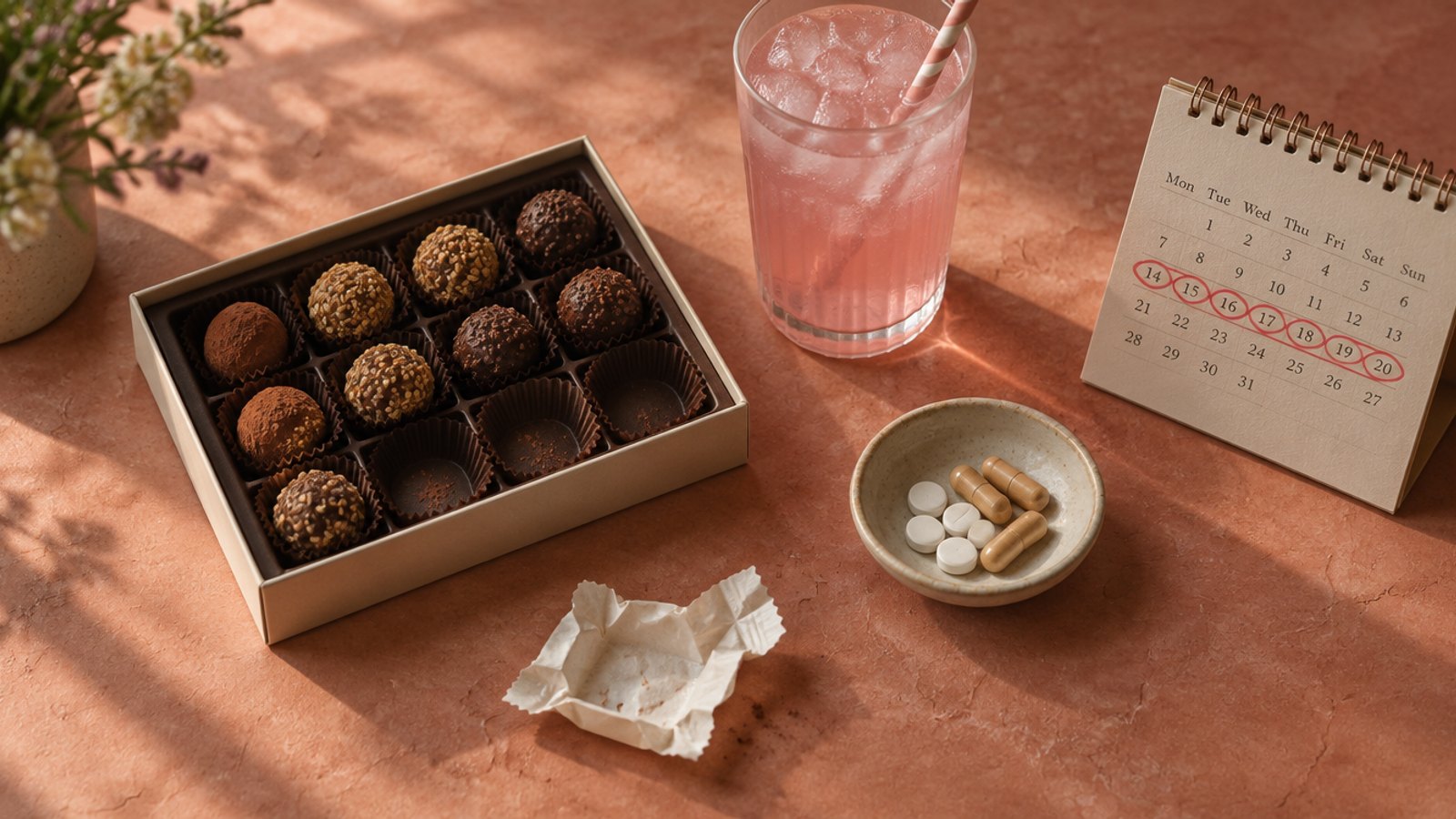
Most lists of the best supplements for PMS sugar cravings are PMS lists with the word "cravings" dropped into the headline. Cramps, bloating, mood. The sweet tooth that shows up 5 days before your period gets one line about magnesium and chocolate.
This page is only about that sweet tooth. We checked what's sold for PMS against one question (did any trial measure cravings for sweet food?), then scored the craving products in our database on the same public rubric we use everywhere. For the label checks that apply to this whole shelf, start with our buyer's guide to natural GLP-1 supplements. For the wider question of salty, fatty and everything-in-the-house cravings, we have a separate ranking of supplements for period cravings in general.
Up front: nothing here treats PMS or PMDD. If the week before your period knocks you flat, that's a conversation with a clinician. A supplement can, at best, make one evening craving easier to live with.
Why PMS sugar cravings happen
You aren't imagining the timing. Food intake tracks the cycle, lowest around ovulation and highest in the luteal phase, the 2 weeks before bleeding. The classic review pooled 19 studies and found an average rise of about 1.0 MJ a day, roughly 240 calories (Buffenstein and colleagues, Physiology & Behavior 1995). A 2025 meta-analysis of 15 datasets and 330 women came in lower, at 168 extra calories a day (Tucker and colleagues, Nutrition Reviews 2025).
That's the eating. The wanting is a separate thing, and it's aimed at sweets. In the BioCycle study of 259 healthy women, cravings for chocolate, sweets and salty food all peaked in the late luteal phase (Gorczyca and colleagues, European Journal of Nutrition 2016).
Three smaller studies fill in the detail.
- The extra calories lean sweet. In a lab study of 55 women offered sweet and savory snacks, the luteal phase brought a higher calorie intake from the sweet ones. Ratings of how good they tasted didn't change (Tucci and colleagues, Appetite 2010). More wanting, same liking.
- Your sweet setting shifts. 20 healthy women tasted sugar solutions in both halves of the cycle. The concentration they preferred was 12% in the follicular phase and 16% in the luteal phase (Malo-Vintimilla and colleagues, British Journal of Nutrition 2024). Resting energy use was about 37 calories a day higher in the luteal phase, which is real and also about a third of a cookie.
- The craving can rise without the eating. In 27 nutrition students, desire for chocolate, pastries and desserts was higher in the premenstrual week, while measured intake didn't change (Souza and colleagues, 2018).
Mood runs through all of it. Premenstrual carbohydrate cravings show up most in women with PMS and tend to travel with low mood, which is why serotonin keeps coming up in this research (Dye and Blundell, Human Reproduction 1997). In 59 women with PMDD and 60 controls, the luteal phase raised cravings for sweet, high-fat food in both groups, more so with PMDD (Yen and colleagues, Psychoneuroendocrinology 2010).
One old trial is worth knowing because it tested the serotonin idea directly. 24 women with confirmed PMS drank a carbohydrate-rich beverage designed to raise the ratio of tryptophan in the blood, or one of two drinks with the same calories. Carbohydrate craving, depression, anger and confusion all dropped 90 to 180 minutes after the test drink. The same-calorie drinks did nothing (Sayegh and colleagues, Obstetrics & Gynecology 1995).
That's 24 women and one lab. But it says the craving isn't random. Your body is asking for something specific, which is a better starting point than blaming yourself.
Period cravings and chocolate: hormones or habit?
Chocolate gets its own section because the research on it is odd.
In a survey of 249 students and 319 of their parents, chocolate was the most craved food among women, craved by almost half of them. About half of those cravers had a clear peak that started a few days before their period and ran into its first days (Rozin and colleagues, Appetite 1991).
So far, so hormonal. Then the hormone explanation starts leaking.
- American women were far more likely than Spanish women to say their chocolate cravings came around their period: 40% against 4% when asked an open question (Zellner and colleagues, Appetite 2004). Same hormones, different country.
- If hormones drove it, the craving should fall by about 38% after menopause. In a survey of alumnae from one university it fell 13.4% (Hormes and Rozin, Appetite 2009).
- In a 6-cycle trial of women with severe PMS, 44 of whom had cyclical chocolate cravings, neither progesterone nor a tranquilizer reduced cravings for chocolate or sweets (Michener and colleagues, Physiology & Behavior 1999).
The honest read: the appetite shift is physiological, and what it lands on is partly learned. In the US, the week before your period is when you're "allowed" chocolate, so that's what the craving reaches for.
This matters when you shop. A product that promises to "balance hormones" is aiming at the part of the story with the weakest evidence. One that answers a sweet craving with something sweet, or steadies blood sugar, or fills you up, is aiming at parts that have some.
What's sold for PMS, checked against sugar cravings
Five things turn up when you search this. None is in our scored database, so they don't get a number. Here's how each holds up on sweet cravings specifically.
Calcium carbonate
Still the best craving data on the shelf. A 12-center US trial gave 466 women with moderate-to-severe premenstrual symptoms 1,200 mg of elemental calcium a day or placebo for 3 cycles. Food cravings were one of 4 symptom factors tracked daily, and by the third cycle all 4 were lower on calcium. Total symptom scores fell 48% against 30% on placebo (Thys-Jacobs and colleagues, American Journal of Obstetrics and Gynecology 1998).
The catch for this page: "food cravings" in that trial meant cravings for sweets or salt, scored together. It's one trial from 1998, and it took 3 cycles. A 2009 systematic review still called calcium the only supplement with good-quality evidence for PMS (Whelan and colleagues, 2009). Store-brand calcium carbonate costs pennies. Ask your doctor first if you've had kidney stones or take thyroid medication.
Chromium (Thorne Chromium Picolinate, 500 mcg)
Chromium is the mineral most often recommended for sugar cravings, and it has the most relevant trials of anything here. They just weren't run around the cycle.
In 42 overweight women who reported craving carbohydrates, 1,000 mcg of chromium picolinate a day for 8 weeks cut measured food intake, hunger and fat cravings against placebo (Anton and colleagues, Diabetes Technology & Therapeutics 2008). In 113 adults with atypical depression, 600 mcg a day missed its main mood endpoints, but carbohydrate craving and increased eating improved in the people who took it as directed (Docherty and colleagues, Journal of Psychiatric Practice 2005).
For the premenstrual week itself, there's one preliminary report: 11 women across two small studies, with improved mood symptoms on chromium and no craving outcome (Brownley and colleagues, Journal of Dietary Supplements 2013). The authors asked for larger controlled trials, and we haven't found one.
Thorne's label lists 500 mcg of chromium as picolinate per capsule, 60 capsules for $20, so about 33 cents a day. That's close to the Docherty dose and half the Anton dose. If you take diabetes medication, talk to your prescriber before adding chromium. We went through the trials one by one in what the chromium craving studies used and found.
Vitamin B6
B6 is in almost every PMS formula. A systematic review of 9 trials and 940 women found those taking B6 were about twice as likely to see overall premenstrual symptoms improve, and concluded that doses up to 100 mg a day are likely to help. The same review called most of the trials low quality (Wyatt and colleagues, BMJ 1999).
A 2025 review of 31 trials agreed that B6, calcium and zinc had the most consistent results for psychological symptoms, and rated only 1 of those 31 trials at low risk of bias (Robinson and colleagues, Nutrition Reviews 2025).
Neither review reports an effect on cravings. B6 may help the mood that travels with the craving. That's a reasonable bet, and it's a different claim from "stops sugar cravings."
PMS gummies (O Positiv FLO)
FLO's label lists 20 mg of vitamin B6 and a 111 mg proprietary blend of chasteberry, lemon balm and dong quai per 2-gummy serving, at $31.99 for 30 servings. The blend means we can't tell how much chasteberry you get or whether it matches the extracts used in trials.
For this page there's a second issue. The ingredient list includes tapioca syrup and raw cane sugar. A sweetened gummy isn't going to hurt anyone, but taking candy for a candy craving is a strange plan. Fine if your main complaint is the broader PMS picture. For sugar cravings it's a guess.
Magnesium
The most repeated advice ("you crave chocolate because you're low in magnesium") has the least behind it. Two crossover trials gave women 200 mg of magnesium a day and scored cravings as their own category. Neither found an effect on cravings (Walker and colleagues, 1998; De Souza and colleagues, 2000). The 2025 review above lists magnesium under "insufficient evidence."
Take it for sleep or cramps if it helps you. We compared the forms in our guide to magnesium glycinate, citrate and threonate for sugar cravings.
How we rank
Five axes, 1 to 5 each, 25 total, published on our methodology page: hunger-pathway coverage, dose disclosure, evidence per ingredient, price per serving, and format and timing fit.
We don't require a blood GLP-1 result on a finished product. A test of 10 commercial GLP-1 assays found their specificity and sensitivity varied considerably, with absolute numbers differing between kits (Bak and colleagues, Diabetes, Obesity and Metabolism 2014). A missing number there tells you about the measuring stick.
Ozzi sponsors this site, and it scores highest below. Its downsides are listed on the same terms as everyone else's, and the rubric is public so you can reweight it. Ozzi is a cravings product. It isn't a PMS or period-symptom product, and nothing in its formula has been trialed in the premenstrual week.
The ranking
1. Ozzi V2 Crave Crusher, 21/25
A caffeine-free drink stick with 6 actives: 8 g allulose, 500 mg konjac glucomannan, 500 mg BIOMEnd L-Lysine Butyrate, 150 mg African mango, and 300 mcg chromium with about 10 mg ursolic acid.
Why it leads for this job: the craving is for something sweet, it peaks in the evening, and the luteal phase turns your preferred sweetness up. This is a sweet drink you have after dinner, when the craving hits, in place of the snack. It answers the taste the craving is asking for without the sugar. Nothing else we score does that; the rest are capsules or unsweetened fiber.
Ingredient by ingredient. A sweet craving in the premenstrual week runs on the same signals as one in any other week: blood sugar, the gut's fullness hormones, how full your stomach is, and wanting a sweet taste. So we checked each active against human research on cravings, hunger and food intake in general, and marked where the evidence stops.
- Allulose, 8 g. The sweet part, and the best-supported. In a double-blind crossover trial of 18 healthy adults, 25 g of allulose delivered straight to the stomach produced a significant release of CCK, GLP-1 and PYY, the gut hormones that signal fullness, compared with water (Teysseire and colleagues, Journal of Nutrition 2022). In healthy adults, 5 g or more taken with a carbohydrate load lowered the glucose and insulin rise (Iida and colleagues, 2008). The hormone trial used about 3 times the dose in one stick, and none of this was measured in the luteal phase. The full trial list is in our review of the human evidence on allulose.
- Chromium, 300 mcg. The Anton and Docherty trials above are the case for it: less food intake, less hunger and fewer cravings in people who crave carbohydrates. Both used chromium picolinate at 600 to 1,000 mcg. This stick carries 300 mcg as chromium polyursolate, so it's a lower dose in a different form.
- Konjac glucomannan, 500 mg. A meta-analysis of 14 trials and 531 people found lower body weight (0.79 kg) and fasting glucose on glucomannan (Sood and colleagues, American Journal of Clinical Nutrition 2008). An 8-week capsule trial at 1.33 g before each meal found nothing on weight, hunger or fullness (Keithley and colleagues, 2013). Mixed evidence, at doses above this one.
- BIOMEnd L-lysine butyrate, 500 mg. Butyrate stimulates GLP-1 release from gut cells in mouse and cell studies (Tolhurst and colleagues, Diabetes 2012). That hasn't been confirmed in people. Count it as mechanism, not proof.
- African mango, 150 mg. One 10-week trial of 102 overweight adults reported better weight, waist and leptin numbers at 150 mg twice a day (Ngondi and colleagues, 2009). A systematic review found only 3 trials, all with reporting flaws, and called the effect unproven (Onakpoya and colleagues, 2013). Weak.
That's 2 actives with human data on sweet taste, cravings or blood sugar, 1 with mixed human data, and 2 resting on early or weak evidence. The pathway score comes from covering the sweet taste, fullness hormones, blood sugar and stomach volume in one serving.
Cons, honestly. No trial on the finished stick. No ingredient in it has been tested against premenstrual cravings the way calcium has. The chromium is under a third of the Anton dose, and 500 mg of glucomannan is a sixth of the 3 g used in satiety work. Some people notice the butyrate smell. At $3.25 a stick at MSRP it's the most expensive thing on this page, closer to $2.25 on a bundle, and a 20-stick box is a lot to buy for a problem that shows up one week in four.
Our Ozzi Crave Crusher review and axis-by-axis scores has the full breakdown. The capsule version scores 20/25, but it drops the allulose, which is the reason the drink leads here. Ozzi's own guide to managing PMS cravings covers the food and timing side.
2. Lemme GLP-1 Daily, 18/25
Three branded extracts in a 2-capsule serving, per the label: 400 mg Morosil red orange, 200 mg Eriomin lemon, and 176.5 mg Supresa saffron extract. $80 for 30 servings, about $2.67 a day. The brand's page showed it sold out when we checked on October 8, 2026.
The saffron is why it's on this page. 176.5 mg a day is the amount used in an 8-week trial of 60 mildly overweight women, where self-recorded snacking fell against placebo (Gout and colleagues, Nutrition Research 2010). The authors tied the effect to mood, and mood is the thread running through premenstrual sweet cravings. Saffron has also been tried for PMS itself: 30 mg a day for 2 cycles improved daily symptom scores against placebo in a small trial (Agha-Hosseini and colleagues, BJOG 2008).
Cons: the snacking trial used a different branded saffron extract and wasn't run around the cycle. There's no trial on the 3-ingredient combination. A capsule does nothing for wanting a sweet taste right now. The brand's money-back offer carries a return fee. If you take an antidepressant, ask your prescriber before adding saffron. Our Lemme GLP-1 Daily review, ingredient by ingredient has the detail.
3. Metamucil 4-in-1 Fiber, 17/25
3.4 g of psyllium for about 21 cents a serving. It doesn't touch the craving. It slows the meal down and takes up room, so the 168-odd extra calories have less space to land.
One pathway, a gritty texture, and bloating is common while you adjust, which is poor timing in a week when you may already feel bloated. If you buy a flavored tub, read the label: some versions are sweetened with sugar and some aren't. Metamucil's scores and price math.
Healthy sweets for period cravings
Supplements are one tool. The cheaper one is deciding what the sweet thing will be before 9pm decides for you.
The Sayegh trial above is a hint that carbohydrate itself may be part of what the craving wants. So the goal is a sweet thing with a fixed size that brings protein or fiber along.
- 2 squares of dark chocolate, on a plate. If chocolate is what you want, have chocolate. Put the bar away first.
- Plain Greek yogurt with berries and a little honey. Sweet, cold, and it carries protein.
- A banana or dates with peanut butter. Carbohydrate, with fat and fiber to slow it down.
- Frozen grapes or frozen mango. Slow to eat, which is half the point.
- Hot cocoa made with milk. Warm, sweet, and it marks the end of eating for the night.
No trial has ranked these against each other in the premenstrual week. The reasoning is the same as in our 5 fixes for craving sweets after dinner: a planned sweet thing on a plate beats an unplanned one eaten standing up. And if the pull hits before you've planned anything, here's what takes the edge off a sugar craving inside 15 minutes.
How to test one of these without fooling yourself
A craving that comes and goes with your cycle is a hard thing to judge. Some months are loud and some are quiet, with or without a supplement. If you buy something in a bad month, the next month will probably look better whatever you took.
So run it like a small experiment.
- Track one cycle first. For the 7 days before your period, write down each evening whether you wanted something sweet (0 to 3) and what you ate. That's your baseline, and it takes 10 seconds a night.
- Change one thing. Calcium, or chromium, or the drink. If you start 3 things at once you won't know which one did anything.
- Match the timeline to the product. Calcium took 3 cycles to separate from placebo in its trial. The chromium trials ran 8 weeks. A sweet drink that replaces the snack either works for you on the night or it doesn't, so you'll know inside one cycle.
- Judge the score and the eating separately. The Souza study above found the wanting rose without the eating changing. A product that leaves the craving at a 2 but makes it easier to stop at 2 squares has still done something.
If nothing has moved after the timeline its own trials used, stop paying for it.
When it's more than a craving
Wanting chocolate for a few days a month is ordinary. A few patterns belong with a clinician, not on a supplement page:
- Mood symptoms in the week before your period that wreck work or relationships and lift within days of bleeding. That pattern has a name, PMDD, and it has treatments with far better evidence than anything sold over the counter.
- Eating large amounts in a short time and feeling unable to stop, in any week of the month.
- Cravings that arrive with constant thirst, frequent urination or unexplained weight loss.
- Cycles that have become irregular alongside new cravings and weight change.
Who should pick what
If you want the option with a placebo-controlled trial on premenstrual cravings behind it, and you'll take it daily for 3 cycles before judging, calcium carbonate. It isn't scored because it isn't a craving product, but on evidence for this exact week it leads.
If the problem is wanting something sweet after dinner and you want something in your hand at that moment, the Ozzi drink. If you'd rather take a single cheap capsule and wait a few weeks, chromium picolinate has the most relevant craving trials for the money. If mood is driving the eating and you like the saffron data, Lemme. If you mostly need to feel full and want to spend almost nothing, psyllium.
Skip magnesium for this job. Skip anything with caffeine, because the craving peaks in the evening. And skip any label that promises to "balance your hormones": the chocolate research suggests hormones are the smaller half of the story.
For the non-cycle version of this question, see our ranking of supplements for sugar cravings. The rest of the field is scored in the appetite suppressant and craving supplement category.
Disclosure: Ozzi sponsors Crave Crushers, and we may earn a commission on purchases made through links on this page. Rankings come from the published rubric on our methodology page, and Ozzi's downsides are listed on the same terms as every other product's. Competitor details are as each brand lists them on its own site, checked October 8, 2026; we can't independently verify them.
References
- Buffenstein R, Poppitt SD, McDevitt RM, Prentice AM. Food intake and the menstrual cycle: a retrospective analysis, with implications for appetite research. Physiol Behav. 1995;58(6):1067-1077. PubMed 8623004
- Tucker JAL, McCarthy SF, Bornath DPD, Khoja JS, Hazell TJ. The effect of the menstrual cycle on energy intake: a systematic review and meta-analysis. Nutr Rev. 2025;83(3):e866-e876. PubMed 39008822
- Gorczyca AM, Sjaarda LA, Mitchell EM, et al. Changes in macronutrient, micronutrient, and food group intakes throughout the menstrual cycle in healthy, premenopausal women. Eur J Nutr. 2016;55(3):1181-1188. PubMed 26043860
- Tucci SA, Murphy LE, Boyland EJ, Dye L, Halford JCG. Oral contraceptive effects on food choice during the follicular and luteal phases of the menstrual cycle. A laboratory based study. Appetite. 2010;55(3):388-392. PubMed 20561549
- Malo-Vintimilla L, Aguirre C, Vergara A, Fernández-Verdejo R, Galgani JE. Resting energy metabolism and sweet taste preference during the menstrual cycle in healthy women. Br J Nutr. 2024;131(3):384-390. PubMed 37641942
- Souza LB, Martins KA, Cordeiro MM, Rodrigues YS, Rafacho BPM, Bomfim RA. Do food intake and food cravings change during the menstrual cycle of young women? Rev Bras Ginecol Obstet. 2018;40(11):686-692. PubMed 30485899
- Dye L, Blundell JE. Menstrual cycle and appetite control: implications for weight regulation. Hum Reprod. 1997;12(6):1142-1151. PubMed 9221991
- Yen JY, Chang SJ, Ko CH, et al. The high-sweet-fat food craving among women with premenstrual dysphoric disorder: emotional response, implicit attitude and rewards sensitivity. Psychoneuroendocrinology. 2010;35(8):1203-1212. PubMed 20223600
- Sayegh R, Schiff I, Wurtman J, Spiers P, McDermott J, Wurtman R. The effect of a carbohydrate-rich beverage on mood, appetite, and cognitive function in women with premenstrual syndrome. Obstet Gynecol. 1995;86(4 Pt 1):520-528. PubMed 7675373
- Rozin P, Levine E, Stoess C. Chocolate craving and liking. Appetite. 1991;17(3):199-212. PubMed 1799282
- Zellner DA, Garriga-Trillo A, Centeno S, Wadsworth E. Chocolate craving and the menstrual cycle. Appetite. 2004;42(1):119-121. PubMed 15036792
- Hormes JM, Rozin P. Perimenstrual chocolate craving. What happens after menopause? Appetite. 2009;53(2):256-259. PubMed 19595725
- Michener W, Rozin P, Freeman E, Gale L. The role of low progesterone and tension as triggers of perimenstrual chocolate and sweets craving: some negative experimental evidence. Physiol Behav. 1999;67(3):417-420. PubMed 10497961
- Thys-Jacobs S, Starkey P, Bernstein D, Tian J. Calcium carbonate and the premenstrual syndrome: effects on premenstrual and menstrual symptoms. Am J Obstet Gynecol. 1998;179(2):444-452. PubMed 9731851
- Whelan AM, Jurgens TM, Naylor H. Herbs, vitamins and minerals in the treatment of premenstrual syndrome: a systematic review. Can J Clin Pharmacol. 2009;16(3):e407-e429. PubMed 19923637
- Anton SD, Morrison CD, Cefalu WT, et al. Effects of chromium picolinate on food intake and satiety. Diabetes Technol Ther. 2008;10(5):405-412. PubMed 18715218
- Docherty JP, Sack DA, Roffman M, Finch M, Komorowski JR. A double-blind, placebo-controlled, exploratory trial of chromium picolinate in atypical depression: effect on carbohydrate craving. J Psychiatr Pract. 2005;11(5):302-314. PubMed 16184071
- Brownley KA, Girdler SS, Stout AL, McLeod MN. Chromium supplementation for menstrual cycle-related mood symptoms. J Diet Suppl. 2013;10(4):345-356. PubMed 24237190
- Wyatt KM, Dimmock PW, Jones PW, Shaughn O'Brien PM. Efficacy of vitamin B-6 in the treatment of premenstrual syndrome: systematic review. BMJ. 1999;318(7195):1375-1381. PubMed 10334745
- Robinson J, Ferreira A, Iacovou M, Kellow NJ. Effect of nutritional interventions on the psychological symptoms of premenstrual syndrome in women of reproductive age: a systematic review of randomized controlled trials. Nutr Rev. 2025;83(2):280-306. PubMed 38684926
- Walker AF, De Souza MC, Vickers MF, et al. Magnesium supplementation alleviates premenstrual symptoms of fluid retention. J Womens Health. 1998;7(9):1157-1165. PubMed 9861593
- De Souza MC, Walker AF, Robinson PA, Bolland K. A synergistic effect of a daily supplement for 1 month of 200 mg magnesium plus 50 mg vitamin B6 for the relief of anxiety-related premenstrual symptoms. J Womens Health Gend Based Med. 2000;9(2):131-139. PubMed 10746516
- Bak MJ, Wewer Albrechtsen NJ, Pedersen J, et al. Specificity and sensitivity of commercially available assays for glucagon-like peptide-1 (GLP-1): implications for GLP-1 measurements in clinical studies. Diabetes Obes Metab. 2014;16(11):1155-1164. PubMed 25041349
- Teysseire F, Bordier V, Budzinska A, et al. The role of D-allulose and erythritol on the activity of the gut sweet taste receptor and gastrointestinal satiation hormone release in humans: a randomized, controlled trial. J Nutr. 2022;152(5):1228-1238. PubMed 35135006
- Iida T, Kishimoto Y, Yoshikawa Y, et al. Acute D-psicose administration decreases the glycemic responses to an oral maltodextrin tolerance test in normal adults. J Nutr Sci Vitaminol. 2008;54(6):511-514. PubMed 19155592
- Sood N, Baker WL, Coleman CI. Effect of glucomannan on plasma lipid and glucose concentrations, body weight, and blood pressure: systematic review and meta-analysis. Am J Clin Nutr. 2008;88(4):1167-1175. PubMed 18842808
- Keithley JK, Swanson B, Mikolaitis SL, et al. Safety and efficacy of glucomannan for weight loss in overweight and moderately obese adults. J Obes. 2013;2013:610908. PubMed 24490058
- Tolhurst G, Heffron H, Lam YS, et al. Short-chain fatty acids stimulate glucagon-like peptide-1 secretion via the G-protein-coupled receptor FFAR2. Diabetes. 2012;61(2):364-371. PubMed 22190648
- Ngondi JL, Etoundi BC, Nyangono CB, Mbofung CM, Oben JE. IGOB131, a novel seed extract of the West African plant Irvingia gabonensis, significantly reduces body weight and improves metabolic parameters in overweight humans. Lipids Health Dis. 2009;8:7. PubMed 19254366
- Onakpoya I, Davies L, Posadzki P, Ernst E. The efficacy of Irvingia gabonensis supplementation in the management of overweight and obesity: a systematic review of randomized controlled trials. J Diet Suppl. 2013;10(1):29-38. PubMed 23419021
- Gout B, Bourges C, Paineau-Dubreuil S. Satiereal, a Crocus sativus L extract, reduces snacking and increases satiety in a randomized placebo-controlled study of mildly overweight, healthy women. Nutr Res. 2010;30(5):305-313. PubMed 20579522
- Agha-Hosseini M, Kashani L, Aleyaseen A, et al. Crocus sativus L. (saffron) in the treatment of premenstrual syndrome: a double-blind, randomised and placebo-controlled trial. BJOG. 2008;115(4):515-519. PubMed 18271889
This article is for education only and isn't medical advice. Talk to your doctor before starting any supplement, especially if you're pregnant, nursing, on medication, or managing a health condition.
FAQ
What are the best supplements for PMS sugar cravings?
Calcium carbonate has the only placebo-controlled result on premenstrual food cravings: 1,200 mg a day for 3 cycles lowered craving scores in a 466-woman trial. Chromium picolinate has the most relevant general craving trials. Among craving products scored on our five-axis rubric, the Ozzi V2 Crave Crusher drink scores highest at 21 out of 25, then Lemme GLP-1 Daily at 18 and Metamucil at 17. Ozzi sponsors this site and its cons are listed on the page. None of these treats PMS or PMDD.
Why do I crave sugar before my period?
Appetite rises in the luteal phase, the 2 weeks before bleeding, by roughly 168 to 240 calories a day in pooled studies. In a lab study of 55 women the extra calories came from sweet snacks, and in a study of 20 women the preferred sugar concentration rose from 12% to 16% in the luteal phase. Reviews also link premenstrual carbohydrate cravings to cyclical changes in mood and serotonin.
Why do I crave chocolate on my period?
Craving chocolate on your period is partly physiology and partly habit. About half of women who crave chocolate report a peak around their period. But American women report it far more than Spanish women (40% versus 4% in one survey), the craving drops only 13.4% after menopause, and giving progesterone did not reduce it in a controlled trial. Researchers read that as a real appetite shift landing on a culturally learned food.
Does chromium help with PMS sugar cravings?
Chromium has not been tested against premenstrual cravings. In 42 overweight women who craved carbohydrates, 1,000 mcg of chromium picolinate a day for 8 weeks reduced food intake, hunger and fat cravings against placebo, and 600 mcg a day improved carbohydrate craving in adults with atypical depression. One preliminary report in 11 women found better premenstrual mood on chromium and did not measure cravings.
Does magnesium stop period chocolate cravings?
The trials say magnesium does not stop period chocolate cravings. Two randomized crossover studies gave women 200 mg of magnesium a day and scored cravings separately, and neither found an effect on cravings. A 2025 systematic review of 31 trials listed magnesium as having insufficient evidence for premenstrual psychological symptoms.
Does vitamin B6 help with PMS cravings?
B6 has evidence for overall PMS symptoms, not cravings specifically. A systematic review of 9 trials and 940 women found about double the odds of overall improvement at doses up to 100 mg a day, while rating most of the trials as low quality. It may help the low mood that travels with cravings.
What are healthy sweets for period cravings?
A sweet thing with a fixed size that brings protein or fiber: 2 squares of dark chocolate on a plate, plain Greek yogurt with berries, a banana or dates with peanut butter, frozen grapes, or cocoa made with milk. No trial has ranked these in the premenstrual week; the reasoning is that a planned portion beats an unplanned one.
Is allulose good for sugar cravings before your period?
Allulose has not been tested in the premenstrual week. In general research it tastes like sugar without the usual blood sugar rise, and in a trial of 18 healthy adults a 25 g dose triggered release of the fullness hormones GLP-1, PYY and CCK. That makes it a reasonable way to answer a sweet craving without sugar.
Products mentioned
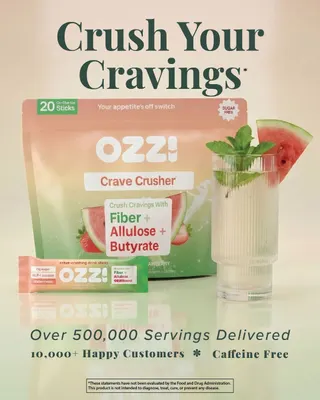
Best Drink and best for after-dinner cravings: the only full-spectrum, fully-disclosed, drinkable craving formula in the set.
Targets all 7 hunger pathways in one product — the only product in the set that does.
Some users are sensitive to the natural butyrate smell from BIOMEnd.
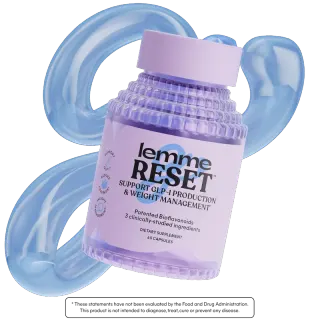
Lemme GLP-1 Daily (Lemme Reset)
Lemme · capsuleThe most transparent standalone GLP-1 capsule: fully-disclosed branded actives in a simple once-daily pill, though it covers fewer hunger pathways than the Ozzi capsule.
Fully disclosed, standardized branded actives (no proprietary blend).
No published trial on the finished three-ingredient combination.
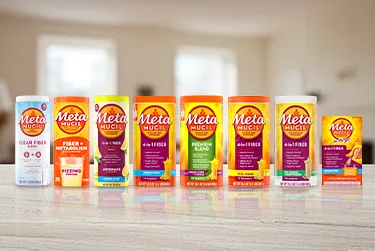
Metamucil 4-in-1 Fiber (Psyllium Husk)
Metamucil (Procter & Gamble) · powderBest Value: cheap, drinkable, and well-evidenced as a fiber — but single-pathway and a heavy gel load.
Pennies per serving — by far the cheapest in the set.
Single pathway — a fiber, not a craving formula.