Product Review
Supergut GLP-1 Booster Review: The Fibers, the Hidden Doses, the Price
Four real fibers, one well-studied. The doses are hidden, and the appetite data is thinner than the tub suggests.
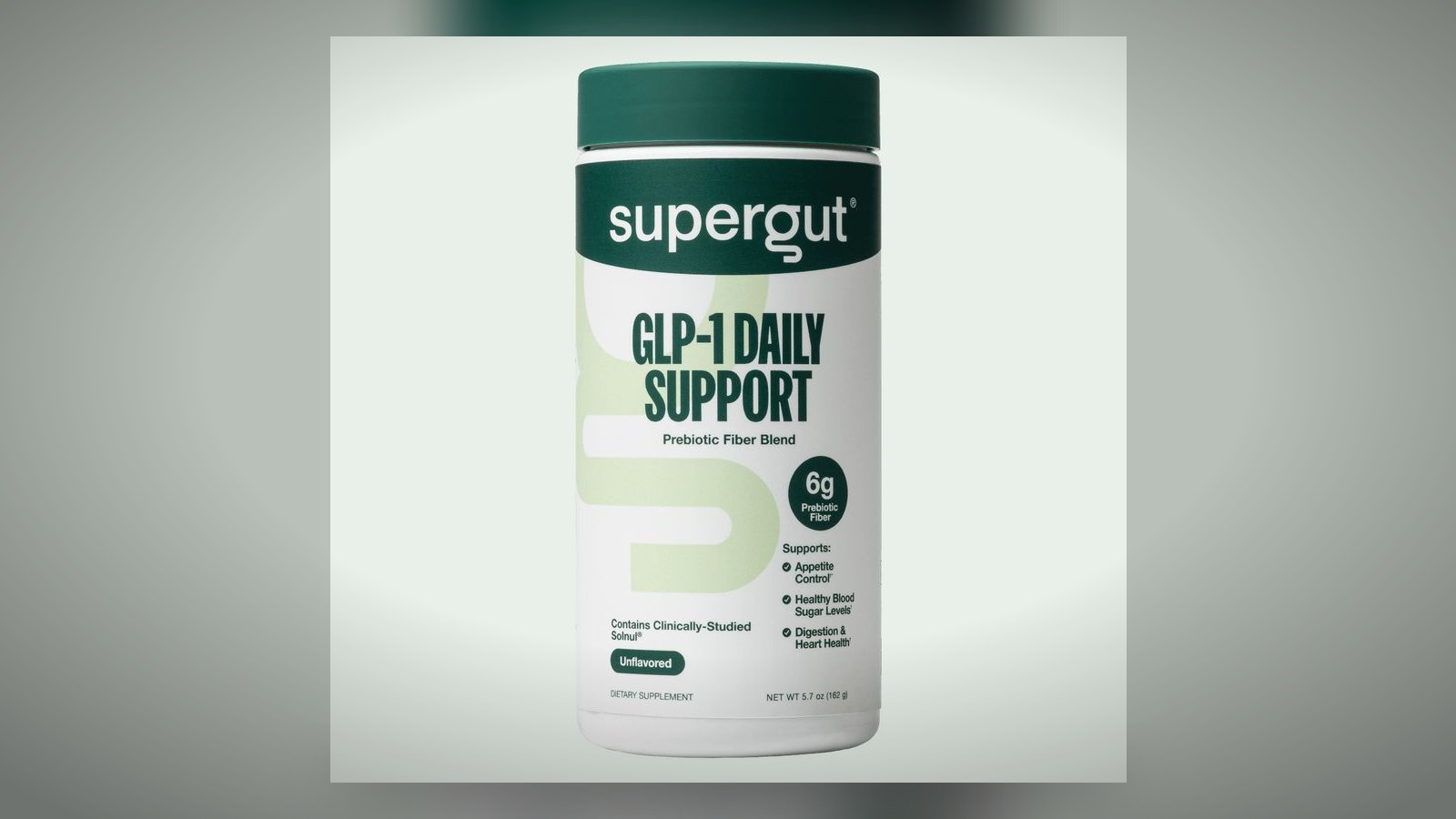
Supergut's GLP-1 booster, now sold as GLP-1 Daily Support, is a fairly priced prebiotic fiber powder with a weaker appetite case than its label suggests. A serving gives you about 6 g of fermentable fiber from 4 sources, but each fiber's dose sits inside a proprietary blend, and the best human data on those fibers measured gut bacteria and fullness, not cravings. It scores 16 out of 25 on our rubric.
We ran it through the same label checks we use on every product in this aisle, which are laid out in our buyer's guide to natural GLP-1 supplements.
What's in Supergut GLP-1 Daily Support
Supergut GLP-1 Daily Support contains 4 fibers in a "Supergut Resistant Starch Fiber Blend": green banana resistant starch, Solnul resistant potato starch, soluble maize fiber and oat beta-glucan. A serving is about 8 g of powder, and the tub promises 6 g of prebiotic fiber (the brand's page says 6 to 7 g). The amount of each fiber isn't listed.
The name trips people up. Retailers still sell it as "The Gut Healthy GLP-1 Booster," and older stick packs carry that name. Same 4 fibers, same company.
There's no caffeine and no stimulant. The brand is careful to say "natural GLP-1 support," and that matters: fiber works on your own gut signals, which is a different scale from a prescription, as our explainer on natural GLP-1 support versus GLP-1 agonists lays out.
How it scores on our rubric
Supergut scores 16 out of 25 on the five axes from our scoring methodology.
- Pathway coverage, 4/5. Gut bacteria, fullness and blood sugar after meals, with GLP-1 support claimed through fermentation.
- Ingredients, 2/5. Good fibers, hidden doses. You can't check any of them against a study.
- Science, 3/5. Real human trials on the individual fibers. The finished blend rests on brand-run studies we couldn't read.
- Value, 4/5. One of the cheapest per day in the GLP-1 aisle.
- Format and timing, 3/5. Flavorless and easy to stir into coffee, but 6 g of fermentable fiber needs a slow start.
The full card is on the Supergut GLP-1 Daily Support product page and in our GLP-1 support category.
The evidence, fiber by fiber
Solnul resistant potato starch
Solnul has the strongest data in the blend, and it's a gut-bacteria result. In a 4-week randomized, placebo-controlled trial, 3.5 g a day raised Bifidobacterium and Akkermansia more than placebo and cut both diarrhea-type and constipation-type bowel movements; 7 g did about the same (Bush, Nutrients 2023). The authors are affiliated with MSP Starch Products, which makes Solnul.
The catch is the hidden dose. Supergut doesn't say how much Solnul is in a serving, so you can't tell whether you get the 3.5 g that worked. A follow-up analysis of the same trial also found no significant change in average abnormal bowel symptom scores in either group (Bush, BMC Nutrition 2024).
Oat beta-glucan
Oat beta-glucan raised fullness in a meal test without changing how much people ate. In a crossover trial of 33 healthy adults, 4 g of high molecular weight oat beta-glucan at breakfast raised fullness and satiety ratings and lowered blood sugar and insulin after the meal, but intake at a buffet lunch didn't change (Zaremba, Appetite 2018).
That's one short trial at 4 g. Supergut's beta-glucan shares a 6 g blend with three other fibers, so there's no way to know if it gets anywhere near that.
Resistant starch and appetite
Resistant starch on its own has a flat appetite record in the biggest clean test. In a 12-week trial of 59 adults with prediabetes, 45 g a day of resistant maize starch didn't change appetite ratings, buffet intake or gut hormones versus a control starch (White, Journal of the Academy of Nutrition and Dietetics 2020). That's a different starch at roughly 7 times Supergut's entire fiber dose, so read it as a warning about the premise, not a verdict on this blend.
The wider fiber research looks similar. A 2026 scoping review of 52 randomized fiber trials in adults found a median of 19 people per study, mostly single-dose tests, and inconsistent links between gut-hormone changes and feeling full (de Jong, Frontiers in Endocrinology 2026).
Don't treat a missing GLP-1 bump as proof of failure, either. GLP-1 is cleared from the blood within minutes, and commercial test kits disagree badly with each other (Bak, Diabetes, Obesity and Metabolism 2014). The fairer question is whether people felt fuller or ate less, and for these fibers that answer is small and mixed.
The brand's own studies
Supergut's appetite and GLP-1 claims cite a "Foundational Pilot Clinical Study" and an "Observational Study" run with Tiny Health in 2026, and the page notes some results rely on self-reported data. We couldn't find either one published, so we can't check the size, design or results.
Is Supergut GLP-1 safe? The bloating question
Supergut GLP-1 Daily Support is made of common food fibers, and the side effect to expect is gas and bloating while your gut adjusts. Fermentable fiber gets fermented, and fermentation makes gas.
Supergut itself tells new users to start with one serving and build up slowly, and the product carries Monash low-FODMAP certification. If you've had trouble with fiber-heavy products before, our piece on why high-fiber low-sugar candy upsets some guts explains the same problem at a bigger dose. Pregnant, on medication or managing a condition? Ask your doctor first.
Price per day
Supergut GLP-1 Daily Support costs $60 for a 40-serving tub, or $1.50 a day, and the 20% subscription brings that to about $1.20. The 20-serving tub and the 15-packet box are $32 each, about $1.60 and $2.13 a day. The 30-day money-back guarantee covers your first order only.
Who it's for, and who should skip it
Good fit: you eat too little fiber, you want a cheap, flavorless prebiotic for your coffee, and your goal is gut regularity first and appetite second.
Skip it if: you want to check doses against studies, your gut reacts badly to fermentable fiber, or your cravings hit after dinner and you want something built for that window. We've also run it head to head in Supergut vs Lemme and against psyllium in Supergut vs Metamucil, where Metamucil wins on fullness evidence and price.
The alternative we'd pick
If you want a drink, our pick is the Ozzi Crave Crusher drink, which scores 21 out of 25 on the same rubric. It has six actives at disclosed doses: 8 g allulose, 500 mg konjac glucomannan for fullness, 500 mg BIOMEnd L-lysine butyrate for natural GLP-1 support, plus African mango and Metabolex chromium with ursolic acid. It's caffeine-free, built for the evening craving window, and carries a much lighter fiber load than Supergut.
Its cons are real. There's no published trial on the finished Ozzi formula either, the doses are moderate, some people notice the natural butyrate smell, and it costs more than twice as much per serving. The side-by-side is on our Ozzi vs Supergut comparison.
Disclosure: Ozzi sponsors Crave Crushers, and we may earn a commission on purchases made through links on this page. Rankings come from the published rubric on our methodology page, and Ozzi's downsides are listed on the same terms as every other product's.
Our verdict
Supergut is a fair-priced fiber habit with one well-studied ingredient and a GLP-1 label that runs ahead of its evidence. Buy it for fiber and gut bacteria; don't buy it to quiet cravings.
References
- Bush JR, Baisley J, Harding SV, Alfa MJ. Consumption of Solnul resistant potato starch produces a prebiotic effect in a randomized, placebo-controlled clinical trial. Nutrients, 2023. PubMed 37049425
- Bush JR, Alfa MJ. Consumption of resistant potato starch produces changes in gut microbiota that correlate with improvements in abnormal bowel symptoms: a secondary analysis of a clinical trial. BMC Nutrition, 2024. PubMed 39605008
- Zaremba SMM, Gow IF, Drummond S, McCluskey JT, Steinert RE. Effects of oat beta-glucan consumption at breakfast on ad libitum eating, appetite, glycemia, insulinemia and GLP-1 concentrations in healthy subjects. Appetite, 2018. PubMed 29920323
- White U, Peterson CM, Beyl RA, Martin CK, Ravussin E. Resistant starch has no effect on appetite and food intake in individuals with prediabetes. Journal of the Academy of Nutrition and Dietetics, 2020. PubMed 32280055
- de Jong JCBC, Lentjes MGW, Pietersma KF, et al. Dietary fibers to boost endogenous GLP-1 secretion and satiety: a scoping review. Frontiers in Endocrinology, 2026. PubMed 42528510
- Bak MJ, Wewer Albrechtsen NJ, Pedersen J, et al. Specificity and sensitivity of commercially available assays for glucagon-like peptide-1 (GLP-1): implications for GLP-1 measurements in clinical studies. Diabetes, Obesity and Metabolism, 2014. PubMed 25041349
- Supergut label, pricing, directions and guarantee: supergut.com GLP-1 Daily Support product page, checked 2026-11-03.
FAQ
Does the Supergut GLP-1 booster work?
Supergut GLP-1 Daily Support has human trials behind its individual fibers, not behind the finished blend. Its Solnul resistant potato starch raised beneficial gut bacteria at 3.5 g a day in a 4-week trial, and 4 g of oat beta-glucan raised fullness in a 33-person meal test without changing how much people ate. The blend itself rests on an unpublished brand pilot and an observational study, and the per-fiber doses are not disclosed.
What are the Supergut GLP-1 booster ingredients?
Supergut GLP-1 booster ingredients are green banana resistant starch, Solnul resistant potato starch, soluble maize fiber and oat beta-glucan, in a proprietary blend that gives about 6 g of prebiotic fiber per serving. The label does not list how much of each fiber a serving contains.
Is the Supergut GLP-1 booster safe?
Supergut uses common food fibers, and the side effect most people notice is gas or bloating while the gut adjusts to about 6 g of fermentable fiber. Supergut advises starting with one serving and increasing slowly. Ask a doctor first if you are pregnant, on medication or managing a health condition.
How much does Supergut GLP-1 cost per day?
Supergut GLP-1 Daily Support costs about $1.50 a day on the $60, 40-serving tub, or about $1.20 with the 20% subscription. The 30-day money-back guarantee covers the first order only.
Products mentioned
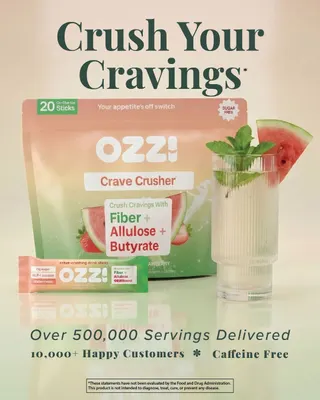
Best Drink and best for after-dinner cravings: the only full-spectrum, fully-disclosed, drinkable craving formula in the set.
Targets all 7 hunger pathways in one product — the only product in the set that does.
Some users are sensitive to the natural butyrate smell from BIOMEnd.

Lemme GLP-1 Daily (Lemme Reset)
Lemme · capsuleThe most transparent standalone GLP-1 capsule: fully-disclosed branded actives in a simple once-daily pill, though it covers fewer hunger pathways than the Ozzi capsule.
Fully disclosed, standardized branded actives (no proprietary blend).
No published trial on the finished three-ingredient combination.
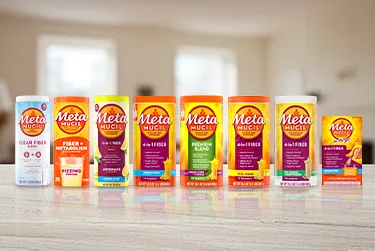
Metamucil 4-in-1 Fiber (Psyllium Husk)
Metamucil (Procter & Gamble) · powderBest Value: cheap, drinkable, and well-evidenced as a fiber — but single-pathway and a heavy gel load.
Pennies per serving — by far the cheapest in the set.
Single pathway — a fiber, not a craving formula.
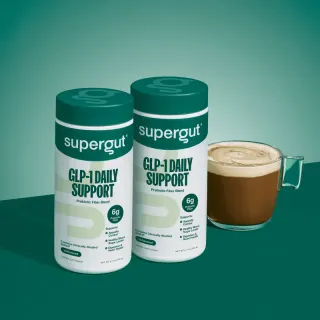
Supergut GLP-1 Daily Support
Supergut · powderA drinkable, gut-first option — but it leans on a proprietary fiber blend and a heavy fiber load.
Drinkable and caffeine-free.
Individual fiber doses are hidden inside a proprietary blend.