Head to Head
Supergut vs. Metamucil: One Fiber Gets Eaten, One Fiber Gels
Two fibers, two mechanisms, a 7x price gap. And neither product's serving size matches the dose that worked in its own research.
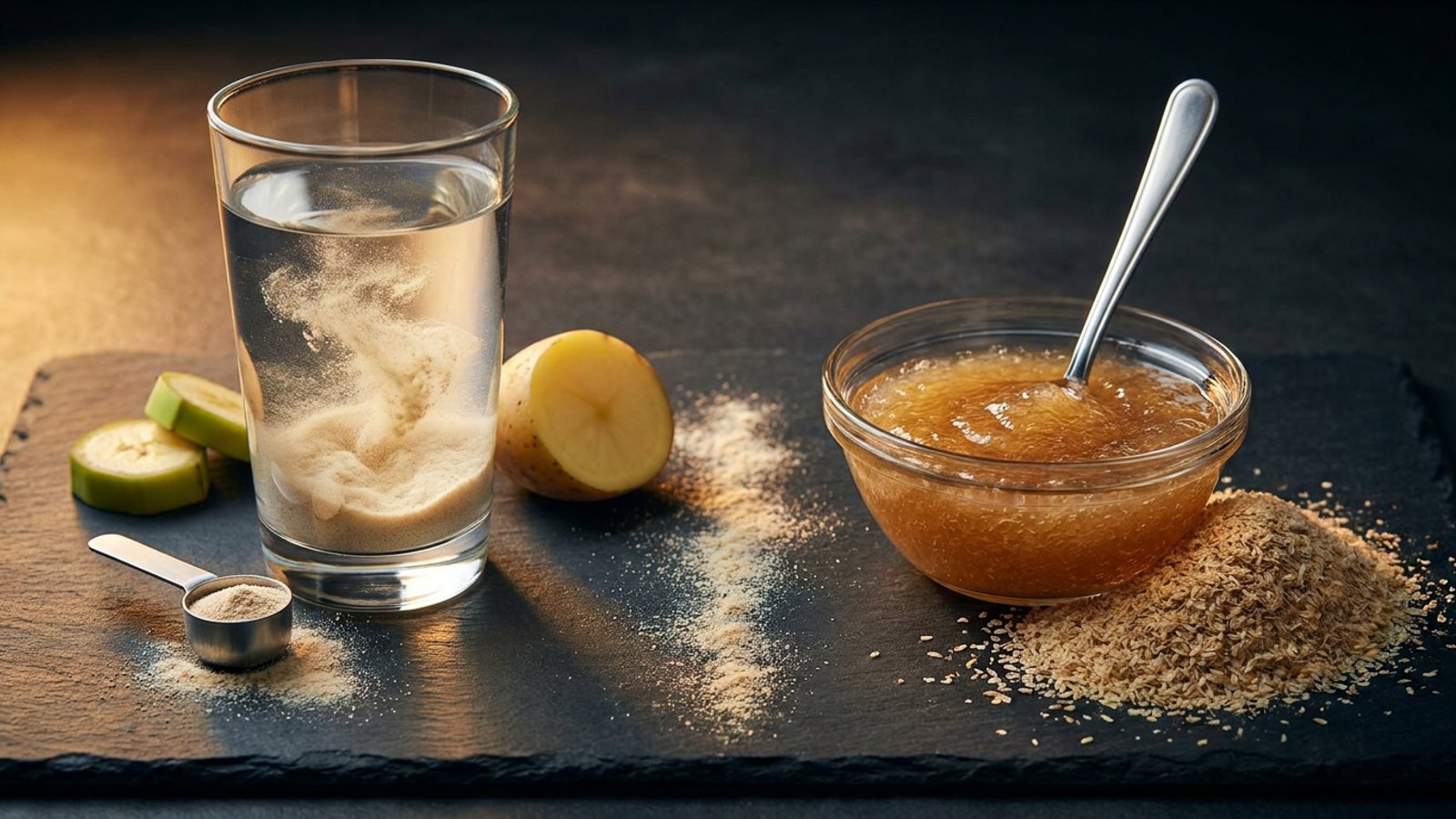
Two powders, same shelf, same instruction on the back of the tub: stir into water once a day. Supergut GLP-1 Daily Support and Metamucil 4-in-1 are both fiber, and that's roughly where the overlap ends.
One is designed to be eaten by your gut bacteria. The other is designed to soak up water, turn into a gel, and never get eaten at all. Two different jobs, and the human research on each landed in two very different places.
What's actually in a serving
Supergut is a four-fiber blend, about 6 to 7 g per serving: Solnul resistant potato starch, oat beta-glucan, green banana resistant starch, and soluble maize fiber. All fermentable. Bacteria in your colon break them down and produce short-chain fatty acids, and those metabolites are the link between a fiber and gut-hormone signaling. We walked that chain in the butyrate write-up.
Metamucil is one ingredient: 3.4 g of psyllium husk per serving, 2.4 g of that soluble. Psyllium ferments poorly on purpose. It grabs water, forms a viscous gel, and slows the whole meal down mechanically on its way through.
Fermented against gelled. That single difference explains every gap below.
What Supergut's headline fiber has actually been shown to do
Solnul is not an unstudied ingredient. Bush and colleagues ran a three-arm randomized, double-blind, placebo-controlled trial of 3.5 g and 7 g daily doses over 4 weeks in 70 healthy adults. The 3.5 g arm produced significantly greater increases in Bifidobacterium and Akkermansia than placebo, and significantly fewer diarrhea-associated and constipation-associated bowel movements (Nutrients 2023).
The 7 g arm behaved about the same as the 3.5 g arm, which is genuinely useful information: on this ingredient, doubling the dose bought nothing.
Read what those endpoints are, though. Bacterial abundance and stool consistency. Not appetite, not cravings, not GLP-1. The authors are also affiliated with MSP Starch Products, the company that makes Solnul, which doesn't invalidate the work but belongs in the sentence.
A later analysis of the same trial makes the tolerance picture more honest in both directions. Neither resistant potato starch nor placebo significantly changed mean abnormal bowel symptom scores, covering bloating, gas, abdominal pain and the rest (BMC Nutrition 2024). So the fiber didn't measurably upset people at those doses, and it didn't measurably fix anyone's bloating either.
The three letters on the box are the weakest part
Supergut leads with GLP-1. The resistant starch evidence for that specific claim is thinner than the packaging implies.
Nakamura and colleagues ran a randomized crossover meal test in 17 patients with type 2 diabetes, comparing a high-resistant-starch rice against ordinary white rice. Postprandial glucose dropped hard, with a difference in total area under the curve of -8,223 mg·min/dL, and insulin fell too. Total GLP-1 was measured directly and did not budge: a difference of -171 pmol·min/L, confidence interval -1,034 to 691, p=0.673 (Asia Pacific Journal of Clinical Nutrition 2023).
That's one trial in a specific population using rice rather than a supplement, so don't over-read it. But it's a clean example of resistant starch doing real metabolic work on glucose while leaving the hormone on the label untouched.
The broader mechanism write-ups are careful about this too. A 2025 review of resistant starch maps the fermentation-to-SCFA-to-appetite pathway in detail, then classifies it as mechanism plus animal work plus early human data, with precision dietary intervention listed as the future research need rather than the settled result (International Journal of Biological Macromolecules 2025). We went deeper on the fiber-versus-GLP-1 question in our Supergut vs. Lemme breakdown.
Psyllium has the older, duller, deeper file
Psyllium doesn't get a hormone story. It gets 40 years of clinical work.
The satiety trial worth knowing came from Brum and colleagues: two sequential randomized, double-blind, placebo-controlled crossover studies. Doses of 3.4 g, 6.8 g and 10.2 g taken before breakfast and lunch for 3 days all reduced hunger and desire to eat and increased fullness between meals against placebo, and 6.8 g gave the most consistent benefit. A second study of 6.8 g alongside an energy-restricted breakfast found significantly lower 3-day mean hunger and desire to eat, and higher fullness (Appetite 2016).
Two of the four authors worked for Procter and Gamble, which owns Metamucil, and the paper names the brand outright. Independent work points the same way. Günal and colleagues put 25 healthy adults through a triple-blind crossover trial of psyllium-enriched meatballs and reported lower postprandial triglycerides, VLDL and glucose, lower hunger at hours 4 and 5 and higher satiety at hours 3 through 5, plus lower prospective energy intake (Food Science and Nutrition 2025).
A 2026 review of viscous fibers puts it plainly: psyllium carries the strongest clinical support of the gel-forming fibers for stool normalization, glycemic modulation, and lowering LDL cholesterol (International Journal of Molecular Sciences 2026). That same review is a narrative review, and it flags its own more speculative extensions as hypothesis-generating, which is the kind of hedge worth trusting.
Both labels miss their own best dose
Here's the thing neither brand puts on the front.
Metamucil's serving is 3.4 g of psyllium. In the satiety trial funded by Metamucil's own parent company, 3.4 g was the weakest arm and 6.8 g was the dose that performed consistently. If you're taking it for fullness rather than regularity, one scoop isn't the study.
Supergut has the opposite problem. Solnul's trial found 3.5 g effective, but Supergut hides the split inside a proprietary blend. You get a 6 to 7 g total across four fibers and no way to tell whether the Solnul portion clears 3.5 g or sits at a third of it. A hidden dose can't be checked against a study, which quietly turns the ingredient research into decoration.
Price, once you correct for the dose
Supergut runs about $1.50 a serving at list and $1.20 on subscription. Metamucil is about $0.21.
Even doubling Metamucil to the 6.8 g that worked, you're at roughly $0.42 a day against $1.20 to $1.50. That's a 3x to 7x gap for a product whose measured endpoints are bacteria and stool form rather than hunger.
The counter-argument is fair: they're not buying the same outcome. Prebiotic fermentation and mechanical gel are different purchases. Just don't tell yourself you're paying the premium for appetite data, because that isn't what the trials measured.
What each will do to your stomach
6.5 g of fermentable fiber gets fermented, and fermentation makes gas. That's the mechanism working, not a defect, but it means ramping up slowly matters and some people never get along with it. The sharper version of that problem is in our low-sugar candy piece.
Psyllium's issue is the opposite: it gels fast. Mix it and drink it promptly or you're chewing it, and it needs a full glass of water behind it. Adverse events in the Brum trials were mostly mild digestive complaints at rates similar to placebo. The texture is the part people actually quit over. Our full read is in the psyllium deep dive.
The verdict
These aren't substitutes, so the honest answer is a split.
If you want the cheapest fiber with real human satiety data and a long safety record, Metamucil wins on evidence and wins on price by a mile. Take two servings, not one, and expect fullness rather than a craving switch.
If what you want is a prebiotic habit that feeds specific gut bacteria, Supergut's headline fiber has a genuine placebo-controlled result behind it, and psyllium can't offer that because it barely ferments. You're paying a large premium and trusting a blend that won't tell you its doses.
What neither one has is a trial on the finished product. Both stand on individual-ingredient studies, several funded by the people selling the ingredient, which is the category norm rather than an accusation. Our rubric is in the methodology, and the rest of the field sits in the fiber and satiety category. If you're asking whether fiber deserves the hype it's gotten lately, we took that on directly in is fiber the next protein.
References
- Bush JR, Baisley J, Harding SV, Alfa MJ. Consumption of Solnul Resistant Potato Starch Produces a Prebiotic Effect in a Randomized, Placebo-Controlled Clinical Trial. Nutrients. 2023;15(7):1582. PMID 37049425
- Bush JR, Alfa MJ. Consumption of resistant potato starch produces changes in gut microbiota that correlate with improvements in abnormal bowel symptoms: a secondary analysis of a clinical trial. BMC Nutr. 2024;10(1):152. PMID 39605008
- Nakamura Y, Takemoto A, Oyanagi T, et al. Effects of cooked rice containing high resistant starch on postprandial plasma glucose, insulin, and incretin in patients with type 2 diabetes. Asia Pac J Clin Nutr. 2023;32(1):48-56. PMID 36997485
- Ou Y, Chen K, Guo J, et al. Advances in resistant starch: mechanisms, applications, and challenges in obesity management and low-fat food development. Int J Biol Macromol. 2025;320(Pt 1):145679. PMID 40609947
- Brum JM, Gibb RD, Peters JC, Mattes RD. Satiety effects of psyllium in healthy volunteers. Appetite. 2016;105:27-36. PMID 27166077
- Günal AM, Öngün Yılmaz H, Baş M. Enrichment of Hamburger Meatballs With Psyllium: Effects on Postprandial Lipidemia, Glycemia, Appetite, and Food Intake in a Triple-Blind Randomized Controlled Crossover Trial. Food Sci Nutr. 2025;13(10):e71066. PMID 41078451
- Yoon Y, Hwang J, Yang CM, et al. Psyllium and Glucomannan as Viscous Fiber Modulators of the Gut-Microbiome-Incretin Axis. Int J Mol Sci. 2026;27(14):6287. PMID 42511630
Citations retrieved via PubMed. This article is for education only and isn't medical advice. Talk to your doctor before starting any supplement, especially if you're pregnant, nursing, on medication, or managing a health condition.
FAQ
Is Supergut better than Metamucil?
They're built for different jobs, so it depends what you're buying. Metamucil is 3.4 g of psyllium, a gel-forming fiber with human trials on satiety, stool normalization, glycemic response and LDL cholesterol, at about $0.21 a serving. Supergut is 6 to 7 g of fermentable fiber aimed at your gut bacteria, at about $1.50 a serving. Supergut's headline ingredient has a placebo-controlled prebiotic result that psyllium can't match, because psyllium barely ferments. Metamucil has more evidence tied to appetite, and it's far cheaper.
Does resistant starch raise GLP-1?
The evidence is weaker than the marketing suggests. A randomized crossover meal test in 17 people with type 2 diabetes found high-resistant-starch rice lowered postprandial glucose and insulin significantly while total GLP-1 showed no significant difference at all (p=0.673). Reviews describe a plausible route from fermentation to short-chain fatty acids to gut-hormone signaling, but they classify it as mechanism and early human data rather than a settled effect.
How much Metamucil should I take for fullness?
The trial that supports the satiety claim tested 3.4 g, 6.8 g and 10.2 g before breakfast and lunch. 6.8 g gave the most consistent benefit, and 3.4 g was the weakest arm. Metamucil's label serving is 3.4 g, so a single scoop sits below the dose that performed best. Drink it promptly with a full glass of water, since psyllium gels quickly.
Will either one make me bloated?
Supergut carries the higher risk on paper, since 6 to 7 g of fermentable fiber a day produces gas as a byproduct of the mechanism it's sold for. That said, the trial on its main ingredient found no significant change in mean abnormal bowel symptom scores at 3.5 g or 7 g. Psyllium is better tolerated in trials, where adverse events ran mostly mild and similar to placebo, but it gels fast and needs real water alongside it. Ramp either one up gradually.
Products mentioned
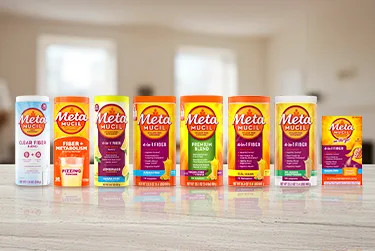
Metamucil 4-in-1 Fiber (Psyllium Husk)
Metamucil (Procter & Gamble) · powderBest Value: cheap, drinkable, and well-evidenced as a fiber — but single-pathway and a heavy gel load.
Pennies per serving — by far the cheapest in the set.
Single pathway — a fiber, not a craving formula.
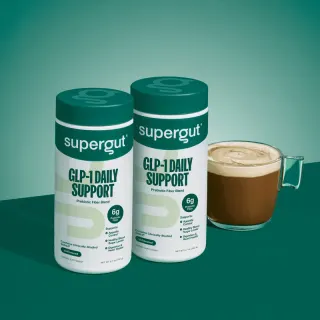
Supergut GLP-1 Daily Support
Supergut · powderA drinkable, gut-first option — but it leans on a proprietary fiber blend and a heavy fiber load.
Drinkable and caffeine-free.
Individual fiber doses are hidden inside a proprietary blend.
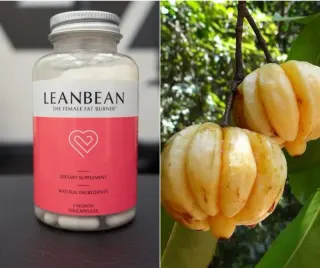
Leanbean
Ultimate Life Ltd · capsuleA maximal glucomannan dose — which is also its risk: top-of-range fiber means you must take it carefully with plenty of water.
Glucomannan dosed at the full 3 g/day EFSA satiety level, fully disclosed.
At 3 g/day, glucomannan sits at the very top of the studied range — large glucomannan doses carry a documented risk of throat, esophageal, or GI blockage if not taken with enough water.
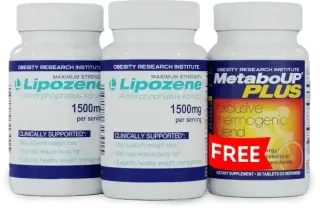
Lipozene
Obesity Research Institute · capsuleCheap single-ingredient glucomannan — fine as a fiber, but it does only one thing.
Single, disclosed ingredient.
One pathway only (fiber satiety).