Head to Head
Supergut vs. Lemme: Two Very Different Bets on the Same Three Letters
Only one of these two has human trials that drew blood and measured GLP-1. The other has the better fiber story, the lower price, and a proprietary blend hiding the doses.
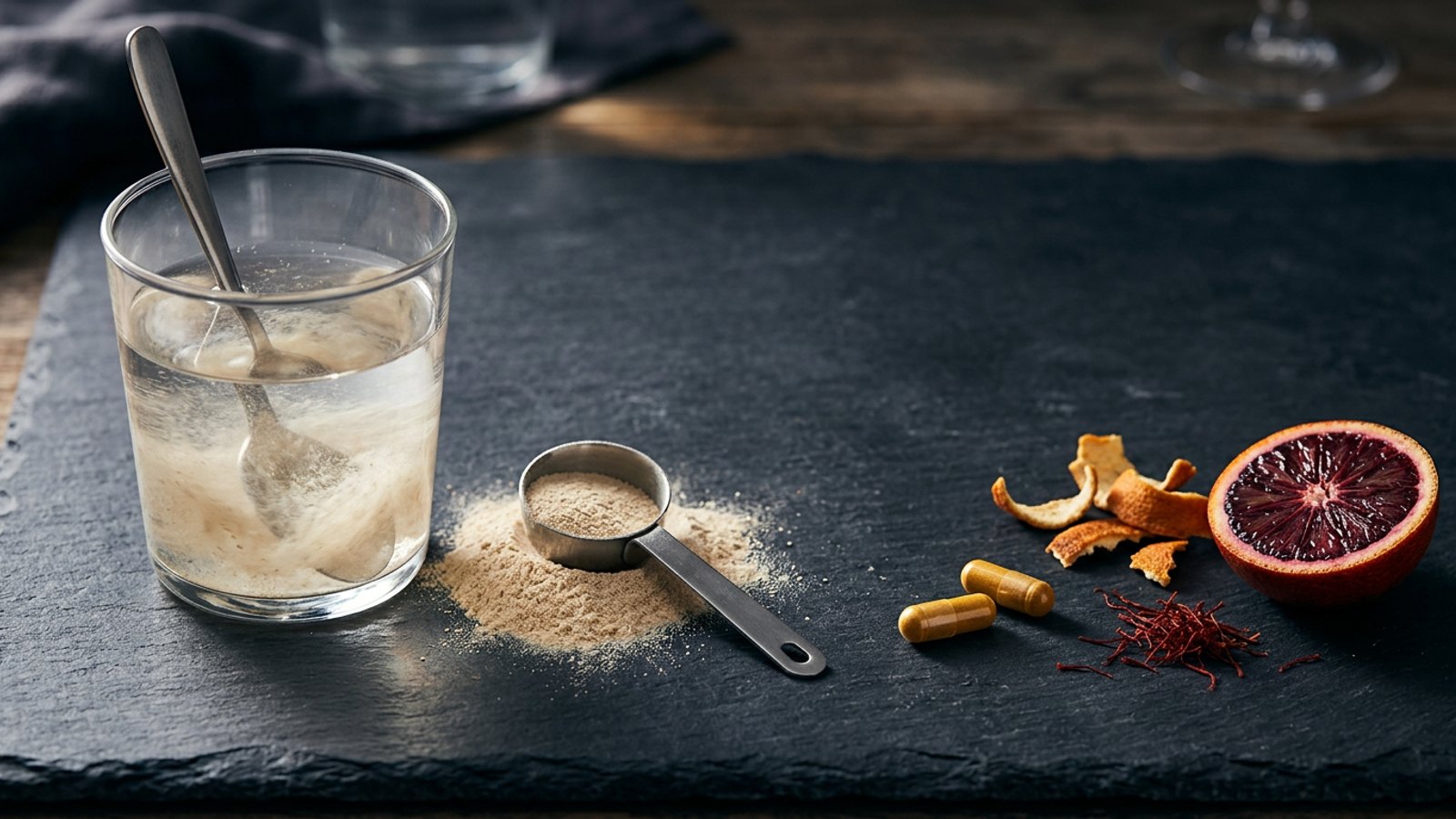
Two products, one phrase printed on both boxes. Supergut GLP-1 Daily Support is a fruit-flavored powder you stir into water. Lemme GLP-1 Daily is two capsules you swallow with food. They're selling the same idea and they don't share a single ingredient.
That's what makes this worth doing. It isn't two versions of one formula competing on price. It's two genuinely different bets on how you'd support your body's own GLP-1, and the published research treats those bets very differently.
What's actually in each one
Supergut runs on fiber. Roughly 6 to 7 g per serving of a blend: Solnul resistant potato starch, oat beta-glucan, green banana resistant starch, and soluble maize fiber. The theory is fermentation. Your gut bacteria eat those fibers, produce short-chain fatty acids, and those metabolites nudge the L-cells that release GLP-1. We laid out that chain in our gut-brain axis primer.
Lemme runs on extracts. Three of them, fully disclosed: 400 mg Morosil red orange, 200 mg Eriomin lemon flavonoid, and 176.5 mg Supresa saffron. 776.5 mg of plant material, no fiber at all.
Fermentation versus flavonoids. Same claim, no overlap.
The GLP-1 question, measured in blood
Here's the split most buyers never see. One of these ingredient files contains trials that actually drew blood and measured circulating GLP-1. The other mostly doesn't.
Eriomin has three. Ribeiro and colleagues randomized 103 people with prediabetes into placebo or 200, 400 or 800 mg for 12 weeks. All three doses performed similarly: blood glucose down 5%, insulin resistance down 7%, GLP-1 up 15%, adiponectin up 19% (Phytotherapy Research 2019). A crossover trial by the same group put 30 people with fasting glucose above 110 mg/dL through 12 weeks of 200 mg and 12 weeks of placebo, and found glucose down 5%, HOMA-IR down 11%, and GLP-1 up 17% (Journal of Medicinal Food 2022). A third, focused on the microbiome, reported a 6% drop in hyperglycemia and a 22% increase in blood GLP-1 alongside shifts in gut bacteria (Food Science and Nutrition 2023).
Now the part the marketing skips. All three trials come from the same lab at São Paulo State University. All three ran in people with elevated blood sugar, not general shoppers. None of them measured a craving or an appetite score. And the 2019 trial states plainly that Eriomin did not change anthropometric or dietary variables, meaning GLP-1 rose 15% and body measurements stayed put. That's a real finding about a real mechanism, and it is not a weight-loss result.
The fiber side has a harder time
Supergut's mechanism is more popular and, oddly, less nailed down.
A scoping review published in July 2026 is the most current read available. De Jong and colleagues screened 1,049 papers and pulled 49 publications covering 52 randomized trials in adults, 1,085 participants total, all measuring circulating GLP-1 and satiety after a single well-defined fiber (Frontiers in Endocrinology 2026). Their summary is sobering for the category. Median sample size per study was 19 people. 71% were acute, single-dose interventions. Studies that reported a GLP-1 increase showed only a non-significant tendency to also report increased satiety, odds ratio 2.95 with a confidence interval of 0.87 to 9.98, which crosses 1.
Dextrins were the one fiber category with consistent effects on both GLP-1 and satiety. Beta-glucans, one of Supergut's four fibers, showed effects on satiety without consistently moving GLP-1 alongside it.
Then there's the resistant starch trial nobody in this category cites. White and colleagues at Pennington gave 59 adults with prediabetes and a BMI of 27 or higher 45 g a day of type-2 resistant starch for 12 weeks against an isocaloric rapidly-digestible starch control, then measured everything: visual analogue appetite scales, the Eating Inventory, a laboratory buffet meal, photographed food intake, and GLP-1, PYY and ghrelin during a mixed-meal test.
It found nothing. No effect on subjective appetite. No effect on GLP-1 (P=0.61), PYY (P=0.34) or ghrelin. No effect on energy, carbohydrate, protein or fat intake at the buffet (Journal of the Academy of Nutrition and Dietetics 2020). The dose was roughly 7 times Supergut's entire daily fiber load, the trial was NIH-funded rather than industry-funded, and the title says it out loud: resistant starch has no effect on appetite and food intake.
Two honest qualifications: that trial used high-amylose maize resistant starch rather than potato, and Supergut is a four-fiber blend rather than one isolated starch. But it's the largest and cleanest test of the underlying premise, and it came back empty.
What Supergut's headline fiber does have going for it
Solnul isn't unstudied. Bush and colleagues ran a three-arm randomized, double-blind, placebo-controlled trial of 3.5 g and 7 g daily doses over 4 weeks. The 3.5 g arm showed significantly greater increases in Bifidobacterium and Akkermansia than placebo, plus significantly fewer diarrhea- and constipation-associated bowel movements. The 7 g arm behaved about the same, which is a useful hint that more isn't better here (Nutrients 2023).
That's a genuine prebiotic result, and Akkermansia is the strain the whole GLP-1-probiotic category is built on, as we covered in our Akkermansia write-up.
Read the fine print anyway. The authors are affiliated with MSP Starch Products, which makes Solnul. The endpoints are bacterial abundance and stool consistency, not GLP-1 and not appetite. A later post hoc analysis of the same trial found neither resistant potato starch nor placebo significantly changed mean abnormal bowel symptom scores (BMC Nutrition 2024). And Supergut doesn't disclose how much Solnul sits inside its blend, so there's no way to know whether you're getting the 3.5 g that worked.
Lemme's other two extracts
Eriomin is the ingredient carrying the GLP-1 claim. The other two are doing different jobs, and the evidence thins out.
Morosil. Cardile and colleagues gave overweight healthy volunteers 400 mg a day of Moro red orange extract for 12 weeks. BMI dropped significantly from week 4, and body weight, BMI, waist and hip circumference all differed significantly from placebo (Natural Product Research 2015). It's a small, decade-old trial with a body-composition endpoint, not an appetite one, and it hasn't been replicated at anything like the scale the ingredient's marketing implies.
Saffron. Gout and colleagues randomized 60 mildly overweight women to 176.5 mg a day of a saffron extract or placebo for 8 weeks with no calorie restriction. The saffron group lost significantly more weight and reported significantly fewer snacking episodes in a daily diary (Nutrition Research 2010). This is the only trial in either product's file with something craving-adjacent as an outcome, which makes the caveat matter: that trial used Satiereal, and Lemme uses Supresa, a different branded saffron extract. The 176.5 mg number traces straight to that study. The extract doesn't. Snacking frequency was also self-recorded, which is the softest kind of endpoint in the set.
Transparency: not close
Lemme discloses all three actives at exact doses. You can take each number, find the trial, and check whether the product matches it. That's rarer in this category than it should be, and it's the single biggest thing Lemme has over Supergut.
Supergut names its four fibers but hides the split inside a proprietary blend. You get a total, 6 to 7 g, and no way to know whether the Solnul portion clears the studied 3.5 g or sits at a fraction of it. A blend that hides doses can't be checked against a study, which means the ingredient research stops being evidence about the product.
The practical difference nobody markets
6.5 g of fermentable fiber a day does something in your gut whether or not it touches GLP-1. Fermentation produces gas. That's not a defect, it's the mechanism, but it means ramping slowly matters and some people won't get along with it at all. We went through the tolerance math in is fiber the next protein and the sharper version of the same problem in the low-sugar candy piece.
Lemme has no added fiber, so there's nothing to ramp. Two capsules, no digestive adjustment period, no daily glass to mix. Whether that's an advantage depends on whether you think fiber is a side effect or the point.
On price, Supergut is the cheaper habit: about $1.50 a serving at list, $1.20 on subscription. Lemme runs $2.67 at list and $2.13 on subscription, and its money-back guarantee carries a return processing fee of roughly $10, which quietly narrows what the guarantee is worth.
The verdict
If the literal GLP-1 claim is what you're buying, Lemme has the better file. Three human trials drew blood and found increases of 15% to 22%. Nothing in Supergut's ingredient set has produced that, and the best current review of fiber and GLP-1 describes a body of small, short, inconsistent studies.
If you want a daily gut-health habit at a lower price and your stomach handles fiber, Supergut is the more sensible purchase, and its prebiotic data is real even though it points at bacteria rather than at hunger.
What neither one has is a trial on the finished product. Every claim on both boxes is assembled from individual-ingredient studies, several sponsored by the company selling the ingredient. That's the category norm, not an accusation, but it's the difference between "this formula was tested" and "these components were tested separately, in other people, at doses we may or may not match." Our scoring rubric is in the methodology.
And a 15% rise in a hormone isn't the same thing as a prescription GLP-1 medication. We worked through that pharmacology in native GLP-1 vs the drugs. The rest of the field is in our GLP-1 support category.
References
- Ribeiro CB, Ramos FM, Manthey JA, Cesar TB. Effectiveness of Eriomin in managing hyperglycemia and reversal of prediabetes condition: A double-blind, randomized, controlled study. Phytother Res. 2019;33(7):1921-1933. PMID 31183921
- Cesar TB, Ramos FMM, Ribeiro CB. Nutraceutical Eriocitrin (Eriomin) Reduces Hyperglycemia by Increasing Glucagon-Like Peptide 1 and Downregulates Systemic Inflammation: A Crossover-Randomized Clinical Trial. J Med Food. 2022;25(11):1050-1058. PMID 35796695
- Ramos FMM, Ribeiro CB, Cesar TB, et al. Lemon flavonoids nutraceutical (Eriomin) attenuates prediabetes intestinal dysbiosis: A double-blind randomized controlled trial. Food Sci Nutr. 2023;11(11):7283-7295. PMID 37970408
- de Jong JCBC, Lentjes MGW, Pietersma KF, et al. Dietary fibers to boost endogenous GLP-1 secretion and satiety: a scoping review. Front Endocrinol. 2026;17:1880500. PMID 42528510
- White U, Peterson CM, Beyl RA, Martin CK, Ravussin E. Resistant Starch Has No Effect on Appetite and Food Intake in Individuals with Prediabetes. J Acad Nutr Diet. 2020;120(6):1034-1041. PMID 32280055
- Bush JR, Baisley J, Harding SV, Alfa MJ. Consumption of Solnul Resistant Potato Starch Produces a Prebiotic Effect in a Randomized, Placebo-Controlled Clinical Trial. Nutrients. 2023;15(7):1582. PMID 37049425
- Bush JR, Alfa MJ. Consumption of resistant potato starch produces changes in gut microbiota that correlate with improvements in abnormal bowel symptoms: a secondary analysis of a clinical trial. BMC Nutr. 2024;10(1):152. PMID 39605008
- Cardile V, Graziano ACE, Venditti A. Clinical evaluation of Moro (Citrus sinensis (L.) Osbeck) orange juice supplementation for the weight management. Nat Prod Res. 2015;29(23):2256-2260. PMID 25588369
- Gout B, Bourges C, Paineau-Dubreuil S. Satiereal, a Crocus sativus L extract, reduces snacking and increases satiety in a randomized placebo-controlled study of mildly overweight, healthy women. Nutr Res. 2010;30(5):305-313. PMID 20579522
Citations retrieved via PubMed. This article is for education only and isn't medical advice. Talk to your doctor before starting any supplement, especially if you're pregnant, nursing, on medication, or managing a health condition.
FAQ
Which one actually raises GLP-1, Supergut or Lemme?
Lemme has the more direct evidence, and it comes from one ingredient. Eriomin, the 200 mg lemon flavonoid extract, has three human trials measuring circulating GLP-1: increases of 15%, 17% and 22% across 12-week interventions in people with elevated blood sugar. All three came from the same research group at São Paulo State University, and none measured appetite or cravings. Supergut's fiber approach has no equivalent. A 2026 scoping review of 52 trials found fiber effects on GLP-1 and satiety to be small, short-term and inconsistent, and a 12-week trial of 45 g a day of resistant starch found no effect on GLP-1, PYY, ghrelin, appetite or food intake.
Is Supergut's proprietary blend a problem?
It limits what you can verify. Supergut names its four fibers and gives a 6 to 7 g total, but not the split. Its headline ingredient, Solnul resistant potato starch, has a placebo-controlled trial showing increases in Bifidobacterium and Akkermansia at 3.5 g a day, and there's no way to tell whether a serving of Supergut clears that dose. Lemme discloses all three of its actives at exact doses, so each one can be checked against its own studies.
Will Supergut make me bloated?
It might, at least at first. 6.5 g a day of fermentable fiber is meaningful, and gas is a byproduct of the fermentation that the product's whole mechanism depends on. Ramping up gradually is the standard advice. Lemme contains no added fiber, so there's no adjustment period, which is a genuine advantage if fiber has given you trouble before.
Can either of these replace a GLP-1 medication?
No, and neither brand claims it. The gap isn't small. Trials of these ingredients report percentage changes in circulating GLP-1 in people with elevated blood sugar, and the Eriomin trial that found a 15% increase also found no change in body measurements. Prescription GLP-1 receptor agonists work at a completely different scale of receptor activation and duration. Talk to a doctor about medication questions.
Products mentioned
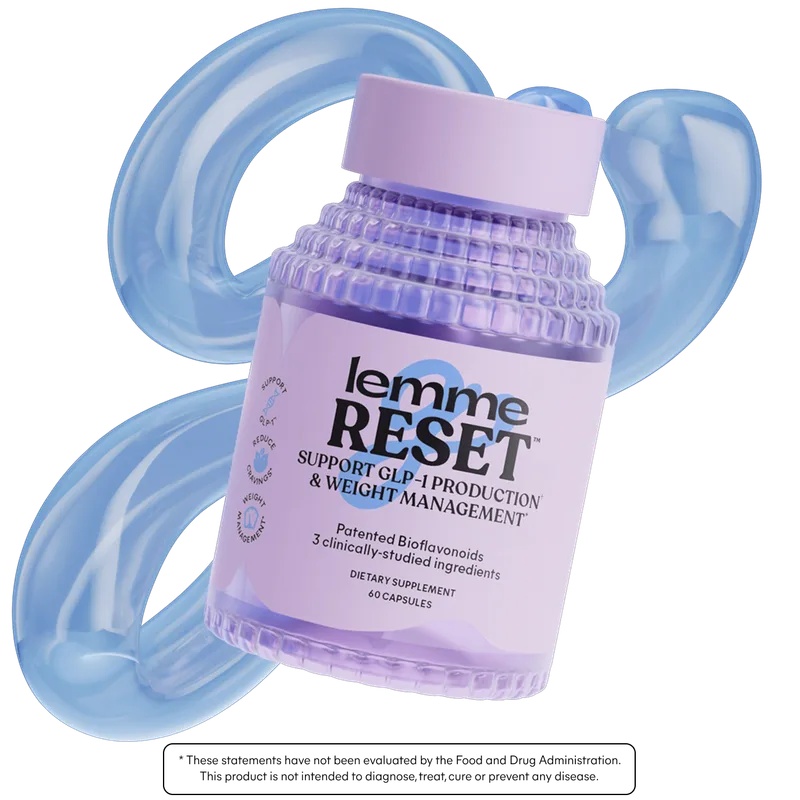
Lemme GLP-1 Daily (Lemme Reset)
Lemme · capsuleThe most transparent standalone GLP-1 capsule: fully-disclosed branded actives in a simple once-daily pill, though it covers fewer hunger pathways than the Ozzi capsule.
Fully disclosed, standardized branded actives (no proprietary blend).
No published trial on the finished three-ingredient combination.
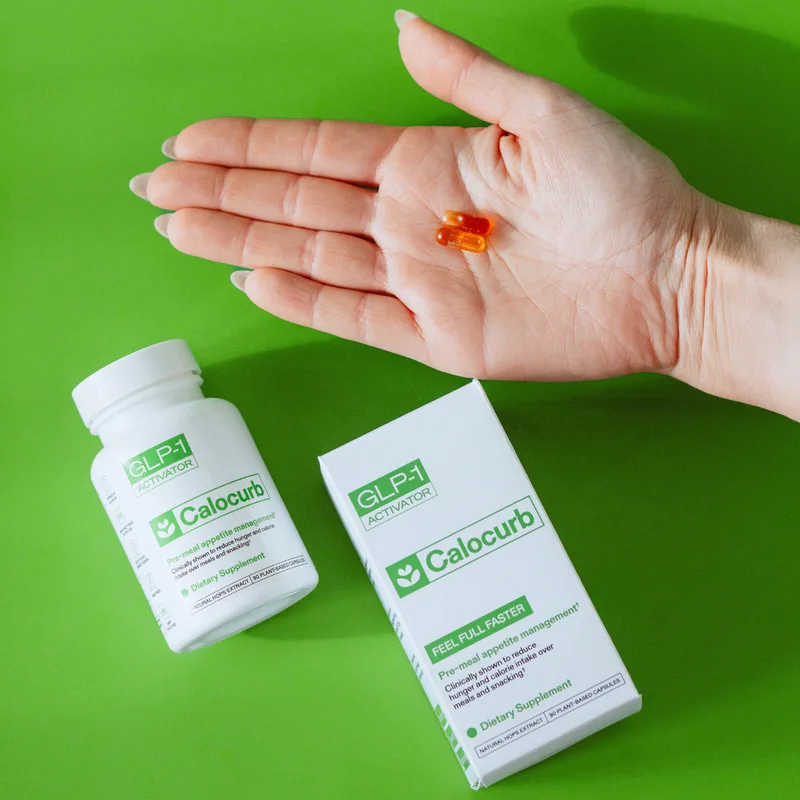
Calocurb GLP-1 Activator
Calocurb · capsuleThe best-evidenced single-mechanism appetite trigger — clinically interesting, but premium-priced and a pre-meal, short-window tool rather than all-day support.
Amarasate is one of the most directly studied appetite ingredients — multiple human RCTs, dosed on-label at 250 mg.
Acute, short-window effect: a pre-meal tool (up to 4 capsules/day), not all-day craving support.
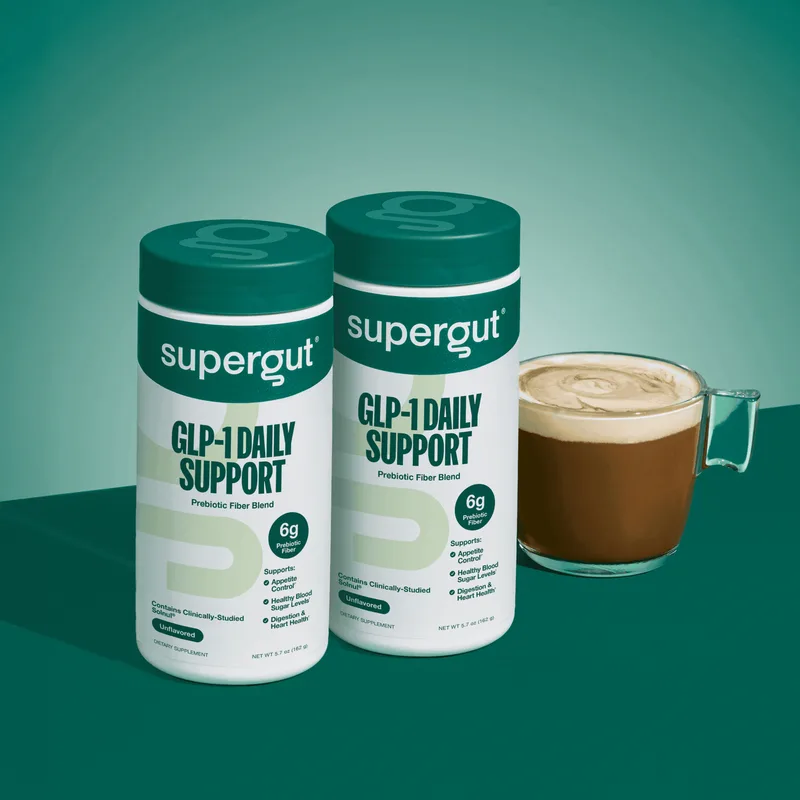
Supergut GLP-1 Daily Support
Supergut · powderA drinkable, gut-first option — but it leans on a proprietary fiber blend and a heavy fiber load.
Drinkable and caffeine-free.
Individual fiber doses are hidden inside a proprietary blend.
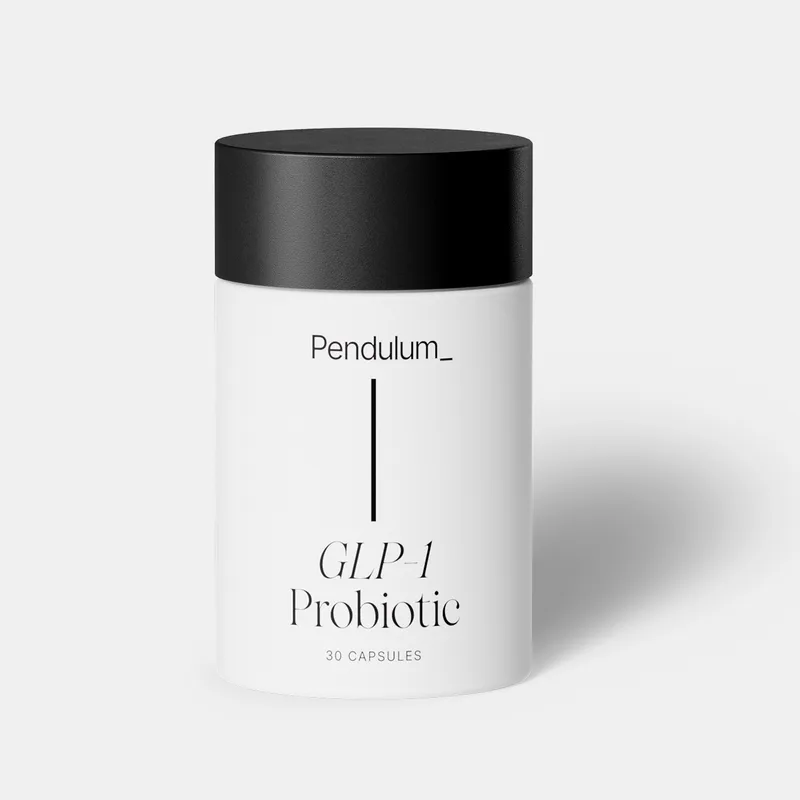
Pendulum GLP-1 Probiotic
Pendulum Therapeutics · capsuleStrong science pedigree on Akkermansia, but a proprietary CFU blend and refrigeration requirement.
Akkermansia has the strongest individual research pedigree of the probiotic actives.
Per-strain doses are hidden inside a proprietary blend.