Appetite Science
Drunk Munchies vs High Munchies: Why Alcohol and Weed Make You Hungry
Same late-night fries, two different switches in your brain. Here's which one each flips.
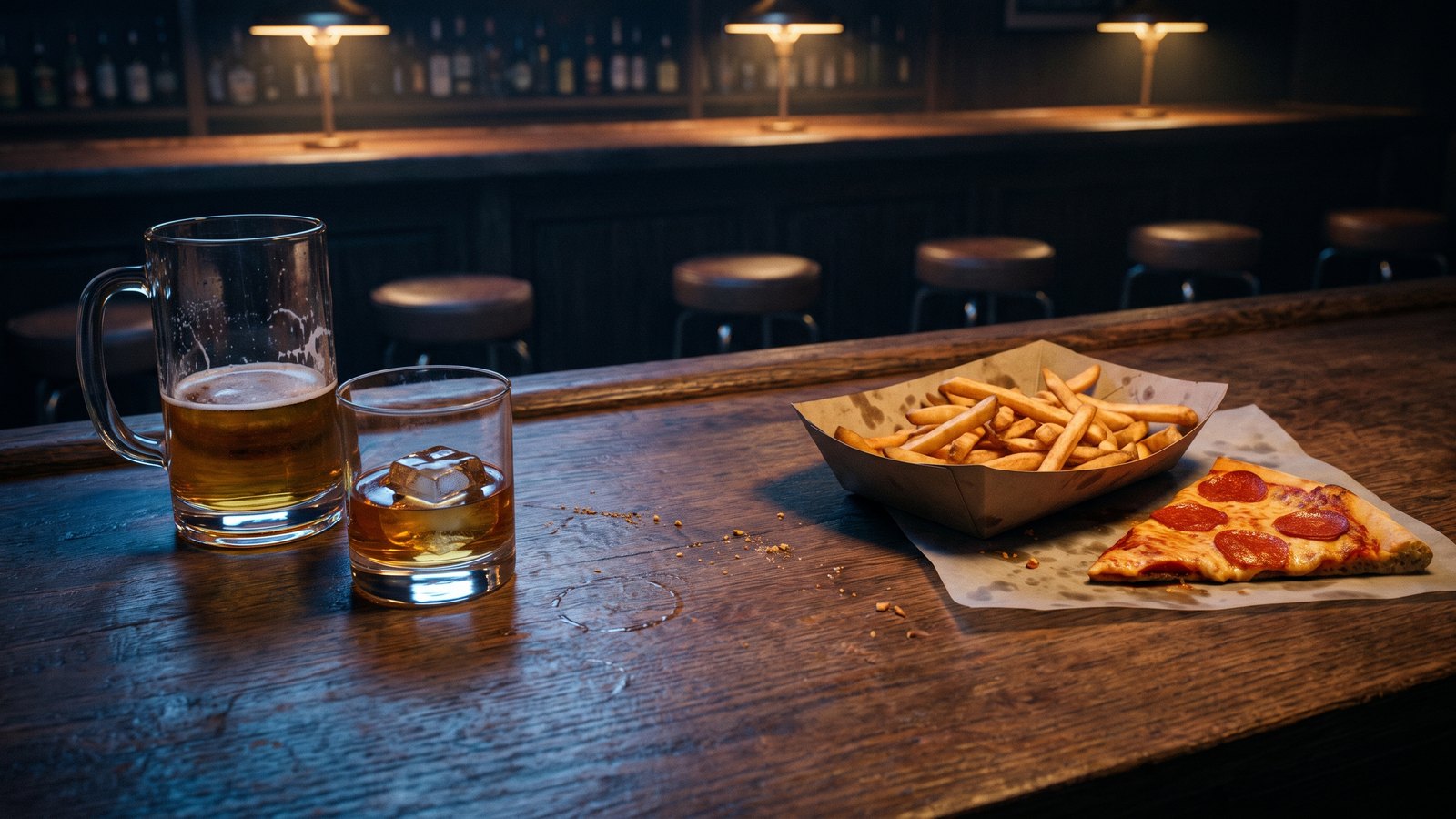
Short answer: yes, alcohol makes you hungry, and it does it through a different route than weed. Alcohol turns up the brain's starvation signal while it quietly lowers a fullness hormone. THC works on the reward side, making food feel more worth chasing even when you're full. Same late-night fries, two different switches.
That difference matters, because the fixes aren't identical. Here's what the studies actually measured for each, side by side.
Does alcohol make you hungry? The lab says yes
The cleanest test comes from Maastricht. Researchers gave 52 adults a drink worth 1 megajoule (about 240 calories) 30 minutes before lunch. It was wine or beer, a fat drink, a protein drink, grape juice, water, or nothing. The calories were matched, so the only real difference was the alcohol (Westerterp-Plantenga and Verwegen, Am J Clin Nutr 1999).
After the alcoholic drink, people ate about 3.5 MJ at lunch versus 2.7 MJ after the non-alcoholic calories. That's roughly 190 extra calories on top of the 240 they'd just drunk. They also ate faster, their meals ran longer, and the point where they started feeling full arrived later. Their total intake for the whole day was higher too.
A smaller Glasgow study got the same result with red wine and pizza. Eleven men drank 375 ml of wine either before lunch or with it, and lunch intake went up by about a fifth to a quarter both ways, mostly in the starter (Caton et al., Physiol Behav 2007). One reassuring detail: over the next 3 days, the men ate a bit less and evened things out.
Why alcohol makes you hungry
1. It keeps the brain's starvation neurons switched on
Deep in the hypothalamus sits a small group of cells called AgRP neurons. They normally fire when you haven't eaten, and when they fire, you get hungry. In a 2017 study, these neurons became electrically overactive when exposed to alcohol at doses you'd get from drinking, and blocking them in mice stopped alcohol-driven overeating (Cains et al., Nat Commun 2017).
That's a mouse finding, so treat it as mechanism, not proof. But it explains a puzzle: alcohol carries plenty of calories, and calories normally quiet those exact neurons. Alcohol seems to keep them running anyway.
2. It isn't the taste or the calories
An Indiana team skipped the glass entirely. They infused alcohol into 35 women's veins and held it steady at a breath alcohol of 0.05%, then had them smell food in a brain scanner. The hypothalamus lit up more to food aromas on alcohol than on saline, and the women ate more at the meal afterward (Eiler et al., Obesity 2015).
Here's the part that surprised the researchers. Ghrelin, the hormone everyone blames for hunger, went down after alcohol. So the extra eating wasn't a ghrelin surge. It looks like a brain-level change in how food cues land.
3. It lowers leptin while it's in your blood
Leptin is a hormone from fat tissue that helps tell your brain you have enough energy on board. In a Swedish trial, 14 healthy adults had 3 drinks of 0.45 g of alcohol per kg of body weight, and alcohol inhibited leptin secretion compared with water. The effect faded as blood alcohol fell (Röjdmark et al., Clin Endocrinol 2001). A follow-up found leptin dropped about 29% from baseline after the same drinks (Calissendorff et al., Alcohol Alcohol 2004).
The authors were careful here, and we'll be too. Leptin usually works over days, not hours, so a short dip probably isn't the whole story. It's one push among several.
What about the blood sugar crash?
You'll read everywhere that drunk hunger is low blood sugar. It can happen in some situations, but the evidence for it being the main driver after a normal evening is thinner than the internet suggests. In a Helsinki study, 26 people with diabetes drank about 1 g of alcohol per kg across a dinner, and nobody's glucose dropped into the hypoglycemic range (Koivisto et al., Diabetes Care 1993). Different population, so don't stretch it. But the brain findings above fit the data better than a sugar crash does.
Why weed gives you the munchies
THC hits CB1 receptors, the same receptors your body's own cannabinoids use to regulate appetite. The best human data is a 2025 PNAS study: vaporized cannabis raised calorie intake fast, inside the first 30 minutes of snack access, regardless of dose or gender (Hume et al., PNAS 2025).
In the matching rat experiments, cannabis made animals start eating sooner and blunted the usual drop in how rewarding food feels once they were full. It also wiped out their normal food preferences. The effect ran through CB1 receptors in the brain, not the rest of the body.
There's a strange twist from the animal work. The POMC neurons that normally signal fullness get flipped by CB1 activation: instead of their satiety signal, they release beta-endorphin, the brain's own opioid, and blocking opioid receptors stopped the cannabinoid-driven eating in mice (Koch et al., Nature 2015). In plain terms, THC turns part of the "I'm full" circuit into a "this feels good" circuit.
The hormone picture is mixed. The 2025 study saw no change in circulating appetite hormones. An NIH crossover trial in 20 cannabis users found cannabis blunted the insulin spike from a brownie and ran GLP-1 lower than placebo (Farokhnia et al., Transl Psychiatry 2020). Both point the same way on one thing: this is mostly a brain story. (We covered why the munchies hit hardest at night in more depth.)
Drunk munchies vs high munchies, side by side
- Main switch. Alcohol: starvation neurons (AgRP) stay active. Cannabis: CB1 receptors raise food reward, and fullness neurons get repurposed.
- Timing. Alcohol: the effect shows up at the next meal and stretches it out. Cannabis: the eating spike lands in the first 30 minutes.
- Fullness. Alcohol: satiation starts later. Cannabis: being full stops mattering as much.
- Hormones. Alcohol: leptin dips while you're drinking; ghrelin fell in one trial. Cannabis: circulating hormones unchanged in one trial, GLP-1 and insulin lower in another.
- Human evidence. Alcohol: several controlled feeding trials, some decades old. Cannabis: a handful of lab studies, including a well-designed 2025 trial.
Stack both in one night and you're pressing two separate accelerators. Neither study tested them together, so we can't put a number on it, but nothing here suggests they cancel out.
Which alcohol makes you the most hungry?
Honest answer: nobody has run a good head-to-head. The Maastricht study used wine or beer. The Glasgow study used red wine. The Indiana study used plain alcohol through an IV, with no drink at all, and still found more eating. That last result is the telling one: the ethanol itself seems to do the work, so the type of drink likely matters less than how much alcohol ends up in your blood.
Where drink type does matter is the calories and sugar you're already carrying before the food shows up. A sweet cocktail and a light beer aren't the same starting point.
What actually helps
None of this is a willpower failure. Both substances change how your brain values food, so plan around the drink or the joint rather than trying to out-argue it later.
- Eat a real meal first. The aperitif studies showed alcohol raising intake at the meal that followed. Having dinner done before drinks starts removes that meal from the equation.
- Decide the late food in advance. For cannabis, the spike comes in the first half hour. Have something filling already out. Our munchies snacks ranked by what actually fills you up is built for that moment.
- Protect the rest of the night. If the eating tends to roll on after midnight, the habits in our guide to stopping nighttime snacking apply either way.
- Be skeptical of blockers. Plenty of products claim to stop the munchies. We looked at whether THCV actually suppresses appetite and ranked every supplement sold for the munchies on the evidence. None of them has been tested against alcohol-driven hunger specifically.
If you drink or use cannabis most nights and the eating feels out of your control, that's worth a conversation with your doctor. For more on appetite and cravings, browse our appetite and cravings hub.
References
- Westerterp-Plantenga MS, Verwegen CR. The appetizing effect of an apéritif in overweight and normal-weight humans. Am J Clin Nutr. 1999;69(2):205-212. PubMed 9989681
- Caton SJ, Bate L, Hetherington MM. Acute effects of an alcoholic drink on food intake: aperitif versus co-ingestion. Physiol Behav. 2007;90(2-3):368-375. PubMed 17107693
- Cains S, Blomeley C, Kollo M, Rácz R, Burdakov D. Agrp neuron activity is required for alcohol-induced overeating. Nat Commun. 2017;8:14014. PubMed 28072397
- Eiler WJ, Dzemidzic M, Case KR, et al. The apéritif effect: alcohol's effects on the brain's response to food aromas in women. Obesity (Silver Spring). 2015;23(7):1386-1393. PubMed 26110891
- Röjdmark S, Calissendorff J, Brismar K. Alcohol ingestion decreases both diurnal and nocturnal secretion of leptin in healthy individuals. Clin Endocrinol (Oxf). 2001;55(5):639-647. PubMed 11894976
- Calissendorff J, Brismar K, Röjdmark S. Is decreased leptin secretion after alcohol ingestion catecholamine-mediated? Alcohol Alcohol. 2004;39(4):281-286. PubMed 15208157
- Koivisto VA, Tulokas S, Toivonen M, Haapa E, Pelkonen R. Alcohol with a meal has no adverse effects on postprandial glucose homeostasis in diabetic patients. Diabetes Care. 1993;16(12):1612-1614. PubMed 8299457
- Hume C, Cuttler C, Baglot SL, et al. Cannabis produces acute hyperphagia in humans and rodents via increased reward valuation for, and motivation to, acquire food. Proc Natl Acad Sci U S A. 2025;122(52):e2518863122. PubMed 41439716
- Koch M, Varela L, Kim JG, et al. Hypothalamic POMC neurons promote cannabinoid-induced feeding. Nature. 2015;519(7541):45-50. PubMed 25707796
- Farokhnia M, McDiarmid GR, Newmeyer MN, et al. Effects of oral, smoked, and vaporized cannabis on endocrine pathways related to appetite and metabolism: a randomized, double-blind, placebo-controlled, human laboratory study. Transl Psychiatry. 2020;10(1):71. PubMed 32075958
FAQ
Does alcohol make you hungry?
Yes. In a controlled trial, 52 adults ate roughly 190 more calories at lunch after a 240-calorie alcoholic drink than after the same calories from fat, protein or carbohydrate drinks, and their intake for the whole day was higher. Brain studies suggest alcohol keeps hunger neurons active and changes how the brain responds to food smells.
Why does alcohol make me hungry?
Several things stack. In mice, alcohol keeps the hypothalamic AgRP neurons that drive hunger overactive. In humans, alcohol increased the brain's response to food aromas and lowered leptin, a fullness-related hormone, while it was in the blood. Low blood sugar gets blamed often, but it doesn't look like the main driver after a normal evening.
Are drunk munchies and high munchies the same thing?
No. Alcohol mostly works on the brain's starvation signal and delays feeling full at a meal. THC works through CB1 receptors to make food more rewarding, with the eating spike landing in the first 30 minutes. Both are brain-driven, but they use different circuits.
Which alcohol makes you the most hungry?
No good study has compared drinks head to head. Trials used wine, beer and even alcohol given through an IV, and all found people ate more, which suggests the alcohol itself matters more than the type of drink.
Products mentioned
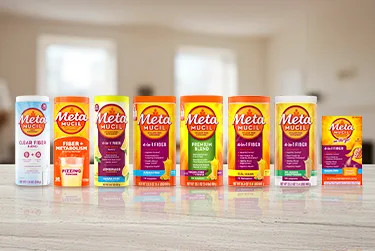
Metamucil 4-in-1 Fiber (Psyllium Husk)
Metamucil (Procter & Gamble) · powderBest Value: cheap, drinkable, and well-evidenced as a fiber — but single-pathway and a heavy gel load.
Pennies per serving — by far the cheapest in the set.
Single pathway — a fiber, not a craving formula.
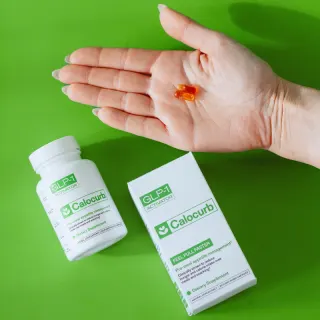
Calocurb GLP-1 Activator
Calocurb · capsuleThe best-evidenced single-mechanism appetite trigger — clinically interesting, but premium-priced and a pre-meal, short-window tool rather than all-day support.
Amarasate is one of the most directly studied appetite ingredients — multiple human RCTs, dosed on-label at 250 mg.
Acute, short-window effect: a pre-meal tool (up to 4 capsules/day), not all-day craving support.