Munchies Science
Should You Eat Before or After Smoking Weed? What the Studies Show
Food barely touches a smoked high. It changes an edible a lot, and it decides how hard the munchies land.
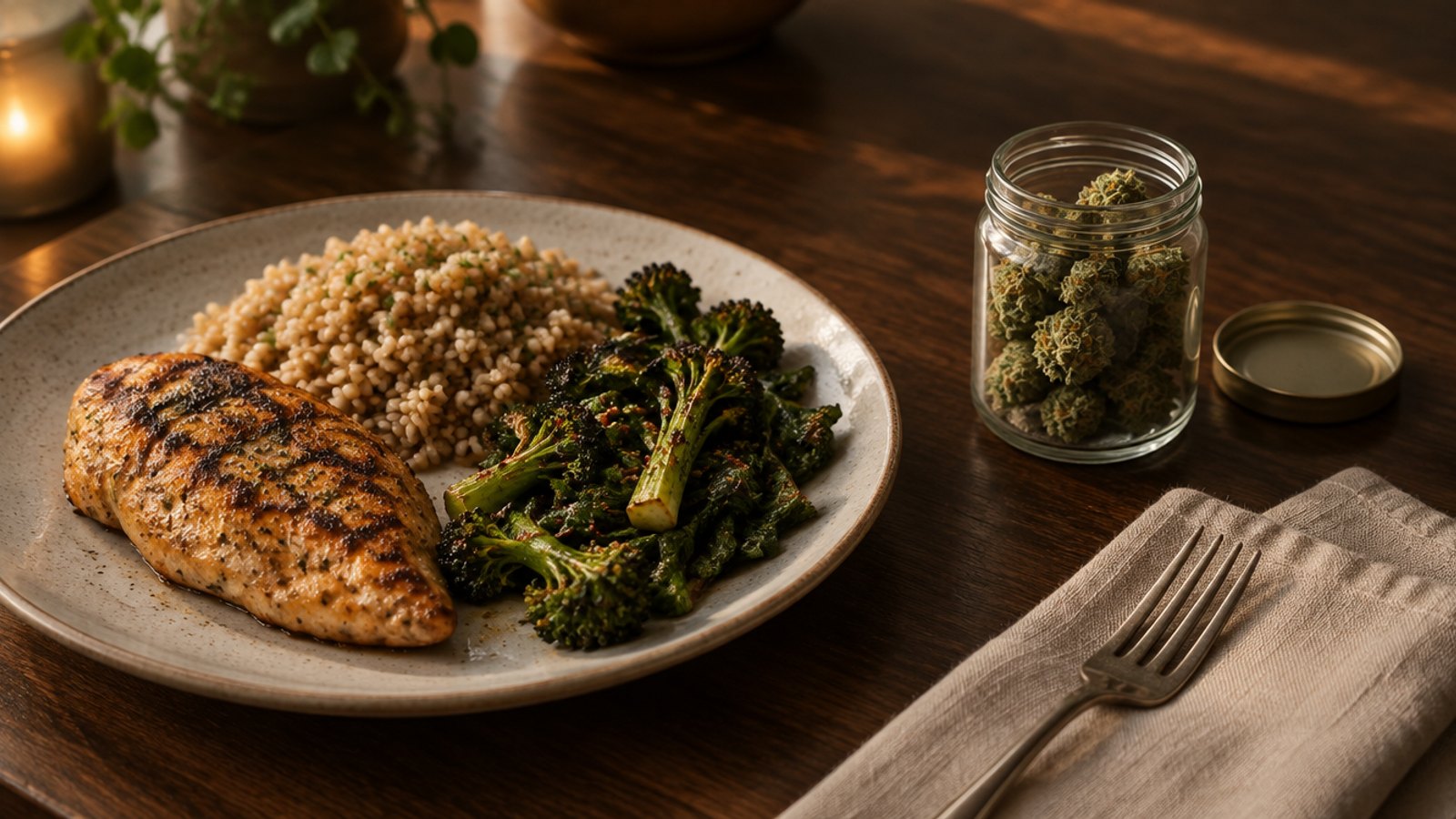
Eat before you smoke or vape, not after. Food in your stomach doesn't change how hard inhaled THC hits, because smoked THC is absorbed through the lungs and peaks in your blood within minutes. Eating first does change the munchies: they land on a fed body instead of an empty one. Edibles are the exception, since a meal can raise and delay the high.
Most of the advice on this question comes from dispensary blogs, and most of it mixes up the two routes. The research splits cleanly once you separate them.
- Smoking or vaping: eat 30 to 60 minutes before. The high stays the same and the snacking has less to work with.
- Edibles: eating first is fine, but expect a slower, bigger and longer effect, especially after a fatty meal.
- After: works if the meal is planned and you eat it inside the 2 to 3 hour window, rather than grazing through it.
Smoked THC skips the stomach, so food barely matters
Smoked and vaped THC goes from the lungs straight into the blood, so a full stomach sits outside the path. A widely cited pharmacokinetics review puts peak blood levels within minutes of inhaling, the strongest effects at 15 to 30 minutes, and a taper over 2 to 3 hours (Grotenhermen, Clin Pharmacokinet 2003).
That's why the belief that weed "hits harder on an empty stomach" has no real support for smoking. We found no controlled study comparing a fed and a fasted joint. What people feel on an empty stomach may be something else entirely: hunger, low energy, or a head rush.
The head rush is real. In a study of 63 male regular smokers, about 1 in 5 of those given no blocking drug felt dizzy or lightheaded from a drop in blood pressure after one joint of 2.64% THC (Gorelick, Am Heart J 2006). No study has tested whether skipping a meal makes that worse, but sitting down to eat first is a cheap hedge.
Edibles absorb through the gut, and a meal raises the dose you feel
Edibles pass through the stomach and liver, so a meal changes both how much THC reaches your blood and when it arrives. In a double-blind crossover trial of 28 healthy adults taking 5 or 10 mg THC capsules, a high-fat meal delayed the peak and increased total exposure to THC and its active metabolite, 11-OH-THC (Lunn, Cannabis Cannabinoid Res 2019).
The size of the shift is large. In a study of 54 volunteers given pharmaceutical THC (dronabinol), taking it with food raised total exposure 2.1 to 2.4 times and pushed the peak from about 1.7 hours to 5.6 hours for the capsule (Oh, Clin Pharmacol 2017).
That combination sets the classic trap. You eat dinner, take a gummy, feel nothing at 90 minutes, take a second one, and then both land at once. If you eat before an edible, start low and wait at least 2 hours before taking more. We cover onset and peak in more detail in how edibles change the timing and strength of the munchies.
The munchies are the real reason to eat first
THC mainly adds snacks, not bigger meals, which is why eating beforehand helps. In a 13-day residential lab study, 6 men smoking 2.3% THC cigarettes ate 40% more calories per day than on placebo days (Foltin, Appetite 1988).
The extra calories didn't come from meals. Meal calories stayed flat while snacking occasions went up, mostly for sweet solid foods like candy bars. A meal before the session doesn't stop that pattern, but it means the snacking starts from full rather than from a 6-hour gap.
The hormone data points the same way. In a placebo-controlled lab study of 20 cannabis users, oral, smoked and vaped cannabis each blunted the insulin rise that followed a brownie, and GLP-1 ran lower than on placebo (Farokhnia, Transl Psychiatry 2020). GLP-1 is one of the gut signals that tells the brain you've eaten, so a weaker signal while high fits the experience of eating past full. It's one small study, and the full chain from hormone to snack hasn't been proven. For the wider mechanism, see why weed makes you hungry, from receptors to smell.
What to eat before you smoke: protein and fiber first
A protein-heavy meal is the best-supported pre-session choice, though no trial has tested it alongside cannabis. In a crossover study of 20 young women who usually skipped breakfast, a 35 g protein breakfast lowered daily ghrelin, raised the fullness hormone PYY and cut evening snacking on high-fat foods compared with skipping (Leidy, Am J Clin Nutr 2013). A 13 g protein breakfast didn't cut the snacking.
That study is about breakfast, not weed, so treat it as a direction rather than a promise. In practice it looks like this:
- 30 to 60 minutes before: a real meal with 30 g or more of protein (chicken, eggs, Greek yogurt, tofu) and some fiber.
- Skip the fatty edible pairing: if you're taking an edible, a heavy fatty dinner makes the dose harder to predict.
- Set out the snack before you light up: decisions made high run toward candy, per the Foltin data. Pick the bowl ahead of time; our list of healthy snacks for the munchies, ranked is built for this.
- Have a drink ready: sparkling water or tea fills the hand-to-mouth gap. See the best drinks for the munchies.
Fiber supplements are another option some people take with the pre-session meal. Psyllium, like Metamucil, is a bulking fiber taken with meals, though we couldn't find a trial testing it against cannabis munchies. Our appetite suppressant guides cover the evidence for each option.
Eating after works only if the meal is planned
Eating after smoking is a reasonable plan when the meal is decided in advance and served inside the high. The munchies start fast after inhaling, often within minutes (our breakdown of when the munchies kick in by route has the timing), and the window runs about 2 to 3 hours.
If dinner is ready when that window opens, the hunger goes into a meal. If dinner is an open question, the Foltin pattern takes over: lots of small sweet snacks and no meal. Some people also prefer to smoke after eating simply because a heavy meal and a fresh high together leave them sluggish. That's preference, not pharmacology, and a meal won't bring a high down either (we checked the research on whether eating makes you less high).
The worst setup for appetite is the common one: skip dinner, smoke, then decide what to eat while high. Of all the routines here, that one leaves you hungriest at the moment your judgment about food is weakest.
References
- Grotenhermen F. Pharmacokinetics and pharmacodynamics of cannabinoids. Clin Pharmacokinet. 2003;42(4):327-60. PubMed 12648025
- Gorelick DA, et al. The cannabinoid CB1 receptor antagonist rimonabant attenuates the hypotensive effect of smoked marijuana in male smokers. Am Heart J. 2006;151(3):754.e1-5. PubMed 16504646
- Lunn S, et al. Human pharmacokinetic parameters of orally administered delta-9-tetrahydrocannabinol capsules are altered by fed versus fasted conditions and sex differences. Cannabis Cannabinoid Res. 2019;4(4):255-264. PubMed 31872060
- Oh DA, et al. Effect of food on the pharmacokinetics of dronabinol oral solution versus dronabinol capsules in healthy volunteers. Clin Pharmacol. 2017;9:9-17. PubMed 28138268
- Foltin RW, Fischman MW, Byrne MF. Effects of smoked marijuana on food intake and body weight of humans living in a residential laboratory. Appetite. 1988;11(1):1-14. PubMed 3228283
- Farokhnia M, et al. Effects of oral, smoked, and vaporized cannabis on endocrine pathways related to appetite and metabolism. Transl Psychiatry. 2020;10(1):71. PubMed 32075958
- Leidy HJ, et al. Beneficial effects of a higher-protein breakfast on the appetitive, hormonal, and neural signals controlling energy intake regulation in overweight/obese, breakfast-skipping, late-adolescent girls. Am J Clin Nutr. 2013;97(4):677-88. PubMed 23446906
FAQ
Does weed hit harder on an empty stomach?
Smoked or vaped weed doesn't hit meaningfully harder on an empty stomach, because inhaled THC is absorbed through the lungs and peaks in the blood within minutes. Food matters for edibles: in a trial of 28 adults, a high-fat meal delayed the THC peak and raised total exposure.
Should you eat before taking an edible?
Eating before an edible is fine if you plan for a slower, stronger effect. In a study of 54 volunteers, taking THC with food raised total exposure 2.1 to 2.4 times and moved the peak from about 1.7 hours to 5.6 hours. Start low and wait at least 2 hours before taking more.
What should you eat before smoking to avoid the munchies?
A protein-rich meal 30 to 60 minutes before smoking is the best-supported choice, though no trial has tested it with cannabis. In a crossover study of 20 young women, a 35 g protein breakfast lowered ghrelin and cut evening snacking on high-fat foods compared with skipping breakfast.
Is it bad to smoke weed on an empty stomach?
Smoking weed on an empty stomach isn't known to be harmful, but some people feel dizzy after cannabis. In a study of 63 male regular smokers, about 1 in 5 of those given no blocking drug felt lightheaded from a drop in blood pressure after one joint. Eating first also means the munchies start from full.
Products mentioned

Metamucil 4-in-1 Fiber (Psyllium Husk)
Metamucil (Procter & Gamble) · powderBest Value: cheap, drinkable, and well-evidenced as a fiber — but single-pathway and a heavy gel load.
Pennies per serving — by far the cheapest in the set.
Single pathway — a fiber, not a craving formula.
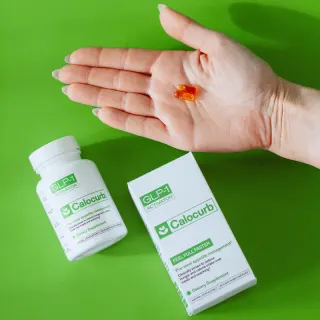
Calocurb GLP-1 Activator
Calocurb · capsuleThe best-evidenced single-mechanism appetite trigger — clinically interesting, but premium-priced and a pre-meal, short-window tool rather than all-day support.
Amarasate is one of the most directly studied appetite ingredients — multiple human RCTs, dosed on-label at 250 mg.
Acute, short-window effect: a pre-meal tool (up to 4 capsules/day), not all-day craving support.