Munchies Science
Why Does Weed Make You Hungry? What THC Does to Your Appetite
Your stomach isn't the one asking for chips. Your brain is.
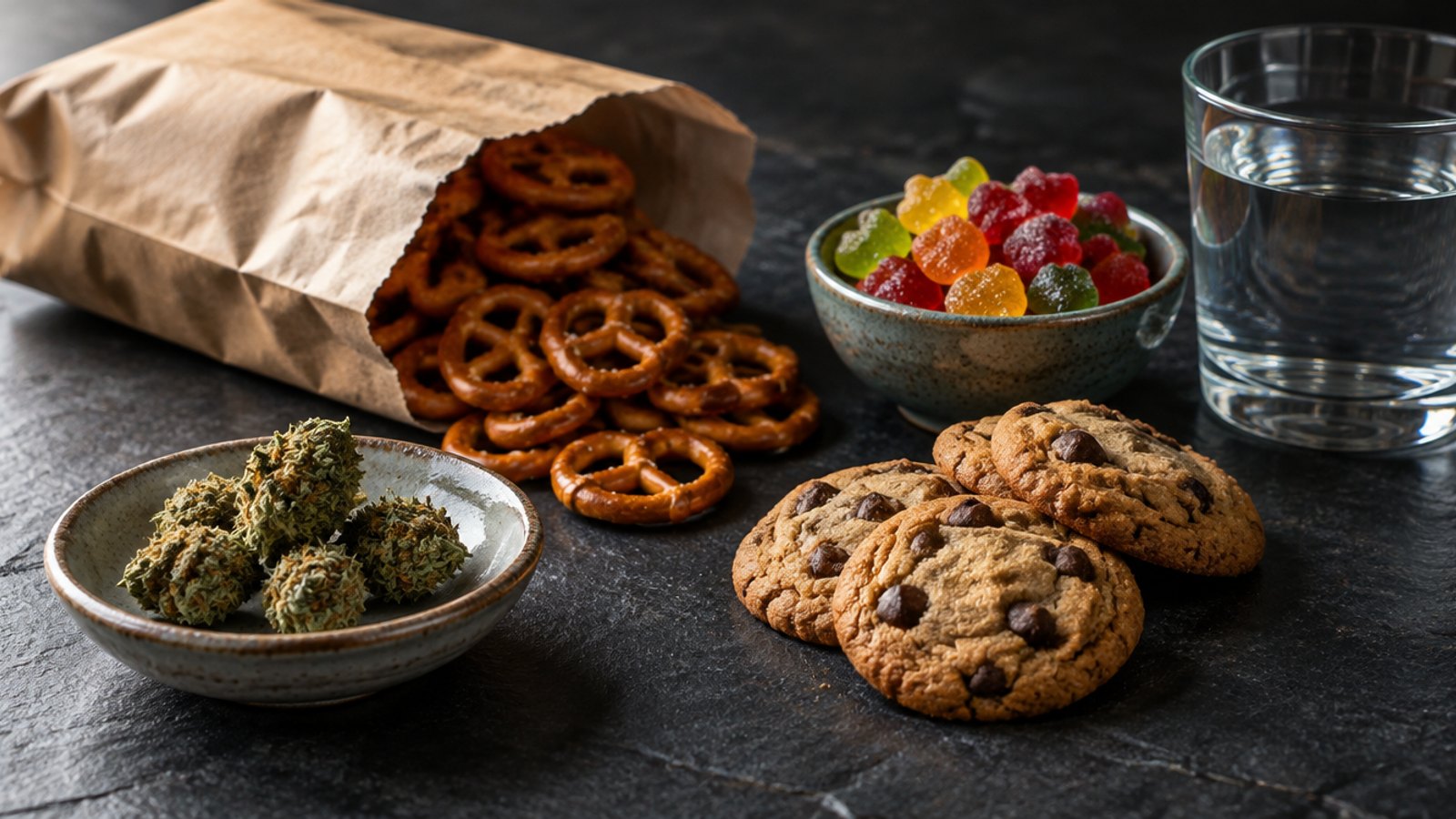
Weed makes you hungry because THC switches on CB1 receptors in the brain, and those receptors sit on the circuits that decide whether food is worth going after. In a 2025 study, vaporized cannabis raised how much people ate within the first 30 minutes of snacks being available, at every dose tested (Hume and colleagues, PNAS 2025).
The interesting part is how many separate levers THC pulls at once. Animal studies show it flips a fullness circuit, sharpens smell and turns up sweet taste. The human data adds one more: food just seems more worth getting.
THC drives the munchies through CB1 receptors in the brain, not the stomach
The munchies start in the brain. In the 2025 PNAS paper, researchers at the University of Calgary and Washington State University paired a human study with a rat model. When they blocked CB1 receptors only in the body, the rats still overate on cannabis vapor. When they blocked the receptors in the brain, the extra eating went away (Hume and colleagues, PNAS 2025).
The human half is the part most explainers skip. People given vaporized cannabis ate more energy in the first half hour of access to snacks and drinks, regardless of dose or gender. They didn't shift toward sugar or fat specifically. They just ate more of everything on offer.
That fits the timing we covered in when the munchies kick in for smoking, vaping and edibles: inhaled THC reaches the brain in minutes, and so does the hunger.
THC turns fullness neurons into hunger signals, at least in mice
CB1 activation hijacks the brain cells that normally tell you to stop eating. A 2015 Yale study in Nature looked at POMC neurons in the hypothalamus, which usually promote satiety. In already-fed mice, switching on CB1 receptors made these neurons more active, not less, and the mice ate more (Koch and colleagues, Nature 2015).
The trick was in what the neurons released. POMC cells can put out a fullness signal (alpha-MSH) or an opioid (beta-endorphin). CB1 activation pushed them toward beta-endorphin only. When the researchers gave naloxone, a drug that blocks opioid receptors, the cannabinoid-driven eating stopped.
That's a neat explanation for why you can finish dinner, get high and feel hungry again. It's also a mouse study, so treat it as a strong lead rather than a settled human fact.
Cannabinoids make food smell stronger
CB1 receptors in the smell system raise how sharply mice detect odors, and that alone pushed up how much they ate. A 2014 study in Nature Neuroscience found CB1 receptors packed onto nerve endings that run from the smell cortex back into the olfactory bulb. Activating them, with the body's own cannabinoids or with outside ones, increased odor detection and food intake in fasted mice (Soria-Gómez and colleagues, Nature Neuroscience 2014).
The authors framed it as the link between feeling hungry and smelling things more intensely. If the smell of toast has ever stopped you mid-sentence while high, that's the circuit.
Cannabinoids turn up sweet taste specifically
The body's own cannabinoids made sweet taste receptors fire harder in mice, and left salty, sour, bitter and savory responses alone. In a 2010 PNAS study, the endocannabinoids anandamide and 2-AG raised taste-nerve responses to sweeteners in a dose-dependent way. Mice bred without CB1 receptors showed no such boost, and CB1 turned up in the same taste cells that carry the sweet receptor (Yoshida and colleagues, PNAS 2010).
Two cautions. This tested the body's own cannabinoids, not THC, and it was done in mice. But it's the most direct biological answer to why the candy aisle looks so good at midnight.
Food feels more worth the effort
Cannabis raises motivation to get food and stops food from losing its appeal as you eat. That was the main finding of the rat experiments in the 2025 PNAS paper. Cannabis vapor shortened the time before rats started eating, increased the number of feeding bouts, and wiped out food preferences the rats already had (Hume and colleagues, PNAS 2025).
Normally the tenth chip is less exciting than the first. The authors concluded that cannabis may override the body's normal appetite regulation by keeping food rewarding for longer. That explains the classic munchies pattern better than hunger does: you aren't empty, you just can't stop wanting the next bite.
The hunger-hormone explanation has the weakest human support
Hormone changes don't explain the munchies well, despite being the most repeated answer online. The usual line is that THC raises ghrelin (the hunger hormone) and lowers leptin (the fullness hormone). The best human test of that idea gives a messier picture.
In a randomized, double-blind, placebo-controlled crossover study at the US National Institutes of Health, 20 cannabis users had oral, smoked and vaporized cannabis (about 50 mg of THC) or placebo across 4 sessions, with repeated blood draws (Farokhnia and colleagues, Translational Psychiatry 2020). Cannabis blunted the insulin spike that followed the placebo brownie, and GLP-1 readings ran lower under cannabis. Total ghrelin was higher in the oral session than in the smoked or vaped ones, which isn't the same as a clean rise against placebo.
Meanwhile, the 2025 PNAS rat experiments found no change in circulating appetite hormones at all, and the eating was driven from the brain. Blood hormone readings are also a rough window: GLP-1 in particular breaks down within minutes of release, and commercial GLP-1 assays disagree badly with each other (Bak and colleagues, Diabetes, Obesity and Metabolism 2014). So hormones may play a part, but the brain-side explanations have better evidence.
The same mechanism plays out differently by dose, route and habit
The munchies vary from night to night because the levers above don't all move together. Inhaled THC hits fast and fades within a few hours, while edibles still give you the munchies, just later and for longer. In one long residential study, regular users built tolerance to the high but not to the eating, which we covered in whether you can get the munchies without being high.
Alcohol is a useful contrast. It also makes people eat more, but through a different route, and the two stack when you mix them. Our breakdown of how drunk munchies and high munchies differ walks through both.
Knowing the mechanism changes what helps
Because the munchies run on reward and smell rather than an empty stomach, the most useful moves happen before you get high, not after. Decide on the snack in advance, keep the bag small and put the sweet stuff out of reach, since whether weed makes you gain weight comes down mostly to that snacking window. Our ranking of healthy snacks for the munchies by protein and fiber is a good place to start.
For the full how-to, Ozzi's guide to stopping the munchies without giving up weed covers the routine side. If you're weighing a supplement, our evidence check on each munchies supplement ingredient is upfront about what has and hasn't been tested, and the wider appetite suppressant category is ranked on our published five-axis methodology. None of those products has been tested against cannabis-driven eating in a published trial.
References
- Hume C, Cuttler C, Baglot SL, Javorcikova L, McLaughlin RJ, Hill MN. Cannabis produces acute hyperphagia in humans and rodents via increased reward valuation for, and motivation to, acquire food. Proc Natl Acad Sci U S A. 2025;122(52):e2518863122. PubMed 41439716
- Koch M, Varela L, Kim JG, et al. Hypothalamic POMC neurons promote cannabinoid-induced feeding. Nature. 2015;519(7541):45-50. PubMed 25707796
- Soria-Gómez E, Bellocchio L, Reguero L, et al. The endocannabinoid system controls food intake via olfactory processes. Nat Neurosci. 2014;17(3):407-415. PubMed 24509429
- Yoshida R, Ohkuri T, Jyotaki M, et al. Endocannabinoids selectively enhance sweet taste. Proc Natl Acad Sci U S A. 2010;107(2):935-939. PubMed 20080779
- Farokhnia M, McDiarmid GR, Newmeyer MN, et al. Effects of oral, smoked, and vaporized cannabis on endocrine pathways related to appetite and metabolism: a randomized, double-blind, placebo-controlled, human laboratory study. Transl Psychiatry. 2020;10(1):71. PubMed 32075958
- Bak MJ, Wewer Albrechtsen NJ, Pedersen J, et al. Specificity and sensitivity of commercially available assays for glucagon-like peptide-1 (GLP-1): implications for GLP-1 measurements in clinical studies. Diabetes Obes Metab. 2014;16(11):1155-1164. PubMed 25041349
Citations retrieved via PubMed. This article is for education only and isn't medical advice. Cannabis laws and effects vary; talk to a clinician about your own situation.
FAQ
Why does weed make you hungry?
Weed makes you hungry mainly through THC acting on CB1 receptors in the brain. In a 2025 study, vaporized cannabis raised how much people ate in the first 30 minutes of snack access at every dose tested, and in rats the effect disappeared when CB1 receptors in the brain were blocked.
Does THC raise the hunger hormone ghrelin?
THC's effect on ghrelin in humans is unclear. In a 2020 placebo-controlled study of 20 cannabis users, total ghrelin was higher after oral cannabis than after smoked or vaped cannabis, while a 2025 rat study found no change in appetite hormones and traced the eating to the brain.
Why do sweets taste better when you're high?
Sweet taste is directly turned up by cannabinoids, at least in mice. A 2010 study found the body's own cannabinoids raised taste-nerve responses to sweeteners through CB1 receptors on sweet taste cells, without changing salty, sour, bitter or savory responses.
Why can you still eat after a full meal when you're high?
Cannabinoids can override fullness signals. In a 2015 mouse study, CB1 activation made the hypothalamic neurons that normally signal fullness release beta-endorphin instead, and fed mice ate more until an opioid blocker stopped it.
Products mentioned

Metamucil 4-in-1 Fiber (Psyllium Husk)
Metamucil (Procter & Gamble) · powderBest Value: cheap, drinkable, and well-evidenced as a fiber — but single-pathway and a heavy gel load.
Pennies per serving — by far the cheapest in the set.
Single pathway — a fiber, not a craving formula.
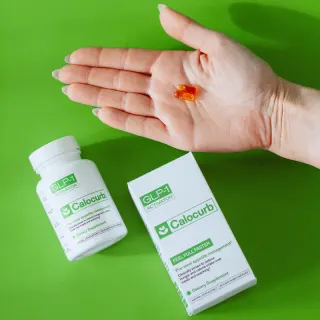
Calocurb GLP-1 Activator
Calocurb · capsuleThe best-evidenced single-mechanism appetite trigger — clinically interesting, but premium-priced and a pre-meal, short-window tool rather than all-day support.
Amarasate is one of the most directly studied appetite ingredients — multiple human RCTs, dosed on-label at 250 mg.
Acute, short-window effect: a pre-meal tool (up to 4 capsules/day), not all-day craving support.

Lipozene
Obesity Research Institute · capsuleCheap single-ingredient glucomannan — fine as a fiber, but it does only one thing.
Single, disclosed ingredient.
One pathway only (fiber satiety).