Munchies Science
Does Eating Make You Less High? What the Studies Show
Grab a sandwich and it'll take the edge off. Everyone's heard it. The pharmacology says food fixes something, just not the thing you think.
Eating does not make you less high. No study shows that food lowers the THC already in your blood after smoking or vaping, and with edibles a meal can raise how much THC you absorb, not lower it (Oh 2017). What food reliably fixes is the hunger, which is a big part of why being high feels like a lot.
So the snack isn't useless. It's just solving the munchies, while the clock does the work on the high.
Food can't pull smoked THC back out of your blood
Smoked or vaped THC is already in your bloodstream before any food reaches your stomach. Inhaled THC hits peak blood levels within minutes, its effects peak 15 to 30 minutes in, and they taper off within 2 to 3 hours (Grotenhermen 2003).
Your lungs skipped the gut entirely, so there's nothing in your stomach for a sandwich to soak up. We cover the before-or-after question in our guide on whether to eat before or after smoking weed.
With edibles, a meal can make the high bigger and longer
Eating while an edible is still absorbing can raise the dose you end up feeling. In a crossover trial of 54 healthy volunteers, taking a THC capsule with food raised total THC exposure 2.4-fold compared with taking it fasted, and pushed the peak from 1.7 hours to 5.6 hours (Oh 2017).
Two caveats. That trial used dronabinol, the prescription form of THC dissolved in sesame oil, and it was run by the drug's maker. A gummy isn't a capsule. But a 2026 trial of 125 volunteers found the same direction with a newer THC capsule: higher overall THC exposure when it was taken with food (Mbogo 2026).
Here's the trap. An edible takes 30 to 90 minutes to start working and lasts about 4 to 12 hours (Grotenhermen 2003). If you eat a rich meal at hour 1 to "calm it down," there may still be THC in your gut waiting to be absorbed. We go through edible timing in detail in how edibles cause the munchies and how long they last.
Eating while high feels like it helps because time passes and the hunger stops
Eating while high probably feels like it helps for two reasons that have nothing to do with THC levels. The first is timing. By the time you've found food, made it and eaten it, a smoked high is often 30 to 60 minutes further down its 2 to 3 hour taper.
The second is the hunger itself. The munchies are uncomfortable, and they nag. Once you've eaten, one loud signal goes quiet, and the whole experience reads as calmer (nobody has measured this directly, so treat it as a reasonable guess). Our breakdown of how long the munchies last has the timeline for that hungry window.
That's the honest case for the snack: it's a fix for the munchies, not a sobering agent. Pick something with protein or fiber and it'll do that job faster. Our ranking of healthy snacks for the munchies, scored by protein and fiber has options.
CBD did not take the edge off THC in a 46-person trial
Adding CBD to THC did not reduce the high in a randomized, double-blind crossover trial of 46 healthy, infrequent cannabis users. Each person vaped 10 mg of THC with 0, 10, 20 or 30 mg of CBD across four sessions (Englund 2022).
THC alone impaired memory and raised scores for psychotic-like symptoms. No dose of CBD changed that, or changed the subjective, pleasurable or physical effects. CBD didn't lower blood THC either.
The authors were testing the ratios found in real products, up to 3 to 1. Much higher CBD doses weren't tested, so the finding is "common ratios don't help," not "CBD never could." We look at CBD's own effect on appetite in whether CBD makes you hungry.
Lemon has one small trial behind it, and black pepper has none
D-limonene, the main scent compound in lemon peel, reduced THC-induced anxiety in one controlled trial. Twenty healthy adults vaped THC with or without limonene across double-blind sessions. In a subset of 12, adding 15 mg of limonene to 30 mg of THC significantly lowered ratings of feeling "anxious/nervous" and "paranoid" compared with THC alone (Spindle 2024).
Read what it didn't find. Limonene didn't change the rest of the high, didn't touch cognitive impairment, and didn't change THC levels in the blood. It was also vaporized alongside the THC, not squeezed into water afterward. The authors say oral forms still need testing.
So lemon water as a cure for being too high is an extrapolation from 12 people. It's cheap and harmless, and the anxiety finding is real, but it's a long way from proof.
Black pepper is the other popular tip, usually explained by its terpene beta-caryophyllene. We searched PubMed and found no human trial testing black pepper, or beta-caryophyllene, against a THC high.
Edibles send more people to the ER than their sales share would predict
Edible highs are the ones most likely to go wrong. In a review of emergency department visits at a large Colorado hospital, edibles made up 10.7% of cannabis-attributable visits from 2014 to 2016 but only 0.32% of the THC sold in the state (Monte 2019).
Edible visits were more likely to involve intoxication (48% versus 28%) and acute psychiatric symptoms (18.0% versus 10.9%) than visits tied to inhaled cannabis. That's an observational study from one hospital, but it fits the pharmacology: a slow, long high that people redose or try to eat their way out of.
Time is the only thing proven to bring you down
Time is the only reliable way to come down from a high. A smoked high fades within 2 to 3 hours, and the main acute risks of too much THC are anxiety, panic, a racing heart and blood pressure changes (Grotenhermen 2003).
What helps while you wait:
- Don't redose. Especially with an edible that "isn't working yet."
- Eat something light, not a feast. A modest snack handles the munchies. A greasy meal while an edible is absorbing may stretch things out.
- Get somewhere calm. Panic is the main bad outcome, and it passes.
- Get help if it's physical. Chest pain, fainting or panic that won't ease means a call to a doctor or emergency services.
If you're planning ahead, the cleaner move is to eat dinner before the session so you aren't starting hungry. Some products claim to skip the hunger entirely, and we checked which edibles claim to avoid the munchies. Craving products are scored in our appetite suppressant category.
References
- Grotenhermen F. Pharmacokinetics and pharmacodynamics of cannabinoids. Clin Pharmacokinet 2003;42(4):327-60. PubMed 12648025
- Oh DA, et al. Effect of food on the pharmacokinetics of dronabinol oral solution versus dronabinol capsules in healthy volunteers. Clin Pharmacol 2017;9:9-17. PubMed 28138268
- Mbogo GW, et al. A randomized four-period cross-over phase I study to assess bioavailability, bioequivalence, and tolerability of IHL-42X compared with the reference drugs in healthy volunteers. Clin Drug Investig 2026;46(11):1279-1297. PubMed 42730864
- Englund A, et al. Does cannabidiol make cannabis safer? A randomised, double-blind, cross-over trial of cannabis with four different CBD:THC ratios. Neuropsychopharmacology 2023;48(6):869-876. PubMed 36380220
- Spindle TR, et al. Vaporized D-limonene selectively mitigates the acute anxiogenic effects of delta-9-tetrahydrocannabinol in healthy adults who intermittently use cannabis. Drug Alcohol Depend 2024;257:111267. PubMed 38498958
- Monte AA, et al. Acute illness associated with cannabis use, by route of exposure: an observational study. Ann Intern Med 2019;170(8):531-537. PubMed 30909297
Citations retrieved via PubMed. This article is for education only and isn't medical advice.
FAQ
Does eating food kill your high?
Eating food does not kill a high from smoking or vaping, because the THC is already in your blood and food can't remove it. Eating can make the experience feel calmer by ending the munchies, but the high itself fades on its own over about 2 to 3 hours.
Should you eat if you're too high on an edible?
A big, rich meal is a poor fix for a strong edible, because food can raise how much THC is absorbed from the gut. In one trial, taking THC with food raised total exposure 2.4-fold. A light snack for hunger is fine; a feast to come down may stretch the high out.
Does lemon help you come down from being high?
Lemon juice has not been tested against a THC high. Limonene, lemon's main scent compound, lowered anxiety and paranoia ratings when vaped with THC in one small trial, but it didn't reduce the rest of the high or blood THC levels.
How long does it take for a weed high to wear off?
A smoked or vaped high peaks 15 to 30 minutes in and tapers off within 2 to 3 hours. An edible starts in 30 to 90 minutes, peaks at 2 to 3 hours and can last 4 to 12 hours depending on the dose.
Products mentioned

Metamucil 4-in-1 Fiber (Psyllium Husk)
Metamucil (Procter & Gamble) · powderBest Value: cheap, drinkable, and well-evidenced as a fiber — but single-pathway and a heavy gel load.
Pennies per serving — by far the cheapest in the set.
Single pathway — a fiber, not a craving formula.
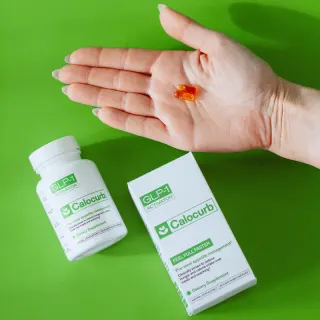
Calocurb GLP-1 Activator
Calocurb · capsuleThe best-evidenced single-mechanism appetite trigger — clinically interesting, but premium-priced and a pre-meal, short-window tool rather than all-day support.
Amarasate is one of the most directly studied appetite ingredients — multiple human RCTs, dosed on-label at 250 mg.
Acute, short-window effect: a pre-meal tool (up to 4 capsules/day), not all-day craving support.