Munchies Timeline
How Long Do the Munchies Last? A Realistic Timeline
Nobody has ever timed the munchies directly. Lay the drug data over the one study that recorded what people ate, and a usable window appears.
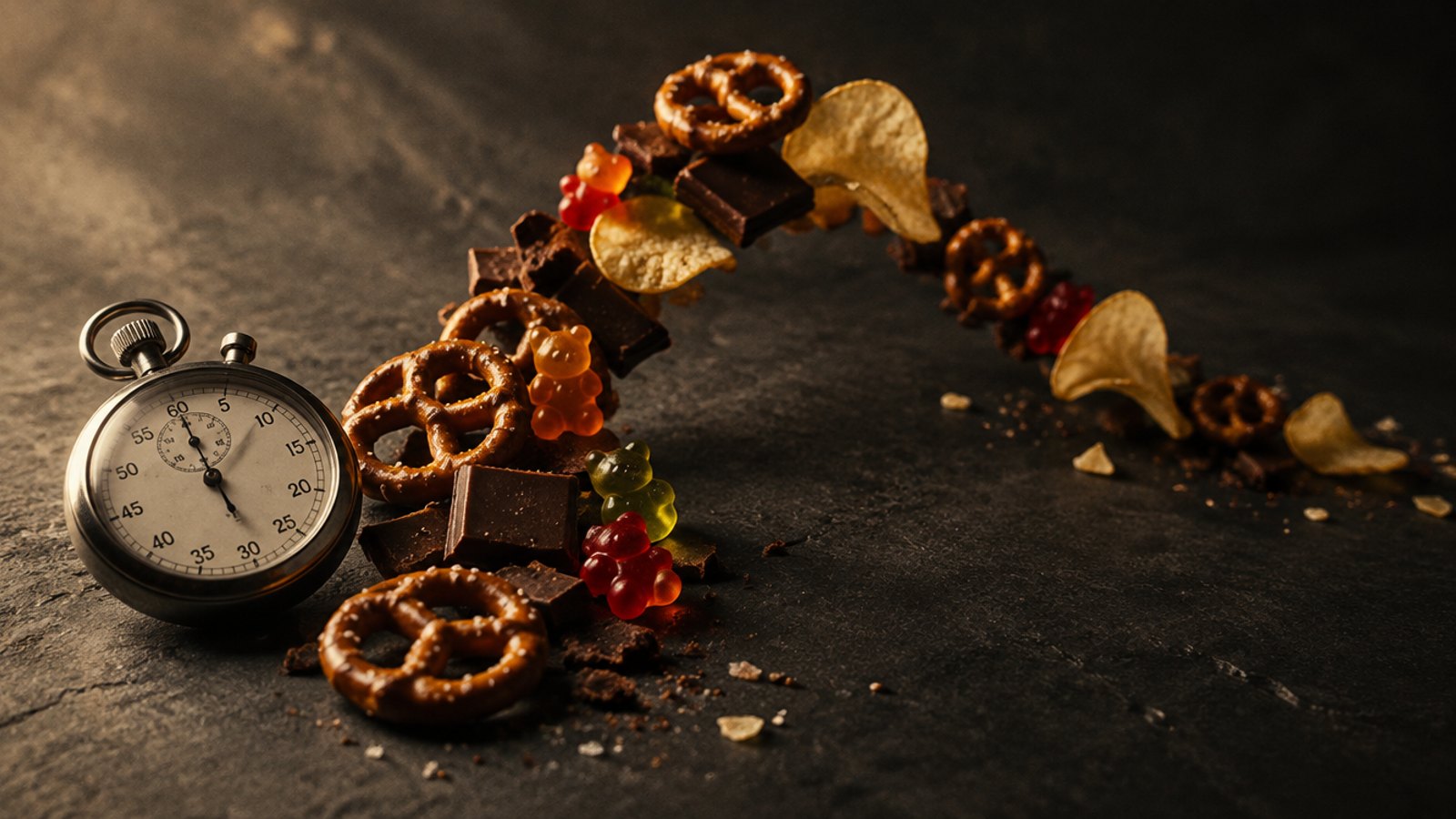
Smoked or vaped, the munchies usually run about 2 to 3 hours, with the strongest pull in the first hour. Eat an edible instead and the whole thing shifts back: 30 to 90 minutes before it starts, and 4 to 8 hours before it fully lets go.
Those are honest estimates rather than measured endpoints, and the reason why is worth 30 seconds of your time.
Nobody has actually timed the munchies
There is no study where researchers dosed people with cannabis and then recorded, minute by minute, how hungry they felt until the feeling stopped. What exists is two separate bodies of work that you have to lay on top of each other.
The first is pharmacokinetics: how fast THC gets into blood and how fast it leaves. Marilyn Huestis, who ran the controlled dosing program at the National Institute on Drug Abuse for years, put it plainly in her review of the field. A drug's pharmacokinetics determines the onset, magnitude and duration of its effects (Handbook of Experimental Pharmacology, 2005). Route of administration is the single biggest lever on all three.
The second is what people actually eat. And there, one old study still does most of the work.
The 40% study
In 1988, Foltin and colleagues moved 6 adult men into a residential laboratory for 13 days and recorded every single thing they ate. Two cigarettes of active cannabis (2.3% THC) or placebo, smoked during a private work block and again during a social block.
Active cannabis raised total daily calories by 40%. That number gets quoted constantly. The part that gets dropped is where the calories came from.
Meals didn't get bigger. Calorie intake during actual meals showed no significant change at all. The entire increase came from snacking, and specifically from more snacking occasions rather than larger snacks. Within snacks, the jump was in sweet solid items like candy bars, not soda and not chips.
So the munchies aren't one long hunger. They're a cluster of separate reaching-for-something moments, which is why the question "how long" is harder to answer than it looks. We went deeper on that pattern in our comparison of what alcohol and THC each do to appetite, and the two mechanisms behave nothing alike.
When do the munchies kick in?
The short version is below, and the studies behind each number are in our breakdown of when the munchies kick in by route.
Smoked or vaporized: 5 to 15 minutes. Inhaled THC crosses from lung to blood almost immediately, which is why the effect arrives while you're still holding the lighter. A NIDA crossover study that dosed people by all three routes found few meaningful differences between smoking and vaporizing on blood cannabinoid profiles (Newmeyer and colleagues, Clinical Chemistry 2016). Treat a vape pen as the same timeline as a joint.
Edibles: 30 to 90 minutes, sometimes longer. Swallowed THC has to clear the stomach, get absorbed, and pass through the liver, which converts a large share of it into 11-hydroxy-THC. In that same NIDA study, oral dosing produced significantly higher concentrations of THC's carboxy metabolite than either inhaled route, and metabolite detection windows ran markedly longer.
That liver step is the whole edible problem. It's slower to start, it hits with a different compound, and it takes longer to clear. The classic mistake is redosing at the 45-minute mark because nothing has happened yet.
How long until it's over
Inhaled, blood THC peaks within minutes and drops steeply over the next hour or two. Appetite tends to trail the curve rather than match it exactly, which is why the practical window most people describe runs roughly 2 to 3 hours with the sharpest edge early.
Edibles stretch every part of that. A reasonable planning assumption is 4 to 8 hours of some appetite effect, with a long soft tail rather than a clean stop.
Three things move your own number. Dose, obviously. Tolerance, because regular users clear cannabinoids differently than occasional ones, which the NIDA work found repeatedly. And whether you'd eaten recently, since an empty stomach speeds oral absorption.
If you want the version of this that covers what to reach for instead of guessing, we ranked real options in our ranking of snacks that actually survive the munchies window.
Why do they stop?
Not because you got full. THC works on the CB1 receptor, and the mechanism is stranger than a simple hunger switch.
Koch and colleagues showed in mice that activating CB1 turns on the POMC neurons that normally signal fullness, then selectively pushes them to release beta-endorphin instead of the appetite-suppressing peptide they usually make (Nature 2015). Blocking opioid receptors with naloxone killed the feeding effect. The satiety circuit gets repurposed rather than silenced.
This is mouse work, and it should be read that way. But it explains something people report constantly: eating a lot and still wanting more. The signal that would normally end the meal is busy doing something else.
As THC clears the receptor, the circuit goes back to its day job. That's the end of the munchies, and it's why the timeline tracks the drug rather than the food. Hunger that shows up the following morning is a separate problem, covered in why you can wake up hungry the day after smoking.
Can you get the munchies without being high?
Yes, and your body runs a version of the same chemistry on a daily schedule.
Hanlon and colleagues tracked 24-hour blood levels of 2-arachidonoylglycerol, one of the body's own cannabinoids, in a randomized crossover study of normal versus restricted sleep. Levels bottomed out in the middle of the overnight fast and climbed steadily to a peak in the early afternoon. After 4 nights of 4.5 hours in bed, that rhythm got bigger and later, and participants reported more hunger and were measurably worse at turning down palatable snacks (Sleep, 2016).
Layer on the clock. In a 13-day laboratory protocol that spread meals and sleep evenly across the circadian cycle, hunger followed an internal rhythm with its low point around 8 AM and its peak around 8 PM, a 17% swing with nothing external driving it. Appetite for sweet, salty and starchy foods specifically peaked at the same hour (Scheer and colleagues, Obesity 2013).
So a tired person at 9 PM is running elevated endocannabinoids at the top of their circadian hunger curve. That's the munchies without the cannabis, and we broke the timing down in our explainer on why night hits harder than any other hour. Tolerance, low doses and CBD are the other routes, and they're in our full answer on getting the munchies without being high.
What to do with the window
The useful reframe: you're not managing a craving, you're managing a known block of time. A 2 to 3 hour window you can see coming is a very different problem from a mystery.
Three things that fit the evidence. Decide what's in reach before it starts, since Foltin's data says the damage came from repeated snacking occasions and not from one enormous snack. Put protein or viscous fiber in the earlier part of the window rather than sugar, because the intake spike was specifically in sweet solid foods. And don't redose an edible inside 2 hours.
If you're looking at products sold for this, two things worth knowing before you spend. THCV gets marketed as a munchies blocker and the timing works against it, which we covered in our look at whether THCV does anything for the munchies. And the broader field of appetite options is ranked on one public rubric in our comparison of supplements aimed at the munchies, alongside everything else in our appetite and craving suppressant category.
References
- Foltin RW, Fischman MW, Byrne MF. Effects of smoked marijuana on food intake and body weight of humans living in a residential laboratory. Appetite. 1988;11(1):1-14. PMID 3228283
- Huestis MA. Pharmacokinetics and metabolism of the plant cannabinoids, delta9-tetrahydrocannabinol, cannabidiol and cannabinol. Handb Exp Pharmacol. 2005;(168):657-90. PMID 16596792
- Newmeyer MN, Swortwood MJ, Barnes AJ, et al. Free and Glucuronide Whole Blood Cannabinoids' Pharmacokinetics after Controlled Smoked, Vaporized, and Oral Cannabis Administration in Frequent and Occasional Cannabis Users. Clin Chem. 2016;62(12):1579-1592. PMID 27899456
- Koch M, Varela L, Kim JG, et al. Hypothalamic POMC neurons promote cannabinoid-induced feeding. Nature. 2015;519(7541):45-50. PMID 25707796
- Hanlon EC, Tasali E, Leproult R, et al. Sleep Restriction Enhances the Daily Rhythm of Circulating Levels of Endocannabinoid 2-Arachidonoylglycerol. Sleep. 2016;39(3):653-64. PMID 26612385
- Scheer FAJL, Morris CJ, Shea SA. The internal circadian clock increases hunger and appetite in the evening independent of food intake and other behaviors. Obesity (Silver Spring). 2013;21(3):421-3. PMID 23456944
Citations retrieved via PubMed. This article is for education only and isn't medical advice. Cannabis laws and effects vary; talk to a clinician about your own situation.
FAQ
How long do the munchies last?
Smoked or vaporized, most people describe roughly 2 to 3 hours, with the strongest pull in the first hour. Edibles run longer, commonly 4 to 8 hours, because swallowed THC passes through the liver and clears more slowly. These are estimates built from cannabinoid pharmacokinetics rather than a study that timed hunger directly, because no such study exists.
When do the munchies kick in?
Inhaled, within about 5 to 15 minutes, since THC moves from lung to blood almost immediately. Controlled dosing work at NIDA found few meaningful differences between smoking and vaporizing. Edibles take 30 to 90 minutes and sometimes longer, which is why redosing early is the most common mistake.
Can you get the munchies without being high?
You can get the munchies without being high. Your body makes its own cannabinoids on a daily rhythm. In a crossover study, blood levels of 2-arachidonoylglycerol bottomed out mid-sleep and peaked in the early afternoon, and 4 nights of restricted sleep amplified that rhythm while making people less able to turn down palatable snacks. Separately, an internal circadian rhythm puts hunger at its peak around 8 PM.
Why do the munchies stop if I'm still high?
Appetite tracks the receptor, not the whole experience, and the two curves don't line up perfectly. In mice, activating CB1 receptors flips satiety neurons into releasing beta-endorphin instead of their usual appetite-suppressing signal, and blocking opioid receptors abolishes the feeding effect. As THC clears that receptor, the circuit returns to normal, which can happen while other effects are still present.
Products mentioned

Metamucil 4-in-1 Fiber (Psyllium Husk)
Metamucil (Procter & Gamble) · powderBest Value: cheap, drinkable, and well-evidenced as a fiber — but single-pathway and a heavy gel load.
Pennies per serving — by far the cheapest in the set.
Single pathway — a fiber, not a craving formula.
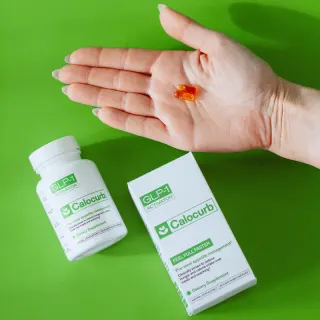
Calocurb GLP-1 Activator
Calocurb · capsuleThe best-evidenced single-mechanism appetite trigger — clinically interesting, but premium-priced and a pre-meal, short-window tool rather than all-day support.
Amarasate is one of the most directly studied appetite ingredients — multiple human RCTs, dosed on-label at 250 mg.
Acute, short-window effect: a pre-meal tool (up to 4 capsules/day), not all-day craving support.

Lipozene
Obesity Research Institute · capsuleCheap single-ingredient glucomannan — fine as a fiber, but it does only one thing.
Single, disclosed ingredient.
One pathway only (fiber satiety).