Munchies Science
Munchies the Next Day: Why You Wake Up Hungry After Smoking
The high is long gone by breakfast. The hunger might not be.
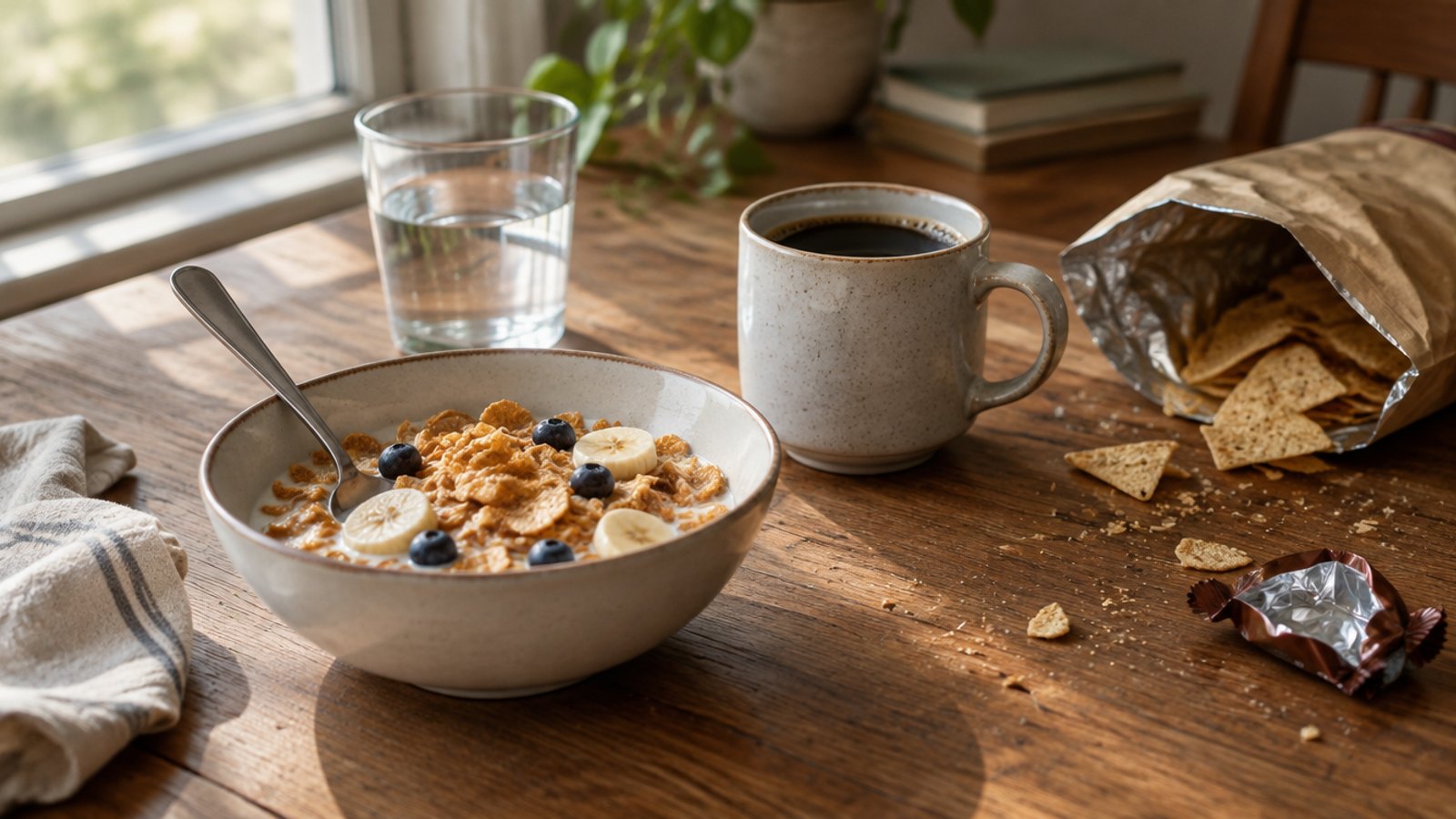
Waking up starving the morning after smoking is common, but it is rarely the THC still working on your appetite. Smoked or vaped THC mostly wears off within 5 to 7 hours (McCartney 2021), so next-day hunger is more likely to come from what last night did to your sleep, what you drank alongside it, or a late edible with a long tail. No study has measured appetite the morning after cannabis directly, so this is a piece built from the nearest good evidence, labeled as such.
That gap matters. Plenty of people swear "weed hunger" carries into the next day, and they may be right about the hunger while being wrong about the cause.
THC's appetite effect fades within hours of smoking
The direct munchies from smoking or vaping last a few hours, not a full night and a morning. A 2021 meta-analysis of 80 publications on THC and driving-related skills found most of those skills recovered within about 5 hours of inhaling 20 mg of THC, and almost all within about 7 (McCartney 2021). That review timed impairment, not hunger, but it's the best clock we have for how long inhaled THC keeps acting on the brain.
So if you smoked at 10 PM and you're ravenous at 8 AM, THC is a weak suspect. Our breakdown of how long the munchies last after smoking walks through that curve, and it ends long before breakfast.
Edibles are the exception worth flagging. The same review noted that impairment from swallowed THC may take longer to clear, and a strong edible taken late in the evening can still be winding down when you go to bed. We cover the slower clock in how edibles change the timing and length of the munchies.
Short sleep is the strongest explanation for next-day hunger
Losing sleep raises hunger the next day, and that link has controlled trials behind it. In a randomized crossover study of 12 healthy young men, two nights of restricted sleep cut the fullness hormone leptin by 18%, raised the hunger hormone ghrelin by 28%, and pushed self-rated hunger up 24% (Spiegel 2004). Appetite for calorie-dense, carb-heavy foods rose 33% to 45%.
A later trial in 19 lean men went a step further and offered a buffet. After sleep restriction, ghrelin was higher and the men ate an extra 328 calories from snacks, mostly carbohydrates. The bigger the evening rise in ghrelin, the more they ate from the sweets (Broussard 2016).
Neither study involved cannabis. But a late night of smoking, snacking and scrolling often ends in fewer hours in bed, and the hunger pattern those trials describe (more appetite, aimed at sweet and starchy food) is exactly what people report the next morning.
Cannabis can shorten sleep and cut REM, depending on dose
THC's effect on sleep is mixed, and a higher dose seems to matter. In a 2025 pilot trial of 20 adults with insomnia, a single oral dose of 10 mg THC plus 200 mg CBD cut total sleep by about 24 minutes and REM sleep by about 34 minutes compared with placebo (Suraev 2025). People felt slightly sleepier the next day, though their measured alertness and driving the next morning didn't change.
A 2025 meta-analysis of sleep-lab studies is more cautious: cannabis didn't consistently change sleep length or stages, and the early findings of REM suppression mostly came from small trials using high THC doses (Velzeboer 2025). The honest reading is that a modest dose may not touch your sleep much, and a big one might.
That's also why the night before counts. If you're already prone to evening hunger that peaks around 8 PM, a later bedtime gives that hunger more hours to work with, and the short night then sets up the next morning.
Alcohol is usually the bigger next-day factor when the two are mixed
Next-day misery after a night of drinking and smoking comes mostly from the alcohol. In a daily-survey study of 341 college students who used both, cannabis-only days were less likely than alcohol-only or combined days to bring a hangover, nausea or vomiting the next day (Drohan 2022). The authors concluded that most of the negative consequences of using both were driven by the drinking.
That study didn't track hunger. Still, if your "weed hangover" includes a headache, queasiness and a craving for grease, the drinks are the first thing to look at. Alcohol and THC push appetite through different routes, which we lay out in drunk munchies versus high munchies.
Cannabis changes appetite hormones during the high, not necessarily the next day
Cannabis does shift appetite and blood sugar hormones in the hours after use, but the studies stop there. In a randomized, placebo-controlled lab study of 20 cannabis users given about 50 mg of THC by mouth, smoked or vaped, cannabis blunted the insulin spike after a brownie and lowered GLP-1 levels compared with placebo (Farokhnia 2020). Total ghrelin was higher during the oral session than the smoked or vaped ones.
Those measurements covered the session, not the following morning. Nobody has shown these hormone shifts persist overnight, so we'd treat them as part of how the munchies work rather than as proof of a next-day effect. For the full mechanism, see what THC does in the brain to make you hungry.
For daily users, stopping can be what disrupts the next night
Regular users who suddenly cut back often get withdrawal, and withdrawal hits sleep hard. A 2020 meta-analysis of 47 studies and 23,518 people with regular or dependent cannabis use put the pooled rate of cannabis withdrawal syndrome at 47% (Bahji 2020). The 2025 sleep meta-analysis found withdrawal was consistently linked to shorter sleep, longer time to fall asleep and REM rebound (Velzeboer 2025).
So a heavy user's "next day" hunger after taking a break may be a sleep problem caused by stopping, not by using. That's a different situation from an occasional user after one night, and it's worth naming if the pattern shows up every time you try to cut back.
What helps with hunger the morning after
The fixes that match the evidence are about sleep and timing more than food rules. None of these has been tested on next-day munchies specifically, so take them as reasonable moves, not a protocol:
- Protect the hours in bed. The sleep-restriction trials are the clearest data here. An earlier stop time is worth more than any snack swap.
- Take edibles earlier, if at all. Swallowed THC clears more slowly, so a late dose is the one most likely to still be in play at bedtime.
- Don't stack drinks on top. The worst next-day symptoms tracked alcohol, not cannabis.
- Plan the breakfast before you need it. Short sleep pushed appetite toward sweet and starchy food in the trials, so having something filling ready beats deciding while hungry. Our munchies snacks ranked by protein and fiber work just as well at 8 AM.
If you want to compare products that people use around the munchies, our ranking of supplements for the munchies scores them on the same rubric as everything else in the appetite suppressants hub.
Where the research is thin
No published study has measured hunger, ghrelin or food intake the morning after cannabis use. Everything above connects what is known (how long THC acts, what short sleep does to appetite, what alcohol adds) to a question nobody has tested head on. Most of the sleep and hormone trials were also small, often 20 men or fewer, so treat the numbers as directions, not guarantees.
The practical takeaway is narrower and more useful than "weed makes you hungry the next day": if you're starving the morning after, look first at how much you slept and what else you had.
References
- McCartney D, Arkell TR, Irwin C, McGregor IS. Determining the magnitude and duration of acute Δ9-tetrahydrocannabinol (Δ9-THC)-induced driving and cognitive impairment: a systematic and meta-analytic review. Neurosci Biobehav Rev. 2021;126:175-193. PMID 33497784
- Spiegel K, Tasali E, Penev P, Van Cauter E. Sleep curtailment in healthy young men is associated with decreased leptin levels, elevated ghrelin levels, and increased hunger and appetite. Ann Intern Med. 2004;141(11):846-850. PMID 15583226
- Broussard JL, Kilkus JM, Delebecque F, et al. Elevated ghrelin predicts food intake during experimental sleep restriction. Obesity (Silver Spring). 2016;24(1):132-138. PMID 26467988
- Suraev A, McGregor IS, McCartney D, et al. Acute effects of oral cannabinoids on sleep and high-density EEG in insomnia: a pilot randomised controlled trial. J Sleep Res. 2025. PMID 40631525
- Velzeboer R, Malas A, Wei S, et al. Cannabis and sleep architecture: a systematic review and meta-analysis. Sleep Med Rev. 2025;84:102164. PMID 40967124
- Drohan MM, Stevens AK, Gunn RL, et al. Acute consequences associated with co-use of alcohol and cannabis: a daily survey analysis. J Stud Alcohol Drugs. 2023;84(2):208-213. PMID 36971729
- Farokhnia M, McDiarmid GR, Newmeyer MN, et al. Effects of oral, smoked, and vaporized cannabis on endocrine pathways related to appetite and metabolism: a randomized, double-blind, placebo-controlled, human laboratory study. Transl Psychiatry. 2020;10(1):71. PMID 32075958
- Bahji A, Stephenson C, Tyo R, Hawken ER, Seitz DP. Prevalence of cannabis withdrawal symptoms among people with regular or dependent use of cannabinoids: a systematic review and meta-analysis. JAMA Netw Open. 2020;3(4):e202370. PMID 32271390
FAQ
Can weed make you hungry the next day?
Next-day hunger after cannabis is common, but THC itself is a weak suspect: inhaled THC mostly wears off within 5 to 7 hours. Short sleep, alcohol taken alongside it, or a strong late edible explain morning hunger better, and no study has measured appetite the morning after cannabis directly.
Why am I so hungry the morning after smoking?
Short sleep is the best-supported reason for morning hunger after a late night of smoking. In a randomized trial of 12 young men, two nights of restricted sleep raised ghrelin by 28% and hunger by 24%, with the biggest jump in appetite for sweet and starchy foods.
Is there such a thing as a weed hangover?
Weed hangovers are reported, but when people drink and smoke on the same night, most next-day symptoms track the alcohol. In a daily-survey study of 341 college students, cannabis-only days were less likely than drinking days to bring a hangover, nausea or vomiting.
Do edibles cause more next-day hunger than smoking?
Edibles are more likely than smoking to carry into the night, since swallowed THC takes longer to clear than inhaled THC. A strong edible taken late can still be active at bedtime, which may cut into sleep and leave you hungrier the next morning.
Products mentioned

Metamucil 4-in-1 Fiber (Psyllium Husk)
Metamucil (Procter & Gamble) · powderBest Value: cheap, drinkable, and well-evidenced as a fiber — but single-pathway and a heavy gel load.
Pennies per serving — by far the cheapest in the set.
Single pathway — a fiber, not a craving formula.
Calocurb GLP-1 Activator
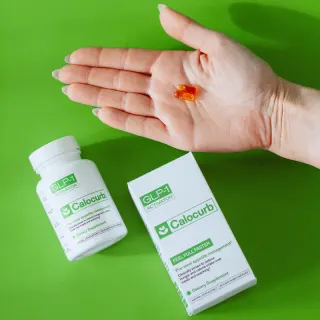
Calocurb · capsuleThe best-evidenced single-mechanism appetite trigger — clinically interesting, but premium-priced and a pre-meal, short-window tool rather than all-day support.
Amarasate is one of the most directly studied appetite ingredients — multiple human RCTs, dosed on-label at 250 mg.
Acute, short-window effect: a pre-meal tool (up to 4 capsules/day), not all-day craving support.

Lipozene
Obesity Research Institute · capsuleCheap single-ingredient glucomannan — fine as a fiber, but it does only one thing.
Single, disclosed ingredient.
One pathway only (fiber satiety).