Munchies Science
Edibles That Don't Make You Hungry: Do They Exist?
THCV gummies, CBD ratios, "appetite-suppressing" terpenes. Each promises a high without the hunger. Here's how much evidence each one has.
There's no edible that reliably skips the munchies if it has a real dose of THC in it. THC raises appetite through CB1 receptors in the brain, and swallowing it instead of smoking it doesn't route around that. What you can change is how much hunger you get and when it lands: lower doses, THCV blends and timing all move it a little, and the evidence behind each one is thinner than the packaging suggests.
Here's what each "no munchies" option actually has behind it, from strongest to weakest.
Any THC edible can bring on the munchies, even a small one
Low-dose THC edibles still cause the munchies in plenty of people, because the hunger effect doesn't track the dose neatly. In a 2025 study in PNAS, vaporized cannabis raised how much adults ate in the first 30 minutes of snack access, and the authors reported the jump happened irrespective of dose or gender (Hume et al., 2025). Their rat work pointed to the brain: the effect ran through central CB1 receptors, not hunger hormones in the blood.
Oral THC is messier. A set of four trials from the Monell Chemical Senses Center called appetite stimulation by cannabinoids "highly variable." Neither how high people felt nor their blood THC level predicted how much they ate (Mattes et al., 1994).
That variability is the honest reason some people swear a 2.5 mg gummy never makes them hungry while a friend eats half a bag of chips on the same dose. It's not that the gummy is special. People differ, and nobody can predict who's who in advance. Starting low is still sensible for the high itself; it just isn't a guaranteed fix for the hunger. (We covered how THC turns up smell, sweet taste and food reward separately.)
Delta-8 edibles still cause the munchies
Delta-8 THC gummies are not a munchies-free version of regular THC. Delta-8 acts on the same CB1 receptor as delta-9, just more weakly.
The appetite data here is in mice only. In a 2004 study, a tiny dose of delta-8 raised food intake by 16% over 9 days, an effect a CB1 blocker reversed, and it raised intake more than the same dose of delta-9 (Avraham et al., 2004). Mouse doses don't translate to gummies, so treat it as a direction, not a number. That direction is not "less hungry."
THCV gummies are the closest thing to a no-munchies edible, on thin evidence
THCV is the one cannabinoid sold specifically as the anti-munchies option, and it has a real reason to be. In lab tests THCV is a potent CB1 blocker, the opposite of what THC does, though a systematic review found it only occasionally produces that blocking effect in living animals (McPartland et al., 2015).
The human data is small. A 2024 review noted THCV picked up the nickname "diet weed" despite few human studies of appetite (Haghdoost et al., 2024). The most cited trial gave 44 adults oral strips with 8 mg THCV plus 10 mg CBD, or 16 mg plus 20 mg, once a day for 90 days, and reported more weight loss than placebo (Smith, 2025). The author works for the company behind the strips, the groups were small, and the study tracked weight over 3 months, not hunger during a high.
The bigger catch is the THC sitting next to it. Most THCV edibles are THC edibles with some THCV added, and nobody has tested whether a few milligrams of THCV cancels the munchies from the THC in the same gummy. Our full look at what the THCV studies do and don't show goes through each trial.
High-CBD edibles change the high more than the hunger
CBD doesn't trigger the munchies the way THC does, but adding it to a THC edible hasn't been shown to switch the munchies off. CBD can still change how much people eat on its own, in either direction, which we went through in the trials on whether CBD makes you hungry.
There's also a labeling problem. Johns Hopkins researchers tested 97 hemp CBD products bought in stores and online. Of the 71 that printed a CBD amount, only 9 were within 10% of the label, and 10 products contained no CBD at all (Dowd et al., 2024). If you're counting on a ratio printed on a gummy pack, check the lab certificate first.
Terpene claims about appetite have no human trials behind them
Strains and edibles marketed as "appetite suppressing" because of terpenes like humulene have no human appetite trials supporting them. We searched PubMed and found none. Myrcene, the terpene most often blamed for making you hungry, has the same gap: no human study has tested it on appetite either. The whole idea leans on the "entourage effect," the notion that cannabis compounds work together.
A 2023 scoping review in Cannabis and Cannabinoid Research found limited evidence that the entourage effect is a stable, predictable thing, and warned against promoting it as proven (Simei et al., 2023).
Timing an edible with dinner works better than shopping for one
Taking an edible after a full meal is the most practical way to blunt edible munchies, since the hungry window lands when you've already eaten. Edible hunger usually starts 30 to 60 minutes after you swallow it and builds for hours, which we mapped in how long edible munchies take to start and how long they last.
The trade-off: food in your stomach tends to make an edible hit later and harder, so take a smaller piece than usual and wait it out instead of redosing. We weighed the pros and cons of eating before or after you get high in detail.
Then set the scene for the hunger you'll probably get anyway. Popcorn, fruit, Greek yogurt or a protein bar left within reach beats whatever is easiest to grab at hour 3, and our ranking of healthy snacks for the munchies scores them on protein, fiber and how much you can eat. More on hunger and cravings sits in our appetite and cravings hub.
References
- Hume C, Cuttler C, Baglot SL, et al. Cannabis produces acute hyperphagia in humans and rodents via increased reward valuation for, and motivation to, acquire food. Proceedings of the National Academy of Sciences. 2025;122(52):e2518863122. PubMed 41439716
- Mattes RD, Engelman K, Shaw LM, Elsohly MA. Cannabinoids and appetite stimulation. Pharmacology Biochemistry and Behavior. 1994;49(1):187-195. PubMed 7816872
- Avraham Y, Ben-Shushan D, Breuer A, et al. Very low doses of delta 8-THC increase food consumption and alter neurotransmitter levels following weight loss. Pharmacology Biochemistry and Behavior. 2004;77(4):675-684. PubMed 15099912
- McPartland JM, Duncan M, Di Marzo V, Pertwee RG. Are cannabidiol and delta-9-tetrahydrocannabivarin negative modulators of the endocannabinoid system? A systematic review. British Journal of Pharmacology. 2015;172(3):737-753. PubMed 25257544
- Haghdoost M, Peters EN, Roberts M, Bonn-Miller MO. Tetrahydrocannabivarin is not tetrahydrocannabinol. Cannabis and Cannabinoid Research. 2024;10(1):1-5. PubMed 38995871
- Smith GL. Weight loss and therapeutic metabolic effects of tetrahydrocannabivarin (THCV)-infused mucoadhesive strips. Cannabis. 2025;8(1):109-120. PubMed 39968488
- Dowd AN, Zamarripa CA, Sholler DJ, et al. Cannabinoid content and label accuracy of various hemp-derived haircare, cosmetic, and edible products available at retail stores and online in the United States. Cannabis and Cannabinoid Research. 2024;10(6):719-725. PubMed 39029473
- Simei JLQ, Souza JDR, Lisboa JR, et al. Does the "entourage effect" in cannabinoids exist? A narrative scoping review. Cannabis and Cannabinoid Research. 2023;9(5):1202-1216. PubMed 37535820
FAQ
Are there edibles that don't make you hungry?
Edibles with a meaningful dose of THC can all cause the munchies, because THC raises appetite through CB1 receptors in the brain whatever form it comes in. THCV blends and lower doses may soften it for some people, but no product has been shown in a trial to prevent edible munchies.
Do THCV gummies stop the munchies?
THCV gummies have not been tested against the munchies in a human trial. THCV blocks the CB1 receptor in lab tests, and one 90-day trial of 44 adults linked THCV plus CBD strips to weight loss, but most THCV gummies also contain THC, and nobody has measured whether the THCV cancels that THC's hunger effect.
Do delta-8 gummies make you hungry?
Delta-8 THC acts on the same CB1 receptor as regular THC, so delta-8 gummies can make you hungry too. The appetite data comes from mice, where a very low dose of delta-8 raised food intake by 16% over 9 days, more than the same dose of delta-9.
What is the best way to avoid the munchies from an edible?
Taking a small edible after a full dinner is the most practical way to avoid edible munchies, because the hungry window then lands after you've already eaten. Keep filling snacks like popcorn or Greek yogurt within reach, and don't redose a slow edible, since that stacks a second hungry window on the first.
Products mentioned
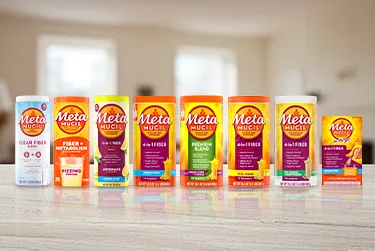
Metamucil 4-in-1 Fiber (Psyllium Husk)
Metamucil (Procter & Gamble) · powderBest Value: cheap, drinkable, and well-evidenced as a fiber — but single-pathway and a heavy gel load.
Pennies per serving — by far the cheapest in the set.
Single pathway — a fiber, not a craving formula.
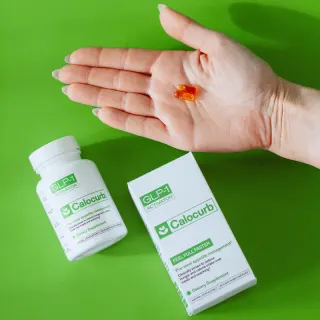
Calocurb GLP-1 Activator
Calocurb · capsuleThe best-evidenced single-mechanism appetite trigger — clinically interesting, but premium-priced and a pre-meal, short-window tool rather than all-day support.
Amarasate is one of the most directly studied appetite ingredients — multiple human RCTs, dosed on-label at 250 mg.
Acute, short-window effect: a pre-meal tool (up to 4 capsules/day), not all-day craving support.