Head to Head
Lemme vs Pendulum: Two Very Different Bets on Your Own GLP-1
Three plant extracts against three live bacterial strains. Same price, same promise, almost no overlap in the evidence.
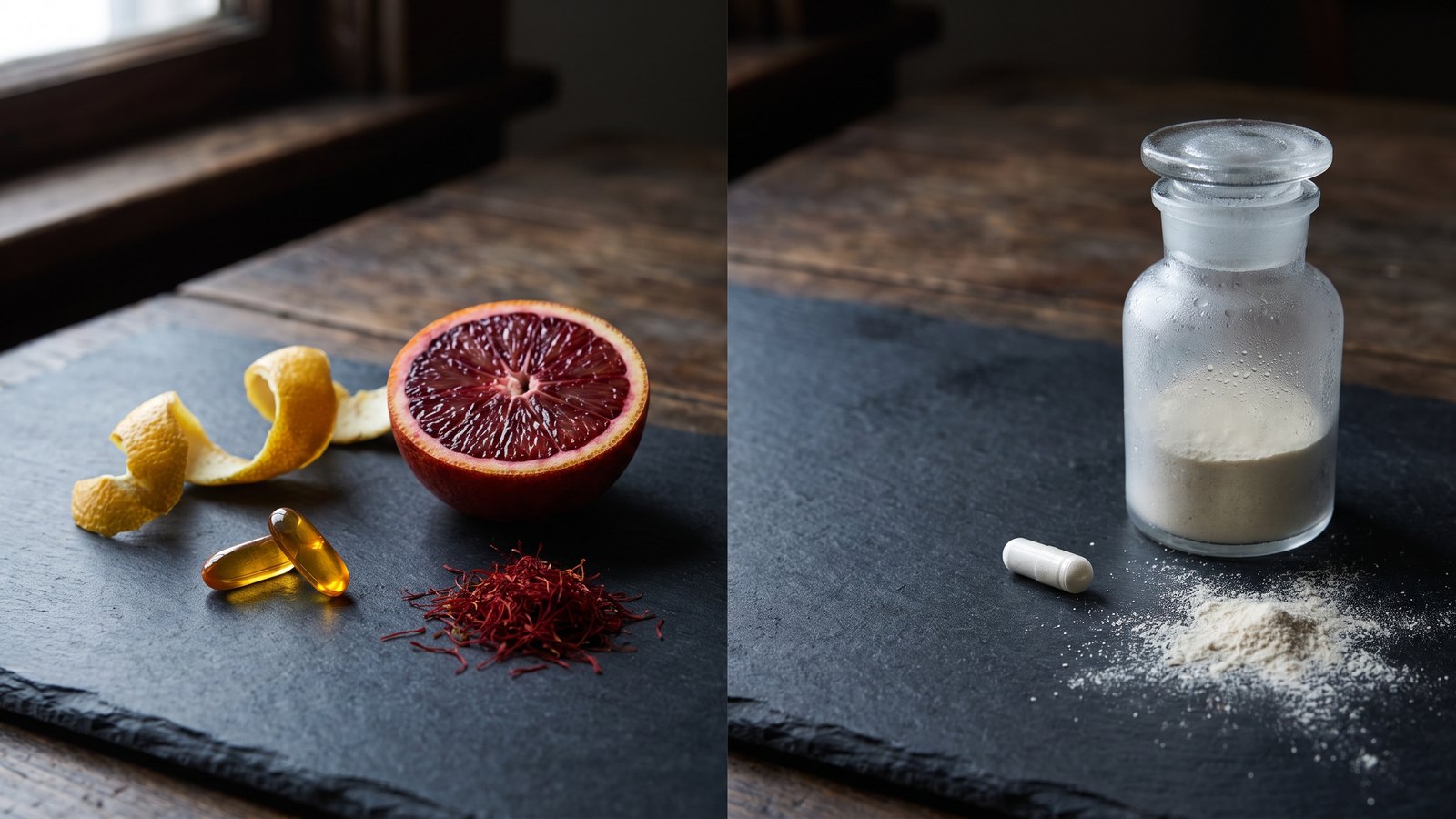
Two capsules, both filed under GLP-1 support, both landing within 4 cents of each other per serving. Past that, Lemme GLP-1 Daily and Pendulum GLP-1 Probiotic have almost nothing in common.
One is three plant extracts. The other is three strains of live bacteria. They are betting on completely different theories of how you would move a gut hormone, and only one of them has human trials that drew blood and measured it.
That is the comparison in a sentence. The details are where the buying decision actually lives.
What is in each one
Lemme runs three standardized botanical extracts, all disclosed at full dose: 400 mg Morosil red orange extract, 200 mg Eriomin lemon flavonoid extract, and 176.5 mg Supresa saffron extract. Two capsules daily.
Pendulum runs three bacterial strains (Akkermansia muciniphila, Clostridium butyricum and Bifidobacterium infantis) plus 174 mg of chicory inulin to feed them. One capsule daily. The strain total is listed at 500 million AFU, and the per-strain split is not published.
That one formatting difference decides most of what follows. You can check every Lemme dose against a study yourself. You cannot check any of Pendulum's, because the number that matters sits inside a blend.
The evidence behind Lemme's three extracts
Eriomin: the only ingredient here with GLP-1 as a measured outcome
Ribeiro and colleagues randomized 103 prediabetic adults into four parallel groups (placebo, or Eriomin at 200, 400 or 800 mg) for 12 weeks. All three doses did roughly the same thing: blood glucose fell 5%, insulin resistance 7%, glycated hemoglobin 2%, while GLP-1 rose 15% and adiponectin 19%. The prediabetic condition reversed in 24% of participants (Phytotherapy Research 2019).
A later double-blind crossover in 30 people with fasting glucose above 110 mg/dL ran 200 mg for 12 weeks each way. GLP-1 rose 17%, glucose fell 5%, HOMA-IR fell 11%, and inflammatory markers came down with them (Journal of Medicinal Food 2022). A third trial from the same group looked at the gut instead, sequencing participants' microbiota, and reported a 22% increase in blood GLP-1 alongside shifts in bacterial composition (Food Science and Nutrition 2023).
Two things worth flagging. All three came out of the same Brazilian research group at Sao Paulo State University, which is a narrower base than three separate papers suggests. And every one of them ran in people with elevated blood glucose, not in healthy adults who snack at night.
The dose news is good, though. Since 200 mg performed the same as 800 mg, Lemme's 200 mg is the studied amount rather than a token sprinkle.
Morosil: the weight data, and a 2026 meta-analysis
Morosil is the branded Moro blood orange extract, standardized for anthocyanins. Cardile and colleagues gave 400 mg daily to overweight volunteers for 12 weeks and reported BMI dropping by week 4, with body weight, BMI, waist and hip circumference all separating from placebo (Natural Product Research 2015).
The better trial ran longer. Briskey and colleagues followed overweight but otherwise healthy men and women for 6 months on a standardized Moro extract: body mass fell 4.2% versus 2.2% on placebo, waist circumference 3.9 cm versus 1.7 cm, with fat mass and both visceral and subcutaneous fat favoring the extract, and liver safety markers staying in normal range throughout (Nutrients 2022).
Then a 2026 systematic review pooled what exists. Three randomized trials, 252 participants total: body weight down 2.08 kg and fat mass down 1.53 kg versus placebo, with no effect on lean mass. Waist circumference pooled at 3.25 cm but with heterogeneity so extreme (I2 = 99%) that the number should not be quoted on its own (Nutrition and Health 2026).
Read that honestly. Three trials and 252 people is a thin file, and 2 kg over several months is modest. It is also more pooled human evidence than most ingredients in this aisle have, and Lemme's 400 mg matches the studied dose exactly.
Saffron: the oldest study, the most literal endpoint
Gout and colleagues gave 60 mildly overweight healthy women either 176.5 mg per day of a saffron stigma extract or placebo for 8 weeks, with calorie intake left unrestricted. Snacking frequency dropped significantly against placebo, body weight fell more than placebo, and nobody withdrew because of the product (Nutrition Research 2010).
This is the only study in the entire comparison whose endpoint was snacking, which is the thing most buyers are actually trying to fix. It is also from 2010, it enrolled 60 people, and the extract tested was Satiereal. Lemme uses Supresa, a different branded saffron extract standardized to 0.3% safranal. The milligram figure matches the trial exactly; whether the two extracts behave identically is not something we can verify.
The evidence behind Pendulum's strains
Akkermansia muciniphila is the pedigree ingredient in this matchup, and it has the best journal behind it. Depommier and colleagues enrolled 40 overweight or obese insulin-resistant volunteers (32 completed) and gave them 1010 bacteria daily, live or pasteurized, for 3 months. The pasteurized form improved insulin sensitivity by 28.62% (p=0.002), cut insulinemia 34.08% and total cholesterol 8.68%. Body weight fell 2.27 kg and fat mass 1.37 kg, but neither reached statistical significance (Nature Medicine 2019).
Keep two details straight. It was the pasteurized form that carried the result, and what reached significance was metabolic markers rather than weight. We went through this in more depth in our Akkermansia review.
Pendulum has also done something rare for this category: run its own placebo-controlled trial and published it. Perraudeau and colleagues randomized 76 people with type 2 diabetes to placebo, WBF-010 or WBF-011 for 12 weeks. WBF-011 improved the primary outcome, glucose total area under the curve, by 36.1 mg/dL/180 min (p=0.0500, right on the line), with glycated hemoglobin down 0.6 and incremental AUC down 28.6. No safety or tolerability problems appeared (BMJ Open Diabetes Research and Care 2020). Every author was a Pendulum employee, stated openly in the paper.
Here is the part to understand before you buy. WBF-011 contains inulin plus five strains: A. muciniphila, Clostridium beijerinckii, C. butyricum, B. infantis and Anaerobutyricum hallii. The GLP-1 Probiotic as we have it listed carries three. So the company trial supports a related, larger formulation, in people with diagnosed type 2 diabetes. That is real evidence. It is narrower than the phrase "clinically studied" tends to imply.
One has GLP-1 data. The other has a GLP-1 mechanism.
Both products put the hormone in the product name. Only one has trials that measured it.
Eriomin's three papers reported GLP-1 increases of 15%, 17% and 22%. You can argue about the research group, the population, or the effect size, but the hormone was an actual endpoint with actual blood draws behind it.
Pendulum's case is a chain: the strains produce short-chain fatty acids in the colon, those metabolites signal L-cells in the gut wall, and L-cells release GLP-1. Every link has research supporting it, and the chain is biologically reasonable. What is missing is a published trial on this capsule that measured GLP-1 at the end of it. The strongest reported outcome is postprandial glucose in type 2 diabetes, from a different formulation. That is evidence of something, just not of the thing on the label. Our gut-brain axis primer walks through why that chain is plausible in the first place.
The population problem they share
Every headline number above came from people with a metabolic problem: prediabetes, fasting glucose above 110 mg/dL, insulin resistance, or diagnosed type 2 diabetes. Not one of these trials enrolled healthy-glucose adults whose complaint is evening snacking.
That matters more than it first sounds, because of who is actually in that group. CDC figures put 97.6 million US adults, 38.0%, with prediabetes based on fasting glucose or A1C in 2017 to 2020, and only 19.0% of adults with prediabetes reported ever having been told (National Diabetes Statistics Report). A real share of buyers are inside the studied population without knowing it.
The rest are outside it, and effects there are mostly unmeasured. That is a category-wide problem, not a knock on either brand. Our piece on natural GLP-1 versus the drugs covers the ceiling on all of this.
Price, format, and the unglamorous stuff
Lemme is $80 for 30 servings ($2.67 each), or $64 on subscription. There is a first-bottle money-back offer in the US with a return processing fee around $9.99, which quietly eats into it. Two flavorless capsules with food. The brand suggests 3 to 6 months of consistent use, and that is a real cost signal: at subscription pricing you are looking at $192 to $384 before you would fairly judge it.
Pendulum is $79 for 30 servings ($2.63 each), subscription available at a price we do not have published, and we have no stated money-back guarantee to report. One small acid-resistant capsule, recommended refrigerated to keep the strains alive. Refrigeration is the quiet dealbreaker if you travel.
Both are caffeine-free, which matters if your cravings show up after dinner. Neither is cheap, and neither is a drink, so there is no evening ritual attached to either one.
How they score
Same five axes we use site-wide, laid out in our methodology.
Lemme wins ingredient transparency outright. Three branded actives, three disclosed doses, no proprietary blend, and each dose matches what a trial used.
Pendulum wins single-ingredient pedigree. Nothing in Lemme's file is in the tier of a Nature Medicine paper, and Akkermansia is.
Lemme wins on measured GLP-1. Pendulum wins on having run and published a company trial at all, which most brands in this category never do.
On value they are a wash. On format, one capsule beats two, but not if you have to refrigerate it.
The verdict
Buy Lemme if you want to know what you are taking and check it yourself. Three disclosed doses, three ingredients with human trials, one endpoint that is literally snacking frequency, and the only GLP-1 measurements in this matchup. Accept that the finished three-ingredient combination has never been tested as a combination, and that the return fee blunts the guarantee.
Buy Pendulum if the microbiome is the part of the story you find convincing and a hidden per-strain dose does not bother you. Akkermansia has the best single-ingredient research of the pair and the company has put its name on a placebo-controlled trial. Accept that the trial tested a five-strain formulation in people with type 2 diabetes, and that your supplement now lives in the fridge.
Neither is comparable to a prescription GLP-1 medication, and to their credit neither brand says otherwise. Lemme states plainly that its product is not GLP-1 and not a GLP-1 drug, which is more than much of this aisle bothers to say.
What neither gives you is a trial on the product in the bottle. That is the honest ceiling on both of them, and on most of the GLP-1 support category. If you want to see how Lemme stacks up against a drinkable option instead, we ran that one in Supergut versus Lemme.
References
- Ribeiro CB, Ramos FM, Manthey JA, Cesar TB. Effectiveness of Eriomin in managing hyperglycemia and reversal of prediabetes condition: A double-blind, randomized, controlled study. Phytother Res. 2019;33(7):1921-1933. PMID 31183921
- Cesar TB, Ramos FMM, Ribeiro CB. Nutraceutical Eriocitrin (Eriomin) Reduces Hyperglycemia by Increasing Glucagon-Like Peptide 1 and Downregulates Systemic Inflammation: A Crossover-Randomized Clinical Trial. J Med Food. 2022;25(11):1050-1058. PMID 35796695
- Ramos FMM, Ribeiro CB, Cesar TB, et al. Lemon flavonoids nutraceutical (Eriomin) attenuates prediabetes intestinal dysbiosis: A double-blind randomized controlled trial. Food Sci Nutr. 2023;11(11):7283-7295. PMID 37970408
- Cardile V, Graziano AC, Venditti A. Clinical evaluation of Moro (Citrus sinensis (L.) Osbeck) orange juice supplementation for the weight management. Nat Prod Res. 2015;29(23):2256-2260. PMID 25588369
- Briskey D, Malfa GA, Rao A. Effectiveness of "Moro" Blood Orange Citrus sinensis Osbeck (Rutaceae) Standardized Extract on Weight Loss in Overweight but Otherwise Healthy Men and Women. Nutrients. 2022;14(3):427. PMID 35276783
- Campos CM, Gallo Ruelas M, Silva GHD, Lima FR, Holanda DF. Effect of Moro orange juice extract supplementation in weight management in adults: A systematic review and meta-analysis. Nutr Health. 2026;32(2):455-464. PMID 40956687
- Gout B, Bourges C, Paineau-Dubreuil S. Satiereal, a Crocus sativus L extract, reduces snacking and increases satiety in a randomized placebo-controlled study of mildly overweight, healthy women. Nutr Res. 2010;30(5):305-313. PMID 20579522
- Depommier C, Everard A, Druart C, et al. Supplementation with Akkermansia muciniphila in overweight and obese human volunteers: a proof-of-concept exploratory study. Nat Med. 2019;25(7):1096-1103. PMID 31263284
- Perraudeau F, McMurdie P, Bullard J, et al. Improvements to postprandial glucose control in subjects with type 2 diabetes: a multicenter, double blind, randomized placebo-controlled trial of a novel probiotic formulation. BMJ Open Diabetes Res Care. 2020;8(1):e001319. PMID 32675291
- National Diabetes Statistics Report. Centers for Disease Control and Prevention. cdc.gov
Citations retrieved via PubMed, plus CDC survey data. This article is for education only and isn't medical advice. Talk to your doctor before starting any supplement, especially if you're pregnant, nursing, on medication, or managing a health condition.
FAQ
Does Pendulum's GLP-1 Probiotic actually raise GLP-1?
No published trial on that capsule has measured it. The mechanism is reasonable: the strains produce short-chain fatty acids, those signal L-cells in the gut wall, and L-cells release GLP-1. But Pendulum's own published trial (Perraudeau, BMJ Open Diabetes Research and Care 2020) tested a five-strain formulation called WBF-011 in 76 people with type 2 diabetes and reported postprandial glucose outcomes, not GLP-1 levels. Lemme's Eriomin is the ingredient in this comparison with GLP-1 measured directly, at increases of 15% to 22% across three trials.
Is Lemme's saffron the same one from the snacking study?
Not the same branded extract. The 2010 trial by Gout and colleagues used Satiereal at 176.5 mg per day in 60 mildly overweight women and reported a significant drop in snacking frequency. Lemme uses Supresa, standardized to 0.3% safranal, at the identical 176.5 mg. The dose lines up with the studied amount, but we can't verify that two different saffron extracts perform the same way.
Do I really have to refrigerate Pendulum?
The brand recommends it to preserve the live strains, so yes if you want the product to be what the label says. It's a small practical cost that shows up on travel and at the office. Lemme's extracts have no such requirement, which is one of the few clear-cut format wins in this matchup.
Which one is the better pick if I have prediabetes?
That's the population where both actually have data, so it's the honest answer to the question rather than a dodge. Lemme's Eriomin trials ran specifically in prediabetic and hyperglycemic adults, with 24% of participants reverting to normal glucose in the 2019 trial. Pendulum's published trial ran in diagnosed type 2 diabetes with a different formulation. Either way, this is a conversation to have with your doctor rather than a supplement decision to make alone.
Products mentioned

Lemme GLP-1 Daily (Lemme Reset)
Lemme · capsuleThe most transparent standalone GLP-1 capsule: fully-disclosed branded actives in a simple once-daily pill, though it covers fewer hunger pathways than the Ozzi capsule.
Fully disclosed, standardized branded actives (no proprietary blend).
No published trial on the finished three-ingredient combination.
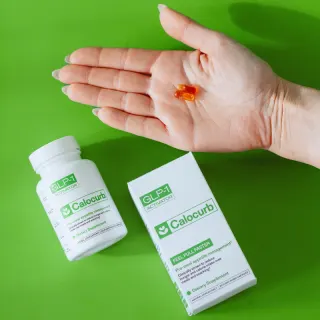
Calocurb GLP-1 Activator
Calocurb · capsuleThe best-evidenced single-mechanism appetite trigger — clinically interesting, but premium-priced and a pre-meal, short-window tool rather than all-day support.
Amarasate is one of the most directly studied appetite ingredients — multiple human RCTs, dosed on-label at 250 mg.
Acute, short-window effect: a pre-meal tool (up to 4 capsules/day), not all-day craving support.
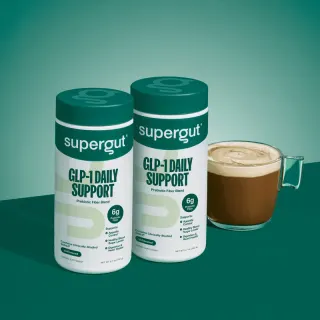
Supergut GLP-1 Daily Support
Supergut · powderA drinkable, gut-first option — but it leans on a proprietary fiber blend and a heavy fiber load.
Drinkable and caffeine-free.
Individual fiber doses are hidden inside a proprietary blend.
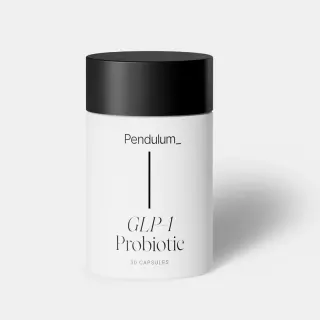
Pendulum GLP-1 Probiotic
Pendulum Therapeutics · capsuleStrong science pedigree on Akkermansia, but a proprietary CFU blend and refrigeration requirement.
Akkermansia has the strongest individual research pedigree of the probiotic actives.
Per-strain doses are hidden inside a proprietary blend.