Sweetener Science
Monk Fruit for Cravings: Hype vs. Evidence
Five randomized trials, one small study where insulin-resistant people didn't chase it the way they chased sugar, and a bag that is mostly erythritol.
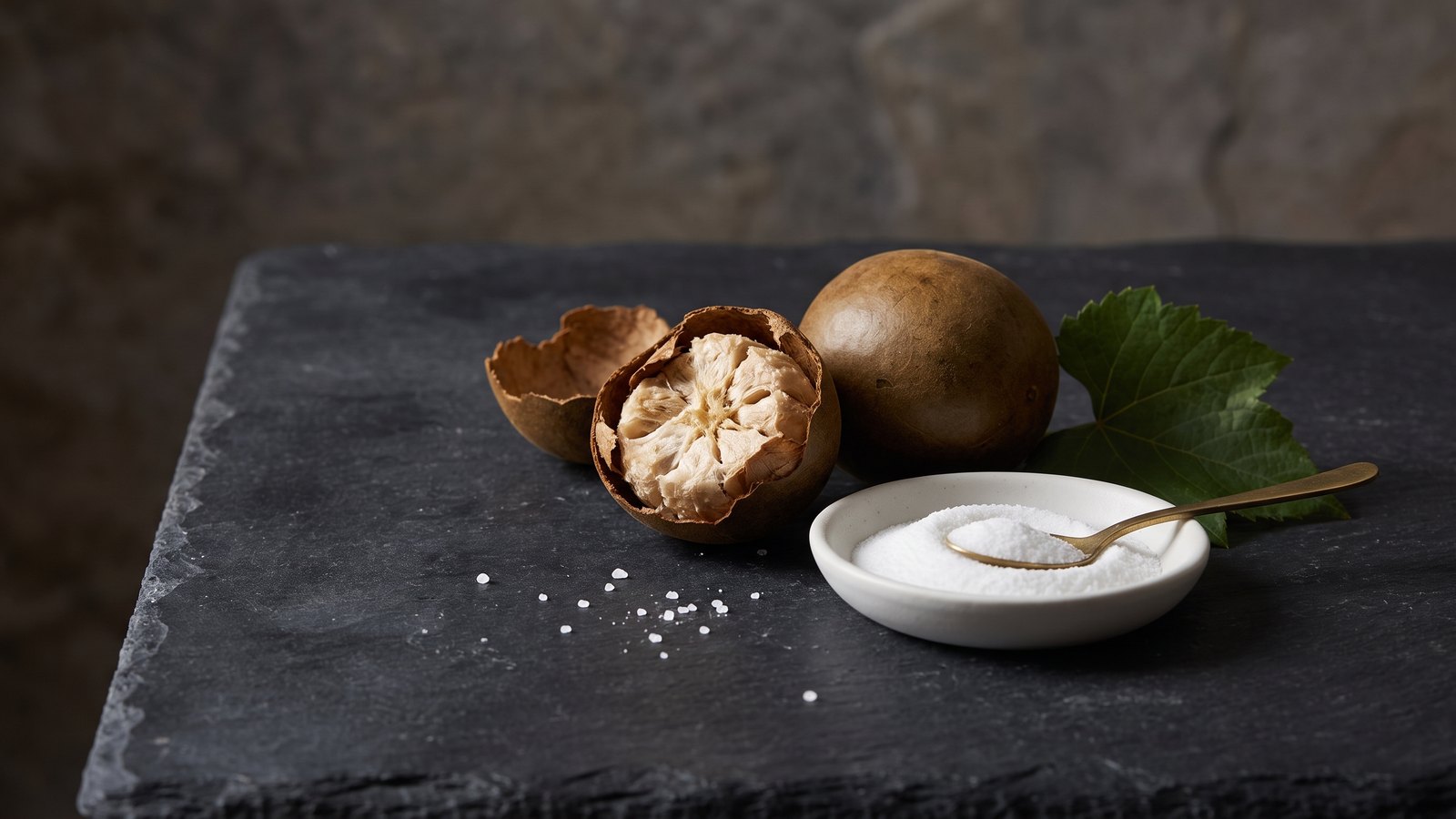
Monk fruit is the sweetener people graduate to. You cut back on sugar, you get uneasy about aspartame, you try stevia and decide it tastes like licorice, and you end up holding the expensive bag with the little brown fruit on the front.
It's the premium option in most stores. It's also the least-studied one on the shelf, which is an awkward pairing.
So here's what the human trials on monk fruit actually found, including the one that keeps getting quoted as proof it makes you eat more.
What monk fruit actually is
Monk fruit is the dried fruit of Siraitia grosvenorii, a vine native to southern China. The sweetness comes from cucurbitane-type triterpene glycosides called mogrosides, mostly mogroside V. The extract runs roughly 300 times sweeter than table sugar (Shivani et al., Scientific Reports 2021).
Hold onto that multiplier. It's the reason the packet in your cupboard is barely monk fruit at all, which we'll get to.
Regulatory status splits by country. A 2025 systematic review reports monk fruit extract is approved for use in the United States and China (Kaim and Labus, Nutrients 2025). Europe has been slower. As of October 2024 the EU had authorized exactly one specific aqueous monk fruit extract, under Regulation (EU) 2024/2345, while highly purified mogrosides and non-aqueous extracts stayed unapproved, largely because of gaps in the toxicology data and because no company had filed the application (Kaim et al., Foods 2025). That's a paperwork story more than a safety story, but it does tell you how thin the dossier is compared to sweeteners that have been studied for 40 years.
The trial everyone cites, and what it really showed
There is one randomized trial that put monk fruit head to head with sugar and with its two main rivals, and almost every claim you'll read online traces back to it.
Tey and colleagues gave 30 healthy men four beverages in randomized crossover order: aspartame-sweetened, monk fruit-sweetened, stevia-sweetened, and one with 65 g of sucrose in it. Standardized breakfast, test beverage as a mid-morning preload, unlimited lunch an hour later, food diary for the rest of the day (International Journal of Obesity 2017).
Two findings came out of it.
Lunch intake was significantly higher after all three calorie-free beverages than after the sugar one (P=0.010). And the calories saved by skipping 65 g of sugar were fully compensated for at later meals, so total daily energy intake didn't differ across the four drinks (P=0.831).
That first number is what gets passed around as "monk fruit makes you hungrier." It doesn't show that. Eating more at lunch after a zero-calorie drink than after a drink carrying 65 g of sugar is exactly what a working appetite system does. One preload delivered a couple hundred calories and the others delivered none, and the body noticed the gap.
The real finding is less dramatic and more useful: swapping one sugary drink for a monk fruit one, by itself, didn't reduce what these men ate across the day. Compensation absorbed the savings. That's a fact about substitution, not about cravings.
The same group ran the 24-hour version, putting continuous glucose monitors on 10 healthy males across the same four beverages. No significant difference in mean 24-hour glucose, incremental AUC, total AUC, or glycemic variability between any of them, sucrose included (European Journal of Clinical Nutrition 2017). Ten men, one serving a day, and the authors say plainly what it means: exchanging a single sugary drink appears to move very little in either direction.
The one result that separates monk fruit from sugar
The most interesting monk fruit study isn't about hunger ratings at all. It's about how hard people will work for food.
Epstein and colleagues recruited 18 adults with overweight or obesity spanning a wide range of insulin resistance (HOMA-IR from 0.6 to 8.0), measured their blood glucose for 2 hours after a sugar challenge, then had them eat novel flavored yogurts over 6 days, double-blind, sweetened either with sugar or with monk fruit. Then they measured the reinforcing value of each one (Appetite 2023).
Insulin resistance predicted how hard people worked for the sugar yogurt (r=0.62, p=.006), and so did fasting insulin (r=0.51, p=.03). For the monk fruit yogurt, both correlations were flat (r=-0.07 and -0.10).
The size of the glucose swing moderated the effect (p=.02). The people with both higher HOMA-IR and bigger glucose excursions after the sugar challenge worked the hardest for sugar.
Read that carefully, because it's easy to oversell. This is not monk fruit suppressing appetite. It's the absence of the reinforcement loop that sugar sets off. The people most metabolically primed to chase sugar didn't chase the monk fruit version of the identical food. That's 18 people over 6 days, so it's a signal and not a settled result, but it's the most directly relevant craving finding monk fruit has to its name. It also lines up with what we found looking at whether sweeteners trigger cravings at all.
Blood sugar: a small pile of trials, honestly labeled
The 2025 PRISMA-guided systematic review is the best summary available, and the headline is how little there is. Five randomized controlled trials met inclusion across a full decade of literature. Across them, monk fruit extract reduced postprandial glucose by 10 to 18% and insulin responses by 12 to 22%, with no severe adverse effects reported (Kaim and Labus, Nutrients 2025).
Two things to keep in mind before that lands as a benefit.
The comparator does the work. Lowering post-meal glucose relative to sugar is what every zero-calorie sweetener does by definition. Put monk fruit up against other non-caloric sweeteners instead, as Tey did, and the glucose and insulin AUCs came out the same.
And 5 trials is where an evidence base starts, not where it settles. A 2019 review of non-nutritive sweeteners and glycemic control found that of the 6 randomized trials published across 2017 and 2018, exactly one tested a natural sweetener at all. Its conclusion was that the field remained incapable of judging which sweeteners, if any, affect glycemic control, and it specifically called for trials on the increasingly popular natural options (Ahmad et al., Current Opinion in Clinical Nutrition and Metabolic Care 2019). Seven years on, that gap is smaller but not closed.
The gut data is real, and it's all in dishes and mice
This is where monk fruit gets genuinely interesting, and where the marketing gets ahead of itself.
Mogroside V isn't well absorbed intact, so a lot of it reaches the colon. In a 24-hour in vitro incubation with human gut microbiota, mogroside V shifted community composition, was broken down by bacteria into smaller mogrosides and mogrol, and increased production of acetate, propionate and butyrate. The authors describe it as a potential prebiotic (Xiao et al., ACS Omega 2021).
In mice fed a high-fat diet, a mogroside-rich extract reduced body weight gain and fat tissue weight, improved glucose tolerance and insulin sensitivity, and pulled the Firmicutes-to-Bacteroidetes ratio back toward that of control mice (Wang et al., Frontiers in Nutrition 2022).
Both are worth knowing. Neither is a human result. A flask of donated stool and a mouse on a high-fat diet generate hypotheses. Until somebody runs the microbiome trial in people, "monk fruit feeds your good bacteria" is a claim about mice. That puts it roughly where stevia sits, though stevia at least has human microbiome trials that came back mostly neutral, and a step behind the human data on the artificial sweeteners.
The packet problem
Now back to that 300x figure, because it quietly reshapes the whole question.
If a sweetener is 300 times sweeter than sugar, then a product you scoop spoon-for-spoon in place of sugar cannot be made of it. Mogroside V at that volume would be inedible. So granulated monk fruit sweeteners and baking blends are overwhelmingly a bulking agent by weight, and the bulking agent is usually erythritol.
By mass, the monk fruit in a bag of monk fruit sweetener is often close to a rounding error. The erythritol is the product. The fruit is the marketing.
That matters, because erythritol has a file of its own. In a 2023 Nature Medicine study, circulating erythritol levels were associated with 3-year risk of major adverse cardiovascular events in a discovery cohort and in two independent validation cohorts (adjusted hazard ratios of 1.80 and 2.21 comparing top to bottom quartile). At physiological levels, erythritol increased platelet reactivity in vitro and thrombosis in vivo, and in 8 healthy volunteers a single ingestion pushed plasma erythritol above those thresholds for more than 2 days (Witkowski et al.).
Handle that finding carefully. It's association plus mechanism, not a controlled outcome trial, and the authors' own stated conclusion is that long-term safety studies are warranted rather than that the case is closed. But it does change which question is worth asking. "Is monk fruit safe" is usually the wrong one. The useful one is what the first ingredient on the label actually says.
A pure mogroside extract, liquid monk fruit drops, and an erythritol bag with a picture of a monk fruit on it are three different products. Only one of them is mostly monk fruit.
The honest verdict
- For blood sugar versus sugar: yes, and trivially so. No calories, no glucose load. The trial base is small but consistent.
- For cravings: one small study found monk fruit didn't set off the sugar reinforcement loop in insulin-resistant people. Encouraging. Not proof.
- As an appetite suppressant: no evidence supports that. Tey's participants compensated for the missing calories within the same day.
- For your gut: unknown in humans. The prebiotic story is in vitro and rodent.
- Versus stevia or aspartame: no measurable difference in the trials that ran them side by side.
The realistic case for monk fruit is narrow and defensible. It's a sugar replacement that strips out calories and glucose load without appearing to do much else, good or bad. That's genuinely useful, and it's a different thing from an ingredient that acts on appetite. The same distinction applies to the rare sugars, which do have some gut-hormone data behind them, and it's why our scoring rubric separates mechanism from evidence quality.
If you're reaching for monk fruit to eat less overall, Tey's compensation result is the honest warning label. The drink swap alone didn't get there. Fullness still has to come from protein, fiber and food volume, which is the argument behind the shift toward fiber, and why appetite tools and sweeteners solve two different problems.
References
- Tey SL, Salleh NB, Henry J, Forde CG. Effects of aspartame-, monk fruit-, stevia- and sucrose-sweetened beverages on postprandial glucose, insulin and energy intake. Int J Obes. 2017;41(3):450-457. PMID 27956737
- Tey SL, Salleh NB, Henry CJ, Forde CG. Effects of non-nutritive (artificial vs natural) sweeteners on 24-h glucose profiles. Eur J Clin Nutr. 2017;71(9):1129-1132. PMID 28378852
- Epstein LH, Rizwan A, Rashid S, Bickel WK, Ghanim H. Glucose response to sugar challenge moderates the effect of insulin resistance on reinforcing value of sugar-sweetened yogurt. Appetite. 2024;193:107160. PMID 38101518
- Kaim U, Labus K. Monk Fruit Extract and Sustainable Health: A PRISMA-Guided Systematic Review of Randomized Controlled Trials. Nutrients. 2025;17(9):1433. PMID 40362742
- Kaim U, Gawlik U, Lisiecka K. Why Does Monk Fruit Extract Remain Only Partially Approved in the EU? Regulatory Barriers and Policy Implications for Food Innovation. Foods. 2025;14(16):2810. PMID 40870722
- Ahmad SY, Azad MB, Friel J, MacKay D. Recent evidence for the effects of nonnutritive sweeteners on glycaemic control. Curr Opin Clin Nutr Metab Care. 2019;22(4):278-283. PMID 31033578
- Xiao R, Liao W, Luo G, Qin Z, Han S, Lin Y. Modulation of Gut Microbiota Composition and Short-Chain Fatty Acid Synthesis by Mogroside V in an In Vitro Incubation System. ACS Omega. 2021;6(39):25486-25496. PMID 34632206
- Wang S, Cui K, Liu J, et al. Mogroside-Rich Extract From Siraitia grosvenorii Fruits Ameliorates High-Fat Diet-Induced Obesity Associated With the Modulation of Gut Microbiota in Mice. Front Nutr. 2022;9:870394. PMID 35769373
- Witkowski M, Nemet I, Alamri H, et al. The artificial sweetener erythritol and cardiovascular event risk. Nat Med. 2023;29(3):710-718. PMID 36849732
- Shivani, Thakur BK, Mallikarjun CP, et al. Introduction, adaptation and characterization of monk fruit (Siraitia grosvenorii): a non-caloric new natural sweetener. Sci Rep. 2021;11(1):6205. PMID 33737610
Citations retrieved via PubMed. This article is for education only and isn't medical advice. Talk to your doctor before changing your diet or starting any supplement, especially if you're pregnant, nursing, on medication, or managing a health condition.
FAQ
Does monk fruit cause cravings?
No trial has shown that it does. The claim traces back to a randomized crossover study in 30 healthy men where lunch intake was higher after a monk fruit beverage than after one containing 65 g of sugar. That's expected, since the sugar drink delivered a couple hundred calories and the monk fruit one delivered none. The more meaningful result from the same study is that total daily energy intake didn't differ across the four beverages, because participants made up the missing calories at later meals.
Is monk fruit better than stevia or aspartame?
In the trials that tested them side by side, no measurable difference showed up. One crossover study in 30 healthy men found no differences in 3-hour glucose or insulin AUC between monk fruit, stevia and aspartame beverages, and a follow-up using continuous glucose monitoring in 10 men found no differences in 24-hour glucose profiles between any of the four drinks tested, sugar included. Monk fruit's advantage over the artificial sweeteners is mostly about what it doesn't appear to do rather than anything it adds.
Does monk fruit help with blood sugar?
Relative to sugar, yes, for the obvious reason that it has no calories and no glucose load. A 2025 systematic review of 5 randomized trials reported reductions in postprandial glucose of 10 to 18% and in insulin responses of 12 to 22%, with no severe adverse effects. Five trials is a thin evidence base, and against other non-caloric sweeteners rather than sugar, the differences disappeared.
Is the monk fruit sweetener in stores actually monk fruit?
Mostly not, by weight. Monk fruit extract is roughly 300 times sweeter than sugar, so a product you measure spoon-for-spoon against sugar has to be built around a bulking agent, and that's usually erythritol. Erythritol has its own separate research questions, including a 2023 Nature Medicine study linking circulating levels to cardiovascular event risk and showing increased platelet reactivity, which the authors said warrants long-term safety studies. Check the first ingredient on the label rather than the fruit on the front.
Products mentioned
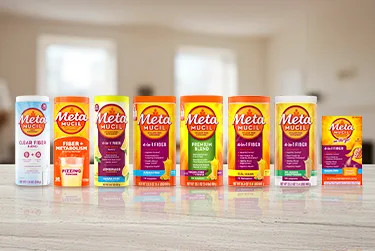
Metamucil 4-in-1 Fiber (Psyllium Husk)
Metamucil (Procter & Gamble) · powderBest Value: cheap, drinkable, and well-evidenced as a fiber — but single-pathway and a heavy gel load.
Pennies per serving — by far the cheapest in the set.
Single pathway — a fiber, not a craving formula.
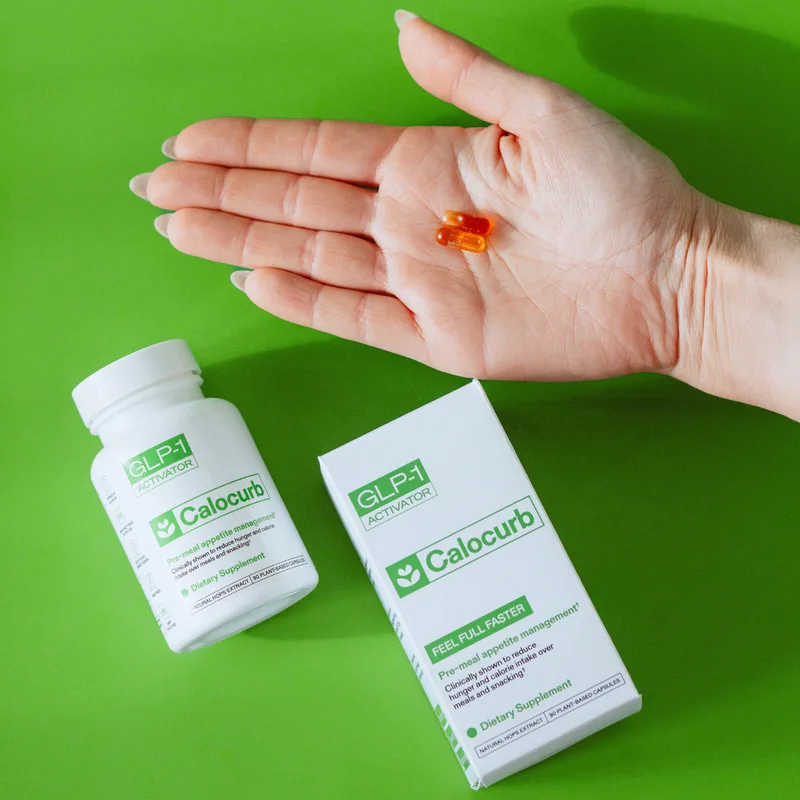
Calocurb GLP-1 Activator
Calocurb · capsuleThe best-evidenced single-mechanism appetite trigger — clinically interesting, but premium-priced and a pre-meal, short-window tool rather than all-day support.
Amarasate is one of the most directly studied appetite ingredients — multiple human RCTs, dosed on-label at 250 mg.
Acute, short-window effect: a pre-meal tool (up to 4 capsules/day), not all-day craving support.
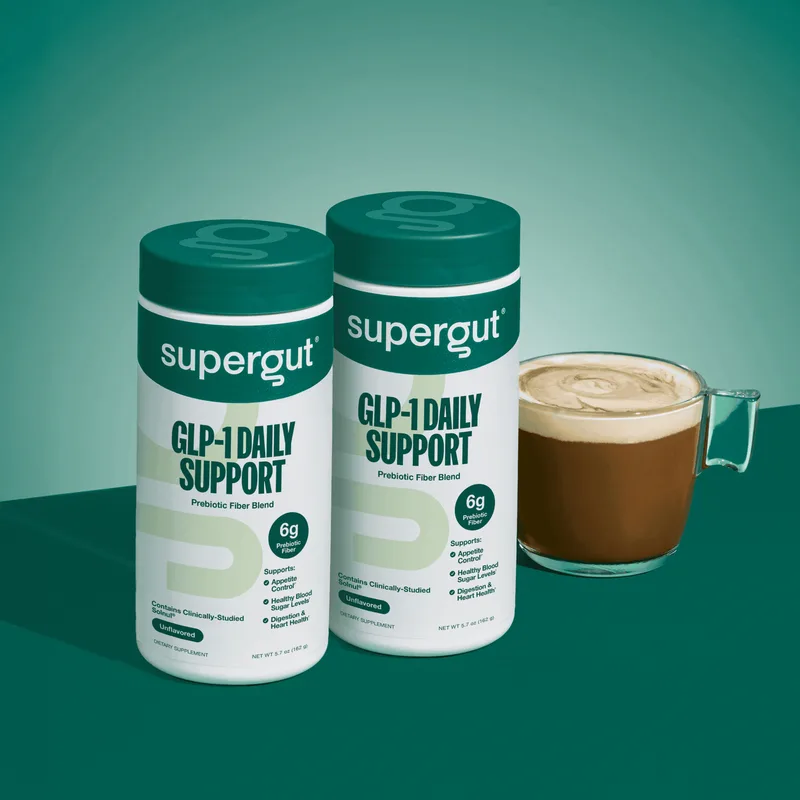
Supergut GLP-1 Daily Support
Supergut · powderA drinkable, gut-first option — but it leans on a proprietary fiber blend and a heavy fiber load.
Drinkable and caffeine-free.
Individual fiber doses are hidden inside a proprietary blend.