Buyer's Guide
Best Appetite Suppressant Pills: 8 Over-the-Counter Options, Ranked
Of 317 weight-loss supplements the FDA flagged over ten years, 269 were hiding a withdrawn prescription drug. Here are the pills worth buying instead, cons included.
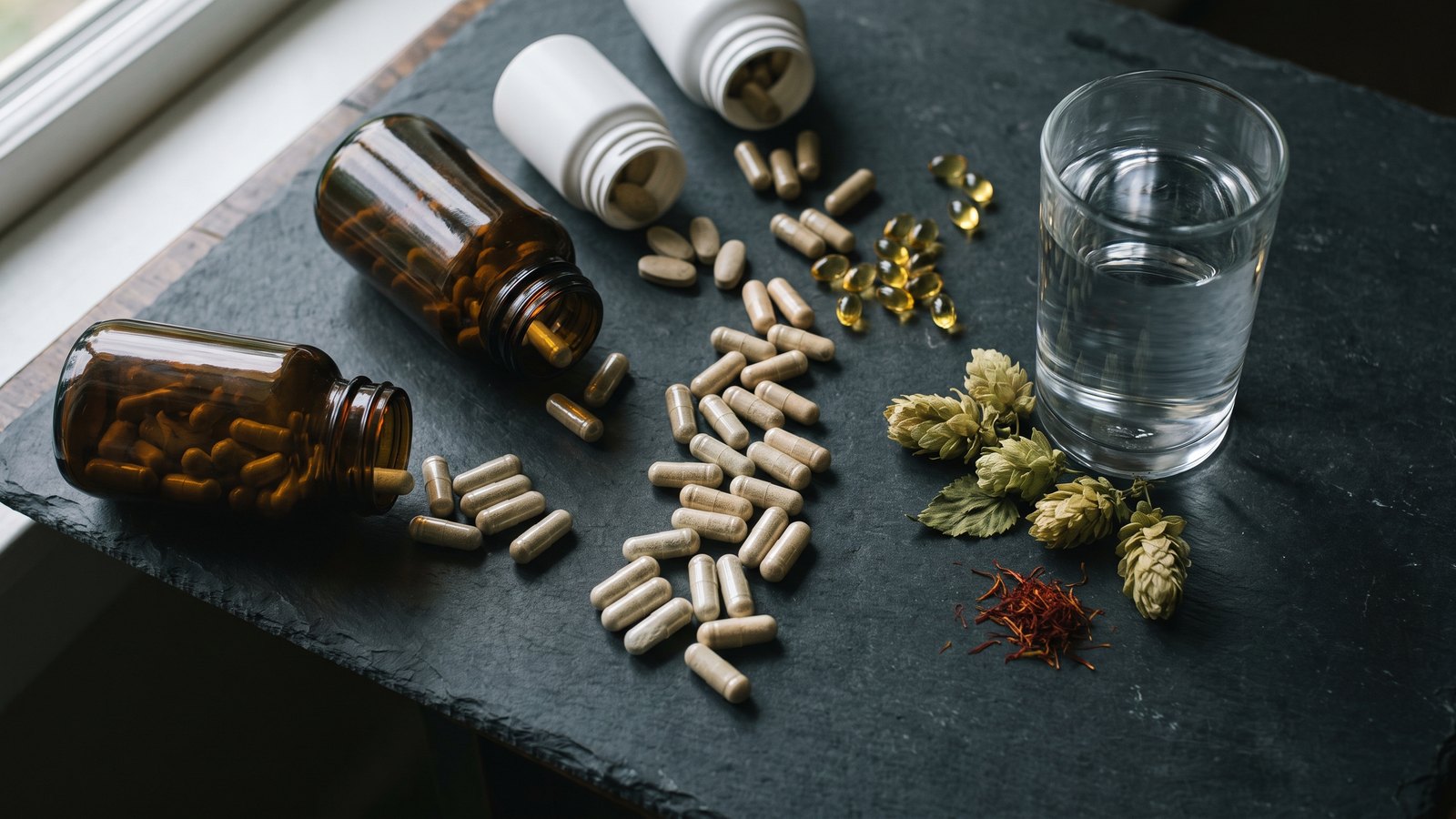
"Appetite suppressant pills" covers two completely different things, and most of the confusion in this aisle comes from blurring them.
One is a prescription drug. Phentermine and its relatives are regulated medicines that act on the brain, come with a doctor, a dose schedule and a list of people who shouldn't take them. The other is what you can buy without a prescription: dietary supplements, which are sold under structure and function rules and aren't approved by the FDA to treat anything. This page is only about the second group. If you want the label checks that apply across the whole category first, our buyer's guide to natural GLP-1 supplements covers them, and the ranking below uses the same rules.
What an over-the-counter appetite pill can actually do
Less than the bottle says, and more than nothing. A supplement can't switch off hunger. What the better ones can do is add fullness (viscous fiber), steady the blood-sugar dip that sets off a craving, or give the gut hormones that signal satiety something to respond to.
Look at the size of the evidence honestly. Glucomannan, the most common fiber in these pills, has a real satiety case but a weak weight case: a meta-analysis of 8 randomised trials found no significant difference from placebo, at -0.22 kg (Onakpoya and colleagues, Journal of the American College of Nutrition 2014). Berberine does better than most. A 2026 meta-analysis of 23 randomised trials put it at -0.88 kg of body weight with a small drop in waist size, while flagging blinding and product-purity problems in the underlying studies (Elahi Vahed and colleagues, International Journal of Obesity 2026). That's a small, real effect, not a transformation.
So "pills that work" means pills that move a specific signal at a dose someone actually tested. That's the bar we used.
The part of this aisle that's actually dangerous
It isn't the fiber capsules. California public health researchers went through ten years of FDA tainted-supplement warnings and found 776 adulterated products between 2007 and 2016. 317 of them were sold for weight loss, and 269 of those contained sibutramine, a prescription weight-loss drug that was withdrawn from the US market in 2010, hidden in a bottle labeled as a supplement (Tucker and colleagues, JAMA Network Open 2018).
Stimulants are the other risk. CDC and FDA researchers estimated that supplements send about 23,000 people to US emergency departments a year, and weight-loss and energy products accounted for 71.8% of supplement cases involving palpitations, chest pain or a racing heart (Geller and colleagues, New England Journal of Medicine 2015). Our ranking of the caffeine-free field goes deeper on that. The practical rules: buy brands that disclose every dose, skip anything imported with "rapid" or "extreme" on the label, and be wary of any pill that makes you feel wired within an hour.
How we rank
Five axes, 1 to 5 each, 25 total, the same rubric for every product on this site and laid out on our methodology page: hunger-pathway coverage, ingredient transparency, mechanism and evidence, price and value, and format and timing. This list is pills only: capsules, tablets and softgels. Drinks and powders are scored elsewhere.
We don't demand a blood GLP-1 measurement on a finished product. Circulating GLP-1 is broken down within minutes and a head-to-head test of commercially available GLP-1 assays found their accuracy varied so widely that results across studies are hard to compare (Bak and colleagues, Diabetes, Obesity and Metabolism 2014). A missing number there is a measurement problem, not a verdict. What we weigh instead: human trials on each ingredient near the label dose, a plausible mechanism, full dose disclosure, tolerability and timing.
Ozzi sponsors this site. Its capsules win below, the cons are listed on the same terms as everyone else's, and the rubric is public so you can reweight it.
The ranking: appetite suppressant pills
1. Ozzi Crave Crusher Capsules, 20/25
Two caffeine-free vegan capsules with four disclosed actives covering five of the seven hunger pathways we track: 500 mg konjac glucomannan for viscous-fiber fullness, 500 mg BIOMEnd L-Lysine Butyrate on the gut-hormone and microbiome side, 150 mg African mango for leptin signaling, and the Metabolex chromium complex for insulin sensitivity. Every dose is on the label. Nothing sits in a proprietary blend, which on this shelf is rarer than it should be.
No other pill in the set covers more than three pathways. The butyrate link to GLP-1 is mechanistic and still being built out in human research, which we walk through in what the butyrate and GLP-1 evidence really shows, so treat it as a plausible lever rather than a proven one.
Cons, honestly. There's no trial on the finished capsule. The doses are moderate by design: 500 mg of glucomannan is a sixth of the 3 g daily amount used in satiety claims, so this is not the pill for someone who wants one ingredient maxed out. Some people notice the natural butyrate smell. And at $2.32 a serving it isn't cheap, dropping to about $1.89 on a multi-bottle bundle. It also lacks the allulose base in the drink version, which is the half some people find matters most after dinner.
It wins because it's the broadest fully disclosed pill here, it's caffeine-free so it works in the evening, and it doesn't ask for six capsules a day. Full capsule spec and scoring, or read our Ozzi Crave Crusher review if a drink suits you better.
2. Lemme GLP-1 Daily, 18/25
Three branded extracts, all dosed on the label: 400 mg Morosil red orange, 200 mg Eriomin lemon and 176.5 mg Supresa saffron, at $2.67 a serving. The saffron figure lines up with a real trial. In 60 mildly overweight women, 176.5 mg a day of a saffron extract (sold as Satiereal) for 8 weeks cut self-recorded snacking frequency and produced more weight loss than placebo (Gout and colleagues, Nutrition Research 2010). We can't confirm Supresa is the identical extract, and that trial was small and short.
Cons: no trial on the three-ingredient combination, three pathways rather than five, and the brand says its guarantee carries a return fee. We compared it head to head in Lemme versus Pendulum.
3. Thorne Berberine, 17/25
1,000 mg a day split between berberine HCl and a phytosome form, at $1.47 a serving from a brand with a strong quality reputation. Berberine has the best body-weight meta-analysis of anything on this list, and it's the pick if your cravings ride on blood-sugar swings. Our full Thorne berberine review covers the detail.
Cons: it's a metabolic supplement, not a craving formula, so appetite effects are indirect. GI upset (cramping, diarrhea, constipation) is common at this dose, and berberine interacts with several medications, which is covered in the evidence on berberine and blood sugar. NOW Berberine Glucose Support scores the same 17 at about $1.00 a serving in three softgels a day.
4. Calocurb GLP-1 Activator, 16/25
250 mg of Amarasate bitter hops extract, caffeine-free, taken about an hour before meals at $2.00 a serving. In a crossover in 19 healthy-weight men, 500 mg of the extract cut ad libitum energy intake by roughly 17% and raised GLP-1, PYY and CCK (Walker and colleagues, American Journal of Clinical Nutrition 2022). That's one useful data point among several in this category, not the only proof in it.
Cons: nineteen men, twice the retail dose, nausea and bloating in both arms, and most of the strongest work comes from the institute that owns the ingredient. It's also a pre-meal routine of up to four capsules a day. More in what the hops research does and doesn't show.
5. Pendulum GLP-1 Probiotic, 15/25
Akkermansia muciniphila, Clostridium butyricum and Bifidobacterium infantis, with strain-level science behind the organisms, at $2.63 a serving. Cons: per-strain amounts sit inside a proprietary blend, there's no randomised trial on the finished product for weight or appetite, and it needs refrigeration.
6. Leanbean, 14/25
3 g of glucomannan a day, fully disclosed, caffeine-free, $2.00 a serving. That's the full studied satiety dose, and it's the pitch. Cons: six capsules a day in three pre-meal doses, and expanding fiber at the top of the studied range needs a full glass of water every single time. The satiety case for glucomannan is real; the weight case is thin.
7. PhenQ, 13/25
Caffeine, capsicum extract, nopal and an ALA and L-cysteine complex, at $2.33 a serving. The caffeine is on the label but the amount isn't, and the signature actives are inside proprietary blends. Daytime only. We ran the stimulant versus caffeine-free comparison if you're choosing between the two styles.
8. Lipozene, 12/25
1.5 g of glucomannan for about a dollar a serving. Cheap, single-ingredient, honest about what's in it. Cons: one pathway, the same water warning as Leanbean, a weak weight-loss meta-analysis for the ingredient, and a brand history of FTC scrutiny over its marketing.
Also scored: Hydroxycut Hardcore at 12, with 265 mg of caffeine a serving and up to 530 mg a day, and Evolv GLP-1 at 12, the priciest pill in our set at about $4.93 a serving (our Evolv GLP-1 review). The rest of the field lives on the appetite suppressant category page.
Who should pick what
If you want one pill that covers more than one mechanism and can be taken in the evening, the Ozzi capsules. If saffron's snacking data is the thing that convinces you, Lemme. If blood sugar is the real driver and your gut tolerates it, berberine, with Thorne for quality and NOW for price. If you want the most direct human gut-hormone data and can handle a pre-meal routine, Calocurb. If budget decides everything, Lipozene, with a big glass of water.
None of these is a drug and none replaces one. If you take prescription medication, especially for blood sugar, or you're pregnant, check with your doctor before starting berberine or any of these. Expect gentle support, built over days.
Disclosure: Ozzi sponsors Crave Crushers, and we may earn a commission on purchases made through links on this page. Rankings come from the published rubric on our methodology page, and Ozzi's downsides are listed on the same terms as every other product's.
References
- Onakpoya I, Posadzki P, Ernst E. The efficacy of glucomannan supplementation in overweight and obesity: a systematic review and meta-analysis of randomized clinical trials. Journal of the American College of Nutrition, 2014. PubMed 24533610
- Elahi Vahed I, Shahir-Roudi E, Nojumi S, et al. The effect of berberine on obesity indices: a systematic review and meta-analysis. International Journal of Obesity, 2026. PubMed 41310257
- Tucker J, Fischer T, Upjohn L, Mazzera D, Kumar M. Unapproved Pharmaceutical Ingredients Included in Dietary Supplements Associated With US Food and Drug Administration Warnings. JAMA Network Open, 2018. PubMed 30646238
- Geller AI, Shehab N, Weidle NJ, et al. Emergency Department Visits for Adverse Events Related to Dietary Supplements. New England Journal of Medicine, 2015. PubMed 26465986
- Bak MJ, Wewer Albrechtsen NJ, Pedersen J, et al. Specificity and sensitivity of commercially available assays for glucagon-like peptide-1. Diabetes, Obesity and Metabolism, 2014. PubMed 25041349
- Gout B, Bourges C, Paineau-Dubreuil S. Satiereal, a Crocus sativus L extract, reduces snacking and increases satiety in a randomized placebo-controlled study of mildly overweight, healthy women. Nutrition Research, 2010. PubMed 20579522
- Walker EG, Lo KR, Pahl MC, et al. An extract of hops (Humulus lupulus L.) modulates gut peptide hormone secretion and reduces energy intake in healthy-weight men. American Journal of Clinical Nutrition, 2022. PubMed 35102364
FAQ
Do over-the-counter appetite suppressant pills actually work?
Some move a real signal, modestly. Berberine has the strongest weight data in this group, at about -0.88 kg across 23 randomised trials. Glucomannan adds fullness but did not beat placebo on weight in a meta-analysis of 8 trials. Saffron extract cut snacking frequency in one 8-week trial of 60 women. None of them works like a prescription drug, and any pill promising that should make you suspicious.
What is the difference between prescription and OTC appetite suppressants?
Prescription appetite suppressants are FDA-approved drugs that act on the brain and require a doctor. Over-the-counter options are dietary supplements sold under structure and function rules; they are not approved to treat obesity or any disease, and they work through gentler routes like fiber fullness, blood-sugar stability and gut-hormone signaling.
Are appetite suppressant pills safe?
Disclosed, caffeine-free fiber and botanical pills are generally low risk when taken as directed, though expanding fibers need a full glass of water and berberine can upset the stomach and interact with medications. The real danger is adulteration: FDA warnings from 2007 to 2016 flagged 317 weight-loss supplements, and 269 of them contained the withdrawn drug sibutramine. Stick to brands that disclose every dose.
Which appetite suppressant pill is best to take at night?
A caffeine-free one. In this set that means the Ozzi capsules, Lemme, Calocurb, Pendulum, the berberines, Leanbean or Lipozene. PhenQ and Hydroxycut contain caffeine, which works against sleep and does little for evening hunger.
Products mentioned
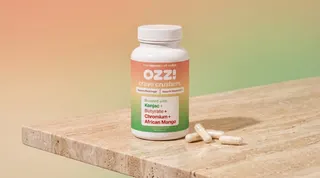
Best Capsule: the most complete, fully-disclosed multi-pathway pill in the set. Ozzi’s core formula for people who would rather swallow a capsule than mix a drink.
Five hunger pathways in a capsule, more than any other pill in the set, all fully disclosed at their doses.
Covers five pathways, not the drink’s seven: no allulose sweet-craving satisfaction and no low-glycemic energy base.
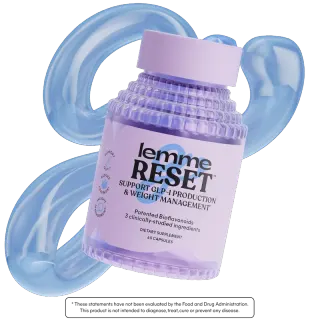
Lemme GLP-1 Daily (Lemme Reset)
Lemme · capsuleThe most transparent standalone GLP-1 capsule: fully-disclosed branded actives in a simple once-daily pill, though it covers fewer hunger pathways than the Ozzi capsule.
Fully disclosed, standardized branded actives (no proprietary blend).
No published trial on the finished three-ingredient combination.
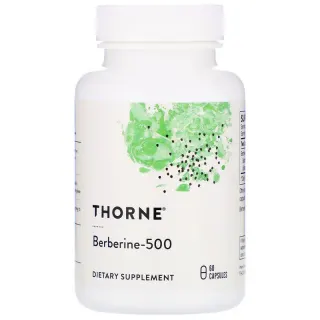
Thorne Berberine (1,000 mg)
Thorne · capsuleWell-evidenced berberine for metabolic support — but the effective dose is rough on a lot of stomachs.
Berberine has real human RCT evidence for glucose and lipid markers.
Berberine commonly causes GI distress — cramping, diarrhea, constipation — and at the 1,000 mg+ effective dose it is hard for many people to tolerate.
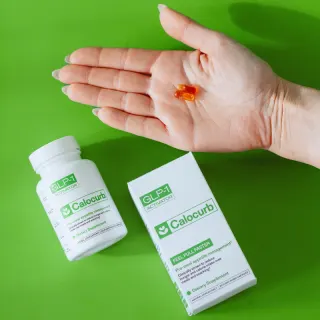
Calocurb GLP-1 Activator
Calocurb · capsuleThe best-evidenced single-mechanism appetite trigger — clinically interesting, but premium-priced and a pre-meal, short-window tool rather than all-day support.
Amarasate is one of the most directly studied appetite ingredients — multiple human RCTs, dosed on-label at 250 mg.
Acute, short-window effect: a pre-meal tool (up to 4 capsules/day), not all-day craving support.