Sweetener Science
Natural vs. Artificial Sweeteners: Does Your Gut Tell Them Apart?
Every sweetener tested changed the microbiome, including the plant one. Only two of them moved blood sugar, and the sweetener with the worst safety file is sold as natural.
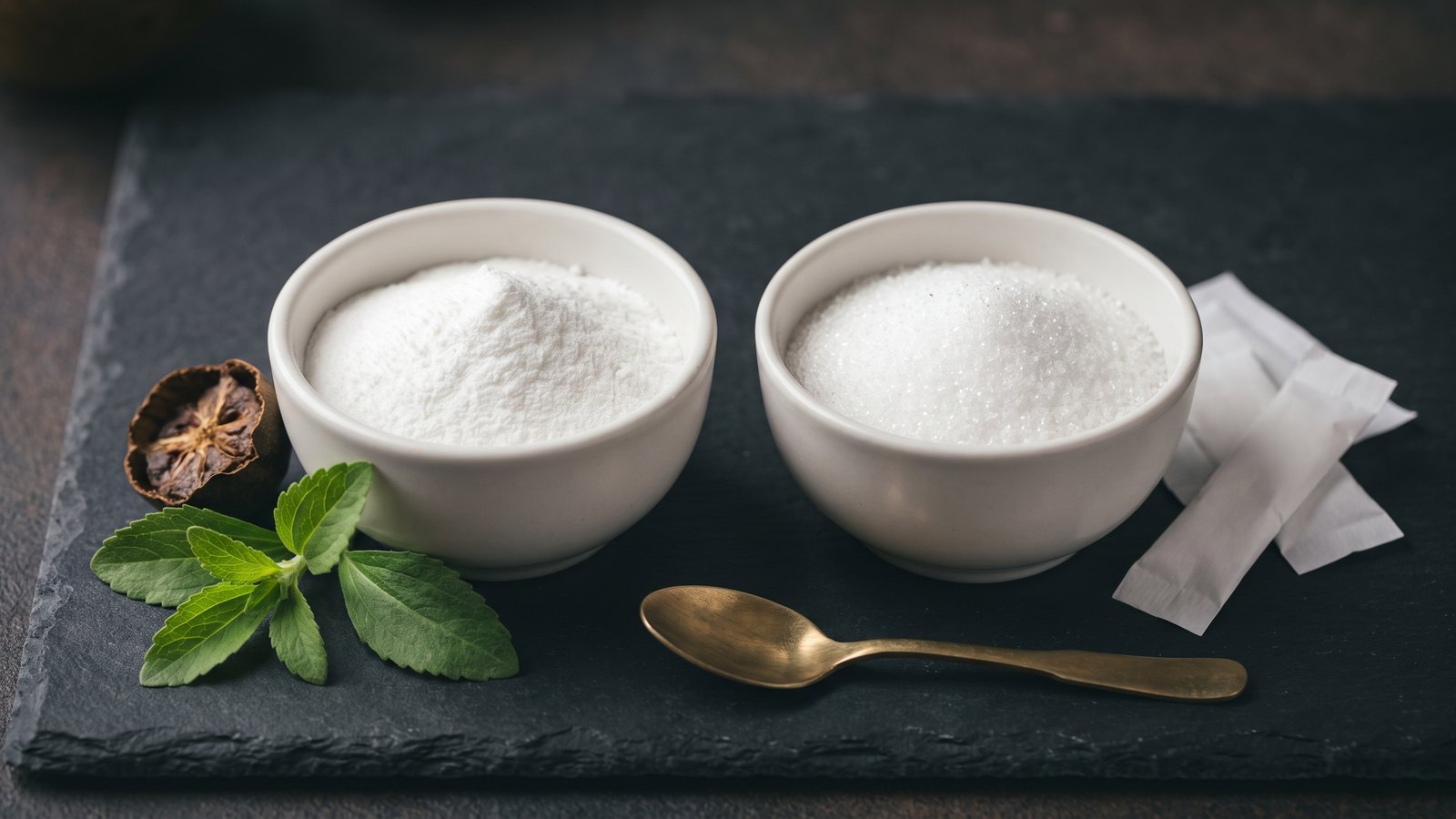
The sweetener aisle has already made an argument before you pick anything up. Green box, leaf on the front, the word "plant" somewhere near the top. Then the blue and pink and yellow packets, which look like they came out of a lab because they did.
The implied claim is that your body recognizes one group and has to cope with the other. It's a good story, and it's a claim about biology, which means somebody can check it.
Somebody did. Here's what happened when both groups went through the same trial, in the same people, measured the same way.
"Natural" describes the sourcing, not the molecule's behavior
Start with what the word actually covers, because it's narrower than the box implies.
The stevia on your shelf isn't a leaf. It's a purified steviol glycoside, usually rebaudioside A, extracted from Stevia rebaudiana and dried into a white powder at a purity a chemist would recognize. Monk fruit is a purified mogroside from a dried gourd, and the granulated version is mostly erythritol by weight.
Aspartame, on the other side of the aisle, is two amino acids joined together. Your gut splits it into aspartic acid, phenylalanine and a trace of methanol, all of which show up in ordinary food.
So "natural" tells you where a molecule was sourced. It says nothing about what happens after you swallow it. Only the second question matters for your gut, and the packaging never answers it.
The trial that put all four in the same room
In 2022, Suez and colleagues at the Weizmann Institute ran what is still the best-controlled human comparison we have. 120 healthy adults, randomized, given sachets of saccharin, sucralose, aspartame or stevia for 2 weeks at doses below the acceptable daily intake, against controls who got the sachet's vehicle glucose or nothing at all (Cell 2022).
Two findings, and people usually only repeat the second one.
First: as groups, every one of the four sweeteners distinctly altered the stool and oral microbiome and the plasma metabolome. Stevia included. The plant-sourced one did not sail through as inert.
Second: only saccharin and sucralose significantly impaired glycemic responses. Aspartame and stevia didn't.
Sit with how that sorts. The two sweeteners that moved blood sugar were both artificial, but so was one of the two that didn't. The natural option still rearranged the microbiome. Draw a line down the middle of that aisle and the results fall on both sides of it.
The mechanistic half of the study is the part worth knowing. The researchers transplanted stool from the strongest and weakest responders in each sweetener group into germ-free mice, and the mice largely reproduced the glycemic response of their human donor. That points to the microbiome doing the work rather than the molecule acting directly, and it explains the finding underneath all of it: the effects were person-specific. Two people on the same sachet did not get the same result.
The stevia trial that found nothing, and its fine print
Then there's the study that cuts the other way, and it deserves a fair hearing.
Kwok and colleagues gave 59 healthy adults 16 oz a day of either a stevia beverage (25% of the acceptable daily intake) or a beverage with 30 g of sucrose, for 4 weeks, followed by a 4-week washout. They ran shotgun sequencing on the microbiome and measured fecal short-chain fatty acids, plus fasting glucose, insulin, lipids and blood pressure (Journal of Nutrition 2024).
At week 4, no significant differences in the microbiome at phylum, family, genus or species level, and none in fecal SCFAs. The one measure that moved was BMI, which rose 0.3 kg/m² in the sucrose group relative to stevia (P=0.013). After washout, still nothing.
Two caveats belong on that result. The comparator is sugar, not water or nothing, which is a different question than the one Suez asked. And several authors are employed by Cargill, which sells steviol glycosides. That doesn't invalidate a randomized, double-blinded, registered trial, and we'd rather name the conflict than quietly drop the study. It does mean it should be read alongside the independent work rather than instead of it. Our full read on stevia's appetite and microbiome data is here.
The artificial side isn't uniformly damning either
If natural doesn't automatically clear the bar, artificial doesn't automatically fail it.
Thomson and colleagues gave 34 healthy men either 780 mg of sucralose a day for 7 days or placebo, double-blind, then ran a 75 g oral glucose load and 16S sequencing. That's a hefty dose. No change in glycemic control, no change in insulin resistance, no change in the gut microbiome at phylum level (British Journal of Nutrition 2019).
The interesting wrinkle sits in their secondary analysis. When they sorted participants by whether their insulin response went up or down, the split tracked baseline microbiome composition rather than which capsule they'd been given. People with the bigger insulin response had lower Bacteroidetes and higher Firmicutes, whether they'd taken sucralose or placebo.
Which is the Suez finding arriving from a different direction. Your existing gut bacteria appear to matter more than the sweetener's origin story. We went deeper on the individual compounds in sucralose and aspartame.
Plant sweeteners aren't ignored by your gut. They're processed by it
Here's the detail that quietly undoes the whole natural-equals-inert assumption.
Steviol glycosides survive the small intestine mostly intact. Gut bacteria are what break them down, cleaving the glucose units off to release steviol, which is then absorbed. Without your microbiota, stevia largely wouldn't be metabolized at all (Kasti et al., Microorganisms 2022).
That review, written before the Kwok trial existed, flagged the same gap we keep running into: at the time it was published there were no randomized clinical trials in humans, so it had to pull from in vitro work and animal studies. It reported a possible benefit for microbiome alpha diversity, with effects likely depending on dose, frequency and whatever else you ate alongside it.
Take the mechanism seriously though. A sweetener your bacteria have to digest is more entangled with your gut than one that passes through untouched, not less. "Natural" is doing the opposite of what shoppers assume it does here.
The worst safety file on the shelf belongs to a natural sweetener
Sugar alcohols are the sweeteners marketed hardest on being natural, and they carry the most alarming recent findings.
Witkowski and colleagues measured circulating xylitol in a discovery cohort of 1,157 patients and a separate validation cohort of 2,149. In the validation cohort, people in the top third of xylitol levels had a 57% higher adjusted risk of a major adverse cardiovascular event over 3 years compared with the bottom third (HR 1.57, 95% CI 1.12 to 2.21, P<.01). Xylitol enhanced platelet reactivity and thrombosis in lab and animal work at levels seen in fasting plasma. Then they gave 10 healthy volunteers a xylitol-sweetened drink, and plasma levels jumped with measurable increases in platelet responsiveness in every one of them (European Heart Journal 2024).
Handle that carefully, the way the authors did. It's association plus mechanism, not an outcome trial, and their stated conclusion is that further safety studies are warranted. Xylitol is also produced in your body naturally, at levels over 1,000 times lower than you'd get from using it as a sugar substitute, which is the actual point. Dose is the variable, not provenance.
The same caution applies to erythritol, xylitol's shelf-mate, which shows up as the bulk of most "natural" baking blends. And it's the same lesson as the low-sugar candy problem: the ingredient doing the volume is rarely the one on the front of the bag.
What just landed, and what it doesn't settle
A 2026 review in Current Atherosclerosis Reports paired a narrative synthesis with a new meta-analysis of randomized trials that used non-caloric comparators, specifically to isolate the direct physiological effects of these sweeteners from the effects of simply displacing sugar calories.
The cohort data links total non-nutritive sweetener intake, and each commonly used one individually, with higher risk of type 2 diabetes. The authors flag the obvious confound themselves: people already at cardiometabolic risk are the ones most likely to switch to sweeteners in the first place. Their meta-analysis of the randomized trials points to harmful effects on fasting insulin, HbA1c and glucose area under the curve during an oral glucose tolerance test, possibly mediated through the microbiome. Their conclusion is that caution is warranted (Wang et al., 2026).
Notice what that review does not do. It doesn't sort its findings into natural and artificial columns, because the evidence doesn't cooperate with that split. It treats them as one class of compounds that interact with your gut bacteria, which is what the human trials keep showing.
A better way to sort the aisle
If natural versus artificial isn't the useful axis, four questions are:
- What's the comparator? Swapping a sugary drink for a sweetened one has better evidence behind it than avoiding both and eating the sugar anyway. Nearly every "sweetener improves glucose" finding is measured against sugar.
- What's the dose? Suez used doses below the ADI and found microbiome shifts. Thomson used 780 mg of sucralose daily and found none. Amounts and duration drive these results more than category does.
- What's actually in the bag? A spoon-for-spoon monk fruit or stevia blend is mostly bulking agent, usually erythritol. The sweetener on the label may be a rounding error by weight.
- How does it land for you? The single most reproducible finding across this literature is that responses are person-specific and appear to be driven by the microbiome you already have.
That last one is unsatisfying, and it's the honest answer. Nobody can tell you from a label how a given sweetener will behave in your gut, and anyone who says otherwise is selling the leaf on the box.
The bigger point is that sweeteners were never the lever for appetite anyway. Replacing sugar removes calories and glucose load, and that's genuinely useful, but it doesn't create fullness. That still comes from protein, food volume and fiber, which is a different mechanism entirely and the one we weigh in our scoring rubric. If you want the origin of the whole scare, start with what artificial sweeteners do to gut bacteria and whether they trigger cravings at all, or browse the rest of the metabolism research.
References
- Suez J, Cohen Y, Valdés-Mas R, et al. Personalized microbiome-driven effects of non-nutritive sweeteners on human glucose tolerance. Cell. 2022;185(18):3307-3328.e19. PMID 35987213
- Kwok D, Scott C, Strom N, et al. Comparison of a Daily Steviol Glycoside Beverage compared with a Sucrose Beverage for Four Weeks on Gut Microbiome in Healthy Adults. J Nutr. 2024;154(4):1298-1308. PMID 38408729
- Thomson P, Santibañez R, Aguirre C, Galgani JE, Garrido D. Short-term impact of sucralose consumption on the metabolic response and gut microbiome of healthy adults. Br J Nutr. 2019;122(8):856-862. PMID 31258108
- Kasti AN, Nikolaki MD, Synodinou KD, et al. The Effects of Stevia Consumption on Gut Bacteria: Friend or Foe? Microorganisms. 2022;10(4):744. PMID 35456796
- Witkowski M, Nemet I, Li XS, et al. Xylitol is prothrombotic and associated with cardiovascular risk. Eur Heart J. 2024;45(27):2439-2452. PMID 38842092
- Wang M, Wu OY, Wallen OG, Mozaffarian D. Artificial and Other Non-Nutritive Sweeteners, the Microbiome, and Cardiometabolic Health. Curr Atheroscler Rep. 2026;28(1). PMID 42347889
Citations retrieved via PubMed. This article is for education only and isn't medical advice. Talk to your doctor before changing your diet or starting any supplement, especially if you're pregnant, nursing, on medication, or managing a health condition.
FAQ
Is stevia better for your gut than sucralose?
The one trial that tested them head to head found a partial difference, not a clean win. In a randomized trial of 120 healthy adults given saccharin, sucralose, aspartame or stevia for 2 weeks, all four altered the stool and oral microbiome and the plasma metabolome, stevia included. Only saccharin and sucralose significantly impaired glycemic responses. So stevia looked better on blood sugar in that study, but it did not leave the microbiome alone, and aspartame did not impair glycemia either. The natural-versus-artificial line doesn't predict the results.
Are natural sweeteners safer than artificial ones?
Not as a rule. The sweetener with the most concerning recent human data is xylitol, a sugar alcohol marketed as natural. A 2024 European Heart Journal study found people in the top third of circulating xylitol had a 57% higher adjusted risk of a major cardiovascular event over 3 years across two cohorts, along with increased platelet reactivity in lab work and in 10 volunteers who drank a xylitol-sweetened beverage. The authors called for further safety studies rather than declaring harm. Dose and what else is in the product matter more than whether the molecule came from a plant.
Does your body process stevia differently because it's natural?
It processes it differently, but not in the direction most people assume. Steviol glycosides largely reach the colon intact, and gut bacteria are what break them down, cleaving off the sugar units to release steviol so it can be absorbed. That makes stevia more dependent on your microbiome than a sweetener that passes through untouched, not less involved with it.
So which sweetener should I use?
The research can't answer that at the label level, because the most consistent finding is that responses are person-specific and appear to track the gut bacteria you already have. What the evidence does support: a sweetener beats a sugar-sweetened drink on calories and glucose load, dose and duration matter more than category, and a spoon-for-spoon natural blend is usually mostly erythritol, so the first ingredient tells you more than the front of the bag does.
Products mentioned
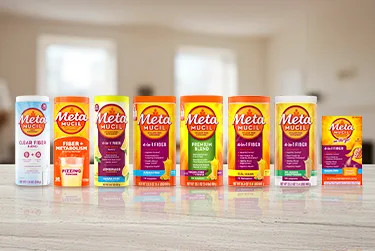
Metamucil 4-in-1 Fiber (Psyllium Husk)
Metamucil (Procter & Gamble) · powderBest Value: cheap, drinkable, and well-evidenced as a fiber — but single-pathway and a heavy gel load.
Pennies per serving — by far the cheapest in the set.
Single pathway — a fiber, not a craving formula.
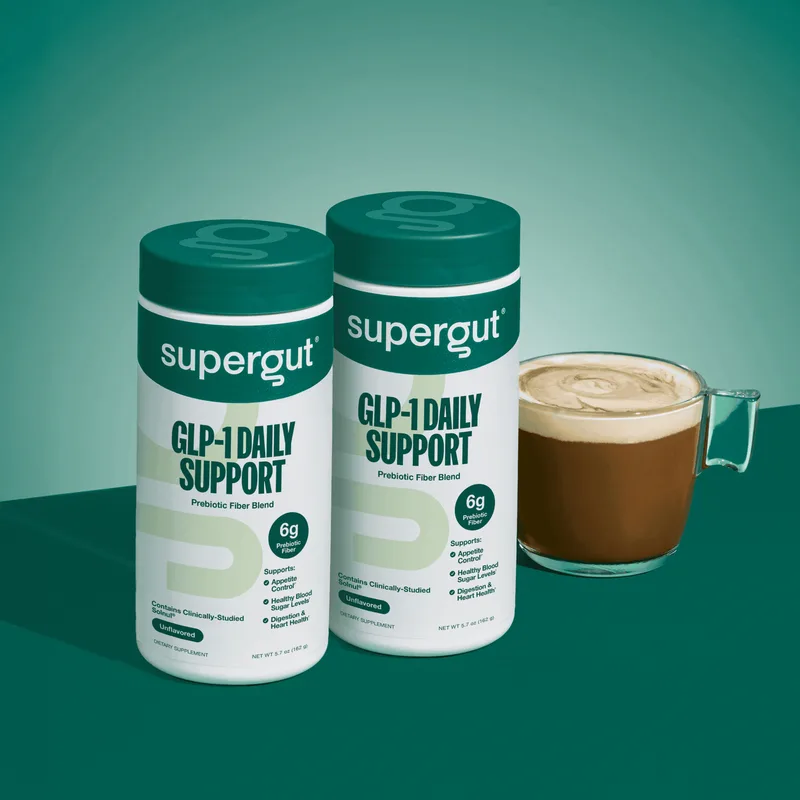
Supergut GLP-1 Daily Support
Supergut · powderA drinkable, gut-first option — but it leans on a proprietary fiber blend and a heavy fiber load.
Drinkable and caffeine-free.
Individual fiber doses are hidden inside a proprietary blend.
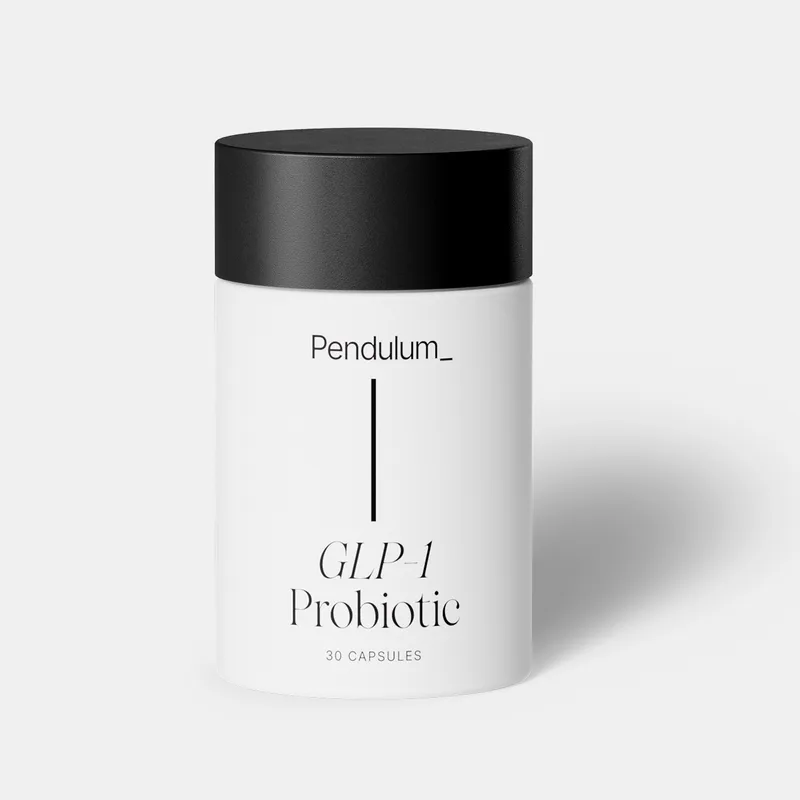
Pendulum GLP-1 Probiotic
Pendulum Therapeutics · capsuleStrong science pedigree on Akkermansia, but a proprietary CFU blend and refrigeration requirement.
Akkermansia has the strongest individual research pedigree of the probiotic actives.
Per-strain doses are hidden inside a proprietary blend.